
The Milwaukee Brewers’ roster as it stands looks pretty balanced, with plenty of carryover from 2025 and very few clear holes. One potential hole, however, is catching depth.
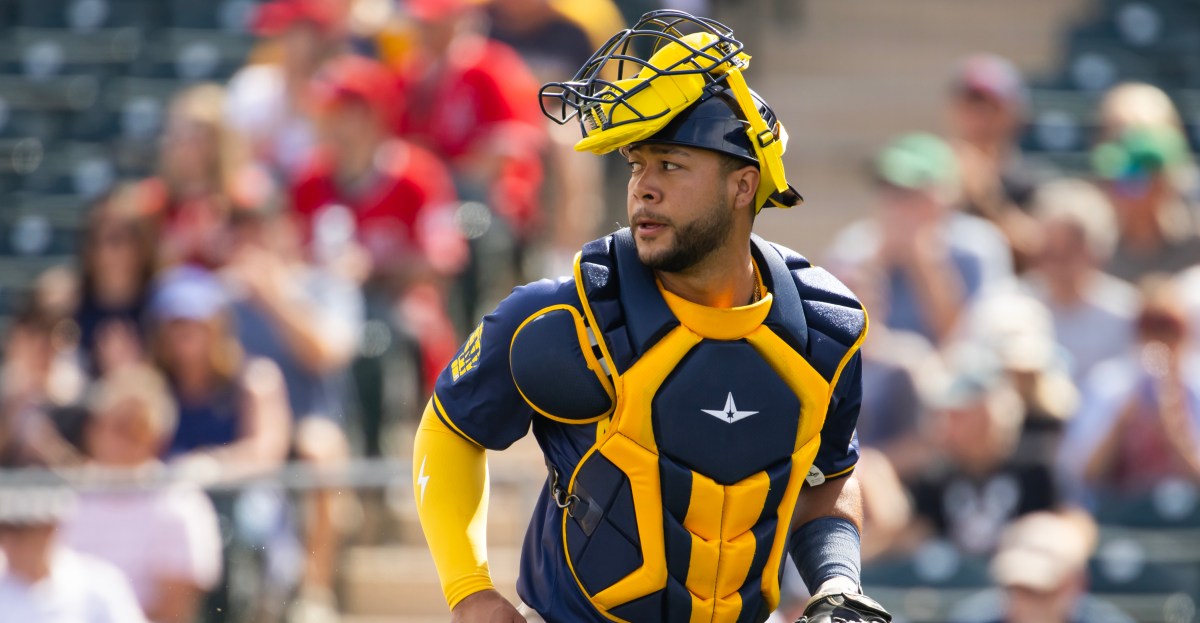
Behind starter William Contreras, the only other catcher currently on the 40-man roster is 23-year-old prospect Jeferson Quero, who hasn’t yet made an MLB appearance.
While it’s clear and obvious that Contreras will get the bulk of the playing time behind the plate in 2026 — he started 119 games behind the plate in 2024 and 128 games there in 2025 — the question is if Milwaukee trusts Quero, who has strong defensive chops but hasn’t yet handled big-league pitching staffs or shown consistent results at the plate.
Quero, who ranks as Milwaukee’s No. 4 prospect and top catching prospect, appeared to be on the fast track to the majors entering 2024, appearing with the big-league squad in spring training and starting the season at Triple-A Nashville. Instead, he drew a walk in his first plate appearance and proceeded to tear his shoulder on a slide back to first, an injury that resulted in surgery and him missing the entire 2024 season.
In 2025, he bounced back to appear in 69 games between Rookie ball and Triple-A, hitting .271/.361/.478 with 11 homers, 17 doubles, 57 RBIs, and 42 runs scored. Altogether, that means he’s played in just 70 games over the last two years, and only 59 games at Triple-A. Plus, at 23 years old, he’d still be one of the youngest players on the Brewers, only ahead of Jackson Chourio, who will turn 22 in March.
That’s why the veteran catcher market makes sense for Milwaukee. A low-cost, experienced backstop is a buffer and bridge to Quero, who, by all means could be ready for regular major league action early in the year.
Some fun options include old friends Victor Caratini, Gary Sánchez, and Eric Haase, as well as other veterans like Christian Vázquez, Elias Díaz, Reese McGuire, or Austin Barnes.
All those names bring something Quero currently doesn’t have; sustained Major League reps and the ability to plug in without hesitation.
Relying on Quero as the only backup also risks two things:
For a team like Milwaukee trying to take another step forward, a veteran stopgap might be the answer. Veterans aren’t glamorous, but they’re pragmatic and stabilizing. And with the front office not willing to invest huge resources just about anywhere, a veteran one-year show-me contract is smart baseball.
Here’s the bottom line: Quero is a real talent and likely in the mix for big-league time soon. But as of right now, he shouldn’t be expected to carry the backup load by himself come opening day. A veteran presence behind Contreras doesn’t just make sense — it’s the responsible call for a club trying to compete now and develop its own.