
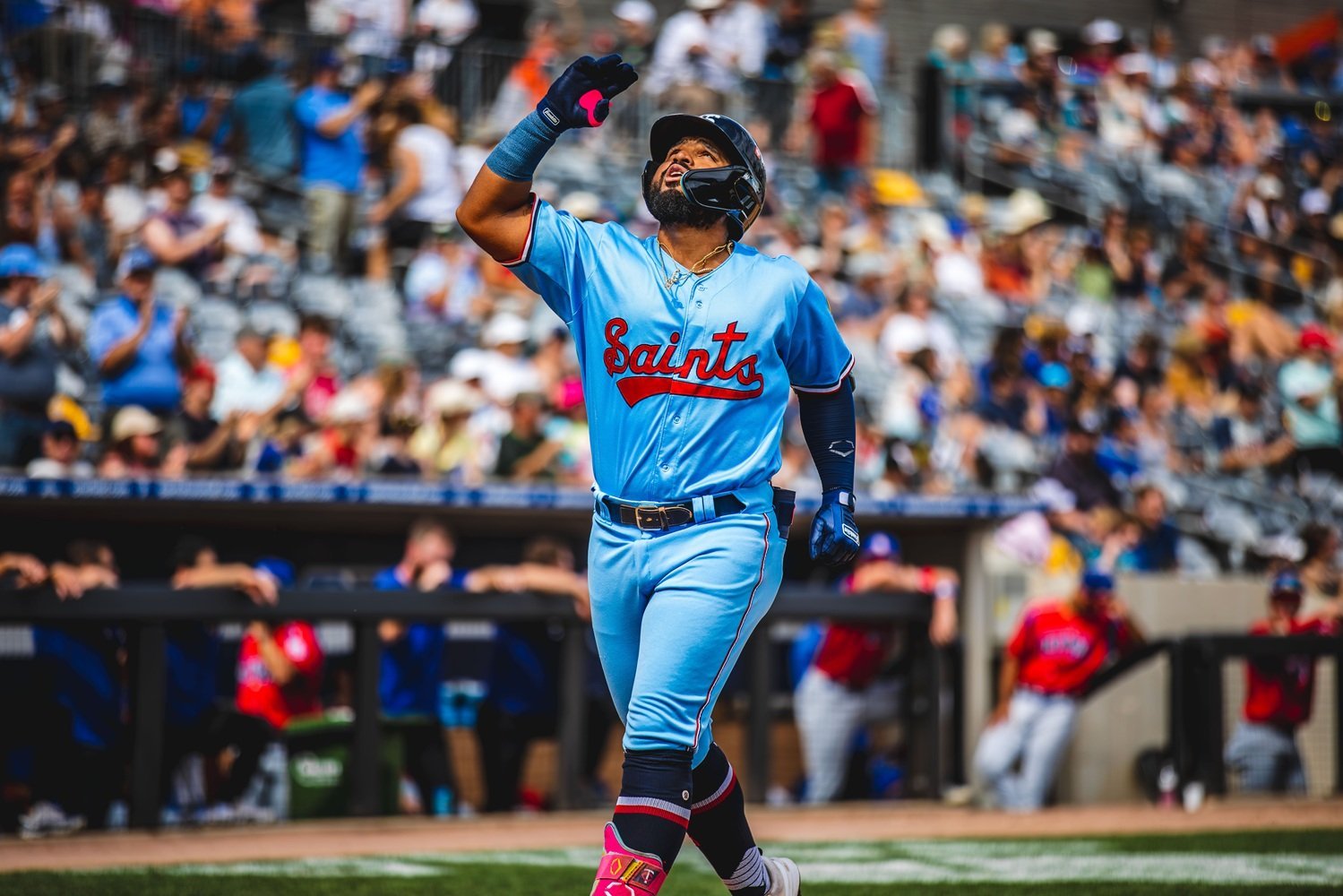
For much of the past several seasons, the Twins have leaned heavily on left-handed power at the big league level, particularly in the outfield corners. That trend is not slowing down anytime soon. Minnesota’s current roster includes bats like Matt Wallner, Trevor Larnach, and James Outman, all of whom must produce next season after mixed results in 2025. Waiting in the wings is Emmanuel Rodriguez, one of the top prospects in baseball, and even the organization’s crown jewel, Walker Jenkins, swings it left-handed.
There is nothing inherently wrong with that profile, especially when the power plays from the strong side of the platoon. Still, roster balance matters. Late-inning matchups, division rivals stacking left-handed relievers, and simple lineup construction all become trickier when the offense leans too far in one direction. In an offseason where payroll flexibility could be limited, the Twins may need to look inward rather than shopping for an external right-handed bat.
Fortunately, the farm system does offer a few intriguing options. None is a sure thing, but each brings some level of right-side power that could help reshape the lineup as soon as next season.
Gabriel Gonzalez (Twins Daily No. 9 Ranked Prospect)
Gonzalez is already on the 40-man roster, and that alone puts him squarely in the conversation. After a breakout season, he finished the year at Triple-A and forced the organization to take a long look at how close he really is. The 21-year-old hit .329/.395/.513 (.908) with a 148 wRC+ with a 14.5 K%. Gonzalez brings a compact swing with surprising pop and has shown the ability to drive the ball to all fields with 38 doubles and 15 homers in 123 games last season. While he is not a pure slugger in the traditional sense, the power is real enough to matter, especially when paired with his improving approach.
The question with Gonzalez has always been defensive home and ultimate ceiling. Last season, he split time between left and right field. Even so, a right-handed bat who can hold his own in the corners and punish mistakes is valuable, particularly when he is already positioned to contribute without additional roster maneuvering. He will start the year at Triple-A but should make his MLB debut in the first half.
Kala’i Rosario
If the Twins are looking for raw power, Rosario might be the loudest answer. He landed back on the radar in a big way this season, and the power is hard to ignore. Rosario crushed 11 home runs in August alone and finished with 25 on the year to lead the Double-A Texas League. In 130 games, he hit .256/.358/.487 (.844) with a 131 wRC+ and a 12.6 BB%. Even with those totals, Minnesota left him unprotected from the Rule 5 Draft, and 29 other teams passed him over.
There is swing and miss in his game (27.5 K% in 2025), and it will always be part of the package. Still, Rosario balances that with a willingness to take walks and a clear understanding of his damage zones. He will play most of 2026 at age 23, which is a crucial context point. He faced older pitchers in 84.5% of his plate appearances last season. He is young for his level, still learning, and already producing elite power numbers. If the contact rate improves even marginally, the upside is significant.
Kyler Fedko (Twins Daily No. 18 Prospect)
Fedko is not always mentioned alongside the louder names in the system, but he remains an interesting sleeper. He reached Triple-A last season as a 25-year-old and combined for 28 homers, a 130 wRC+, and a 21.2 K%. He brings athleticism, sneaky pop, and the kind of versatility the Twins tend to value. Last season, he played all three outfield positions and spent some time at first base.
What Fedko offers is balance. He is a right-handed hitter who can impact the ball without being a one-dimensional slugger. Many wouldn’t consider him a top prospect because of his age. However, player development is rarely linear, and Fedko can provide big-league value. If the Twins are prioritizing lineup flexibility and defensive versatility, Fedko could carve out a role faster than expected.
Ricardo Olivar
Olivar is the furthest away of the group, but the upside is intriguing enough to mention. Last season, he played the entire season at Double-A, posting a 114 wRC+ and a 12.0 BB%. He flashes power potential and has shown the ability to control the strike zone as he climbs the organizational ladder. Minnesota also continues to use him as a catcher, a position with few long-term prospects in the organization.
For an organization that may need internal solutions, Olivar represents the longer-term bet. The other names on this list will likely reach the big leagues before him, but a hot start to the 2026 campaign could force him back into the team’s long-term plans. He is not likely to impact the major league roster immediately, but his right-side power potential is something to keep an eye on as the system evolves.
The Twins may not solve their lineup imbalance overnight, but the answers do not have to come from outside the organization. With a system that quietly features multiple right-handed power bats at different stages, Minnesota has options. The next step is figuring out which one is ready to seize the opportunity.
Which name stands out as an impact right-handed bat? Who has the highest upside? Leave a comment and start the discussion.