
The White Sox have set the table for an interesting trade with this offseason’s transactions. Rule 5 Draft additions and Chicago’s signings of infielder/DH Munetaka Murakami and pitcher Sean Newcomb maxes out the 40-man roster while upgrading key positions. With a flurry of new talent expected to flood the field in 2026, the Sox must take a hard look at their current clubhouse.
As the club slowly emerges from its 121-loss darkness and embraces new coaching and management, the roster must also adapt to reflect this new era of baseball. Trading one of these three players would signal that Chicago is all-in on its future and not trying to preserve its past.
Lenyn Sosa
With a crowded infield and the looming possibility of the Sox drafting Roch Cholowsky first overall next summer, Sosa is the best trade candidate among the roster’s nine eligible infielders.
Sosa has been with the Sox organization since 2016 but has only recently made a name for himself. The 2025 team home run leader (22 HRs) slashed a career-best .264/.293/.434 in 140 games. While his production has been long in the making since his debut in 2022, Sosa’s plate discipline and contact aren’t at the level that warrants keeping him. His 23.5% whiff rate and 40.9% chase rate indicate his struggles with controlling his bat outside the zone, and a 3.3% walk rate only punctuates the point. In comparison, new addition Murakami brings a slightly lower chase rate (25.8%), according to the NPB Batter Profile app, at the cost of a higher whiff rate (36.7%) while producing far more consistency at the plate (.273/.379/.663 slash line in 2025).
Replacing Sosa with the Japanese Babe Ruth sheds risk and optimizes power. Murakami’s ceiling of 33 home runs in his last healthy season is more valuable than Sosa’s at Chicago’s middling stage in the rebuild.
With the tools needed to be a starting second baseman in spite of his defensive limitations, Sosa’s breakout campaign is enough to make him an attractive trade chip. For a team like the Brewers or Rays, who can afford to prioritize his development as a starter and not a bench player, Sosa can be a valuable asset.
Jonathan Cannon
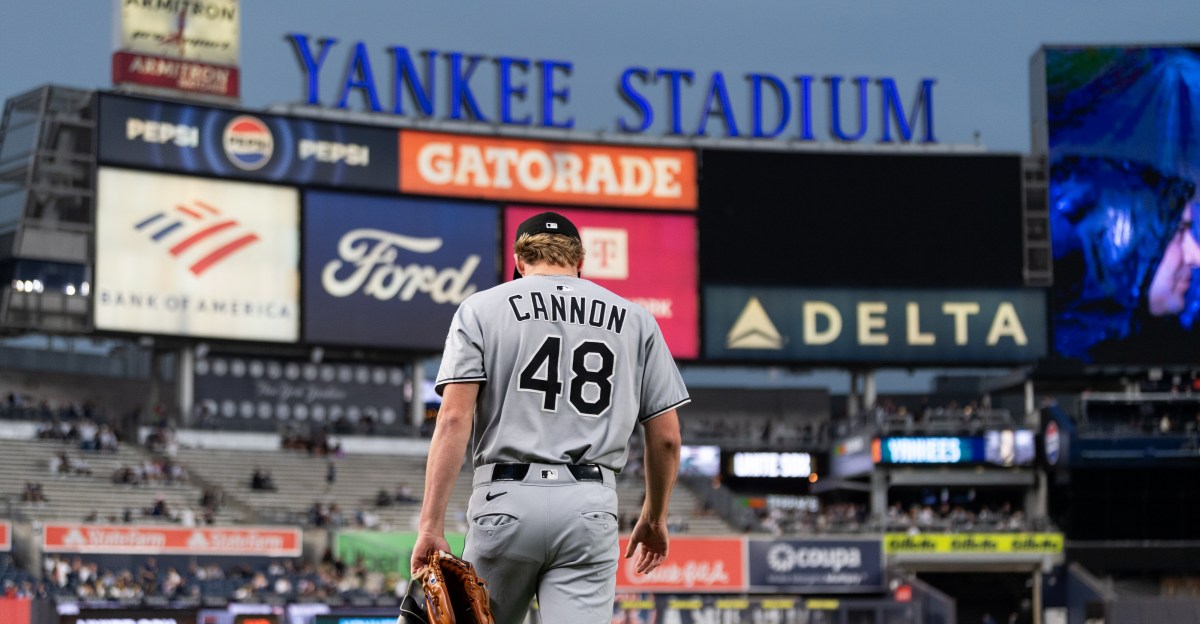
Cannon’s 2025 performance put him in jeopardy of leaving Chicago long before the offseason. His 5.82 ERA and 1.49 WHIP in 22 games resulted in a demotion to Charlotte in early August. There, his pitching hardly improved. Although he was never known to be a finished product, Cannon’s reduced velocity on every pitch last season is concerning:
An influx of new pitchers and return of formidable young talent officially put Cannon out of a job with the Sox. Anthony Kay is slotted behind Davis Martin in the rotation. Ky Bush and Drew Thorpe are returning from Tommy John surgery. Sean Newcomb’s versatility allows the Sox to slot him in a swingman role. And Mike Vasil is bound to get more starts than relief appearances after posting a 2.50 ERA and striking out 82 through 101 innings. With too much proven talent and potential at Will Venable’s fingertips, it’s hard to see how the Sox will make room for Cannon on the Opening Day roster.
Although his poor pitching last year narrows the pool of potential trade suitors, Cannon’s ceiling as a third or fourth starter and floor as a reliever should be enough to make him a waiver pickup.
Korey Lee
Like Cannon, Lee also lost his starting job to more promising talent. Lee first took on the Sox starting catcher job in 2024. His strong arm and pop time of 1.85 seconds compensated for his inconsistent power hitting. But when Edgar Quero and Kyle Teel got promoted, Lee’s average framing and career .193/.234/.321 slash line quickly became a liability. With no clear defensive or offensive advantage and no reason to prioritize his development into a positive-WAR player over either of the rookies, Lee is a clear trade block candidate.
There’s nothing technically wrong with Lee that should scare teams away from giving him a catching job. He simply isn’t Quero or Teel. The catching role is rapidly evolving towards offensive production and steal prevention due to the recent pickoff attempt rules and the new ABS system, creating a market for Lee to be a backup with another organization.