
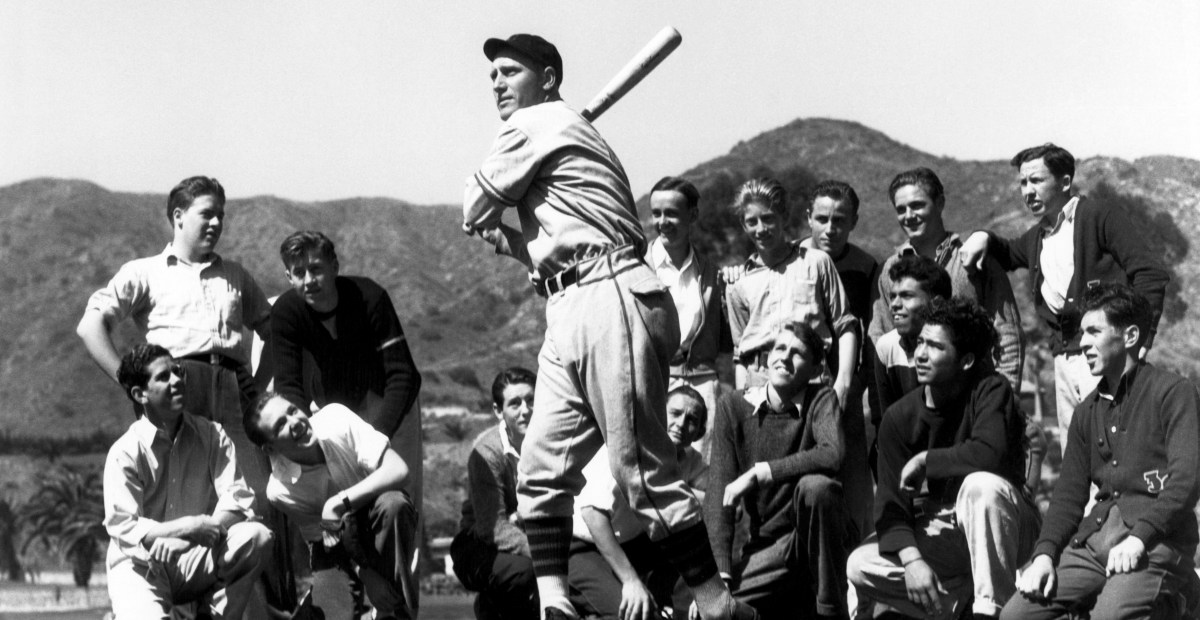
In honor of the Philadelphia Phillies playing host to the 2026 Major League Baseball All-Star Game at Citizens Bank Park, we here at The Good Phight are launching a yearlong series that focuses on the history of the Phillies and the All-Star Game. First up, we’ll highlight the first men to ever represent the Phillies at the Midsummer Classic.
On May 19th, 1933, the owners in Major League Baseball decided to do something unprecedented. Those in charge of both the National League and American League announced that they would pause the regular season to play a game on July 6th that would feature two teams of the best each league has to offer pitted against each other. Chicago Tribune sportswriter Arch Ward was a driving factor behind the decision, ensuring that the event was to take place at Chicago’s Comiskey Park in conjunction with the city’s exhibition at the 1933 World’s Fair.
And thus, the MLB All-Star Game as we know it was born.
The first order of business was to put together the teams that would face off on July 6. It was agreed upon by the presidents of the AL and NL as well as the owners that the fans would be the ones to determine what players would represent their respective leagues at Comiskey. The Phillies, despite being 31-43 and in dead last in the NL on the day of the All-Star Game, sent two players to participate in the exhibition. Those players were right fielder Chuck Klein and shortstop Dick Bartell.
Klein has his fingerprints all over Phillies history, so it’s not much of a surprise to see that he was one of the team’s first All-Stars. He was undoubtedly one of the best hitters of his or any era but gets generally overlooked because he played on losing teams and in Philadelphia’s Baker Bowl, a park that many contemporaries believe aided his home run totals. Nevertheless, Klein was selected to play right field for the inaugural All-Star team and batted third in the starting lineup, sandwiched between two other future Hall of Famers in Giants 2B Frankie Frisch and Reds LF Chick Hafey. At the time of the break, Klein was hitting .369 with 17 home runs in 74 games.
Bartell on the other hand is a name that is almost guaranteed to be one you’re hearing for the first time. A feisty infielder with a good glove but light-in-power bat, Bartell played for the Phillies from 1931 to 1934 after he was traded from the Pirates due to a feud with ownership. In four seasons in Philadelphia, Bartell hit .295 with two home runs with a .954 fielding percentage in 587 games played.
Bartell had a reputation for being an uber aggressive baserunner, something that was evident in the first series of his All-Star 1933 season. In just the second game of the year, Bartell spiked the Brooklyn Dodgers’ first baseman Joe Judge while trying to break up a double play, causing Judge to suffer an ankle injury that kept him out of action for a week. Judge didn’t hide the fact that he believed he was spiked intentionally. After the incident, Judge told the media, including the Philadelphia Inquirer, that never in his 18-year career had he been spiked including by the likes of Ty Cobb, but then “this little upstart digs his cleats into me.” Despite the growing feud with Judge and the Dodgers, Bartell was in the midst of a season that was deemed worthy of appearing on the first All-Star team. He was hitting .288 at the time of the break with 19 extra-base hits in 74 games.
Like Klein, Bartell was in the inaugural starting lineup for the NL, playing shortstop and hitting seventh between CF Wally Berger of the Boston Braves and catcher Jimmie Wilson of the St. Louis Cardinals. Bartell played seven innings, going 0-2 with a strikeout at the plate before being lifted for a pinch hitter in the form of former Pittsburgh Pirates teammate Pie Traynor in the seventh. Klein made four trips to the plate in the game, going 1-4 with a single before he too was lifted in the bottom of the eighth for another Pirate in Paul Waner. As for the overall game, the AL All-Stars defeated the NL squad by a final score of 4-2, thanks in large part to a two-run homer from Babe Ruth in the third.
Klein and Bartell then went back to the Phillies for the remainder of the season, where the team ultimately finished 60-92, “good” for the second worst record in the NL. Klein finished 1933 the runner up to the Giants’ Carl Hubbell in MVP voting, as the slugging outfielder led the NL in batting average (.368), home runs (28) and RBI (120), becoming the only Phillie to ever hit for the triple crown. By more modern statistics, Klein also led the NL in OPS (1.025) and WAR (8.0). Klein was traded to the Cubs following the 1933 season as the Phillies were a bad team on the verge of bankruptcy, but he ultimately returned to Philadelphia in a mid-season trade in 1936. But 1933 was the last truly MVP-worthy season of Klein’s career, as 1934 was the start of a decline that nevertheless saw him hit .278 with a .790 OPS through the end of his career in 1944.
Bartell finished 1933 with a mediocre .271 BA with 31 extra-base hits but a strong .951 fielding percentage that garnered him some down-ballot MVP votes, where he placed 21st. He then spent the 1934 season with the Phillies before being traded to the Giants on Halloween. The Giants surrendered four players for the 27-year-old shortstop, namely George Watkins, Blondy Ryan, Johnny Vergez, and John Pezzullo. Bartell would go on to play ten more seasons in the Majors split between the Giants, Tigers, and Cubs. He didn’t play in 1943 or 1944, as Bartell was drafted into the Army at age 36 where he coached an Army baseball team. 1946 saw Bartell return to the Giants as a player-coach, but he would only appear in five more games in his career. He would be named to one more All-Star team in 1937 as a member of the Giants in what would ultimately be the best season of Bartell’s career, as he hit .306 with a career-high 14 home runs and finished sixth in MVP voting.
James Lincoln Ray, Society for American Baseball Research (SABR) biography for Chuck Klein
Fred Stein, Society for American Baseball Research (SABR) biography for Dick Bartell
Arch Ward, Chicago Tribune, Saturday, May 20th, 1933, page 19
The Philadelphia Inquirer, Friday, July 7th, 1933, pages 15-16
Bill McCullough, Brooklyn Times Union, Saturday, April 15th, 1933, page 11
Stan Baumgartner, Philadelphia Inquirer, Saturday, April 15th, 1933, page 13
Stan Baumgartner, Philadelphia Inquirer, Thursday, November 1st, 1935, page 17