
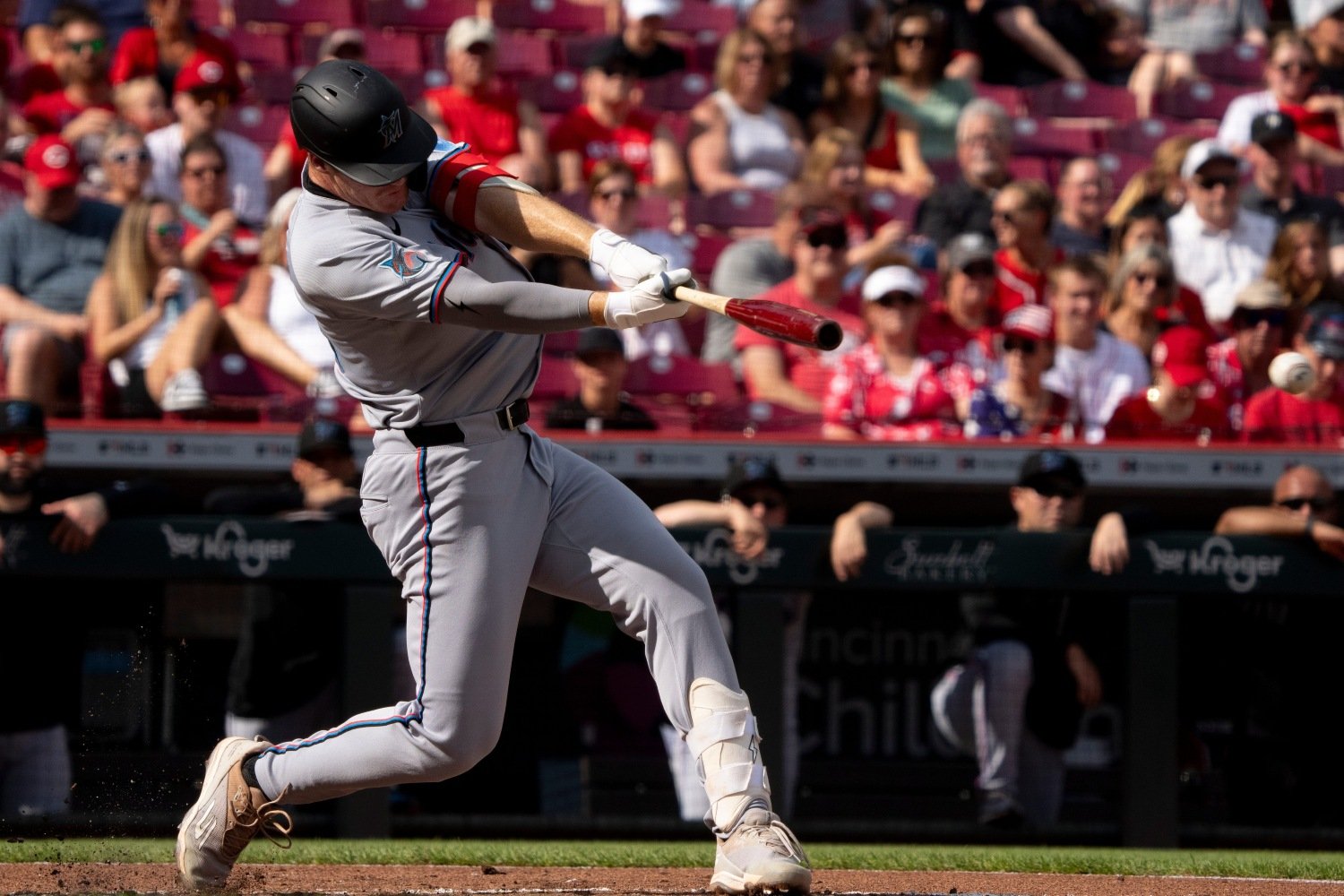
The Minnesota Twins traded left-handed minor-league pitcher Kade Bragg to the Miami Marlins Friday, in exchange for recently-DFAd first baseman Eric Wagaman. To make room on the 40-man roster, they jettisoned shortstop Ryan Fitzgerald, who got his first-ever big-league time for the team last season.
Dan Hayes of The Athletic reported the deal on Twitter.
Wagaman, 28, batted .250/.296/.378 with the Marlins in 2025, in the first extended opportunity he’d ever gotten in the majors. It’s not hard to see what the Twins see in him. He had solidly above-average bat speed in 2025, and it was up 2.3 miles per hour from his brief stint with the Angels in 2024. Wagaman’s whole hitting process changed, as he moved his contact rate 7.2 inches farther out in front of his frame and flattened his swing to get around the ball more.
Big and strong, Wagaman has a fairly short stroke for his size, which prevents him from swinging and missing at disastrous rates. The key for him is staying disciplined at the edges of and outside the strike zone, which he did better with Miami last season. He’s not much of an athlete, and is not an adequate defender anywhere but first base, but he has the tools to hit for power, especially against lefties.
To jump the waiver wire and snare Wagaman, the Twins sent the Marlins lefty reliever Kade Bragg, who split his 2025 between Low-A Fort Myers, High-A Cedar Rapids, and Double-A Wichita. A 17th-round pick in 2023, Bragg is a low-grade prospect, and turning him into any kind of value for the 2026 big-league roster is a nice piece of business.
The bigger question, of course, is how this move affects the somewhat creaky positional roster picture for the 2026 Twins. Wagaman makes a plausibly excellent platoon partner for Kody Clemens, but if the two are manning first base all or most of the time, Josh Bell will have to DH nearly every day. That would limit the available at-bats for Ryan Jeffers and Byron Buxton, as well as Trevor Larnach—if, indeed, Larnach still fits on the roster at all. Wagaman is a poor defender in either outfield corner or at third base, so he reduces (rather than increasing) the team’s expected defensive utility, and pushing backup shortstop Ryan Fitzgerald off the roster amps up existing concerns about the team’s defensive depth.
One possible way of making all this work could be:
A trade of Larnach creating more roster flexibility, making it possible for the team to carry Ryan Kreidler as the backup shortstop;
Clemens working solely as a second baseman and corner outfielder, leaving Wagaman to platoon with Bell at first base
Luke Keaschall being pushed to the outfield, including some center field, leveraging his speed and giving Buxton the chance to DH on days when Bell is at first base
For now, though, the trade doesn’t so much answer any questions as it does confirm fans’ existing notions of what the team values heading into the new season: plus bat speed, matchup value, and frugality, even if they come at the expense of clear roles on the roster or well-rounded defensive groups.