
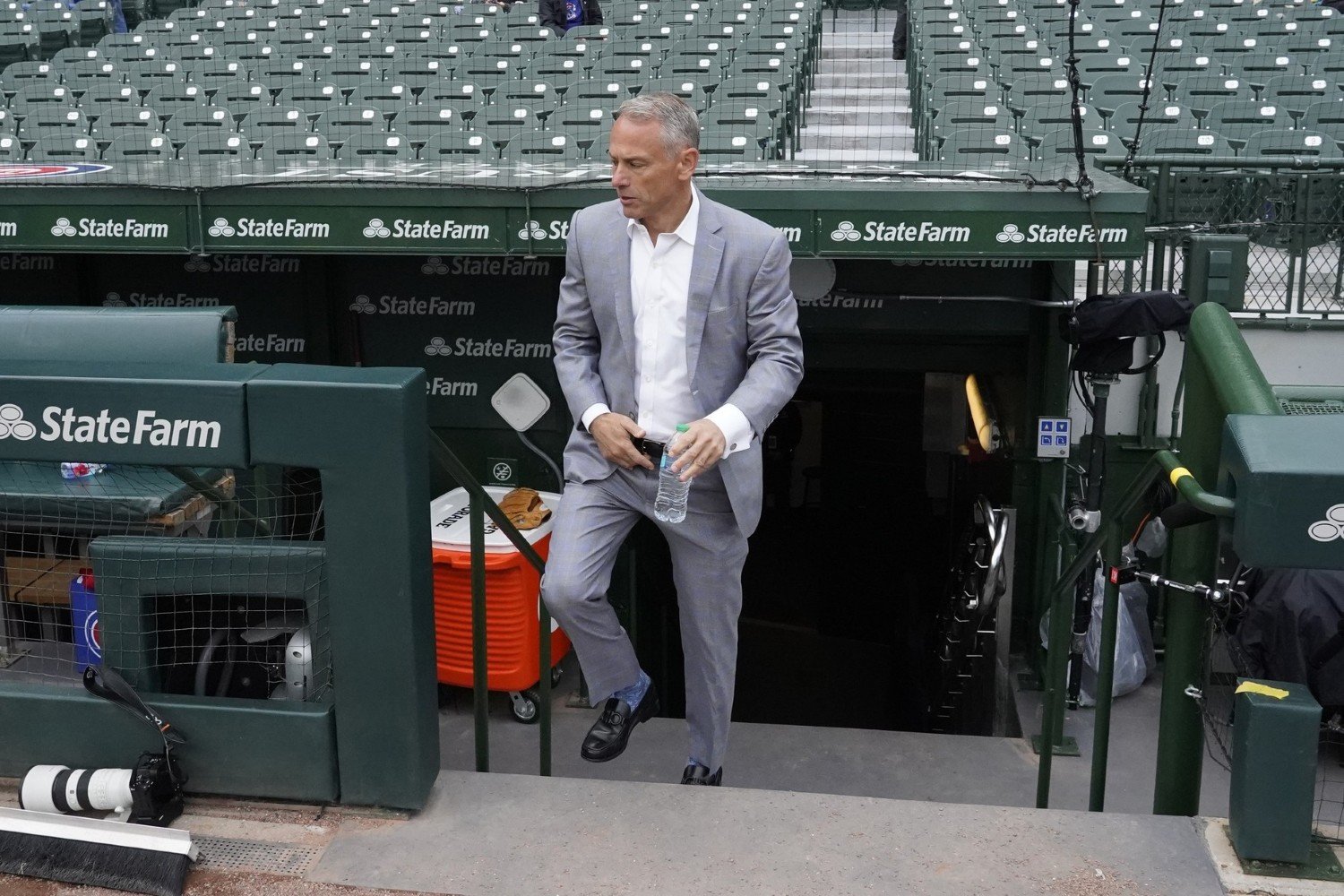
For the third year running, the Cubs’ offseason is coming down to a staring contest between frequent but unhappy collaborators Jed Hoyer and Scott Boras. Boras inflicted a painful loss on Hoyer and company this week, as his client Tatsuya Imai signed a three-year deal with the Astros worth up to $63 million. The Cubs thought they had a deal all but complete with Imai, only to have Boras leverage their last offer into one from Houston that included one of the key provisions on which Hoyer wouldn’t budge: an opt-out after 2026.
Naturally, Chicago isn’t pleased with Boras’s tactics, and this isn’t the first time in the last few years that that has been true. For any of their objections, though, Boras has two reasonable and forceful rejoinders:
They’re not ultimately making the strongest bids; they’re trying to win free-agent sweepstakes only on their terms; and
Where else are they going to go?
Last year, Chicago refused to offer Alex Bregman as many opt-outs as the Red Sox did, even though they did propose a longer deal with a higher net present value. They also declined to consider the deferral structure that allowed Bregman and Boras (however misleadingly) to label the deal as being worth $40 million annually. This time around, Chicago wanted Imai, but not on a deal that allowed him to opt out after 2026. While the benefits of deferring money accrue mostly to the team and are a matter more of style than substance, Hoyer’s intransigence on certain opt-out opportunities meant that the deals signed by Bregman last winter and Imai this time had expected values at least as high as what the Cubs offered, and greater flexibility from the player’s side.
It’s still understandable that the Cubs feel chapped by Boras’s order of operations with Imai, but as Boras and Hoyer both know, giving the agent any kind of cold shoulder is not an option now. One of the reasons why the Cubs were reluctant to consider shorter and higher-AAV structures for Imai is that they want to keep 2026 payroll available for the other top target of their offseason: Bregman, again. Now that they’ve missed on Imai, if they make a meaningful upgrade to the rotation, it will almost surely have to come in the person of either Zac Gallen or Ranger Suárez. We talked at length about why Suárez holds obvious appeal for the Cubs, and about why they were tied closely to Gallen by a rumor earlier this offseason. The thing is, both are Boras clients, too.
Framber Valdez is not in the Cubs’ wheelhouse; he’s not coming. The team’s three top targets in free agency are Bregman, Gallen and Suárez. That leaves Hoyer little leverage in negotiations with Boras, and is one reason why Boras was also happy to steer Imai to Houston: It leaves one of the top landing spots for his other three key free agents hungry. The trade market is an alternative, of course, and the Cubs would just as soon pursue improvement down that road, but discussions with teams like the Nationals (MacKenzie Gore, CJ Abrams) and Marlins (Edward Cabrera, Sandy Alcantara) have gone nowhere recently. A trade for Gore or Cabrera would almost certainly have to be paired with a Bregman signing, making up for the offense lost when the team parts with one of their top young hitters in exchange for a starter. That would only sharpen Hoyer’s position on the winter chessboard and leave Boras with even more leverage in that negotiation.
In the winter of 2023-24, Hoyer won a showdown with Boras when he got Cody Bellinger back on a three-year deal with a reasonable AAV (and opt-outs after each season). He signed Boras client Matthew Boyd early last winter, and then stayed engaged with the super-agent the rest of the winter about Bregman. Ultimately, though, the Cubs have never signed a Boras client to a deal richer than the $80 million Bellinger could have earned over the full course of his three-year deal. For that matter, Boyd’s is the second-richest deal they’ve struck with him. Boras dislikes the Cubs almost as much as they dislike him at this moment, because they were one of the first big-market teams to consistently block his signature end run to ownership on top-tier free agents, and because they spend so much less than they could and should.
Already, it seems clear that the Yankees or Mets will outbid Chicago on Bellinger; the fit there is imperfect, anyway. Bregman could very well return to the Red Sox, though the Cubs remain locked in on him, much as they were at this time last year. There are still enough teams who need a starter to ensure a robust market for Gallen and Suárez, now that their agencymate Imai is out of the way.
Hoyer is relentlessly value-focused in his free-agent shopping. That has led to a high batting average on significant investments. He’s signed seven players to free-agent deals with eight-figure AAVs, and they’ve delivered an average of 10.4 runs above average per season during their time with the team on those deals, according to Baseball Reference. That might not sound like a huge win, but it is. Nor does that count Nico Hoerner and Ian Happ, who have averaged over 20 runs above average per year since their salaries crested $10 million. The only below-average season turned in by any player in this cohort was Jameson Taillon‘s 2023.
That said, refusing to go the extra year or the extra dollar to land an even higher tier of talent has kept a relatively low ceiling on the Cubs. If they want to elbow past the Brewers in 2026, they need to tilt their projection at least 40 more runs to the good, and that means either hitting big on one of their young players or making multiple significant additions between now and Opening Day. To do the former, they have to be better at player development than they’ve yet proved themselves to be. To do the latter, they have to swallow their pride and win a Scott Boras bidding war.