
Spring training starts in less than six weeks and the Minnesota Twins are still one of MLB’s least-active teams, with their only offseason move of any note being the signing of free-agent first baseman Josh Bell to a one-year, $7 million contract in mid-December.
Bell is the Twins’ only meaningful addition to a lineup that ranked 23rd out of 30 teams in runs last season. They’ve done even less to reinforce a short-handed bullpen that was dismantled at the July 31 trade deadline, and their payroll is hovering around $100 million — $60 million below 2023.
It’s been slim pickings for roster changes worth analyzing. But the Twins did make a pair of lower-wattage transactions over the weekend that are at least worth discussing, acquiring 28-year-old first baseman Eric Wagaman from the Miami Marlins and signing 31-year-old shortstop Orlando Arcia.
There’s a realistic chance one or perhaps even both of Wagaman and Arcia are on the Opening Day roster in a backup role, so let’s walk through what each could bring to the table and why each was available to the Twins on the cheap.
Wagaman added to corner mix
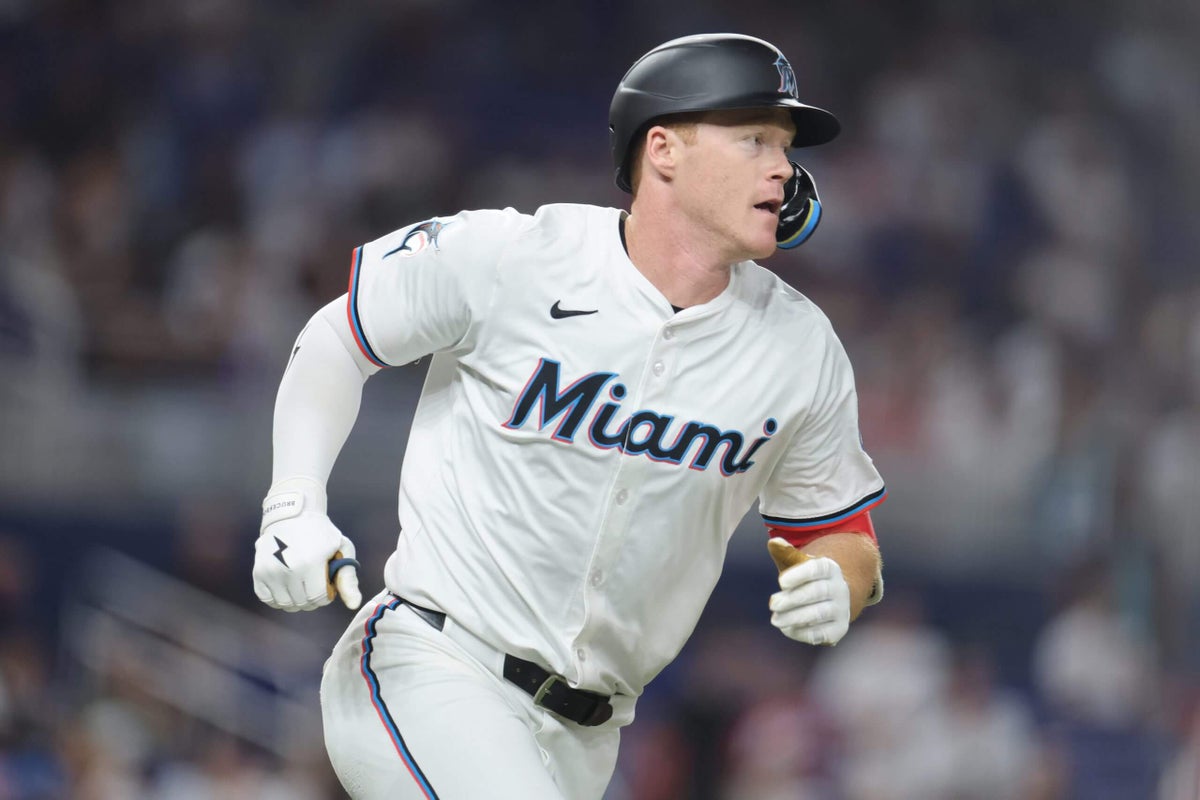
Around this time last winter, Wagaman signed a split contract — meaning different salaries in the majors versus the minors — with the Marlins after being let go by the Los Angeles Angels. He was 27, with just 18 career MLB games and a good but not great Triple-A track record.
But the Marlins, often desperate for offense, essentially handed Wagaman a starting job. He played 140 of 162 games and got 514 plate appearances as Miami’s primary first baseman and occasional left fielder/designated hitter. And he was one of MLB’s least-productive regulars.
Wagaman batted .250/.296/.378 with nine home runs and 32 walks, offering neither power nor plate discipline from offense-driven positions. He ranked 132nd out of 146 qualified hitters in OPS, and his all-around value was below replacement level, totaling -0.4 WAR per FanGraphs and Baseball Reference.
Why would the Twins target Wagaman? And why were they willing to trade the Marlins a decent reliever prospect in Double-A left-hander Kade Bragg to acquire a 28-year-old journeyman who was designated for assignment a few days earlier?
Wag blast 🚀 pic.twitter.com/xliILNbMmC
— Miami Marlins (@Marlins) April 21, 2025
There are a few things that likely drew the Twins to Wagaman, not the least of which is that he’d be minimum-salaried in the majors and still has minor-league options, meaning he can be stashed at Triple-A St. Paul as in-season depth if he doesn’t make the Opening Day roster.
And within last year’s poor overall production, Wagaman hit .283/.321/.462 against left-handed pitching. It was a similar story in the minors, where he hit .328/.379/.541 off lefties in 2024. For a lineup that’s always long on lefty corner bats, the righty-swinging Wagaman could fit in a platoon role.
Wagaman is 6-foot-4 with below-average speed, so he’s limited defensively, but he does have experience playing all four corner spots. He could platoon at first base with Kody Clemens, pushing the weak-gloved Bell to DH, and he could be paired with Matt Wallner or Trevor Larnach in the outfield.
In recent years, the Twins have struggled to find right-handed corner bats who can do damage facing lefties, too often leading to ill-fitting platoons in a lineup susceptible to southpaws. Wagaman is capable of filling that role, stylistically at least, but he seemingly lacks much upside beyond that.
Arcia joins infield competition
In a corresponding transaction to clear a 40-man roster spot for Wagaman, the Twins designated for assignment 31-year-old infielder Ryan Fitzgerald, who got his first big-league opportunity as part of the post-deadline chaos. It’s possible the Twins will try to re-sign Fitzgerald to a minor-league deal.
In the meantime, dropping Fitzgerald left Brooks Lee and October waiver claim Ryan Kreidler as the only shortstop-capable fielders on the 40-man roster, an issue the Twins quickly addressed by signing Arcia to a minor-league contract that includes an invitation to spring training.
Arcia is a familiar name, in part because he’s played 10 years in the majors, including an All-Star selection in 2023, and in part because he’s the younger brother of former Twins outfielder Oswaldo Arcia. But there’s also a reason the veteran was available for a minor-league deal in January.
Arcia was a league-average hitter in 2022 (102 OPS+) and 2023 (99 OPS+), which made him a solid-hitting shortstop, but he batted just .214/.263/.337 (64 OPS+) in 233 games the past two seasons. He was one of only two MLB hitters with at least 700 plate appearances and a sub-.600 OPS in that time.
🚨 ORLANDO ARCIA HOME RUN 🚨 pic.twitter.com/5xSChjALQ8
— Colorado Rockies (@Rockies) June 29, 2025
With that said, Arcia was signed to compete for a bench job, and the bar for acceptable offensive production from a backup shortstop is extremely low. Kreidler, for example, is a career .138 hitter in 89 big-league games whose Triple-A track record (.235/.357/.414) is only slightly more encouraging.
Of course, the reason for the low bar offensively is that backup shortstops are generally chosen for defense, and Arcia has shown typical signs of age-related decline there, too. He graded out as a below-average shortstop last season, and his sprint speed sank to the 10th percentile league-wide.
Arcia was released by the Atlanta Braves in late May and transitioned to a utility role after signing with the Colorado Rockies. He looked comfortable at second base and third base, where diminished range is less of a problem, and he was still somewhat passable at shortstop.
Arcia was likely brought in to compete with the 28-year-old Kreidler for the utility infielder role, an essential component of which is backing up Lee at shortstop. Twins officials have talked up Kreidler’s glove, so Arcia will need to prove he can still handle shortstop and/or rediscover some offensive pop.