
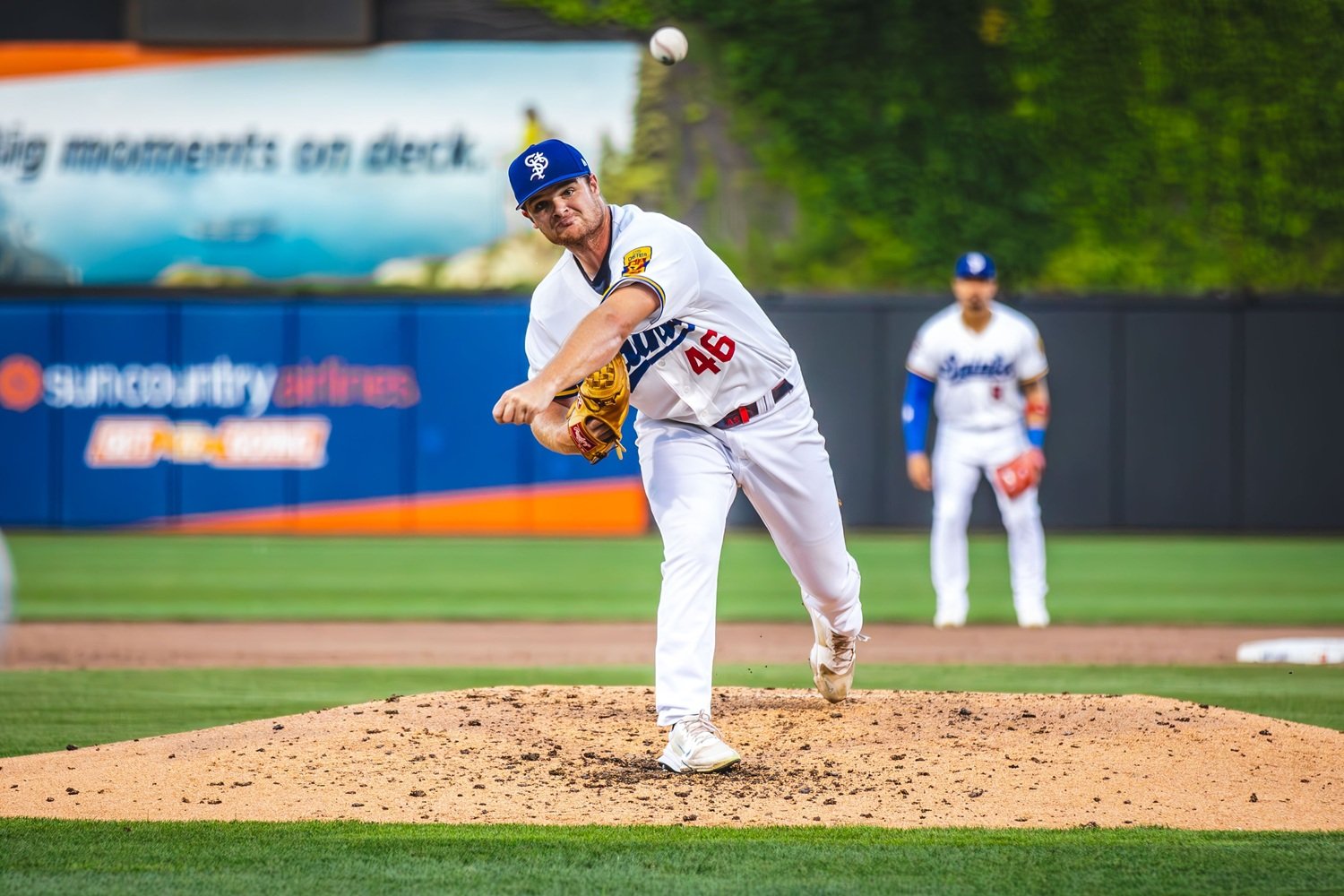
The Minnesota Twins enter 2026 walking a familiar line between patience and urgency. The big-league roster is far from a juggernaut, but the organization underneath it has quietly transformed into one of baseball’s strongest farm systems. After years of prospect droughts, Minnesota finally has waves of talent approaching readiness for the majors.
That shift changes the conversation. Development matters as much as results. Decisions made in St. Paul, Wichita, Cedar Rapids, Fort Myers, and on draft day will ripple all the way to Target Field. These are the five prospect storylines that will shape the Twins organization throughout the 2026 season.
The Walker Jenkins Debut Timeline
Given a healthy spring, Walker Jenkins will open 2026 right where the Twins want him: playing in Triple-A St. Paul. Comfortable. Dominant. And still waiting.
After finishing last season with the Saints, Jenkins still has something to prove against minor-league pitching, so Minnesota doesn’t need to rush him. He posted a 154 wRC+ at Double-A Wichita, but saw that drop to an 88 wRC+ in 23 Triple-A games. He is not on the 40-man roster, and the outfield depth chart has bodies in front of him, including Emmanuel Rodriguez, who remains one of the organization’s most polished bats.
The Twins gain nothing by forcing the issue. Jenkins will be given time to settle in, refine his approach, and wait for the right opening. When that call finally comes, it will be one of the most anticipated prospect debuts in franchise history. The hype will feel familiar to fans who watched Royce Lewis and Byron Buxton arrive with massive expectations.
A Rebuilt Farm System That Must Now Perform
Last year’s trade deadline marked a turning point for the Twins organization. The sell-off injected talent, depth, and upside into a system that badly needed all three. Minnesota went from thin to loaded in a matter of weeks. Now comes the hard part—proving the evaluations were right.
Players acquired at the deadline are no longer names on a transaction log. Eduardo Tait, Kendry Rojas, Mick Abel, Enrique Jimenez, Ryan Gallagher, Sam Armstrong, and Garrett Horn will all be watched closely in the coming year. These players are expected to form the backbone of the next competitive Twins roster.
Adjusting to a new organization can be difficult, but by Opening Day, those growing pains should be a thing of the past. The Twins believe they now have one of the best farm systems in baseball. This season is about distinguishing true building blocks from organizational depth.
Draft Day Pressure at Pick Number Three
The 2026 MLB Draft could play a massive role in shaping the Twins’ long-term outlook, with Minnesota selecting third overall. UCLA shortstop Roch Cholowsky has emerged as the consensus top prospect in the class and appears likely to go first overall. After that, the board opens quickly. College shortstop Justin Lebron and high school shortstops Grady Emerson and Jacob Lombard headline a talented and volatile next tier.
If Lebron slides to number three, the Twins may find themselves staring at a player who could become the organization’s top prospect by this time next season. Draft boards will shift between now and July, but Minnesota is positioned to add another premium talent to an already crowded system.
Another Trade Deadline Reset
The Twins are not exactly gearing up for a 2026 playoff push. Josh Bell has been the team’s most significant addition, and while he fills a need, he does not change the broader trajectory. The bullpen remains thin, with Cole Sands and Justin Topa currently projected as late-inning options.
It’s easy to see Minnesota with a sub-.500 record at the trade deadline. If that happens, the front office may again lean into selling veterans. Joe Ryan, Pablo López, and impending free agents (led by Ryan Jeffers) all could be moved.
The Connor Prielipp Role Decision
Connor Prielipp finally enjoyed something that had eluded him since turning professional: a healthy season. Used as a starter, Prielipp showed real promise, but the Twins handled him cautiously. He reached five innings only twice and never surpassed 85 pitches. That workload tells you everything about how carefully the organization views his future.
Derek Falvey has already mentioned the possibility of moving Prielipp to the bullpen, and it feels like the most logical path. His high-end stuff could make him a devastating late-inning weapon; his injury history makes him a risky proposition as a starter. In a system rich with starting pitching options, Prielipp’s role may end up being one of the most critical decisions the Twins make in 2026.
A Franchise at a Crossroads
The common thread tying all of these storylines together is timing. The Twins are no longer in a race to accumulate talent. They are waiting for the right moments to deploy their top prospects. That is a very different problem from the one the organization has faced in recent years.
The coming season is about alignment. It’s about balancing acquisition and development and keeping the future in mind while the present unfolds. If the Twins navigate these decisions correctly, the next competitive window will feel close to opening. If they get it wrong, the rebuild risks stretching longer than anyone wants to admit.
Which of these storylines do you think will have the most significant impact on the Twins’ future, and is there another prospect situation you are watching closely? Let us know your thoughts in the comments below.
Interested in learning more about the Minnesota Twins’ top prospects? Check out our comprehensive top prospects list that includes up-to-date stats, articles and videos about every prospect, scouting reports, and more!