
In his review of the 2005 film “Elizabethtown,” film critic Nathan Rabin coined the phrase “Manic Pixie Dream Girl,” a term that has since become common in contemporary society to identify a stock character type in fiction novels and films. For those out of the loop, the Manic Pixie Dream Girl is usually a young woman with eccentric, often quirky personality traits who serves as the romantic interest of the straight male protagonist. Well-known adaptations include Zooey Deschanel’s character in “500 Days of Summer,” Mary Elizabeth Winstead’s character in “Scott Pilgrim vs. the World,” and almost every female character in a John Green novel (don’t get me wrong, I love Looking for Alaska, but the point still stands).
Rooted in misogyny, the Manic Pixie Dream Girl archetype is harmful and destructive, creating the false narrative that straight men will always be the primary protagonists in stories and that women are nothing but supporting characters whose value resides in how different they are from other straight women. Interestingly, a similar (albeit less destructive) archetype exists amid the baseball sphere: the “Manic Pixie Right-Handed Hitting Corner Bat.”
Did I just make that term up? Yes. However, the oft-desired archetype of a right-handed-hitting veteran who hits left-handed pitching well and plays a corner infield or corner outfield spot has long been sought by baseball fans and pundits alike, particularly those in Twins Territory. Veteran players like Randal Grichuk, Tommy Pham, and Austin Hays have taken turns as the platonic ideal form of the Manic Pixie Right-Handed Hitting Corner Bat. Yet, the Twins front office has never taken the initiative to acquire them. Shame!
Instead, the Ivy League-educated bunch exclusively peruses the bargain bin, taking fliers on underachieving, league minimum-earning players of that mold. Recent examples include the club acquiring Jordan Luplow almost immediately after the 2023 MLB trade deadline. In theory, Luplow was acquired to fill the Manic Pixie Right-Handed Hitting Corner Bat role for the contending club. Instead, the then-29-year-old generated a measly 87 wRC+ over 73 plate appearances with Minnesota, hitting only eight percentage points better than average against left-handed pitching. Jonah Bride was acquired to fulfill the role last season. However, the right-handed veteran struggled mightily with the Twins, generating a well below-average 39 wRC+ over 67 plate appearances against left-handed pitchers.
Luplow and Bride could serve as cautionary tales for front offices, advising them to avoid giving meaningful plate appearances to struggling players ostracized by other organizations. Yet, Minnesota does have a recent success story of providing significant opportunities to a player of that ilk: Kyle Garlick. Claimed off waivers from Atlanta in February 2021, Garlick performed well for Minnesota during the 2021 and 2022 regular seasons, generating a combined 102 wRC+ over 269 plate appearances. As advertised, Garlick mashed left-handed pitching, posting a 133 wRC+ over 63 plate appearances against lefties in 2021 and a 127 wRC+ over 82 plate appearances against them in 2022. The former Twin quickly fell from grace in 2023, with an uninspiring 74 wRC+ before being designated for assignment in late June. Still, Minnesota got considerable value from a MaPiRiCoBa for two consecutive seasons, constituting a noteworthy success story.
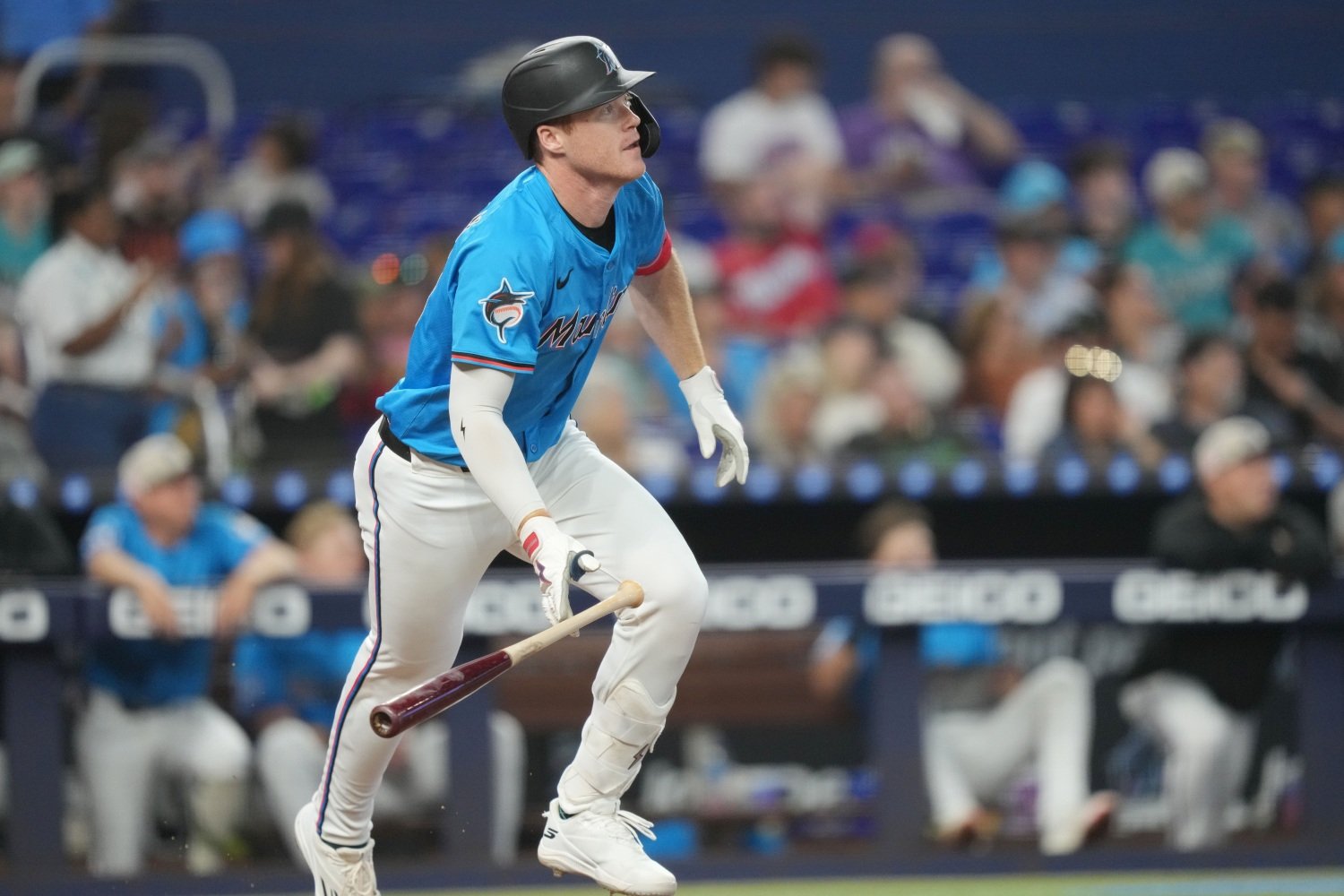
Three years later, Minnesota could have its next productive, league minimum-earning, right-handed hitting corner bat in Eric Wagaman. Acquired from the Miami Marlins for minor-league reliever Kade Bragg on Jan. 2, Wagaman joins the Twins’ 40-man roster, expected to compete with Edouard Julien and Orlando Arcia for the club’s final infield utility bench spot. Since Wagaman has three minor-league options remaining, the 28-year-old could justifiably begin his 2026 campaign with Triple-A St. Paul. Yet, given how thin Minnesota’s infield corner infield depth is, those who follow the club should expect to see Wagaman don a Twins jersey early next season.
Hitting .250/.296/.378 with nine home runs, 28 doubles, and an 85 wRC+ over 514 plate appearances last season, the righty also sported defensive versatility, playing 117 games at first base, 19 in left field, three at third base, and three in right field, while netting 10 starts at designated hitter. He was serviceable at all four positions. Like Garlick, however, most of his value resided in his ability to hit left-handed pitching, to the tune of a 114 wRC+ over 184 plate appearances. The former Marlin struggled against same-handed pitching, with a 69 wRC+ over 330 plate appearances. However, given that Minnesota has an abundance of left-handed hitting corner outfield and infield talent, the club should be able to shield Wagaman from same-handed pitching. They could deploy him similarly to how they used Garlick in 2021 and 2022, maximizing his offensive skillset and positional flexibility.
Despite falling under the inherently derogatory “bargain bin” category of acquisition, Wagaman could provide meaningful value for Minnesota in 2026, making him the club’s first successful version of a Manic Pixie Right-Handed Hitting Corner Bat since Garlick four seasons ago.