
Dear readers, today we are going to take you back to 1982, when the Milwaukee Brewers reached the World Series for the first and only time in franchise history. It seems like only yesterday that this 22-year-old sat intently before the television, watching every minute of every game of that exciting Series.
This multi-part series talks about how the Brewers got there and offers a chronological timeline of the 1982 campaign, including player profiles, game recaps, and other events that affected the season.
The 1981 Brewers Season, Complete With a Work Stoppage
In 1981, the Milwaukee Brewers reached the postseason for the first time in franchise history, albeit during a strike-shortened campaign. The stoppage began on June 12 and lasted until the players and management reached an agreement on July 31. An All-Star game was played on August 9, and the regular season resumed the next day.
The season was split into two halves, with first-half winners playing second-half winners in both leagues for the right to advance to the League Championship and the World Series. The Brewers finished three games behind the New York Yankees in the first half, and it looked like the second half was going to be more of the same, with Milwaukee trailing the Detroit Tigers by three games with only 17 games to go in mid-September. But the Brewers got hot and won 11 of those games and edged both Detroit and Boston by 1 ½ games to win the second-half title in the American League East.
Sadly for Milwaukee, the Yankees took three of five games to end the Brewers’ season. After the final game, Brewers manager Bob Rodgers said, “We came a long way. This was Step One. Step Two will be in spring training” (Wisconsin State Journal, October 12, 1981).
Reliever Rollie Fingers was rewarded for his major league-leading 28 saves, 333 ERA+, and 0.87 WHIP season by winning both the Cy Young Award and the Most Valuable Player Award in the American League, one of only 11 hurlers to claim both honors in the same season.
The Brewers Offseason and the Beginning of Spring Training 1982
The Brewers made few moves in the off-season. Their biggest deal was when they traded pitcher Rickey Keeton to the Houston Astros for reliever Pete Ladd. (The pitcher nicknamed ‘Bigfoot’ spent most of 1982 at Triple-A Vancouver but was promoted to Milwaukee in mid-July when pitcher Jamie Easterly went on the disabled list.)
Also, just before Thanksgiving, Lorn Brown stepped down from the Brewers radio team when flagship station WISN announced that Bob Uecker’s workload would be increased to six innings, while Brown would be the play-by-play broadcaster for only three innings (Wisconsin State Journal, November 20, 1981).
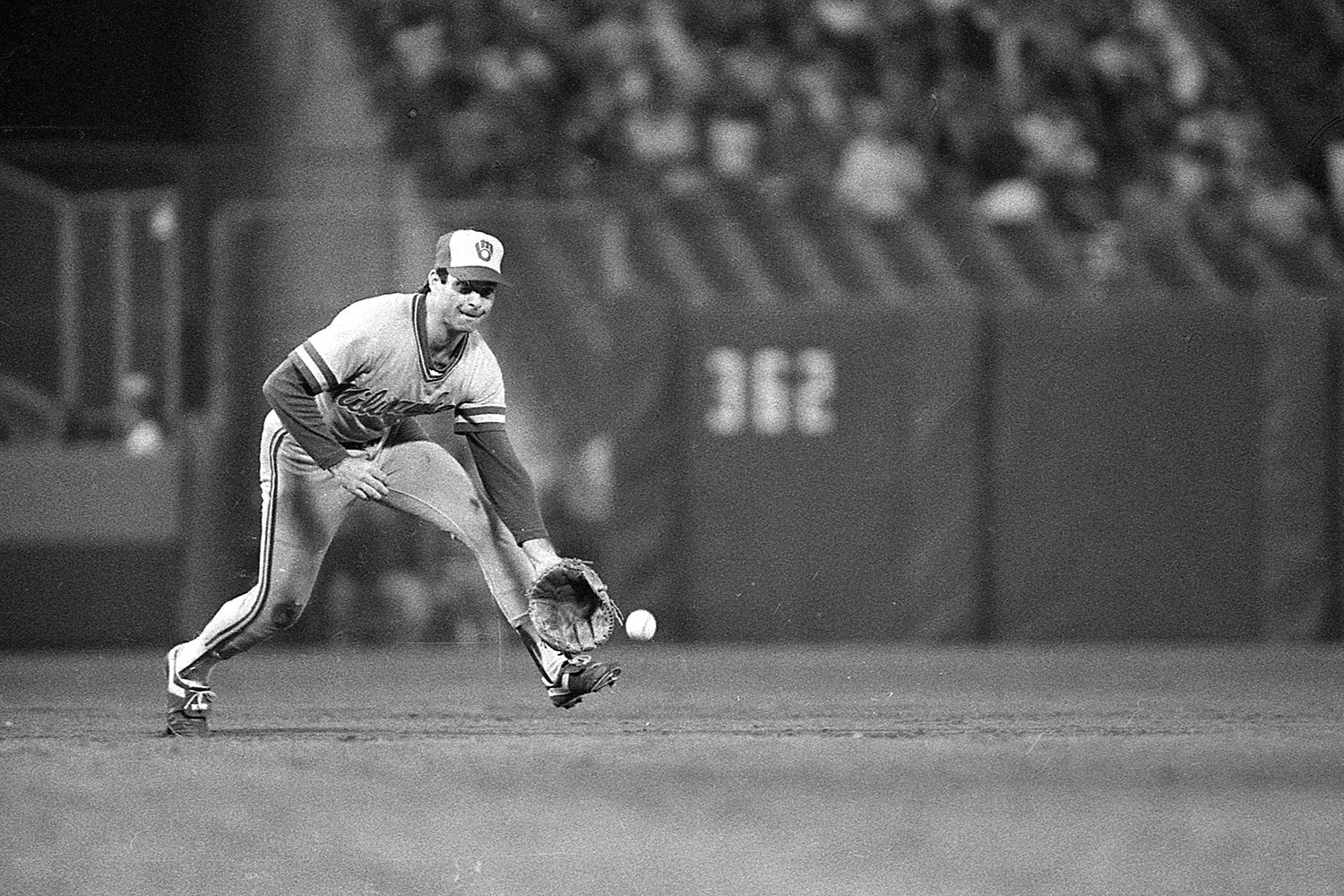
In December, Paul Molitor—who played only 46 games in the outfield and 16 at designated hitter due to ankle surgery—and Brewers management discussed a potential move to third base for the 1982 season (Capital Times, December 4, 1981).
The Baseball Hall of Fame called Hank Aaron in January, along with outfielder Frank Robinson. The former Milwaukee Brave and Brewer was named on 406 of the 415 ballots cast. Wonder why nine people left him off their lists…
In more broadcast news, it was announced in early February that former Brewer Mike Hegan would join Steve Shannon to do broadcasts for WVTV. The Milwaukee station planned on airing 60 games during the regular season (Wisconsin State Journal, February 4, 1982).
Outfielder/designated hitter Larry Hisle, who had played in only 44 games the previous two years, was making his third attempt at a comeback for the Brewers (The Capital Times, February 22, 1982). Unfortunately for Hisle, he would last only nine games during the regular season before going on the DL once again after rotator cuff and other surgeries on his right shoulder. He would announce his retirement after the season.
Remember Bob Rodgers, the prophetic Brewers manager? In early March, he told reporters that “If we don’t win, I’m gone. It’s as simple as that” (The Capital Times, March 4, 1982).
How did he do? Find out in Part 2.
Are you interested in Brewers history? Then check out the Milwaukee Brewers Players Project, a community-driven project to discover and collect great information on every player to wear a Brewers uniform!