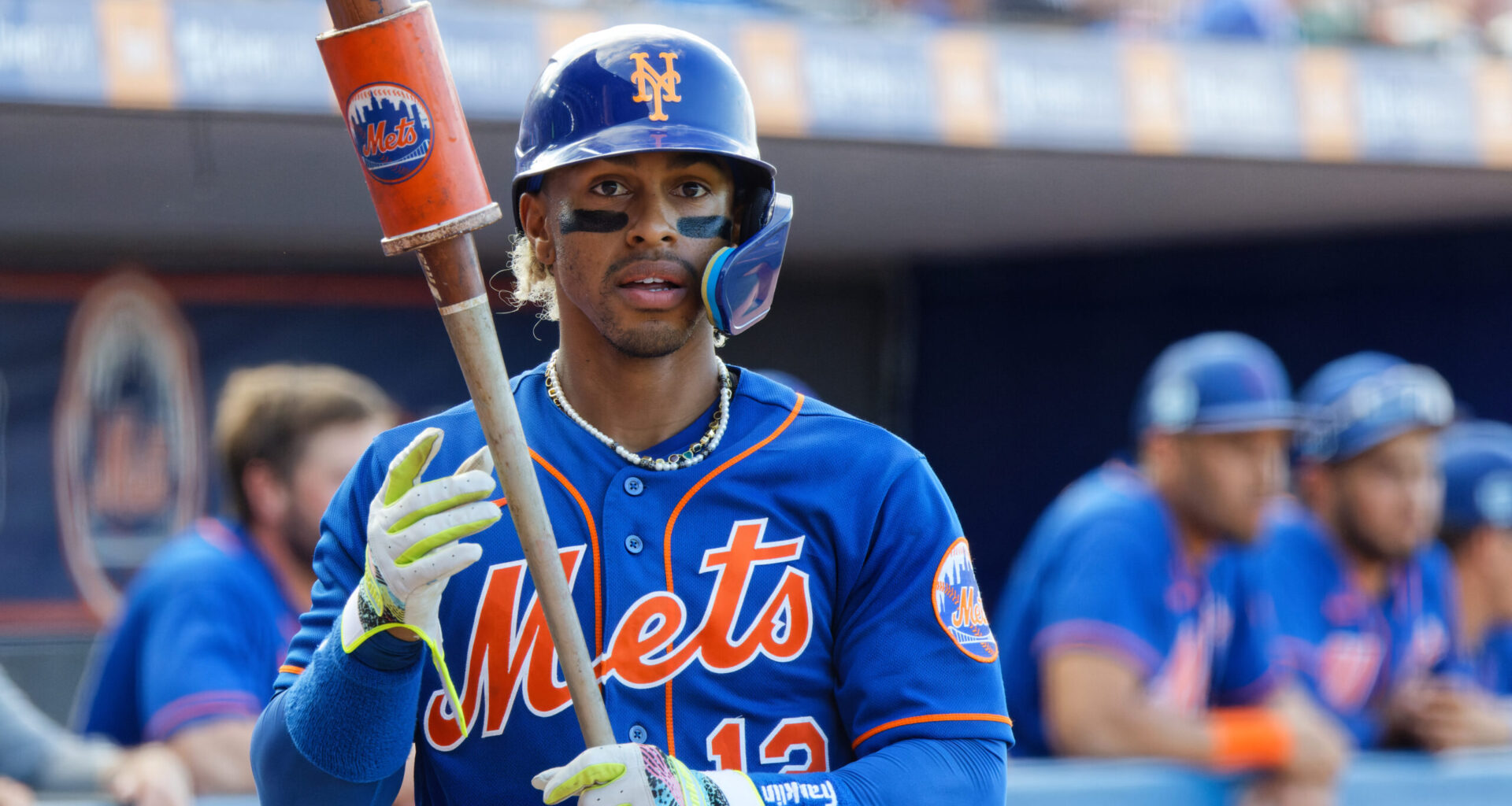
Steve Cohen bought the New York Mets, promising boundless ambition and a payroll to match—a brief, shining era that flooded Citi Field with stars like Francisco Lindor and Max Scherzer.
Yet, in a brutal December, that promise was violently undone: Pete Alonso bolted to Baltimore on a deal worth $155m (around £116–117m), Edwin Díaz signed with the Dodgers for three years and $69m (roughly £52m), and two-time All-Star Jeff McNeil was traded to Oakland.
The billionaire who vowed to outspend everyone is now “nickel-and-diming” his own revolution, dismantling the core he built.
Now, the Mets look like the new Red Sox: a team that speaks of contention but loves saving money instead.
The core they chose to cut loose
The start of the Steve Cohen era was defined by Pete Alonso, who became the face of the team. Over six seasons, Alonso smashed rookie records and hit more than 230 home runs, reigniting a passionate fanbase.
Despite a slight dip in 2024, Alonso delivered a strong 2025 season with 41 homers and a .890 OPS, numbers certainly worthy of retention. However, the Mets failed to make a serious offer, enabling Alonso to sign with a franchise that genuinely valued him. The result: the Orioles gained a middle-order slugger, while the Mets were left with a void in their team identity.
Edwin Díaz’s departure further compounded the pain due to its profound symbolism. His signature trumpet-blaring entrance had become a cultural phenomenon, a sign that Queens was finally believing in the team. Although his dominant 2025 return was perfectly timed, the magic evaporated, and he headed for California when New York was unwilling to match Los Angeles’ offer of just one extra year. This exit wasn’t about money; it was a failure of nerve.
In a move indicative of a new, cost-conscious strategy—a logic once reserved for Oakland, not Flushing. Cohen’s Mets traded McNeil, the popular two-time All-Star and 2022 batting champion, to the A’s.
McNeil, a beloved product of the system and a quintessential “grinder,” was sent away for Yordan Rodríguez, a 21-year-old prospect whose only significant asset is potential. The Mets even covered half of McNeil’s salary, embracing the very kind of cost-cutting philosophy they previously eschewed.
Three faces, three eras of optimism, all gone before Christmas. Just like that, Cohen’s “big-spending New York Mets” became a parody of their own marketing campaign.
The Red Sox blueprint, imported
You may know the Red Sox as Liverpool’s sister team under John Henry’s Fenway Sports Group , the multi‑club empire that turned efficiency into a religion. Boston used to bully MLB with star power.
Then FSG discovered sustainability. They traded an MVP in Mookie Betts. Let Xander Bogaerts go and trade Rafael Devers west.
It’s a familiar story to Liverpool fans too. The same ownership group cut staff pay during a title defence, preached “smart spending” while rivals splurged, and turned emotional clubs into balance‑sheet exercises. It works…but at the cost of enjoyment and fans.
The Mets are now composing their own variation.
You can pick who you think represents Betts, Bogaerts and Devers.
It’s the Red Sox script, line for line, bar for bar, flow for flow! Only the setting this time around is in Queens instead of Boston.
Why it feels like betrayal in Queens
For Boston, it was business. For Queens, it’s betrayal.
Cohen’s arrival felt like deliverance after decades of Wilpon‑era thrift. Here was a man who called losing “unacceptable,” who promised championships and meant it.
He bought affiliates, splurged on stars, and acted like New York deserved an owner with ambition. Finally, Mets fans could dream without irony.
Now, those same fans are watching him retreat into caution. He’s no longer the man who bragged about spending, just another owner hiding behind sustainability.
All of the core’s departure can be seen as the emotional ripping of a band-aid, but when you consider what they achieved? What could have been? Nothing seems to survive in Cohen’s Queens.
Queens thrive on defiance. Mets fans have always seen themselves as underdogs with attitude.
It’s hard to be defiant when your owner is frightened of his own payroll. Still, it’s harder when he starts to sound like John Henry in a different accent.
Cohen is worth more than $19 billion (£14 bn), and while the roster gets stripped for efficiency, his hedge fund reportedly cleared record profits last year and paid him over a billion in personal earnings.
Cohen wanted to make the Mets “the Dodgers of the East.” Mission accomplished — except…the Dodgers signed the players he wouldn’t.
The same movie, dubbed in orange and blue
We’ve heard the justifications; players decline—but great teams win by daring and committing, not predicting decline. The Yankees kept Aaron Judge, and the Braves locked up their core, but the Mets let everyone go, convinced it doesn’t matter.
Until a new star emerges, this looks like fear wearing a calculator, with Cohen forgetting the myth of baseball for the math.
The cruellest irony is that Mets fans demanded faith, believing Cohen’s money would protect them from heartbreak; instead, they watched the money stay in the vault.
Citi Field now feels like Fenway Park—a cathedral downsized for efficiency.
Until they fix it
The Mets can spin this as smart business all they want.
The truth is simpler.
For all his billions, Cohen has started behaving like a man terrified of his own ambition. And no owner, no matter how rich, can spreadsheet his way to belief.
Fans don’t fall in love with glitz; they fall in love with loyalty.
Under Steve Cohen, the Mets have ironically mirrored the modern Red Sox: a big-market team prioritising business efficiency over team loyalty and success.
Despite Cohen’s promise to end the team’s mediocrity, his tenure, intended as a retaliatory statement, has become an apologetically rich, yet ultimately irrelevant, masterclass in restraint (or, more cynically, fear). This approach—exemplified by the failure to retain stars like Alonso—has made the Mets the new Red Sox: an empire that has lost its soul, focusing on efficiency at the expense of its fans’ trust and betraying them.