
For many of us, growing up with baseball meant spending hours on the floor of our bedroom, poring over baseball cards. You might have been one of those who adored the artistry (and especially the creative adventures) of the colorful cardboard collectibles, particularly as various types of special cards became more prevalent in the 1990s. You might have been prone to dog-earing a few copies of Beckett each month, updating the value of your collection by scanning page after page of newsprint-type listings and building skyscrapers in your mind with all your future wealth. No matter what, though, if you loved baseball cards, you spent a lot of time with the numbers.
Specifically, of course, you spent a lot of time with outdated numbers. Even by the time I was 11 in 2000, there were publications like Baseball Prospectus and well-known luminaries like Bill James telling everyone who would listen that OBP mattered more than batting average; that RBIs were often a function of opportunity, rather than clutchness or fortitude; and most of all, that pitcher wins are silly. Funnily enough, you’ll still find some people who want to make the case for pitcher wins. It’s cute. It’s like meeting someone obsessed with the question of Zeppelin or Floyd, in 2005.
The peak of debate over pitcher wins came a quarter-century ago, now, and it’s been a dead issue for at least a decade. No one anyone takes seriously cares what’s listed under ‘W-L’ on a pitcher’s baseball card, anymore, because we can all rattle off five or six reasons why those numbers are deceiving, confusing, or just plain useless.
It was conceived of at a time when one pitcher usually worked the whole game. Now, it’s relatively rare that a pitcher works even two-thirds of one.
Given the above, the arbitrary requirement that a starter work at least five innings to earn a win creates an unnecessary distortion in records.
For any game in which the lead changes hands late, the person credited with the win is often someone who pitched poorly and left the game while trailing, only to have their offensive teammates seize the lead before someone else took the mound.
A starter who pitches a gem but gets outdueled often takes a loss, which is downright foolish.
Wins and losses being credited exclusively to pitchers paints the game as much more pitching-dependent than it is. Tough-luck losses and cheap wins can pile up on the records of hurlers, even when (in either direction) it was really a hitter or fielder who decided several games in a sample.
Yes, that column has become obsolete for the modern fan. But it’s a nice idea, right? One perfectly valid frustration for many fans (especially older ones) is that wins above replacement (WAR), win probability added (WPA) and other 21st-century stats assign value to players by treating all their plate appearances as parts of a continuous seasonal record. This overlooks the fact that each baseball game is a discrete event. While it’s very hard to say whether a hitter who delivers 0.1 WPA (i.e., adds 10 percentage points to the team’s chances of winning) in six different games is more or less valuable than one who delivers 0.6 WPA in one game and 0 in five others, we can all attest that those things feel very different, and have very different implications for what else needs to happen to get that player’s team four wins in the six contests.
The won-lost record has value, conceptually. It was just conceived well over a century ago, and doesn’t hold up to scrutiny now, both because of how the game has changed and because we understand it so much better and differently now than we did then. So, let’s test-drive a still-flawed but more interesting spin on the win (and the loss): WPA W-L.
This is radically simple, and not a product of any especially opaque process. I went through all 162 Twins games from 2025, and did the following:
If the Twins won: Credited the player with the highest WPA in the game with a win;
If the Twins lost: Assigned the player with the lowest WPA in the game a loss;
In all cases: Noted the WPA value for the player who earned the decision that day.
This takes advantage of the fact that we now have easily searchable WPA values for every game, virtually in real time. There are a few variations between sources’ specific WPA values for given games, so for the record, I used Baseball Reference to do this research and leaned on their WPA formula. For those unfamiliar with the idea, WPA simply uses a model informed by historical data to estimate the likelihood of winning for each team entering each plate appearance of a game, and gives credit or blame to the batter and pitcher involved in each encounter based on how those probabilities change from one at-bat to the next. It’s far from a perfect system, because it doesn’t capture fielding value and only very minimally captures baserunning, but it’s something.
A pitcher who throws eight innings of one-run ball is extremely unlikely to take a ‘loss’ under this model, not only because it more directly ties wins and losses to performance by the individual, but because hitters can gets wins and losses in this system, too. Pitchers are still much more likely to do so—hitters took just 52 of the 162 decisions for the 2025 Twins. Now, though, we know the days on which the hitters made the major difference.
This still gives us strange quirks. For instance, Brooks Lee had an incredible (although, to fans who were locked in on this team last year, perhaps not an especially surprising) 10 decisions on his own. He went 7-3, showing a remarkable tendency not only to come up with the big hit now and then, but to become the game’s main character in either direction. It’s very rare for hitters to take losses. It requires a guy not only to go 0-for-4 or so, but to fail in at least one pivotal situation. In the games where hitters got a decision, the 2025 Twins were 37-15, but Lee still managed to lose three games. That he also won seven proves that he disproportionately came to bat in big situations, putting the game on his shoulders.
Seven Twins batters had at least three decisions on the season, with most of them being the everyday players you’d expect. Byron Buxton (who, again, gets no credit for his glove and only partial credit for his speed in this framework) went 4-1. Trevor Larnach (not getting penalized for being a DH in this way of studying things, as he is when evaluated by WAR) went 4-2, delivering a bit less game-changing thump than one might have hoped for from a player whose whole game is his bat. Kody Clemens went 5-2, which might surprise his haters.
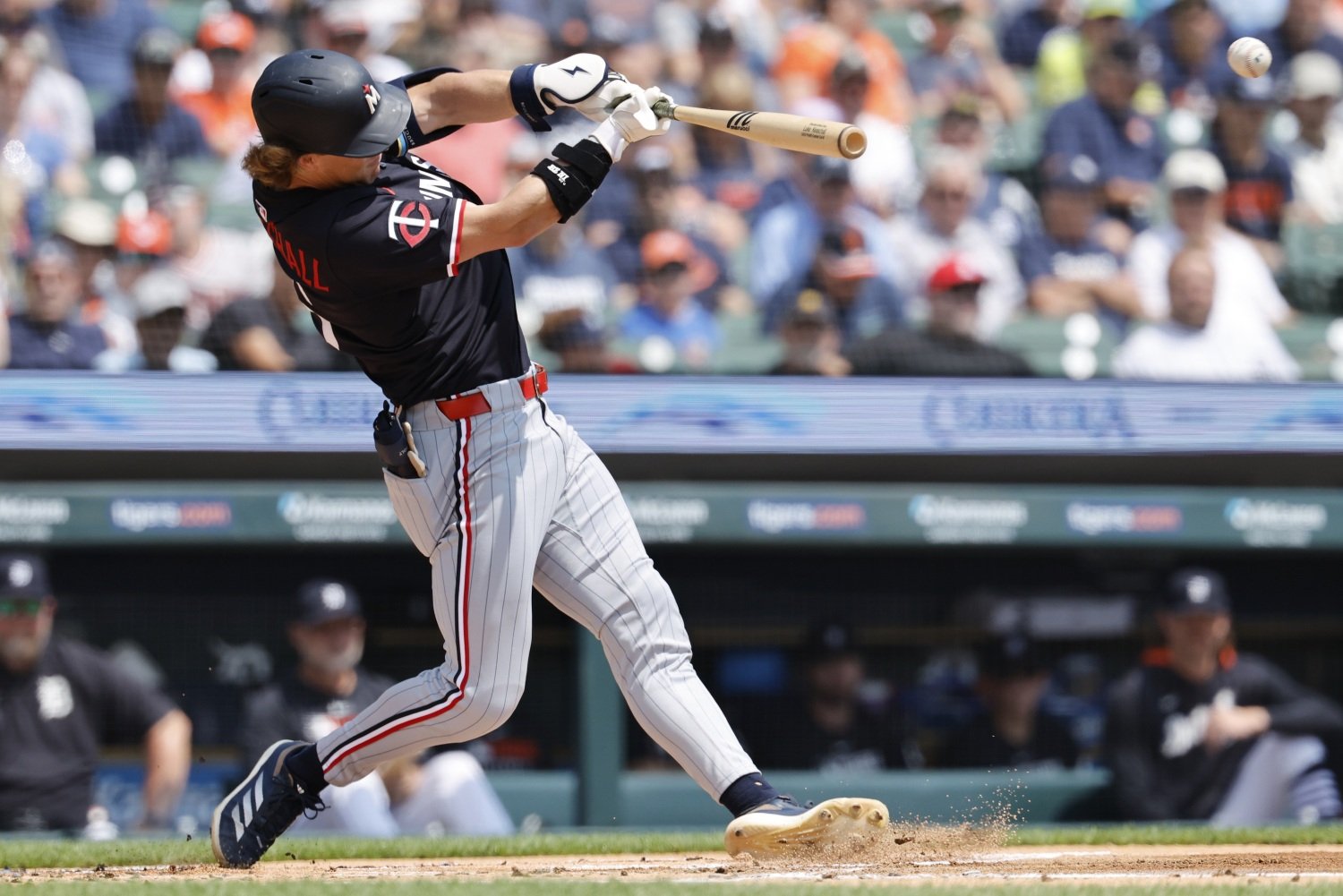
The funniest in this set, though, is Luke Keaschall, who went 3-0 despite losing so much of the season to injury. That’s because, in a remarkable streak in mid-August, he won three straight games for the Twins. Keaschall had a WPA of .168 on Aug. 5, a .243 on Aug. 6, and a .143 on Aug. 8. None of those is especially high for a player in a win—the Twins’ median WPA for players collecting a win was .269—but he led the way on each of those three days, in his first week back from a broken wrist.
If you’re particularly sharp-eyed, you’ll notice that those three games don’t even include his walkoff home run against the Royals, on Aug. 10. It’s not his fault; Keaschall was great that day. However, the win went to Michael Tonkin, who held the visitors scoreless in extra innings twice in a row to set up Keaschall’s heroics. Tonkin was worth .625 WPA that day; keeping opponents off the board under the automatic-runner rule in startlingly valuable.
Speaking of pitchers, it’s funny how much this framework emphasizes the fact that their job is simply not to lose. Pitchers can’t score, and while hanging zeroes is valuable, team wins often end up being credited to the hitters who produced the runs that decided the outcome. Over half of the Twins’ wins went to hitters last year. This framework is unfair to players in a whole different way than standard wins and losses, and most of that unfairness hits relievers. Griffin Jax (0-4) was disappointing in 2025 and certainly wasn’t clutch, but Louis Varland (0-4) felt like a more reliable option and gets no better credit than Jax did under this system. Jhoan Duran (1-4) had to pay the price for the fact that he was often pitching at times when a loss was available to him, but a win wasn’t. Then again, regular wins and losses inflict some of the same caprices on relievers.
Joe Ryan was the decisive influence on the game in about half of his appearances, going 9-7 in 31 games (30 starts). Ditto for Bailey Ober, who went 5-9 in his 27 starts, and Zebby Matthews, who went 3-5 in 16 outings. However, Pablo López (3-2 in 14 starts) and Simeon Woods Richardson (5-3 in 23 games, 22 of them starts) were much less likely to get a decision in a given game. That’s not a bad thing; it’s a testament to their ability to keep the team in it even when they didn’t have their best stuff. That Woods Richardson only took the ‘loss’ three times is one of the more interesting things I gleaned from this. He really was a competitor.
By contrast, you can really see the way the team’s evaporated depth killed them late in the season. Beginning with a disastrous Travis Adams loss on Jul. 27, the Twins lost 38 of their final 58 games, and their median WPA by the player who took the loss went from -.277 for their first 54 losses to -.329 the rest of the way. Adams, Mick Abel, Taj Bradley, Noah Davis, Thomas Hatch and Pierson Ohl went a combined 1-12, and several times, they had WPAs of -.400 or worse in those losses, effectively denying the rest of the team a chance to make up for their failures. Players pressed into bigger roles by others’ departures couldn’t handle it; Justin Topa was 0-6 on the season. Austin Martin and Alan Roden combined to go 0-3.
This isn’t a robust new stat; it’s just a toy. It’s fun, though, for the ways it gives us different insights into the unfolding of games than old-fashioned pitcher wins and losses deliver. We’ll track this stat in 2026, too, and see where it leads us.
For the full list of WPA W-L and the WPAs of the players who got the decision each day, click here.