As regional sports networks crumble, MLB teams are tightening payrolls. The Tigers–Skubal standoff shows how deep the financial uncertainty runs.
The Detroit Tigers’ current arbitration battle with Tarik Skubal is telling in a number of ways.
Advertisement
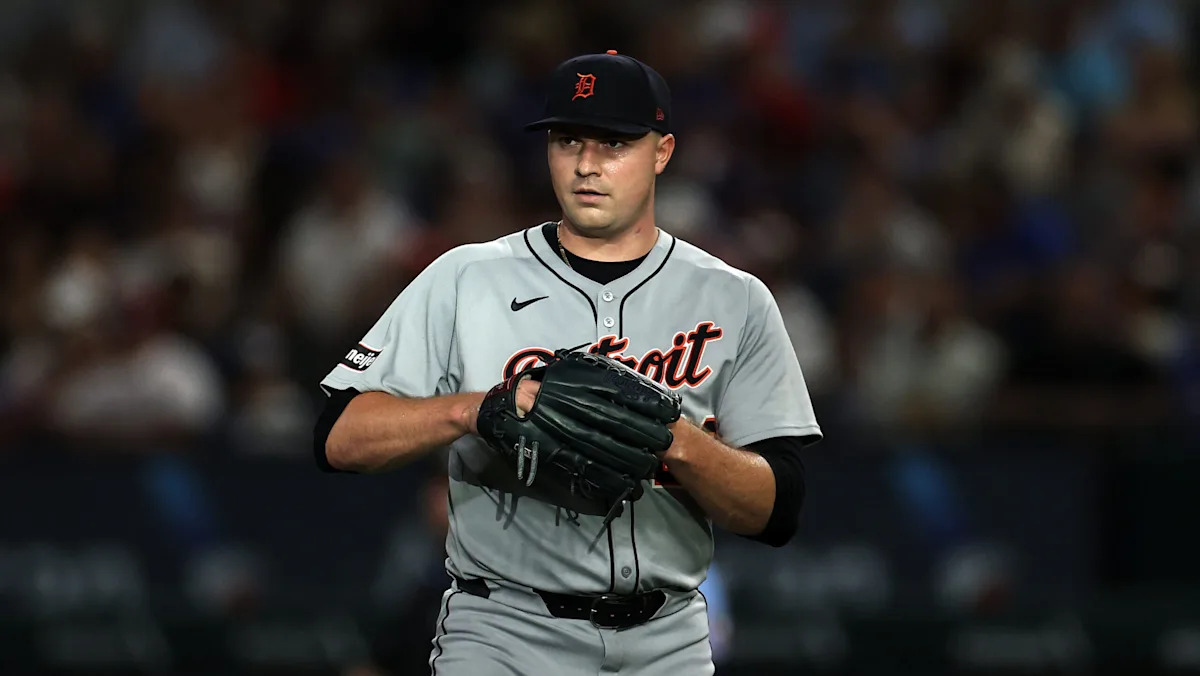
The 29-year-old ace has won the last two American League Cy Young Awards, joining Jacob DeGrom, Clayton Kershaw, Roger Clemens, Denny McLain, and Sandy Koufax as the only pitchers to ever go back-to-back. As the best pitcher in the world, Skubal asked for $32 million from Detroit in his final year before free agency. The Tigers countered with $19 million, a significant raise from the $10 million he made last season, but disrespectful to someone on a historic run like the lefty’s currently on.
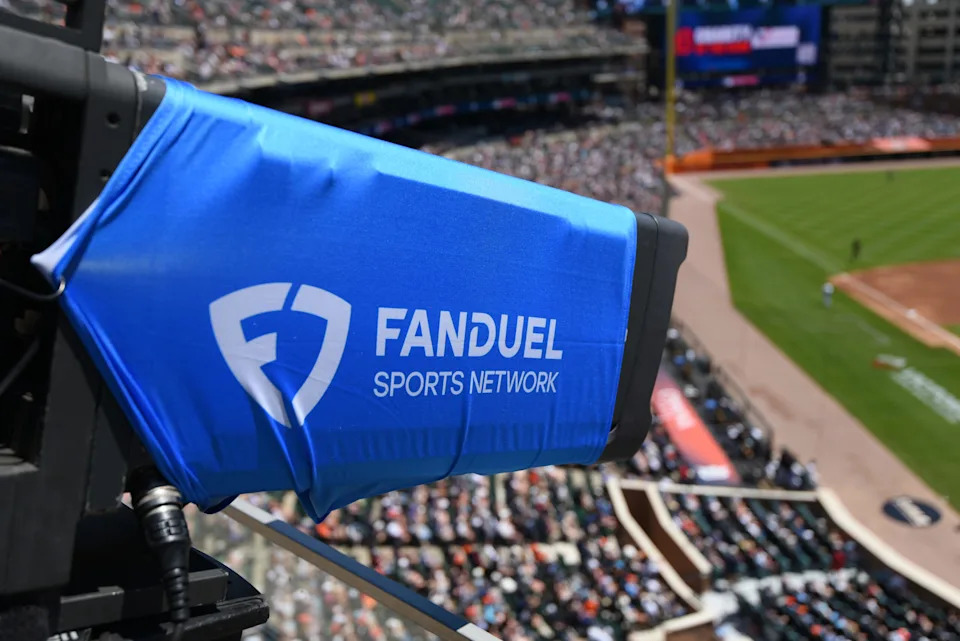
Despite making the playoffs in consecutive years for the first time in more than a decade, the Tigers are among a group of nearly one-third of all MLB teams facing a significant revenue crisis that’s completely outside their control. After Main Street Sports, which operates the FanDuel Sports Network regional sports networks that hold the rights to nearly half the NBA, missed out on rights payments to the basketball teams last week, all nine MLB teams that air their games on FDSN terminated their contracts with Main Street Sports. That leaves the Tigers, Atlanta Braves, Cincinnati Reds, Kansas City Royals, Los Angeles Angels, Miami Marlins, Milwaukee Brewers, St. Louis Cardinals, and Tampa Bay Rays in serious limbo, just more than a month before pitchers and catchers report and about six weeks until Spring Training games begin.
Mark Cunningham / MLB Photos via Getty Images
Without guaranteed RSN millions for their TV deals, impacted teams are seeing a serious dent in their bottom line. An RSN executive told Sports Business Journal last year that media rights dollars account for roughly a quarter of annual club revenue. That may not just be a major reason why the Tigers aren’t willing to shell out for Skubal, who might end up traded this offseason or in July, but why so few of these nine teams have spent significantly this offseason.
Advertisement
Let’s break down the Main Street Nine’s current offseason expenditures:
Atlanta Braves: Owned by Liberty Media, the Braves are MLB’s lone publicly traded company, which means we can see their finances. Atlanta Braves Holdings and the village ecosystem it’s built around Truist Park make this team the best equipped in the group to withstand media rights uncertainty. While baseball revenue is only up 4% year over year, mixed-use revenue shot up 56% to more than $27 million. It’s allowed the Braves to re-sign closer Raisel Iglesias for one year and $16 million, ink All-Star relief pitcher Robert Suárez for three years and $45 million, sign shortstop Ha-seong Kim for one year and $20 million, and outfielder Mike Yastrzemski for two years, $20 million. They’ll be the only team here in this group to spend that much money.
Cincinnati Reds: While Cincy reportedly offered a significant contract to All-Star slugger and area native Kyle Schwarber, the only significant investment the team made so far this offseason was re-signing closer Emilio Pagán to a two-year, $20 million contract. Otherwise, the Reds declined the $12 million option on outfielder Austin Hays and signed relievers Pierce Johnson and Caleb Ferguson for a combined one year and $11 million. Otherwise, the team’s made no other notable expenditures on outside players. Is the RSN uncertainty to blame?
Detroit Tigers: Besides the Skubal issue mentioned above, Detroit signed relievers Kenley Jansen (one year, $11 million) and Kyle Finnegan (two years, $19 million) as well as starter Drew Anderson (one year, $7 million), who spent the last two seasons in South Korea. But $37 million in outside spending for a playoff team is chump change, especially when they shed the expiring contracts of Alex Cobb ($15 million), Rafael Montero ($11.5 million), and Tommy Kahnle ($7.5 million). Gleyber Torres accepting the $22 million qualifying offer didn’t help.
Kansas City Royals: The Royals have yet to sign a Major League player from a different team so far this offseason. They acquired reliever Matt Strahm and his $7.5 million salary from Philadelphia and outfielder Isaac Collins and reliever Nick Mears from Milwaukee, which added $1.5 million in salary, and added an extra year to legendary catcher Salvador Perez’s contract, but Kansas City has done little to date to improve its on-field product while reducing payroll.
Los Angeles Angels: Instead of paying Taylor Ward more than $12 million in arbitration, the Angels shipped him to Baltimore for pitcher Greyson Rodriguez. They then used those savings to sign relievers Kirby Yates, Drew Pomeranz, and Jordan Romano for a combined $11 million instead of bringing back Jansen for a similar amount. LA still has work to do on its roster, but right now it’s slashed payroll.
Miami Marlins: Miami broke the bank with a $13 million deal for closer Pete Fairbanks, but he’s the only player it signed to a big league contract aside from Christopher Morel’s $2 million contract. The Marlins haven’t shed a lot of payroll, so I guess that counts as progress for the notoriously stingy club.
Milwaukee Brewers: Perhaps Brandon Woodruff accepting the $22 million qualifying offer hampered the Brewers’ ability to spend after coming one win short of making the World Series. Akil Baddoo’s $1.25 million contract is the only big league deal Milwaukee’s made, with Rhys Hoskins’ $18 million salary notably coming off the books.
St. Louis Cardinals: St. Louis traded third baseman Nolan Arenado to Arizona on Tuesday, reportedly agreeing to pay $31 million of the $42 million remaining on his contract. Willson Contreras and his $18 million salary and Sonny Gray and his $11 million salary were traded to Boston, with pitchers Dustin May and Ryne Stanek signed for a combined $15.5 million next season. The Cards will continue to prioritize shedding payroll this offseason.
Tampa Bay Rays: Tampa Bay shuffled the deck a good amount, trading big leaguers Brandon Lowe, Shane Baz, and Jake Mangum while signing pitcher Steven Matz, two-years, $15 million, and outfielder Cedric Mullins to a one-year, $7 million pact. Fairbanks and Morel were also not retained, meaning it’s business as usual for the miserly franchise.
With smaller-market teams already relatively reluctant to take on payroll as a general rule and a potential looming lockout possibly making these clubs even more wary, having roughly a quarter of team revenue in doubt has made these nine teams even more reluctant to spend. It makes baseball a less competitive product as a whole and is generally bad for business.
And unless things drastically change over the next six weeks, it sure seems like the RSN collapse has made a noticeable impact on the way teams are approaching this 2025-26 offseason.
Read More: