
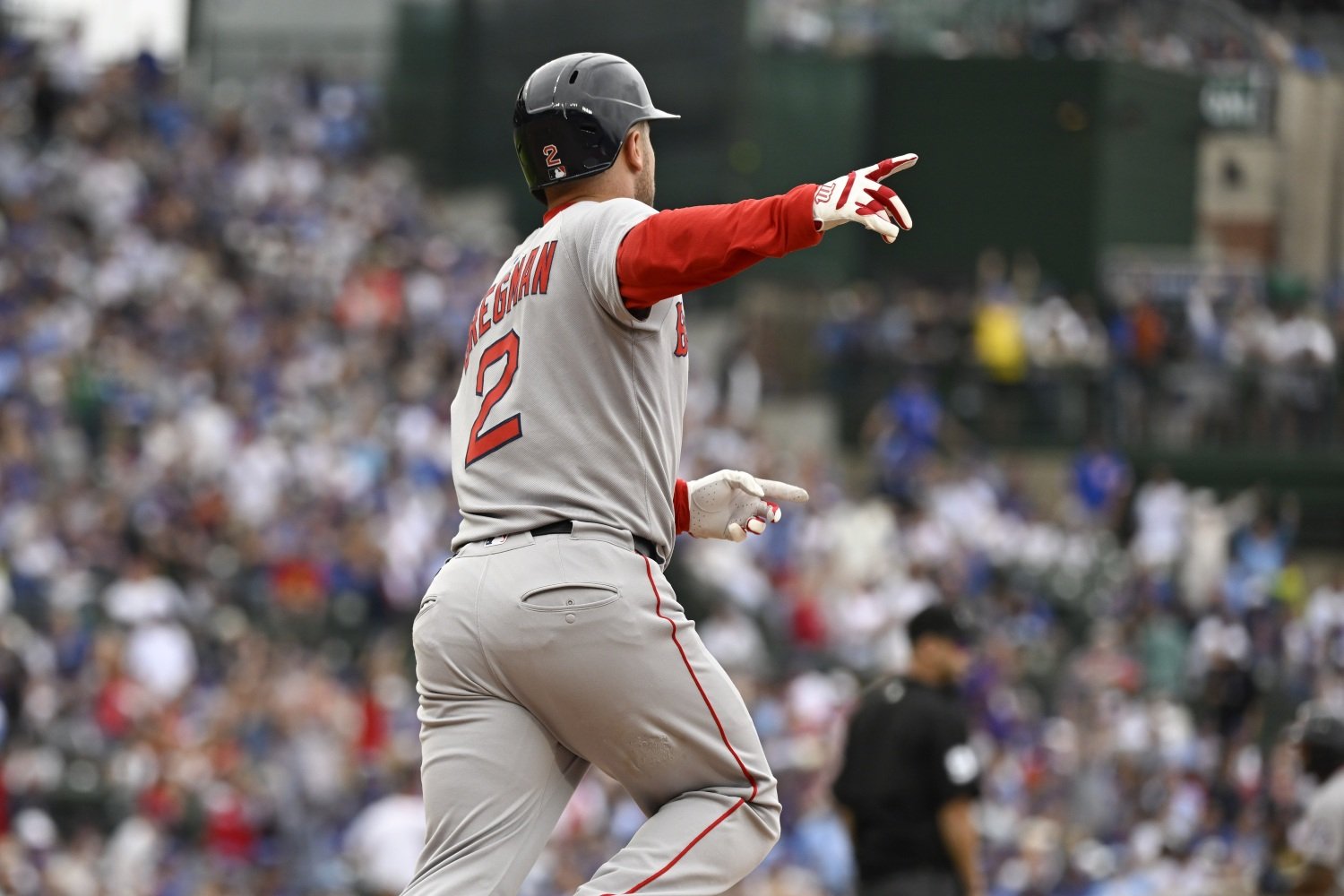
In July 2024, the Chicago Cubs acquired third baseman Isaac Paredes from the Tampa Bay Rays in return for an increasingly position-less Christopher Morel. The thinking was that Paredes would provide them with a controllable option at third base. Instead, Paredes didn’t even make it to 2025 as part of the organization. He was part of the Kyle Tucker deal with the Houston Astros, following a .223/.325/.307 stint with the Cubs in 2024.
Houston, of course, offered a much more appealing park for a right-handed hitter such as Paredes. While Paredes struggled overall in his brief Cubs tenure, games at Wrigley Field proved to be a particular problem. He hit an execrable .105/.177/.140 when staring down the ivy on the outfield wall, across 96 plate appearances. In his first year with the Astros in 2025, he posted a ..249/.354/.481 line at home.
That’s hardly surprising, of course. The Crawford Boxes in Houston have long been considered one of the more appealing stadium features for right-handed hitters with any semblance of power. Statcast’s Park Factors have it as the 12th-most conducive venue for righties to homer. This, naturally, leads to some questions about how the newly signed Alex Bregman will handle the conditions of Wrigley Field over the course of his five-year deal.
Bregman is, in a way, Paredes turned inside-out: a player that has already spent years hitting in Houston, followed by a season in Boston. Each venue is particularly favorable for righty pull hitters. While the Green Monster makes Fenway a tough park for home runs (22nd), it ranks ninth for doubles and seventh for right-handed hitters overall. So how should we view the impending transition for a hitter without elite bat speed or exit velocities and who depends on hitting for power to the pull field, considering that we’re not even two years removed from watching Paredes struggle so mightily?
As it turns out, any concern wrought by that comparison might be a bit overblown. Let’s talk about the shape of each stadium first.
Here’s Houston’s Daikin Park, where Paredes eventually landed and where Bregman spent the majority of his career prior to last year at Fenway:
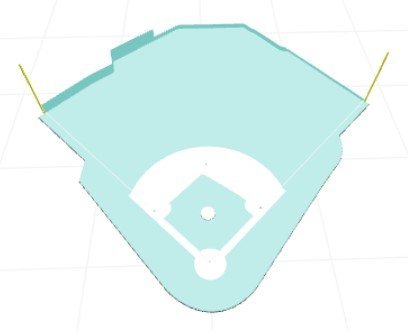
Note the presence of the Crawford boxes and how the wall plays for right-handed hitters with extreme pull tendencies. And here’s Wrigley:
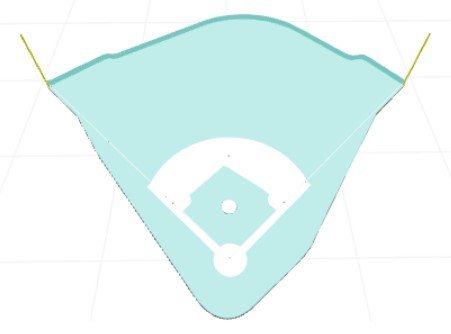
The Cubs’ home park actually juts out in the opposite direction. Toss in the wind on a particular day, and it isn’t difficult to understand why this park has represented such a challenge for certain righties. Based on the two players’ subtle differences in tendencies, though, we should expect very different outcomes from them.
This is Paredes’s doubles and homers spray chart overlaid onto Wrigley’s dimensions:
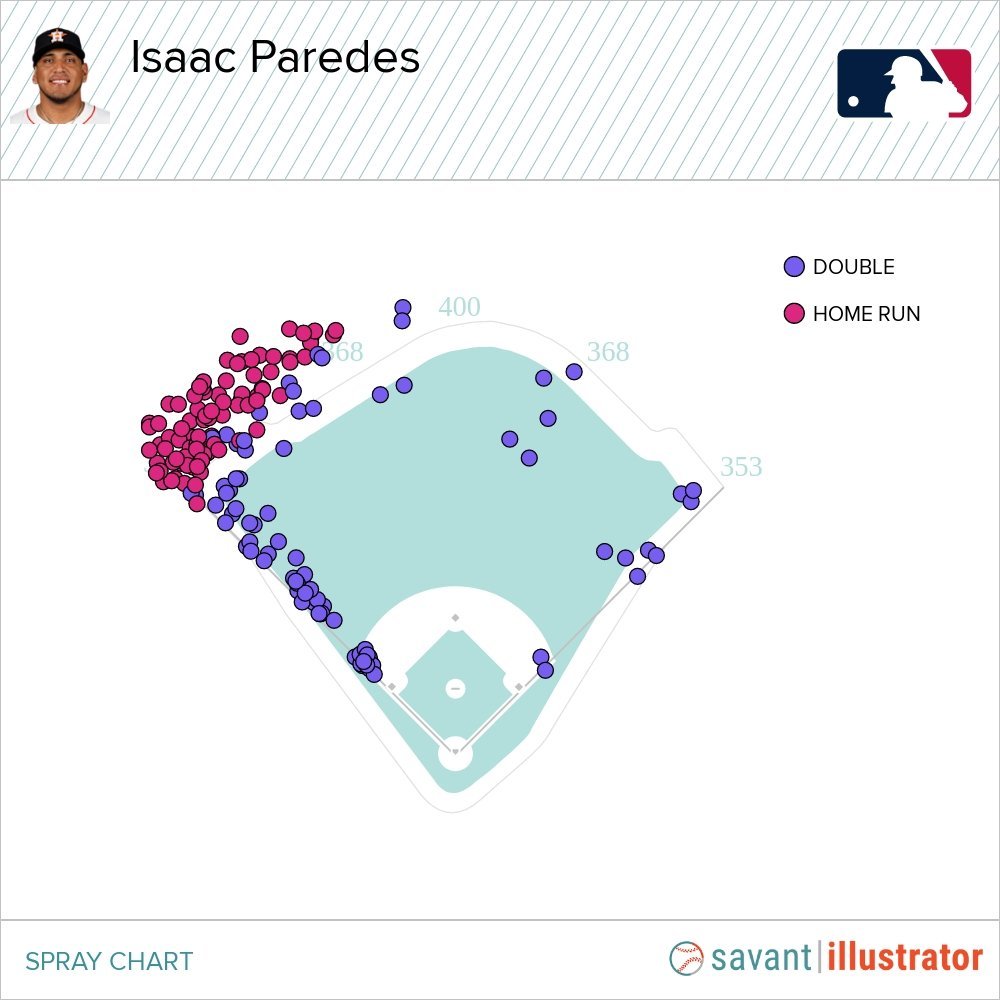
That’s an extreme pull tendency. Contrast that with Bregman:
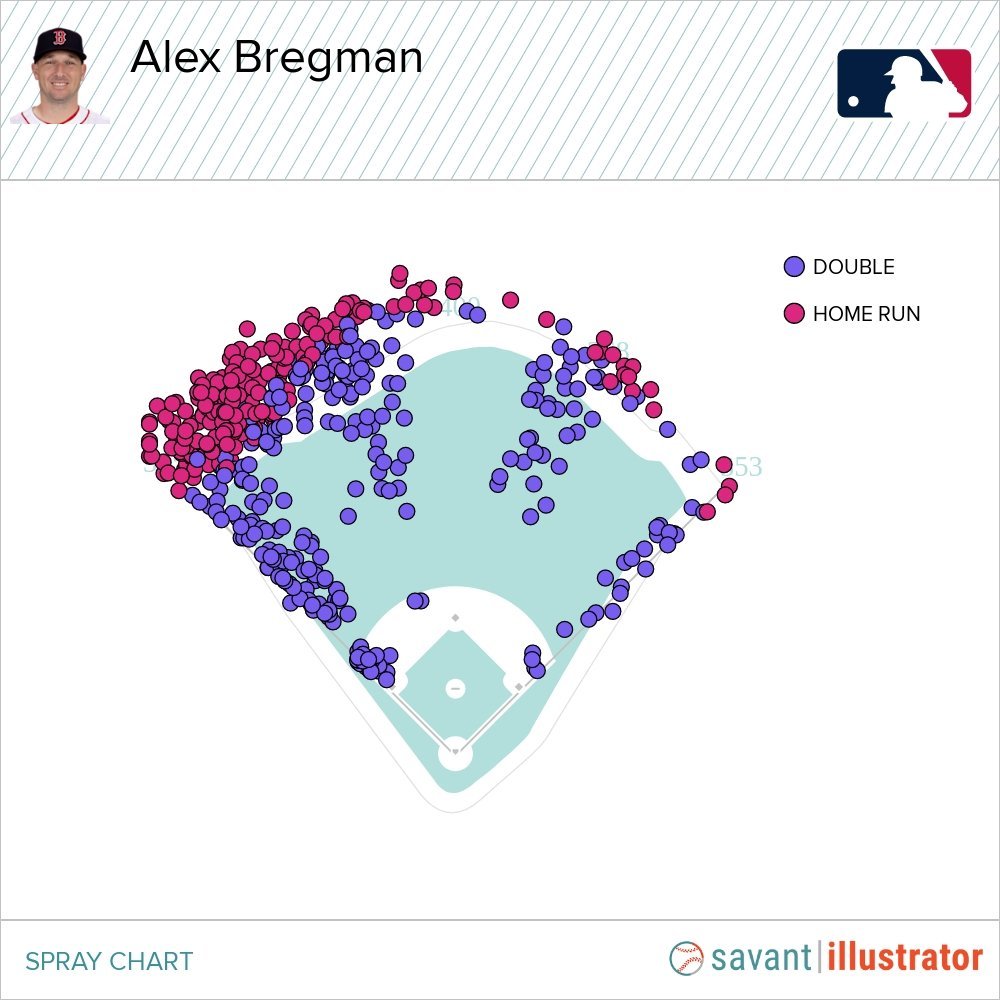
Bregman’s ability to find the gap is a big separator between him and his predecessors at the position. When we examine hitters’ pull rates, we sometimes fall into the trap of imagining that all pull hitters are created equal; they aren’t. Paredes lives down the left-field line. Bregman uses left-center just as often. Because the default is to divide the field into three clusters, he and Paredes both get classified as pull hitters, but if we divided it into five bins, they would be in two different categories.
The other big means of differentiation here is in the quality of contact. Paredes’s 27.1% Hard-Hit rate in 2024 left him little margin for error if the pulled fly balls weren’t scraping over the walls. While his thump increased in 2025, he’s still at just 30.6% for his career. Bregman, however, is coming off a season in which he sat at a Hard-Hit rate of 44.4% (admittedly, a career high) and is at 38.5% for his career. He produces more hard contact, and that hard contact goes more often to the part of the park (left-center) where Wrigley is very hitter-friendly.
That doesn’t mean we should dismiss the notion of the park’s impact entirely. There are going to be some swings where Bregman doesn’t get the desired outcome because of Wrigley’s general deflation of offense, a three-year trend we shouldn’t assume will abate in 2026. However, there’s much less risk that Bregman’s production is diminished by his new home park than there was with Paredes, or even with recent major investments in lefty sluggers like Tucker and Cody Bellinger.