
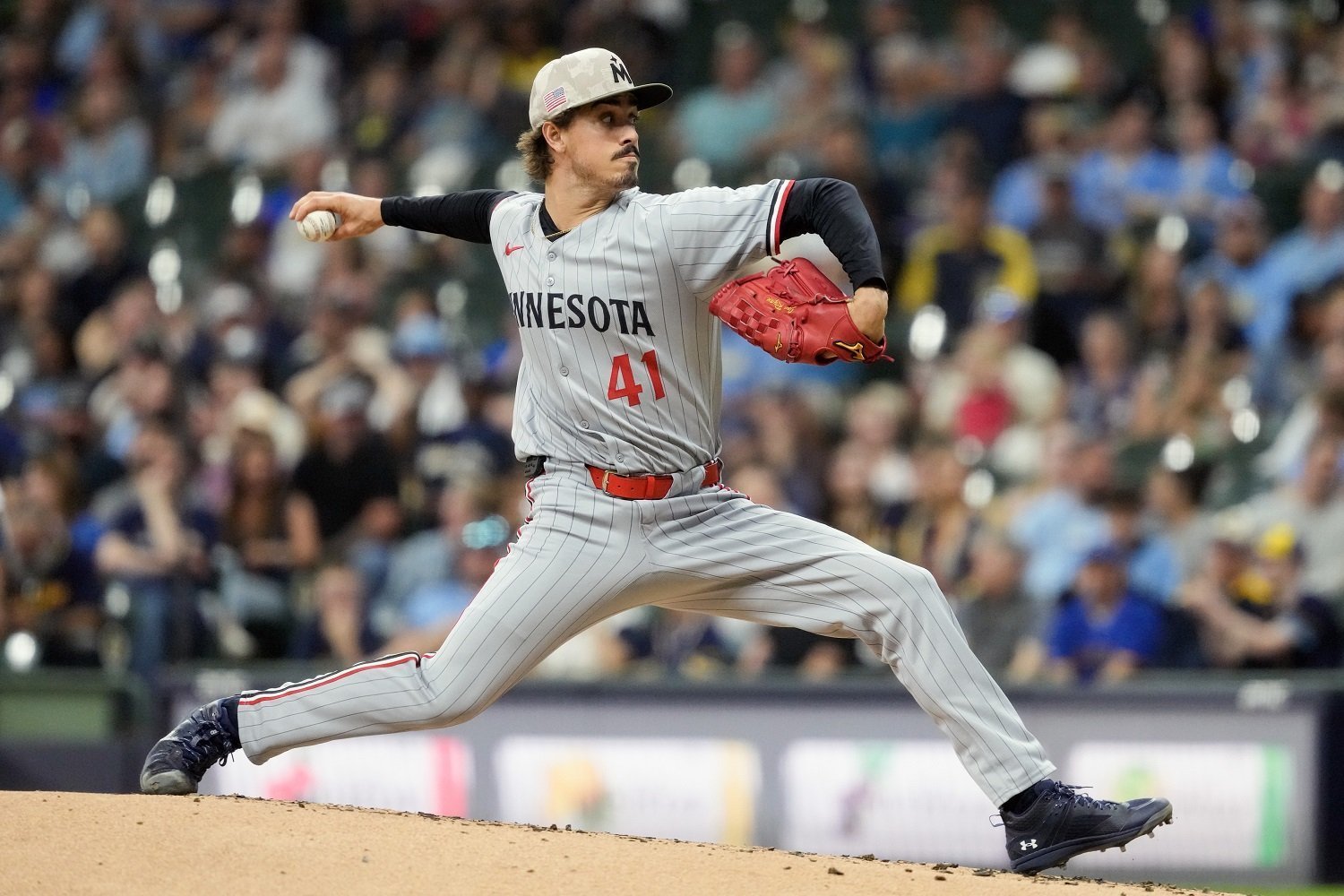
For the second time in three years, the Twins appear poised to take a player all the way through the arbitration process. Minnesota and Joe Ryan were unable to bridge a relatively small gap before the exchange of figures last Thursday, with the club submitting a $5.85 million salary and Ryan countering at $6.35 million. If neither side changes course, an arbitration panel will choose one of those two numbers, and that decision will determine Ryan’s pay for the 2026 season.
While teams and players are technically allowed to keep negotiating after figures are exchanged, the Twins have historically treated that deadline as a firm stopping point for one-year deals. That appears to be the case again here, meaning the next step is a hearing—unless a multiyear agreement unexpectedly materializes. Club policy does allow for longer-term contracts after the deadline, though there has been no indication that discussions are trending in that direction.
From a performance standpoint, Ryan’s case is straightforward. The 29-year-old just completed the best season of his major-league career, finishing with a 3.42 ERA while striking out 194 hitters across 171 innings. He made his first All-Star team and made 30 starts for the first time, firmly establishing himself as a top-of-the-rotation arm. That production came amid frequent trade speculation at last year’s trade deadline, which continued into the winter, though the front office has repeatedly said it does not intend to move core players right now.
This is only Ryan’s second trip through arbitration eligibility. A year ago, he and the Twins avoided a hearing by agreeing to a one-year, $3-million contract, his first significant payday after never earning more than $780,000 in a season. Even at the higher of the two arbitration figures this time around, Ryan would land right around $6 million for 2026, a sizable raise but a modest payday for a pitcher of his caliber.
Unless he is traded or signs an extension, Ryan will be arbitration-eligible again in 2027. He’s not scheduled to reach free agency until after that season. In the short term, that gives the Twins control. In the longer view, it emphasizes the importance of how this relationship is managed now.
It is impossible to ignore the optics. The difference between the two sides is $500,000, a relatively small sum in today’s game. Ryan is widely regarded as one of the better starters in the league, and metrics back that up. FanGraphs estimates that he has generated more than $90 million in on-field value in his career, while earning just over $7 million. That gap speaks to how arbitration and team control suppress salaries, but when a team chooses to fight over such a narrow margin, it invites criticism, too.
The Twins do have precedent on which to stand. They have gone to hearings in the past (most notably with Kyle Gibson late in his tenure), in part to give the front office experience with the process. Minnesota’s last hearing was with Nick Gordon in 2024. Gordon filed for $1.25 million, and the Twins offered $900,000. Minnesota won, and Gordon was denied entry into the seven-figure salary club. With changes in leadership over the last year, it is fair to wonder if that institutional mindset still plays a role, even if there is no clear indication that Ryan’s case is being used as a training exercise.
There is also the human element. Ryan was candid following last year’s trade deadline sell-off, acknowledging that the stretch run was mentally challenging once postseason hopes disappeared. Illness affected several of his starts, and after one outing in Toronto, he admitted that summoning motivation was sometimes difficult.
“I felt like I was in shock for a couple of weeks after that, and then it kind of settled in,” Ryan said. “[My future] is so far out of my control. But it seems like the team is making good decisions from the front office and coaching staff down, to give ourselves a chance to win a couple more ballgames. … I think the team’s going to be in a really good spot going forward.”
That lack of control remains. If the Twins fall out of contention in 2026, Ryan could once again find himself in the thick of trade discussions, either during the season or next winter. Conversely, if Minnesota hopes to extend him or keep him beyond his remaining years of control, the way this arbitration case plays out could matter. Hearings are adversarial by design, requiring the club to argue why a player does not deserve more. Even when the disparity between bids by the parties involved is modest, that process can linger.
Adding another wrinkle is a note from The Athletic’s Aaron Gleeman. He shared on social media that a team source said that Ryan is not expected to make an appearance at TwinsFest. Ryan was on the preliminary list of players who were expected to attend, but his name has been removed without an explanation.
For now, what comes next is straightforward. Unless there is a late pivot, the Twins and Ryan will present their cases to an arbitration panel, and one number will win. What that decision means for the relationship moving forward, and whether a dispute over $500,000 ends up costing the Twins something far more valuable down the road, remains uncertain.
Should the Twins have agreed to Ryan’s salary? What’s the long-term plan with Ryan and the Twins? Leave a comment and start the discussion.