
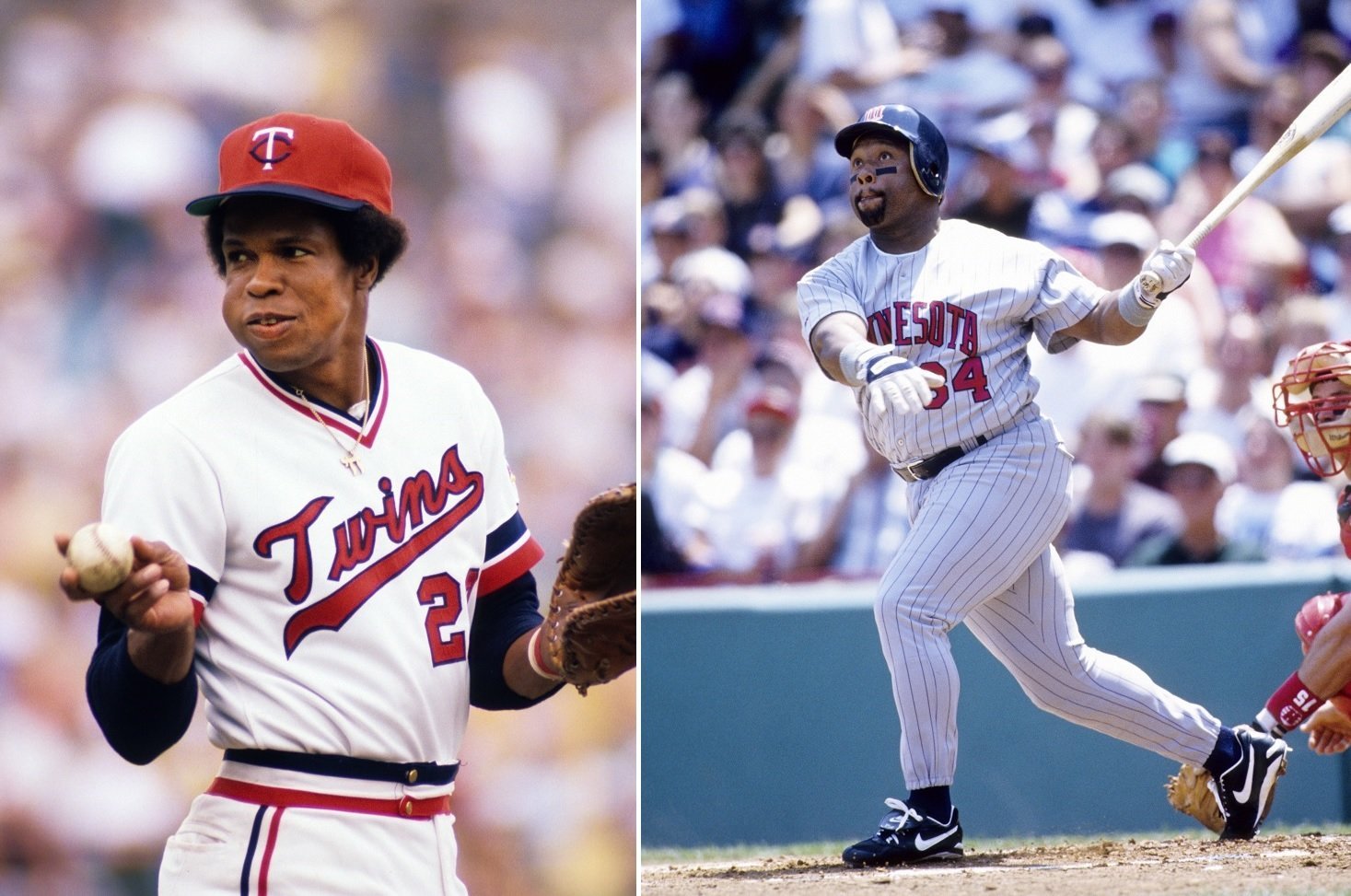
MLB Network has slowly been rolling out its Franchise Favorites lineups, and when the Minnesota Twins come up, the exercise feels less like a debate and more like a walk down a Twins fan’s Memory Lane. This is not just about production or accolades. It’s about connection, moments, and the players who came to define generations of Twins baseball.
The lineup that emerged balances Hall of Fame talent with lesser players who nonetheless felt like Twins through and through. At the time of this writing, MLB Network has yet to release its Twins list. There are obvious choices, a few tough omissions, and some honorable mentions that could easily start arguments among fans of different eras. Let’s take our own shot at naming this team, starting with the position players.
Catcher: Joe Mauer (55.6 rWAR, 3rd in franchise history)
Behind the plate, Mauer is the clear and correct choice. Few players in franchise history carried the weight of expectations the way Mauer did, and fewer still delivered at his level. A hometown star who became an MVP and one of the best catchers of his generation, Mauer represents the modern Twins as well as anyone. Earl Battey and Butch Wynegar deserve recognition for their durability and leadership, but this spot belongs to No. 7.
First Base: Harmon Killebrew (60.6 rWAR, 2nd in franchise history)
At first base, Killebrew is unavoidable. His power defined the franchise for years, and his legacy stretches well beyond the box score. Justin Morneau’s MVP season and Doug Mientkiewicz’s defensive excellence earn them honorable mention status, but Killebrew is the standard by which every Twins first baseman is measured. (Don’t worry; we haven’t forgotten the other high-profile first baseman who belongs on this list.)
Second Base: Rod Carew (63.8 rWAR, 1st in franchise history)
Second base belongs to Carew, one of the purest hitters the game has ever seen. Carew’s ability to control the bat and dominate in so many ways makes him one of the most iconic players in Twins history. Chuck Knoblauch, Brian Dozier, and Jorge Polanco all had meaningful peaks and signature moments, but Carew sits comfortably above the rest.
Third Base: Gary Gaetti (27.1 rWAR)
At third base, Gaetti gets the nod. His consistency, defense, and longevity made him a fixture during some of the franchise’s most important seasons. Corey Koskie and Rich Rollins both have strong cases, especially for fans who value different eras, but Gaetti’s complete body of work stands out.
Shortstop: Roy Smalley (20.9 rWAR)
Shortstop is a position where the Twins have struggled to find stars throughout their history. Smalley earns the starting role thanks to his versatility and impact across multiple stints with the club. Zoilo Versalles brought MVP-level brilliance, Greg Gagne delivered steady production on championship teams, and Carlos Correa made a massive impression in a short time. Smalley’s longevity and overall contribution give him the edge over all of them, though—and his lasting impact as a broadcaster earns him bonus points.
Left Field: Shane Mack (19.6 rWAR)
Mack represents a specific era that many fans remember fondly. He also might be one of the most underrated players in team history. His bat and energy reinforced competitive teams, even if his peak was shorter than some others’. Bob Allison, Larry Hisle, and Eddie Rosario each brought their own flair and impact, making this one of the more subjective choices on the list.
Center Field: Kirby Puckett (51.1 rWAR, 4th in franchise history)
Center field is as straightforward as it gets. Puckett is the heart of the franchise. His smile, his clutch performances, and his presence during the World Series years make him the easiest selection on the entire roster. Torii Hunter and Byron Buxton both deserve praise for excellence on both sides of the ball, but Puckett remains untouchable.
Right Field: Tony Oliva (43.1 rWAR, 7th in franchise history)
Oliva’s selection feels just right (pun intended). His hitting titles and influence on the organization extend well beyond his playing days. Some have even called him “Mr. Twin.” Max Kepler, Tom Brunansky, and Michael Cuddyer each had meaningful runs, but Oliva’s impact resonates across generations.
Designated Hitter: Kent Hrbek (38.6 rWAR, 8th in franchise history)
Designated hitter is where things get a little creative. Hrbek earns the spot, even if it requires some flexibility. He played just over 100 games at DH, but leaving him out of the lineup entirely would feel wrong. Hrbek’s connection to the fan base and his role in the franchise’s most significant moments justify the choice. Jim Thome, Nelson Cruz, and Chili Davis offer more traditional DH resumes, but this lineup is about favorites, not technicalities.
That is ultimately the point of this exercise. A Twins Franchise Favorites lineup is always going to be subjective; that’s the fun of it. It invites debate, brings back memories, and shines a light on the players who define the Twins for so many fans.
Do you agree with the lineup? Who should be switched out? Leave a comment and start the discussion.
Are you interested in Twins history? Then check out the Minnesota Twins Players Project, a community-driven project to discover and collect great information on every player to wear a Twins uniform!