
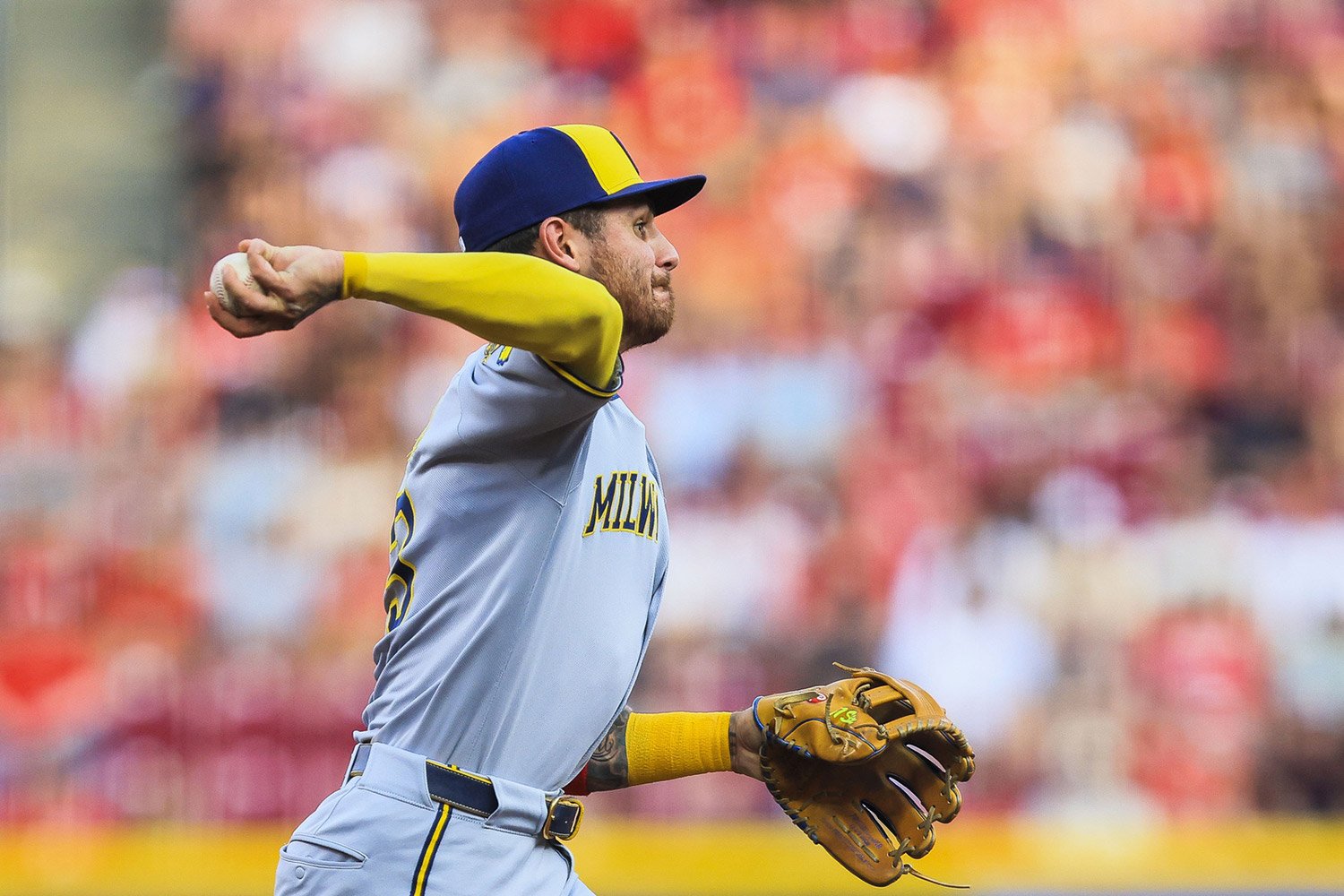
While Joey Ortiz may have tested his manager’s patience with his poor plate discipline throughout a trying 2025 season, the Brewers continued to give him a long leash as their everyday shortstop. It seems there’s still plenty of slack left on that leash, as president of baseball operations Matt Arnold said during last month’s Winter Meetings that the team remains confident in Ortiz’s upside.
The Brewers should remain open-minded about the position, but they shouldn’t feel a pressing need to upgrade. Even if Ortiz does not reach that perceived ceiling, he’s still a capable big-leaguer at a premium defensive position, and the organization’s long-term solution at shortstop could reach the majors within the next two seasons.
Even though his 67 wRC+ last year was the third-lowest among qualified hitters, Ortiz’s defense still made him worth 1.4 fWAR. His 0.3 bWAR was closer to replacement level because it was calculated using his -2 Defensive Runs Saved rather than his +10 Fielding Run Value, but given his defensive improvements throughout the summer, the latter seems to be a better preview of how valuable his glove will be this year.
To replace Ortiz, the Brewers would need to find a shortstop who is clearly better than him. The free agents in their price range wouldn’t move that needle; only the recently-signed Bo Bichette is projected by FanGraphs’ Depth Charts system for a higher 2026 fWAR than Ortiz’s 2.5.
Because even the worst version of Ortiz was still above replacement-level in 2025, he’s at least a capable holdover while the organization’s best shortstop prospects continue developing in the upper minors. Cooper Pratt appears poised to start the season in Triple-A, and Jesús Made seems to be on Jackson Chourio’s track of beginning his third professional season in Double-A and debuting in 2027.
It’s also possible that a reworked group of hitting coaches led by Eric Theisen gets Ortiz in a better hitting position. His strong 84.6% contact rate in 2025 indicated that his hit tool hadn’t disappeared. Most of his issues stemmed from timing; Ortiz had above-average bat speed, but he usually started his swing so late in a pitch’s trajectory that he rarely had a chance to extend his arms and get his barrel through the zone by the time he made contact.
Ortiz’s leash will expire eventually if he doesn’t significantly improve his offense, but he remains the Brewers’ best option at shortstop for now. Giving him another shot in 2026 is the right call.