
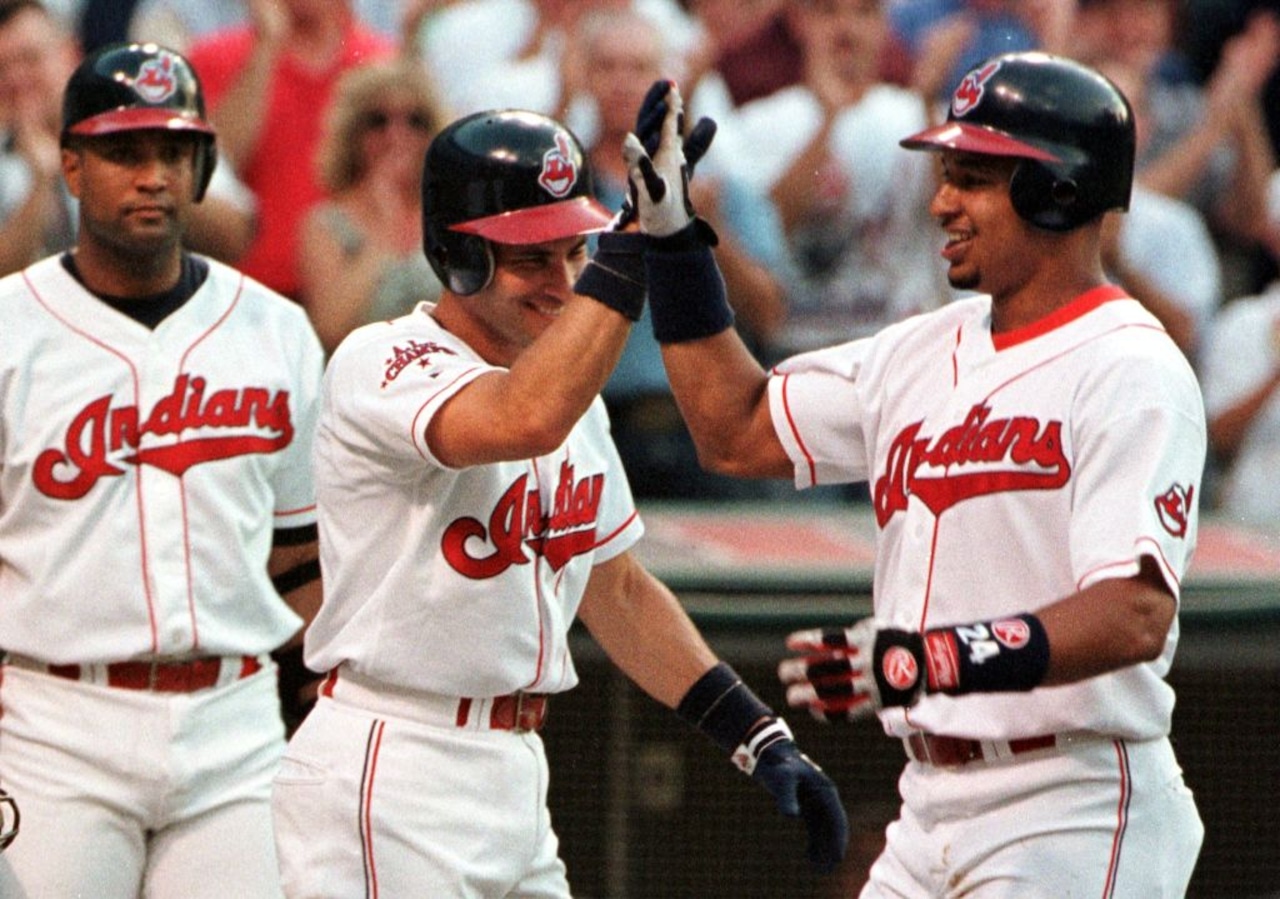
CLEVELAND, Ohio — Two former Cleveland stars find themselves increasingly on the outside looking in as their Baseball Hall of Fame candidacies face significant obstacles. Manny Ramirez and Omar Vizquel, once cornerstones of Cleveland’s powerhouse teams in the 1990s, are seeing their paths to Cooperstown narrow with each passing vote.
Ramirez, in his final year on the ballot, received just 34.3% support in last year’s voting – far short of the 75% needed for induction. Joe Noga, cleveland.com Guardians beat reporter, addressed this on the Cleveland Baseball Talk Podcast: “He’s now in his 10th and final season on the ballot… It would have to be a pretty significant jump for Ramirez to get into the Hall.”
Paul Hoynes, cleveland.com Guardians beat reporter, was even more direct about Ramirez’s chances: “That would be a miracle. Manny, we all know what’s counting against him. He tested positive twice for steroids. It’s really sidetracked his candidacy.”
The PED suspensions have proven to be an insurmountable obstacle for Ramirez despite his 555 career home runs and .312 lifetime batting average. As Hoynes noted: “I can’t see a way that he gets in, and it’s a shame. Now it’s onto the Era Committee for Manny.”
For Vizquel, the situation is similarly bleak but for different reasons. After climbing to nearly 50% support, his candidacy has reversed course dramatically. “He’s been on a downward trend over the last several years because of off the field allegations against him,” Noga explained.
This decline is particularly frustrating for supporters who point to Vizquel’s defensive wizardry – his 11 Gold Gloves making him, in Noga’s words, “the best defensive shortstop that we’ve ever seen play.” Yet personal issues off the field have overshadowed his on-field excellence, and with just two years remaining on the ballot, his Cooperstown chances through the writers’ vote appear slim.
The contrast between statistical achievement and Hall of Fame recognition is stark for both players. Ramirez was one of the most feared right-handed hitters of his generation, while Vizquel revolutionized shortstop defense. Yet both appear headed toward the same outcome – reliance on the Era Committee (formerly known as the Veterans Committee) for potential future induction.
This year’s Hall of Fame class is expected to include Carlos Beltran and Andruw Jones, both of whom are polling above 65% and trending upward. The announcement will come tomorrow, and Hoynes – himself headed to Cooperstown this summer as the recipient of the Baseball Writers Association of America’s Career Excellence Award – sees both as likely inductees: “Beltran got over 70% last year. Usually when you get that close, you know, the next cycle of voting, you usually get inducted.”
For Cleveland fans, the diminishing hopes for Ramirez and Vizquel represent a bittersweet reminder of the franchise’s 1990s golden era. Despite the team’s consistent excellence during that period, their representation in Cooperstown remains limited compared to their on-field achievements.
As both players’ BBWAA ballot opportunities wind down, their legacies remain complicated – extraordinary on-field talents whose Hall of Fame cases have been compromised by factors beyond their statistical accomplishments.
To hear more analysis on Hall of Fame voting and other Cleveland baseball topics, tune into the full Cleveland Baseball Talk Podcast with Joe Noga and Paul Hoynes for their complete breakdown and insider perspectives.
Read the automated transcript of today’s podcast below. Because it’s an AI-generated transcript, it may contain errors and misspellings.
Podcast Transcript
Joe Noga: Welcome back to the Cleveland Baseball Talk Podcast. I’m Joe Noga, joined by Paul Hoynes. Hoynsie, the Guardians signed Sean Armstrong earlier in this offseason. Now, they signed him from the Rangers after last season when, when Armstrong had a really strong year out of the bullpen. The Rangers in return sign a free agent veteran who was with the Guardians last season, Jakob Junis. A one year, $4 million deal to join Texas in their bullpen. It seemed like the Rangers pretty much cleaned house out of their bullpen and, and, and really Eunice now gives them a solid sort of piece. What do you think of the move of basically Cleveland swapping veteran middle relievers with the, the Rangers, but paying about $1.5 million more for Sean? Sean Armstrong, yeah.
Paul Hoynes: Interesting, Joe, because Junis, like you said, was out there for a long time and he had really kind of pitch expectations for Cleveland this past season. 4 and 1, 2.97 ERA, 57 games, 55 strikeouts, 18 walks and 66.2 third 2, 2/3 of an inning. I mean, he did a great job. He was one of those guys, Joe, kind of like Pedro Avila, who was supposed to come in, maybe spot start pitching, you know, blowouts one way or the other, who really kind of ended up pitching in leverage situations. So I’m surprised they didn’t bring them back. You know, like you said, Armstrong had a really good year for them as well, for Texas as well. And they brought them back at a, at a higher price tag. So I think it shows, you know, just how they were, how much they were committed to improving that bullpen.
Joe Noga: Yeah, if you’re looking at just the, the, the Wins above replacement, the WAR number from Baseball Reference, Armstrong’s 1.5 WAR last season and Junis 0.9. Armstrong 4 and 3 with a 2.31 ERA, 71 games, 74 innings. He struck out 74 batters and had a, at a 0.811 WHIP. So, yeah, coming off of the, you know, stand the two seasons up next to each other, Armstrong had the stronger year. That’s why he got a little bit more money and another year option on that deal with Cleveland. I believe it’s an $8 million option for 20, 27. But, you know, remains to be seen whether or not the Guardians are sincere about wanting to pick that up based on whatever Armstrong does. And, and you’re talking about a, a guy who’s going to be pitching this upcoming season at age 35. So there’s, you know, something to, to consider there. Eunice, I think I’m going to be pitching at, at age 33, you know. Yeah, it’s just interesting. Caught my attention when, when I saw that he signed last night with, with the Rangers. I was like, well, you know, it basically they, they swapped relievers with the Guardians, picking up the price tag there.
Paul Hoynes: You know, and just you know, obviously you know, they needed, the guardians, needed some help in the bullpen. They felt they needed help and Texas, you know, has really kind of, you know, kind of really, you know, kind of cleaned house in their bullpen. So they’re probably looking for a deal in, in, in Junis. You know, Junis didn’t sign until what, February of last year with Cleveland and he makes another, you know, kind of late signing. It’s just one of those things I think once you kind of shake out the, the big name free agents, which we saw a lot of movement last week with guys like Bo Bichette and, and you know, Suarez, you know, people are flying out in all directions. I think now, you know, it becomes time for kind of the second and third tier free agents to find homes.
Joe Noga: Yeah. One more thing about Armstrong. When we’ve talked to Stephen Vogt last week, Vote said he had never really had a chance to sit down and have a conversation with Armstrong. So he’s looking forward to sort of meeting him in spring training and we’ll, we’ll find out, you know, just exactly what role he’s going to settle into. But it looks like he’s, he’s going to be in that sort of veteran, you know, late inning sort of leverage. You know, he’ll give Cade Smith opportunities to, to get a rest and he can, he can save a game or two but mostly it’ll be to support and set up, you know, somewhere in that 7, 8, 9 inning range for Cleveland. You mentioned the free agent movement last week. The big move was Kyle Tucker signing surprisingly with the Dodgers on a, you know, a short term deal with big average annual salary and some opt outs that immediately sort of got the, the ball rolling with guys like Bo Bichette. You said signing with the Mets. He goes to New York and the Mets now players sort of in the Cody Bellinger sweepstakes as well because rumors out of the Yankees camp are that they, they’ve sort of reached the end of the limit of how far they’ll go in negotiations. Bellinger like Kyle Tucker, a Scott Boris client and you know, the, the Bellinger camp obviously going to push for as much as big and as long a contract as, as their guy wants. What do you make of the rumors that Kyle Tucker turned down a 10 million, a 10 year, $350 million contract offer from the Blue Jays and also turned down more money from the Mets to sign with the Dodgers on a short term deal?
Paul Hoynes: Really interesting, Joe. I think we’re seeing a shift at least with some players dynamics of a contract. We saw earlier this season, Dylan Cease took a seven year deal with Toronto and obviously quarterly they made the 10 year deal to Tucker for 350 million, but he turns around and takes the shorter deal from the Dodgers at 4 for 240 million. And that’s a kind of, you know, I think we’ve seen, we’ve seen Bregman basically did do that. You know, he signed a three year deal for 120 million last year with Boston, opted out after one year and then came around and signed, you know, a five year, $175 million deal with, with the Cubs last week. So you know, basically that was a six year deal, Joe. He did all right with that. And, and then we see Bichette, you know, turned down, you know, you know, you know, I think he had bigger offers elsewhere, but he takes a short term deal with, with the Mets at 3, 3 years and 126 million. You know, he’s like 27, 28 so you know he’ll be back out on the market. If he doesn’t, I think there’s two opt outs in that, in that deal, he could be back on them in the, in the open market in two years. So you know, it’s kind of interesting just to see. We’ve seen guys OHTANI Take the seven, what the seven years, 700 or the 10 year, $700 million deal. We saw Lindor, you know, a few years back, you know, 10 years for over 300 million. Now players seem to be taking a shorter term deals with more money for a higher annual average value. So you know, kind of interesting strategy. I don’t know if the, you know, the work stoppage, potential work stoppage has anything to do with that after the 2:20, 26 season because if there is a work stoppage, players don’t get paid. So we’ll have to see how that works out.
Joe Noga: Yeah, that, that was a question I was going to have there. You know, does the trend only become like a short term trend because of the potential work stoppage that they’re, they’re taking these shorter deals with these early opt outs in the contracts and the teams are willing to go ahead and dance with that, go ahead and do that for them is what we’ve seen. The Mets basically had to do something. They had to sign Bichette once, once Tucker sort of spurned them. He, you know, Bichette was going to get what he wanted from New York because the Mets had to look like they were signing somebody. The names that are basically still out there, including Bellinger, who hasn’t signed yet, could sign with either New York team or, you know, there, there could be a last minute entry. You know, does he really fit in Toronto? I. Who knows? But you’ve got Eugenio Suarez, who I would assume is going to wait to see where Bellinger signs before he does anything officially. Luis Arise and then you’ve got that, that next level, like you were saying, of, of free agents, you know, somewhere in there where there might be interest by the guardians of guys like Marcelo Zuna, Austin Hayes. Do you, do you see that market starting to get going and gaining any momentum here over the next week to two weeks?
Paul Hoynes: I do, Joe. I think it’s going to start taking off now. They got the, you know, the bigger, some of the bigger names, free agent names out of, signed and delivered last week. I think now teams are going to, you know, be able to, you know, go through the bargain basement, so to speak, of the free agents and fill out some specific needs that they have, you know, with the players they feel they can afford. You know, I’m really interested to see if the guardians will do this, Joe. Are they going to stick to their plan of, you know, given their young prospects, their core players, you know, all the Runway they need to establish themselves in the big leagues or do they add a hit or, you know, a hit or two that, you know, won’t get in a way that won’t threaten their, their players development, you know, their core guys development, but still be able to help, you know, Stephen Vogt, you know, hopefully win another AL Central title.
Joe Noga: Well, and you and I were talking before we started recording here about a guy like Ozuna, while he might be a guy you can get on a, a shorter deal for, you know, something that you might be able to get him down into your price range, he’s not the type of player I don’t think that, that you can, can put into that role that he’s, he’s the kind of guy who basically needs to play every day. He’s going to need to strike out 125 times a season if he’s going to get you those 30 home runs you’re looking for. Does he really fit as a, as A piece. Even if there were a possibility of getting them.
Paul Hoynes: Yeah, I don’t think Ozuna is a guy, Joe. I mean, he’s, he’s exactly what I think the Guardians don’t want to do. You know, they don’t want to bring in a guy, a veteran guy that they got to play every day. Like you said, it’s going to. And he’s going to DH and you’re going to take it Bats away from either, you know, Manzardo or a CJ Kayfus who. Or, you know, Nolan Jones, whoever. You, you cycle through the DH spot. So, you know, I think guys, a guy like, you know, Austin Hayes, you know, is an interesting guy. You could play him in the outfield. You don’. Have to play him every day if, you know, if you can, if, if that’s, if that’s what they’re looking for, you know, a guy outfielder, you know, a veteran versatile outfielder or even an infielder.
Joe Noga: Yeah, I just, I get the feeling that, you know, even those names are guys that are still, you know, going to be pursued by other teams and the Guardians aren’t going to, you know, get in a bidding war over, over a guy like an Austin Hayes for, for one or two years. That, to me doesn’t seem like something that this, this front office is going to want to do. Another route would be the trade route and guy that we’ve heard even back at the, at the beginning of the off season linked to the Guardians in, in terms of a trade possibility would be a Brendan Donovan. And now that St. Louis is, is basically in full on rebuild mode after trading away Nolan Arenado last week. Brendan Donovan, all star, versatile guy, can play the infield, can play the outfield. He’s a, he’s an all star like we said. And he’s, he’s definitely going to be traded as St. Louis doesn’t, doesn’t really have a role for a guy who’s basically, you know, entering his prime and, you know, they’re tearing things down to the studs. So what’s it going to take to get a guy like Brendan Donovan out of St. Louis and you know, would the Guardians be able to meet the asking price of the Cardinals, which is reportedly been pretty steep ever since the beginning of the off season?
Paul Hoynes: Yeah, you know, the Cardinals are rebuilding. Like you said, they’re looking for younger players. The Guardians have a, you know, they have a wheelbarrow full of younger players so they could make this deal. It’s just, you know, a matter of what younger players they want to give up. And who. Who, you know, what are the Cardinals looking for? You know, Heim Bloom, the, you know, the director of baseball operations in St. Louis first year, is saying he wants. He wants this thing settled by the start of spring training. He’d like to have, you know, his situation settled. So we’ll see what happens. But, Joe, I don’t know. Is it young pitching? Is it. I would think that would be the first thing the Cardinals would want.
Joe Noga: Yeah. And the Guardians have young pitching. They have some. A few noteworthy highly rated prospects, particularly even guys that have had a little bit of time in the major leagues. And a guy like Parker Messick, a guy that you would think the Guardians would. Would value pretty highly after what he did in September of last season. But then you also got to think about the pitcher that they acquired from the Blue Jays in Cal, Stephen guy that they’re very high on, a young prospect. He’s rated in their top 30 even position players, like a guy like a George Valera who’s, you know, been through some injury issues, but was with the club through September and in the postseason and played in the postseason last year. These are all names that have. Have surfaced and, you know, maybe could be under consideration. But like you said, the Guardians are loathe to part with especially highly rated pitching prospects. We’ve seen that. Now, like you said, you could name a list of guys who, you know, the Guardians might want. Might want to try to move on from a guy like a Logan Allen, but just because the Guardians might not have a spot for him in the rotation, it doesn’t mean that the Cardinals would be interested. So, you know, does that sound like a, you know, the kind of trade package that the. The Cardinals will be looking for?
Paul Hoynes: Yeah, that’s something around there, Joe. Definitely. I would think it’d be, like you said, Sick. Is an interesting guy, a young guy. You know, he really made an impact, I thought, down the stretch with Cleveland last season. Do they, you know, and. But that’s probably the kind of guy you would have to trade to get him.
Joe Noga: Yeah. And they don’t really know what they’ve got in. In Cal, Stephen, just because they didn’t get a lot, a lot of an opportunity to look at him. He was injured when he first came over from the Blue Jays organization in the Shane Bieber trade at the trade deadline. Then, you know, he, you know, pitched at double. Akron is the kind of guy, is the kind of prospect that, you know, that they value, and I think they might want to take a look at him. A little longer. But who knows if the opportunity presents itself to pick a guy up like Donovan, you don’t want to pass that up. Stephen Vogt would be very excited about a guy that could play the infield, play the outfield and can hit the ball out of the ballpark. It’s, it’s sounds like a match made in heaven for the two of them.
Paul Hoynes: I mean, you’re talking about. You just described every player on the Guardian’s team. You know, outfield, infield, with the exception of hitting the ball out of the ballpark, they all play all over.
Joe Noga: Yeah. And that’s the kind of player that Steven Vogt likes. A guy who can contribute in a lot of different ways. So Donovan seems to be the, the perfect fit there. Let’s see if we’ll keep an eye on whether or not the, the Guardians pursue it. All right, Hoynsie, we’re getting close. In fact, tomorrow we find out who the National Baseball hall of Fame inductees for the 2026 hall of Fame class that you will be a part of as the winner of the Platinum Pen Award, the Baseball Writers association of America Lifetime Achievement or Career Excellence Award. So you’ll be in. Joe Buck will be in as the Ford C. Frick Award winner. And then the, the players that will be in as well, the, the veterans the Era Committee elected, Jeff Kent will be there in Cooperstown. The chances that a couple more guys will be elected. Right now, the most likely candidates, Carlos Beltran, Andruw Jones, these are guys who were both above 65% on last year’s ballot. So very close. We’re talking about needing 75% to get in. Do you see those two as being the, the other two members of the hall of Fame class or could it be more.
Paul Hoynes: Yeah, I think those two are the favorites, Joe, they showed really well last season. Beltran got over 70%. Usually when you get that close, you know, the next, the next cycle of voting, you usually get inducted. So at least Beltran, I believe, will get in. Andrew Jones has been an interesting candidate. He had a great first part of his career then kind of, you know, kind of, you know, when he was on, he was what a great player, great center fielder, big, you know, had big time power. He got last year he received 66.2% of the vote. So, you know, he’s up there too. In all the pre election ratings, both those guys have shown very well. So I would think both those guys have a great chance of getting in. And then you’ve got Chase Utley, who received right there as well in his third year of. Of eligibility. So we’ll see how he does. I think Beltran and Jones are the favorites.
Joe Noga: Yeah. Jones, obviously in his ninth season on the ballot, is getting close to the point where, you know, voters have to. To basically choose, hey, are we going to, you know, normally 9th and 10th year guys get that sort of that bump in their last year to get them over the top. And it looks like Jones is. Is trending that way right now. A couple of Cleveland or former Cleveland guys who are still on the ballot. Manny Ramirez, he. He got 34.3% of the vote last time around. He’s in his 10th and final season. Does. Does. Does Manny maybe get boost and, and jump up there high enough? It would be a pretty significant. Have to be a pretty significant jump for Ramirez to get into the Hall.
Paul Hoynes: Yeah, Joe, that’s. That would be a miracle. Manny, we all know what’s counting against him. You know, tested positive twice for, you know, steroids. It’s really sidetracked his candidacy. It’s. I don’t think. I can’t see a way that he gets in, Joe, and it’s a shame, but, you know, he’s. Now it’s onto the ERA Committee for Manny. We’ll have to see how he fares in. In those. In. In, you know, the, the newest version of the veterans committee.
Joe Noga: Yeah. And that’s an opportunity to be in that cycle, you know, in the next three years. Omar Vizquel as well, he had 17.8% of the. Of the vote last season, but he’s been on a downward trend over the last several years because of other, you know, off the field allegations against him. You know, really, with all those resolved, he’s stayed on the ballot, but he’s in his ninth year trending, you know, away from a possible election. And this is a guy who, you know, he won, what, 13 Gold Gloves. 11. 11 Gold Gloves. Just ridiculous. The best defensive shortstop that we’ve ever seen play. And you know, he’s. He’s probably going to have to cast his fate with the, the veterans committee there. Two guys who, who played for Cleveland in their careers. They are on their first years on the ballot this year. So we’ll will track just how much they. How much of the vote they can manage to get. Probably going to be harder for guys like that. But again, you look at Edwin Encarnacion, you don’t think about it. His, you know, what is it? His home run total, 425, 424. He had 424 home runs in the big leagues. That’s, that’s something that you have to at least consider. It’s why he’s on the ballot. And Chu, a pretty solid hitter in his own right. A 122 career ops plus. So what do you think about those two guys and where should they land in terms of, you know, should they at least stay on the ballot another year?
Paul Hoynes: I’d like to see him stay on a ballot, Joe. They’ve got to get 5% of the vote. I don’t see it happening. The ballot was kind of really, this year’s ballot was a little player wise. It was kind of thin. There was no doubt about it, guys. First ballot, guys. So, you know, it depends, you know, just on how the voters take this, but I would be surprised if either one gets enough votes to stay on the ballot for more than one year.
Joe Noga: When you think about a guy like a Dustin Pedroia, and you know, he was an MVP his second year on the ballot, he’s down around 11.9% after last year’s vote. You know, he’s got a possibility of falling off the ballot. It’s just, you think about a guy like that that played for as long as he did and did the kinds of things that he did, where do you think he ends up, you know, or, or even a Jimmy Rollins, a guy who’s in his fifth year on the ballot. He’s only at 18%.
Paul Hoynes: I think those guys stay on the ballot, Joe. I think they’ll get enough support. Obviously people have been voting for them in the past. I don’t know if they’re ever going to get to 75%. But, you know, Rollins was, you know, a shortstop that really kind of was a defensive minded shortstop that turned out to be a home run hitter. He kind of fooled people a little bit. And Pedroia was kind of, to me, he was like the heart and soul of those Red Sox teams that went to the World Series. He got the most out of his body and it wasn’t a very big body. So I think people remember that. And really an injury kind of ended his career. He, you know, might be, who knows, he might be still playing, but, you know, just, I think those, both those guys will get enough support that they’ll stay on the ballot for at least one more year.
Joe Noga: Any guys who are in their first year on the ballot, Cole Hamels, Alex Gordon, Hunter Pence, Gio Gonzalez, Matt Kemp, these are all guys who were in their first year on the ballot this year. Any of those Guys you think might. Might surprise with their first year vote total.
Paul Hoynes: Yeah, I think, you know, Cole Hamels has a chance, Joe, with the changing, you know, the kind of the changing landscape of a starting p. Pitchers. You know, he’s kind of a good example of that. You know, teams don’t allow you to go too deep into games. They monitor your innings. And he still, you know, had a, you know, pretty, you know, he had a, you know, solid career, pitched a number of innings. He was in the postseason, so he might, he might get enough to stay on.
Joe Noga: Yeah, I gotta, you know, consider guys like that, like Hamill’s, like you said, pitched in the World Series, was World Series MVP four time all Star, won a championship with The Phillies in 2000, 2008. Yeah, but you know what stands out there? Never want to cy young. Yeah, a thing that, you know, sort of stands out that kind of hurts him there, I think. But, you know, he finished in the, in the top 10 a couple of times, so. So yeah, I just. Interesting to see some of the. These names and we’ll find out later on tomorrow afternoon when the hall of Fame makes that call. You’ve gotten a taste of what that feels like to hear your name called and, you know, hear from it. You’ll be sort of sharing in that with these guys as they, as they learn their fates. Hoynsie, that’s going to wrap up today’s edition of the Cleveland Baseball Talk podcast. We’ll be back to talk more tomorrow.
Paul Hoynes: Good deal, Joe.