

Iowa-UCLA baseball postgame: Rick Heller recaps season-ending loss
Iowa coach Rick Heller and player Andy Nelson follow UCLA players after the Bruins’ 9-3 win in the semifinals of the Big Ten Tournament in Omaha.
OMAHA, Neb. − In the new Big Ten Conference, perhaps no sport’s power structure was altered more by the addition of four West Coast teams than baseball.
A northern conference adding four warm-weather teams was going to be a new challenge for programs like Iowa, which has been battling for the league’s top spot for most of the past decade. And we saw just how steep the climb in competition can be in the closing weeks of the Hawkeyes’ once-promising season.
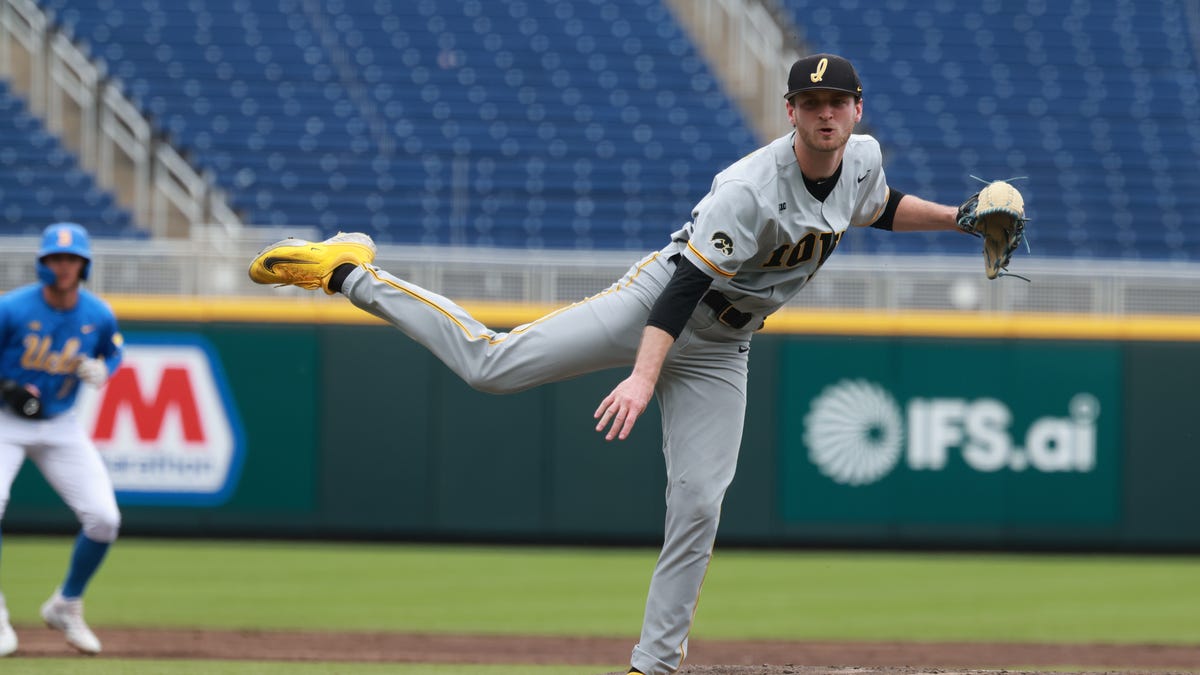
With Kooper Schulte’s strikeout securing a 9-3 loss to UCLA on May 24 in the semifinals of the Big Ten Tournament at Charles Schwab Field, the Hawkeyes likely saw their 2025 campaign end in perplexing fashion, with just two victories in their final 13 games.
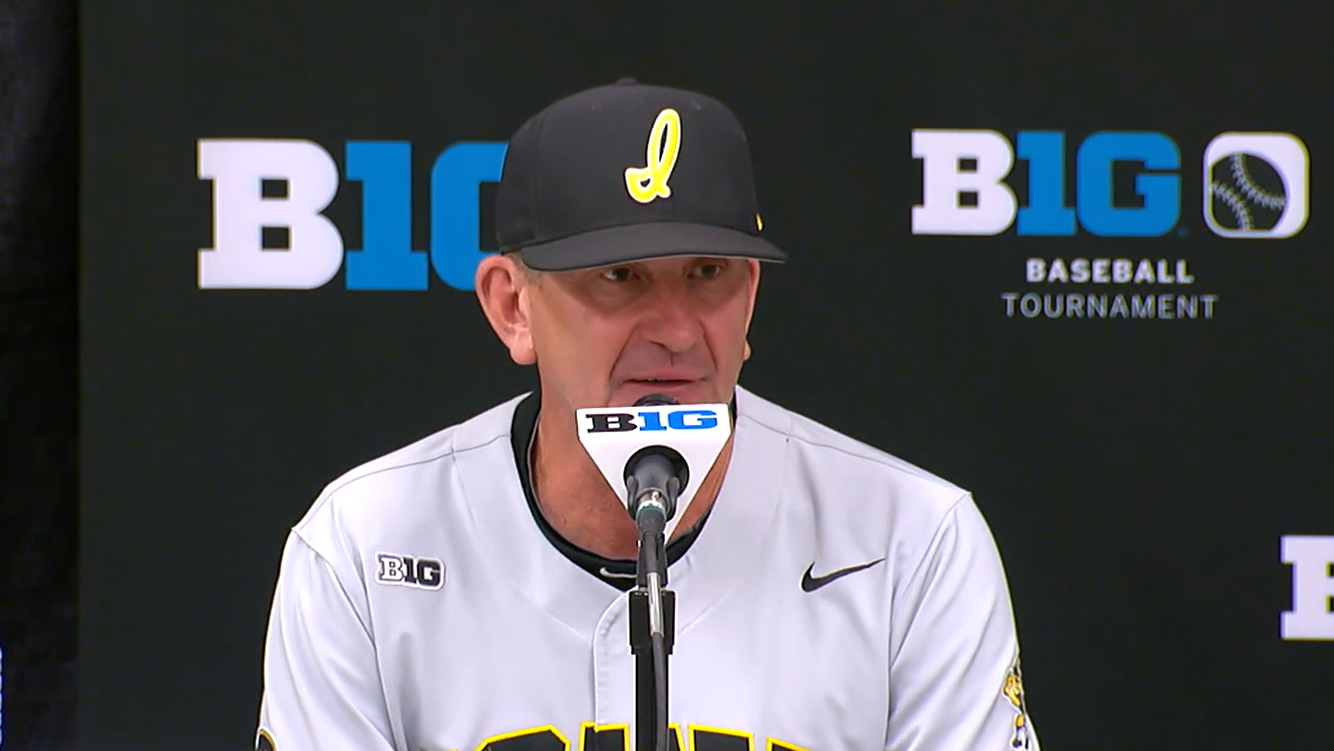
“We really didn’t have anybody in a lull (all season) until it happened, and then it seemed that all of them went,” Iowa 12th-year coach Rick Heller said. “And then the pitching (regression), I didn’t see that coming, either … at the worst possible time.
“There will be people that say we just choked or whatever. And maybe there was some of that. But I didn’t feel it. I didn’t see it. I didn’t sense it. And I’ve done this a long time, and I have seen it.”
College baseball is dominated by warm-weather teams from the South and West, and we see that every year. Introducing UCLA, USC, Oregon and Washington (which finished in the top five of the Big Ten standings, along with Iowa) changed the equation in the 17-team Big Ten. Yet the Hawkeyes cobbled together an incredible midseason run, reaching 20-4 in conference play at one point, to put themselves in the title conversation.
After charging into May with a big lead in the Big Ten standings, Iowa then got seven opportunities against teams in the top 20 of the NCAA’s RPI … and won none of them, going 0-6-1 in crucial games against Oregon State, Oregon and UCLA. Those are the types of opportunities the Hawkeyes clamored for in the past, getting only seven top-20 RPI chances total in the previous three seasons (two of them being Indiana State in the 2023 NCAA Tournament).
When this year’s NCAA Tournament bracket is revealed May 26, it’s likely that Big Ten newbies Oregon and UCLA will earn hosting (top 16) seeds. From 2016 through 2024, the league had two total host seeds (2018 Minnesota and 2022 Maryland). That new landscape is emblematic of what faced Iowa this past weekend in Omaha – and the tall challenge that’ll loom in the future.
Iowa went 0-4 against Oregon and UCLA over 10 days, with the losses coming by a combined 38-13 margin. (Losing leadoff man Ben Wilmes to a leg injury for the final two weeks can’t be dismissed as a factor.)
“I really enjoyed playing them. I wish we would have competed better,” Heller said. “I wish it would have been a tight ballgame one way or another, because I really enjoy, especially as long as I’ve done this now, playing teams like that, that do their business what I think is the right way. … Just really good baseball.”
Chances like what presented itself to Iowa on May 24 might be more elusive in future years – Iowa being in a spot to win two games in two days to win the 12-team Big Ten Tournament and earn the league’s automatic NCAA bid.
A few thousand Hawkeye fans showed up on the first-base side of Charles Schwab Field hoping to see a clutch run to the title game.
The rare “bunt double” by star UCLA shortstop Roch Cholowsky got things going in the wrong direction for Iowa. After an infield single to start the bottom of the third, Cholowsky (a .370 right-handed hitter) punched a bunt through the vacated right side of Iowa’s infield. The well-placed ball against Iowa’s defensive shift trickled into short right field and had first baseman Blake Guerin rumbling to track it down.
Cholowsky, one of the top players in the country, said the bunt was his idea in the moment. It wasn’t called by the dugout.
“First (bunt double) of my life. Perfect time to do it,” Cholowsky said. “I kind of expected I was going to get a heater. … I actually have been practicing it the last three weeks.”
An RBI groundout and sacrifice-fly brought home both runners, and UCLA had secured a 2-0 lead with a small-ball approach that Iowa typically masters.
One inning later, Cholowsky launched a three-run homer over the left-field wall – his third long ball of the tournament and 23rd of the season – to increase UCLA’s lead to 7-0, ending the day for Iowa starter Aaron Savary – who suffered his first loss of the season after lasting just 3 1/3 innings.
“Getting to at least the sixth inning was the hope,” Heller said. “The way Aaron’s pitched this season, we felt that was very doable … to keep it close until the late innings.”
And with that, the Bruins (42-15) had enough to reach the May 25 Big Ten Tournament title game in their first year in the conference against either Penn State or Nebraska.
A two-run home run from Andy Nelson in the top of the fifth snapped the Hawkeyes’ 17-inning scoreless streak here and helped them avoid back-to-back shutouts (after an inconsequential 5-0 pool-play loss to Indiana on Thursday night).
“After that, you try to get guys fired up in the dugout or try to wake them up a little bit,” Nelson said. “We just couldn’t really flip that offensively today. They just kind of held us down. Just frustrating.”
Iowa tacked on a final run in the ninth inning but finished with only five hits.
The odds for Iowa to get an at-large spot in the 64-team NCAA field are extremely low. The Hawkeyes’ run to the front of the Big Ten standings counted three-game sweeps of Michigan (RPI 71) and Indiana (RPI 64). But they entered the UCLA matchup with a 76 RPI and no wins over a team higher than 58 in the RPI while going 0-7-1 against the top 50. Projections by Baseball America and D1 Baseball didn’t even list Iowa among teams to watch, underscoring that the Hawkeyes’ only path to the dance was to win it all in Omaha.
Assuming that’s the end for Iowa, the Hawkeyes will have finished their season 33-22-1 by going 2-10-1 over their final 13 games.
Heller didn’t sit at the podium to make an NCAA Tournament case for these Hawkeyes. He knew that this was probably the end. He did a good job summing up the season, while being somewhat befuddled by how it all fell apart.
“For about eight weeks, we played as well as we could possibly play. We were leading the league in hitting. We were leading the league in pitching,” Heller said. “The run we made in the conference up until the last two weeks of league play was phenomenal.
“But on the other hand, what happened the last four weeks is unacceptable. To put yourself in that position, regardless of what the expectations were, we’re better than that. All of the teams that beat us are capable and could’ve beaten us even if we played better. I just don’t know where things went off the track, because usually when things go off the track, you can feel it in your training, you can feel it in the clubhouse. And that never happened.”
Hawkeyes columnist Chad Leistikow has served for 30 years with The Des Moines Register and USA TODAY Sports Network. Chad is the 2023 INA Iowa Sports Columnist of the Year and NSMA Co-Sportswriter of the Year in Iowa. Join Chad’s text-message group (free for subscribers) at HawkCentral.com/HawkeyesTexts. Follow @ChadLeistikow on X.