
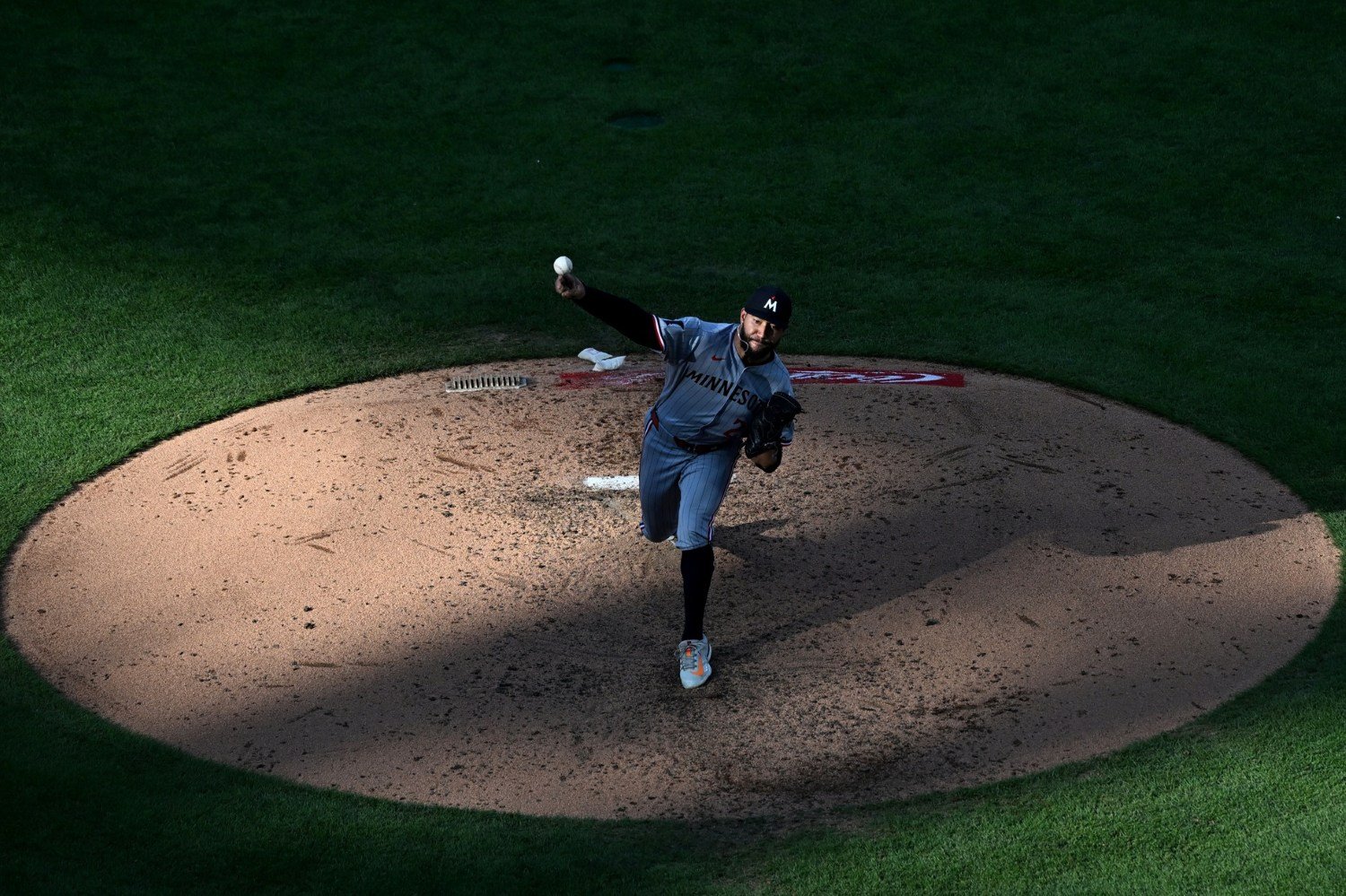
Entering the 2026 MLB regular season, four of the Minnesota Twins’ five rotation spots are filled, headlined by co-aces Pablo López and Joe Ryan, popular bounce-back candidate Bailey Ober, and an experienced but still developing Simeon Woods Richardson. Zebby Matthews, Taj Bradley, David Festa, and Mick Abel will compete for the club’s fifth spot during spring That eight-pitcher collection is one of the most accomplished, talented, and deep groups that president of baseball operations Derek Falvey has constructed, with the 2023 septet of López, Ryan, Ober, Sonny Gray, Kenta Maeda, Tyler Mahle, and Louis Varland being the only close competition.
Again, López and Ryan are the two best arms among the eight pitchers listed. Understandably so, many who follow the Twins would be quick to list Ober as the third most talented arm in the collective. Since 2023 (when López joined Minnesota), Ober has been Minnesota’s third-most effective starting pitcher according to wins above replacement at FanGraphs (fWAR), netting 6.6 during that three-season stretch, trailing Ryan’s 8.6 and López’s 9.6. Yet, after a career-worst performance last season (5.10 ERA and 4.90 FIP over 146 1/3 innings pitched), Ober might no longer be the club’s third-best starter, with Woods Richardson potentially surpassing him.
Despite being demoted to Triple-A St. Paul from mid-May to early June, Woods Richardson improved in his second season as a full-time starter, posting a 4.04 ERA, 4.52 FIP, and a 107-to-46 strikeout-to-walk ratio over 111 1/3 innings. The 25-year-old stood out after the trade deadline, generating a 3.52 ERA, 3.95 FIP, and an elite 31.1% strikeout rate over 30 2/3 innings pitched. Given Ryan’s second-half struggles and López’s extended absence, the young righty operated as Minnesota’s best starting pitcher over the final two months. Meanwhile, Ober sputtered, posting a 4.80 ERA and a 4.32 FIP, with his average four-seam fastball velocity sitting below 90 miles per hour. Woods Richardson vastly outperformed Ober late last season, and that trend could continue in 2026.
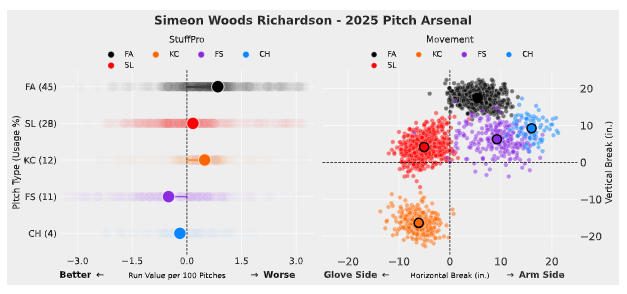
The primary reason Woods Richardson has plausibly usurped Ober as Minnesota’s third-most effective starting pitcher is the continued refinement and improvement of his arsenal. The young righty’s average four-seam fastball velocity has steadily increased over his first four seasons in the majors, settling at 93.2 MPH in 2025. His slider and splitter each flashed above-average.
Ober, on the other hand, has undergone a meaningful decrease in average four-seam velo, with the pitch dropping from 91.7 MPH in 2024 (his best season) to sitting at 90.3 MPH last season. Despite still possessing a plus changeup, he’s gone backward, with the velocity just one culprit. His slider also went off the rails last year.
Obviously, much of Minnesota’s rotation success will be contingent on López and Ryan performing on par with or better than their career norms while remaining healthy. Still, Ober and Woods Richardson will play substantial roles in the club’s efforts to field a plus rotation. As noted earlier, Ober’s struggles could have been the product of him pitching through injury. Still, if he continues to pitch poorly early next season and Woods Richardson continues to progress, the latter could solidify himself as Minnesota’s newest frontline arm. If more than one of those young hurlers forces the issue, it could be Ober whose job is in jeopardy, rather than Woods Richardson’s.