
CLEVELAND, Ohio — While the Baseball Hall of Fame announcement will likely center on favorites Carlos Beltran and Andruw Jones, the real drama of the voting process happens at the margins — those final spots on a voter’s ballot that can determine whether deserving players remain in consideration for years to come.
For cleveland.com’s Paul Hoynes, a veteran Hall of Fame voter, those final decisions create the most agonizing choices on a ballot limited to just ten names.
“I had thought about Chase Utley, and that was a tough vote to not put him on the ballot,” Hoynes explained on the Cleveland Baseball Talk Podcast. “But he has a lot of support. There’s no danger of him not staying on the ballot.”
Those final spots become particularly crucial when considering players who might fall below the 5% threshold needed to remain on the ballot for future consideration. While superstars generate headlines, borderline candidates often need strategic votes to keep their Cooperstown dreams alive.
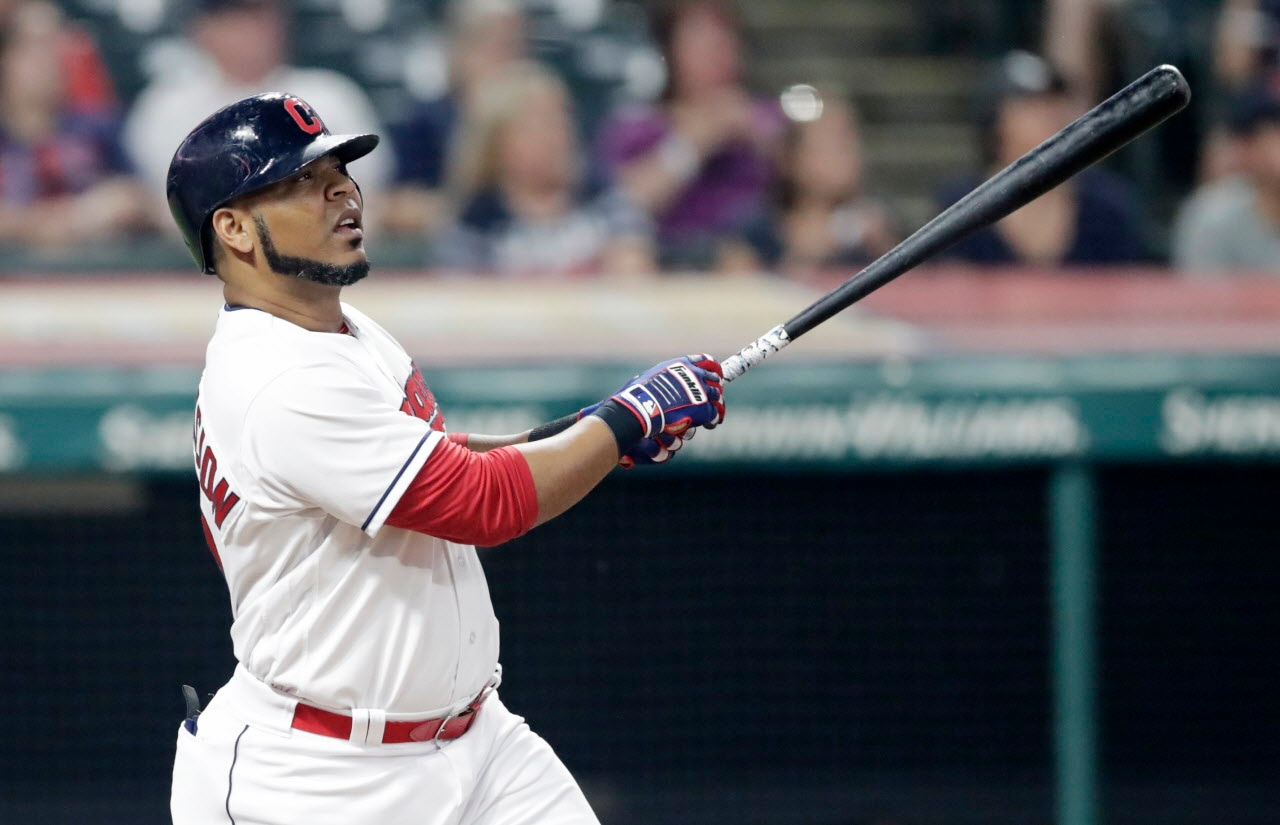
Among those receiving careful consideration from Hoynes was former Guardians slugger Edwin Encarnacion. With 424 career home runs — approaching the 500 mark that often triggers serious Hall consideration — Encarnacion provided exactly what Cleveland’s current lineup lacks: a right-handed power bat capable of 30+ homers and 100+ RBIs.
“Edwin hit a ton of home runs,” Hoynes noted. “That was another tough choice for me and I thought Edwin probably deserves a longer look. But you’ve got 10 votes and that’s it.”
Encarnacion’s peak in Cleveland was impressive: 38 homers and 107 RBIs in 2017, followed by 32 homers and 107 RBIs in 2018. His career numbers (35.3 WAR, 123 OPS+, and over 1,200 RBIs) place him in that difficult gray area of Hall consideration.
Perhaps the most passionate case Hoynes made was for former White Sox ace Mark Buehrle, a model of consistency who threw 200+ innings for 14 straight seasons in an era when workhorses became increasingly rare.
“There’s guys that I think get overlooked and you want to vote for them just for people to take another look at them,” Hoynes explained. “For me, Mark Buehrle is one of those guys.”
Buehrle’s career credentials extend beyond durability. He threw a perfect game and a no-hitter, won a World Series, earned four Gold Gloves, and amassed 214 wins — a body of work that deserves careful consideration rather than a quick dismissal.
Other difficult cuts for Hoynes included David Wright, whose promising career was derailed by injuries: “His career was strong early, but he had so many injuries late in his career that it just kind of hurt him obviously in more ways than one.”
This process highlights how Hall of Fame voting has evolved, with analytics playing an increasingly important role in evaluating candidates like Felix Hernandez, who won a Cy Young Award with just 13 wins — something that would have been unthinkable in earlier eras.
As tonight’s announcement approaches, the true intrigue extends beyond who gets in this year to which borderline candidates receive enough support to continue their Cooperstown journey. For many deserving players, those final ballot spots could make all the difference between baseball immortality and being forgotten by history.
Read the automated transcript of today’s podcast below. Because it’s an AI-generated transcript, it may contain errors and misspellings.
Podcast Transcript
Joe Noga: Welcome back to the Cleveland Baseball Talk Podcast. I’m Joe Noga, joined by Paul Hoynes. Hoynsie, it’s a pretty good morning in the state of Indiana, the Hoosiers winning their first national championship last night in college football. So we’re all, we’re all John Cougar Mellencamp today. That’s a pretty good feeling, but pretty good feeling coming up for a couple of guys likely later on today as the Baseball hall of Fame makes its announcements. A big day for guys like Carlos Beltran and Andrew Jones who are expected to be elected to the hall of Fame in Cooperstown and the possibility of a couple more guys possibly joining them or seeing the results of how far they can climb up the ballot and get close for election next year or in the years to come. We’ll get to talking about your hall of Fame ballot here in a little bit, but first I want to talk about some rankings, some prospect rankings, and if you’re a Cleveland Guardians fan, some excitement as MLB Pipeline, Major League Baseball, MLB.com, Jim Calis and the folks over there are in the process of releasing their top prospect rankings by position. And yesterday they, they did the second base rankings. And lo and behold, number one prospect in the sport at second base for 2026 coming into the season is the 2024 number one overall draft pick and that belonged to the Guardians and Travis Bazzana. Bazzana ranked the number one second base prospect by MLB Pipeline. It’s got to make Chris Antonetti, Mike Chernoff and the rest of the Guardians executives feel pretty good about the decision they made when they had the number one overall pick for the first time in franchise history. Bazan has been a little bit slowed by injury in his development, but for him to enter this season ranked as the number one prospect at second base, it’s a really good sign for, for the Guardians.
Paul Hoynes: It’s really, I guess, you know, he probably gets that number one ranking more by reputation than performance, wouldn’t you say? Because as you said, he hasn’t really, really done a whole lot in his, what, you know, two and a half, two years, two or one and a half years in the minors for Cleveland. Last year he did reach Triple A, which is a good sign. But he, you know, was bothered by the oblique injuries on each side of his rib cage. So that really slowed him down. This is a big year for his development, Jo. Especially I think with the pressure of being that number one overall pick in 2024. The way guys, you know, high draft picks in that class like Kurtz have really jumped out up and performed at a high level at the big leagues. There’s the spotlight’s on him for sure. And you look at the middle infield with Cleveland with Arias and Rocchio. So where does Bazzana fit? That’s, that’s the interesting part. He’s going to come to camp, I would imagine, as a minor league invite. Right. Stephen Vod has already told us he’ll be in camp, so we’re going to get a look at him. But then he goes to play for Team Australia in the WBC and then he’ll come back then. But this will be the first really extended look Cleveland gets at him in, in spring training against big league competition. Just. I’m sure they are, they are as anxious to see how he performs as everybody else is.
Joe Noga: Yeah. And you talked about earning that, that top prospect sort of label more on reputation than on performance. He’s, he’s missed significant time like you said with the injury. But you’re right, that is based sort of on reputation. His hit tool is ranked by MLB.com ranks, you know, out of, what’s it, an 80 grade system. And he’s, he’s got a 60 grade hit tool and he hit.360 in three seasons at Oregon and won the Cape Cod League batting title in 2023 hitting.375. But he’s only hit.243 in, in parts of two seasons in the pros. You know, because of those injuries, you know, the, the hit sort of tool is there. We know that, that he can, he’s just has to go out there and, you know, be on the field enough to sort of do it. And with that is that sort of emerging power as well. And they give him a 55.
Paul Hoynes: You.
Joe Noga: Know, tool out of. It’s out of 60, I believe. Yeah. For the, for power. You know, he’s got the ability to hit the ball out of the ballpark and that’s, you know, it’s shown flashes in the minor leagues. So, you know, as far as tools go, he’s got everything you like. He also runs the bases real well and it’s, it’s where you get defense and all the other sort of aspects of the game that, that he’s still kind of raw and has to develop at these rankings. You know, he’s up there with guys like Michael Arroyo from the Mariners, Bryce Matthews of the Astros, Tommy Troy of the D backs and Max Anderson of the Tigers. All of those guys in the top five are expected to arrive in the big leagues in 2026. So, you know, the experts and the scouts all, all think that Bazan is going to have some sort of influence or impact on the Guardians 2026 season. When do you see something like that happening?
Paul Hoynes: Yeah, I would think ideally they’d like to get a look at him at some point this season, Joe. I mean, I know it’s a fast track but you know, he was the number pick. We’ve seen other players from that 2024 class drafted after Bazzana, you know, make an impact on their big league teams. So I would think, you know, they’ll, they’ll be careful with them. I think they’ll make sure he’s ready. But you know, I would think if all things work well, you know, we would get, we should get a look at him sometime in 2026. The thing, you know, he is, has shown Joe, is, you know, he’s kind of a, an interesting hitter. You know, 24 DOU, 5 triples, 12 home runs, you know, 801 OPS, 417 slug. So you know, there’s some power in there too. You know, he’s just, you know, he’s kind of, you know, he can do a bunch of things with the bat and like you said, he does have the ability to hit the ball out of the park. So you know, I think, you know, the Guardians will wait, will probably, if all things work out, he would probably start the season at AAA and you know, they’ll just give him a chance to, you know, maybe play every day. Joe, and just kind of per for a while and you know, make sure he stays healthy and just get some day in and day out at bats. And then, you know, when, if he is on a hot streak, you know, that’s when teams usually like to bring up their, their younger players.
Joe Noga: Yeah, you look back, you mentioned the, the other players in that 2024 draft. You know, after Bazzana, Chase Burns went to the Reds, Charlie Condon to the Rockies, and then Nick Kurtz obviously to the Athletics. And Kurtz wins the Rookie of the Year. Some outrageous power numbers and really sort of had a seamless transition into the big leagues. Hagan Smith to the White Sox at five and Jack Caglianone to the Royals at six. J.J. Weatherholt seventh to the Cardinals, Christian Moore to the Angels at eight, Connor Griffin to the Pirates at nine and Seaver King to the Nationals round out the top 10 in that draft. Caglianone, we’ve seen flashes of with the Royals. He seems to be sort of finding his way and is definitely in the mix to be on the opening day roster there again this year. Chase Burns, obviously a guy that has been really impressive. The Reds are being very careful with him, obviously, but he looks to be a top, you know, frontline starter in the next, you know, several years to go with that. Weatherholt probably going to get an opportunity to play a lot this year just because the. The Cardinals are going to be rebuilding and they’re going to give him opportunities. So. And that’s sort of the problem with. With Bazzana is the Guardians are never really. Never really fully into a rebuild and never really sort of, you know, writing off a season where they can bring up a prospect like. Like a Bazan or like a Weatherholt and let them, you know, just play sink or swim, you know, regardless of what the results are, the Guardians are always competing for, you know, a division or a spot in the postseason. And it’s hard to work in a guy like a Travis Bazzana and, you know, let him have some of those expected failures when you’re trying to be competitive.
Paul Hoynes: Yeah. You know, you almost. You’re in a position now where, I mean, if they bring Bazano up, they’re not going to bring him up to sit, you know, so he’s got to play every day, so you probably going to have to make a deal, right, to open a spot for him, you know, or maybe, maybe. And you never like to see this. Someone gets hurt. You know, you have to create some playing time for them. And I don’t think, you know, it would be, you know, wise to have him come up and sit on the bench and, and not play every day. You’re probably doing his development more harm than good as opposed to playing every day at Triple-A. So. Interesting situation for Bazzana. Yeah.
Joe Noga: And you don’t want to, you know, have him come up and then have to send him back down to get a little more seasoning and then bring him back up and put him on that. Yo, yo, you don’t. You don’t want to send a message like that if. And he really does come across as the kind of guy who. Who has the kind of confidence necessary in the. The approach and the attitude. And he’s. He’s got a really good clubhouse presence from everything we. We’ve heard and seen of him. You know, once he arrives, I think he. He’s going to arrive and he’s going to stick around, or at least they want him to stick. And, and like you said, play as much as possible every day so, yeah, that’s something to keep an eye on and keep a look at with Bazzana being the number one ranked guy. So, you know, there’s, there’s a lot of good to that. There’s a lot of expectation if you’re, if you’re Bizana, but, you know, there’s also the expectation on the guardian side of things, so we’ll see how both sides handle that with his progression this year. Speaking of progression this year, we talked last week to a few guys, Stephen Vogt, Austin Hedges, Hunter Gaddis. And one of the big topics that we talked about, especially with Austin Hedges, was the development of the starting rotation last season. And you know, this is going to be one of the youngest starting rotations in baseball again this year, but it’s also going to be probably one of the deepest. And Austin Hedges likes the depth of the starting rotation, likes the pieces that they have. Was, you know, it’s fun to hear Austin, you know, sort of go on and on about his teammates and the starting group. He was especially sort of enamored with or positive about Gavin Williams and the strides that Gavin Williams took last year.
Paul Hoynes: Yeah, you know, Gavin really had a breakout year last season. 12 and 5, 3.06 ERA, 31 starts. You know, all career highs. Goes 167 and 2 third innings. There’s 73 punch outs, 83 walks. Yeah, opposition at 211 against him. Joe, you know, he flirted with a no hitter, took the no hitter into the ninth inning against the Mets. But that was, that was a big, big year for Gavin, a huge step forward. Especially when you think about, you know, 2024, when he only made 16 starts open the year on the IL. This was, you know, this was his coming out party. And hopefully he does nothing but get better. And, and I think that’s what, you know, Austin Hedges was talking about, that you’d look at Gavin Williams and maybe another tweak here, another tweak there. He showed the, the ability to kind of change his game on the run during the season and, and pitches. If he has another year like that, you’re probably, he’s probably entering Cy Young territory. You know, I mean, at least in, in the Cy Young conversation.
Joe Noga: Yeah, I would, I would not be surprised to see Gavin Williams sort of a down ballot, you know, favorite to win Cy Young or at least to be in contention for Cy Young. Maybe the odds makers at the beginning of the season might, might throw a little money on, on, on Gavin Williams there to, to, you know, see if it Sticks around at the end of the year. Hedges referred to him as a bonafide ace. He said, everybody knows we’ve got a bona fide ace right there. That’s a guy. You put him against Tarik Skubal at the end of the year and he’s going pitch for pitch with probably the best pitcher in our sport. You know, you mentioned the, you know, Hedges mentioned the growth that he’s seen, you know, the development of from Gavin Williams being a thrower that just throws hard and has nasty stuff to truly being able to pitch, adding a sinker and a cutter and really changing shapes on his pitches. It’s hard to do what Gavin Williams did last year. And like you said, he gives you a lot of confidence heading into the year. But Hedges mentioned Tanner Bibee, he mentioned Parker Messick and Slade Cecconi, Joey Cantillo and Logan Allen. Have he said, you know, to quote him, he says we have so much depth at starting pitcher that it gives us a lot of confidence. I know we’re making strides, we’re going to make strides offensively this year, but Cleveland’s a pitching factory and that reputation is sort of what Gavin Williams is sort of focusing or what Austin Hedges is sort of focusing on heading into the year. So, yeah, what’s the, what’s the confidence level in that starting pitching group and the depth that they’ve got as they. They come in?
Paul Hoynes: I think there’s a lot of confidence in the organization. You know, they went through that down kind of a down period in 2024 when they, you know, made some had to moves. I mean, when, you know, they got caught a little short in the, in the starting rotation. They made some moves after the 2024 season. They got Cecconi, they got Luis Ortiz continued to develop Messick, you know, so, you know, they, they’ve got like right now, you know, you’ve got six solid starters. Gavin Williams and Gavin and Logan Allen and Tanner Bybee and Cecconi and Cantillo and Messick. So you’ve got, you know, you’ve got the makings of a solid rotation there with some depth. I wonder about the depth after, after the six starter Joe who. You know, those are, you know, when you’ve got to have six, seven, eight, I mean you’ve got to have eight or nine starters. Who are the guys kind of waiting in the wings? You know, we, you know, they, Stephen Vogt and even Hedges talks about the depth we have, but we haven’t seen too much of that depth. What is percolating at Triple-A? I Wonder.
Joe Noga: Yeah, and that’s, that’s sort of that next level. The guy that they acquired in the Shane Bieber trade, Cal Stephen, he’s 6 foot 4, 215 pound right hander who they had actually sort of fallen in love with during the 2024 draft process and when he went to Toronto they sort of shifted gears but were able to get their, get ahold of him in this Shane Bieber trade back in July. Cal Stephen in the top 10 in their, their top prospect. A guy who I think we’re, we’re definitely going to see at some point during the 2026 season and either as a spot start role or if he you know, comes up and takes a spot due to injury or a trade or something. But yeah, they really like Cal Stephen. He, he sort of gives them that sort of confidence there. The other, some of the other guys in the, in the minor league system that are sort of the highly regarded prospects, they’re the ones who, you know, you’re looking at guys like Braylon Doty, their number eight prospect. He’s only pitched as high as a single A ball. I don’t see him being a factor necessarily in the, you know, the big league mix as far as starting pitching goes. Yeah, there’s Joey Okie. I think he’s a year or two away from being, you know, factor there as well. So yeah, there’s, there’s all sorts of younger guys further down the list. We’ve seen Doug Nikhazy, we’ve seen guys who are going to be at AAA this year who are sort of that, that depth that, that they’re talking about. You know, Doug Nikhazy didn’t necessarily blow me away. He’s, he had a really good spring training last year, but in the majors he kind of struggled. So maybe he locks it in and gives them an option there as well.
Paul Hoynes: Yeah, yeah. You know Nikhazy, they added Austin Peterson to, to the 40 man roster. I don’t know if there’s, you know, if those guys, you know, Nikhazy would probably be, you know, the next guy up I would think in the pipeline because you know he made a couple starts at triple at for the, for the Guardians. So you know I, I would think that, you know, that if, if they do run into some depth problems that he would be it. They’ve got to make a decision under on their top five and whoever, you know, whoever the guy, you know, the 6 starter is probably going to open at AAA. So you know, so that, that would give him, you know, a little Bit of insurance, but usually you like to run your starting pitching depth, you know, to seven or eight, eight starters. So we’ll have to see how that develops.
Joe Noga: Joe yeah, and they added Yorman Gomez as well, and he’ll be, he was at Akron last year. He started what. How many. They started 15 games. Out of his 27 appearances last year. He’s. So he might be an option or one might be, you know, they might be thinking of him as a swing guy. He’s on the 40 man as well. So, yeah, there’s, there’s options there. So moving on from the starting pitching depth conversation here, you know, wanted to talk just, you know, briefly about your hall of Fame ballot. Hoynsie hall of Fame announcement expected tonight. And, you know, we just wanted to sort of go over the, the, the process that you go through to select your 10 guys who were on the ballot, what decisions you made and, you know, discuss who got your seal of approval sort of as the, you know, for the class of 2026. Yeah, Joe, let’s let, yeah, let’s jump right in there, Joe.
Paul Hoynes: I, you know, I voted for 10 guys. I usually try to vote for 10 guys. Admittedly, this was not the strongest ballot. There wasn’t, you know, you know, you know, an eye opener, a. No doubt about it player from the, from this, from the 2026 ballot. Without further ado, here are my 10 guys. Carlos Beltran, Andrew Jones, Felix Hernandez, Jimmy Rollins, Omar Vizquel, Dustin Pedroia, Mark Burley, Corey Hunter, Paul Hamels and Francisco Rodriguez. Those are my, those are the guys I voted for. Beltran and Jones are, I think, have probably the best chance of getting in. At least, you know, they’re trending above 75% in the ballots that have already been that people have made their, the voters who have made their ballots public. So, but usually, you know, that, that number kind of takes a hit when, you know, the ballots, you know, the actual ballots are counted and we’ll find that out at, at 6pm tonight.
Joe Noga: The guys at the top, I think the, the guys with the, the best chance to get in and you’re talking Jones and, and Beltran, but I’m more interested in maybe the last two or three guys on a, on a voter’s ballot who they, you know, have to, you know, decide, you know, this is my 9th, 10th guy on the ballot and, and the 11th and 12th guy. The guys who were the guys that maybe just missed in terms of your ballot and who you were deciding on.
Paul Hoynes: Yeah, you know, I had, I, you know, I, I Thought about Chase Utley, you know, and you know, that was, that was a tough vote for, you know, to not put on the ballot. But he has a lot, he’s got a lot of support. I think, you know, there’s no danger of him staying on, not staying on the ballot. You know, he’s got a good chance to make a huge jump this year. So, you know, I want to, I want to look at his, his career little more. I thought Bobby Abreu was a guy, you know, that, that, you know, everyone’s, you know, I looked at before. He’s got a lot of numbers. It’s a, it’s a guy that maybe should get a little more consideration. David Wright, I thought, I just, I just thought he was, you know, his, his, his career was strong early, but he had so many injuries late in his career that it just kind of took that, you know, it, it, it kind of hurt him obviously in more ways than one. So those are, those are the guys I, I wrestled with. You know, I mean, Edwin Encarnacion hit a, you know, covered him in Cleveland, hit a ton of home runs. Just. I don’t know if he was maybe, you know, that, that was another tough choice for me and I thought Edwin probably deserved, you know, deserves a longer look. But you know, I just. You got 10 votes and that’s it.
Joe Noga: Yeah, let’s talk about Edwin there. We mentioned him yesterday, his stats as sort of compared to some of the all time guys. The 420. What? 424 home runs in his career. I believe you get that close to 500. And that’s when people start maybe doing a little more of a deep dive on your career. And you know, what makes you a candidate there? This was a guy when he was, when he was in Cleveland and when he was, he had a couple of really nice seasons for the Guardians. Hitting in the middle of that lineup really sort of gave them, actually what they’re, what they’re missing right now is, is exactly what he gave them. The Guardians in that, in the middle of that lineup, a right handed stick that could, could hit 30 home runs and drive in 100.
Paul Hoynes: Yeah, 38 home runs in 2017, 117 RBIs the next year, 2018. 32 home runs, 107 RBIs. I mean he was, he had. 258, 246, 81 OPS the first year, 810 the second year. So he was about as consistent as he could be. Joe. 160 games in 2016. I’m sorry, 157 games in 2017, 137 in 2018.
Joe Noga: Yeah. And did get some MVP votes in 2017. During that season was a, it had been in the, the top 20 at least in, in MVP voting four times. Four other times in his prior to that led the league in RBIs in 2016 when Cleveland, when he took, he was with Toronto and Cleveland took them out in the postseasons. This is a guy who, not necessarily your typical. I believe he played the infield, he played first base and earlier in his career he played a little third base when he played in the Reds organization. Sort of came up as, you know, left side of the infield guy. Just a 16 year career. That’s one of the things that you, that the voters sort of look at is the, the longevity and the, the ability to stay on the field there. That’s important. His what his all time war, you know, numbers, I, I think 35.3. That’s you know, a number that isn’t necessarily going to automatically get you a Hall of fame consideration but OPS plus, career OPS plus of 123. That’s not bad. You know, more than 1,200 RBIs and a.260 career batting average like you said for Encarnacion. So yeah, a guy who, you know, hopefully gets enough votes to stay on the ballot. But this is, this is the kind of year where maybe a voter could, can throw one of those votes his way to keep him on the ballot because like you said, the top of the ballot isn’t necessarily so loaded.
Paul Hoynes: I hope, you know, Edwin gets enough votes to stay on the ballot 5% of the vote so he can get another chance that can. People can look at his career a little deeper. I’m interested, Joe, just on how the kind of the changing landscape of the pitchers is going. You know, with Felix Hernandez and Cole Hamill’s guys said, I remember Felix won the Cy Young, I think with 13 wins the one year when he was with Seattle. And that, that shocked me, Joe. It still shocks me to a certain degree. But the analytics were in his favor and that’s when it seemed like the analytics really kind of took a hold in baseball and took a hold among the, you know, the BBWA voting. The voters, you know, had a huge impact with the Seattle fans in Seattle. So you know, him and Hamill’s I thought were kind of an interesting case study. It’s going to be interesting to see how, how they fare in the voting and if they can get enough votes to eventually, you know, get into the Cooperstown.
Joe Noga: Yeah, the, the interesting part to me of, of this process and after 6 o’ clock tonight, we’ll, we’ll find out is not just who gets in and, you know, the guys that we expect are going to get in, but the analysis that follows of the guys that either didn’t get in or the guys that made the biggest jumps in terms of voting percentages and sort of the changing attitudes of the voters and, and, and how they, you know, play into it. And every, every year is different because every year the, the voting, you know, body changes to a degree a little bit. New guys come in and, you know, some of the, the older voters, they, they stop voting or they’re, they’re processed out. There’s, there’s an analysis point of, you know, the, the, the voters as well that can help you predict who’s going to get in next year and, and what their chances are.
Paul Hoynes: Joe. And, and there’s guys, you know, that I think, you know, to. That get overlooked and, and you want to, you, you know, you, you vote for them just to get, for people to take another look at him. You know, for me, Mark Burley is one of those guys. You know, we saw him a ton with the White Sox, and if there was ever a more consistent pitcher, this is a guy even in this day and age, I mean, he was making, you know, 33, 35 starts, you know, right up until the end of his career. This last year with Toronto, he made 32 starts and almost reached 200. I mean, 200 innings. It’s a guy that, in his 14. First, first 14 full seasons, 200 more or more innings, threw a perfect game through a no hitter, you know, and, you know, this is, you know, and he, he, you know, I, I don’t think he gets enough credit for that. That’s, you know, he’s 200 games, 214 wins. So he checks a lot of boxes. And that’s what’s really, really interesting about, you know, the hall of Fame Val ballot and, and having the privilege of voting for it.
Joe Noga: Yeah, Burley, World Series winner, you know, a guy who finished in the, you know, fifth in the Cy Young voting in 2004. A couple of All Star appearances, four Gold Gloves. You got to take that, insert him into account as well. So, yeah, I think definitely a very worthy candidate. You just hope that enough voters allow him to stay on the ballot to give him a longer look. It’s sort of one of the aspects of this voting process that, you know, is sort of difficult. All right Hoynsie, That’s going to wrap up today’s edition of the Cleveland Baseball Talk podcast. We will talk about all things hall of Fame tomorrow after we find out who gets in. After tonight’s 6pm call, we’ll. We’ll talk to you later.
Paul Hoynes: Good deal.