
The Brewers have had a predictably quiet offseason. Milwaukee is returning most of the roster that won a league-leading 97 regular-season games last year. ZiPS projects them for at least 2 fWAR—the benchmark for a capable starter—at every position but first base.
Because the existing team has a high floor and a small budget, signing mid-tier free agents would be a poor use of resources. To get the most bang for their buck, the Brewers would have to go big, but most of the top free agents are out of their price range, particularly amid the financial fallout of the club terminating its broadcast rights deal with Main Street Sports Group.
That leaves low-risk, high-reward acquisitions as the best way for the Brewers to round out their roster, which could still use more power and another bench infielder behind Andruw Monasterio and Anthony Seigler. Brendan Rodgers might be the best free agent to check both boxes.
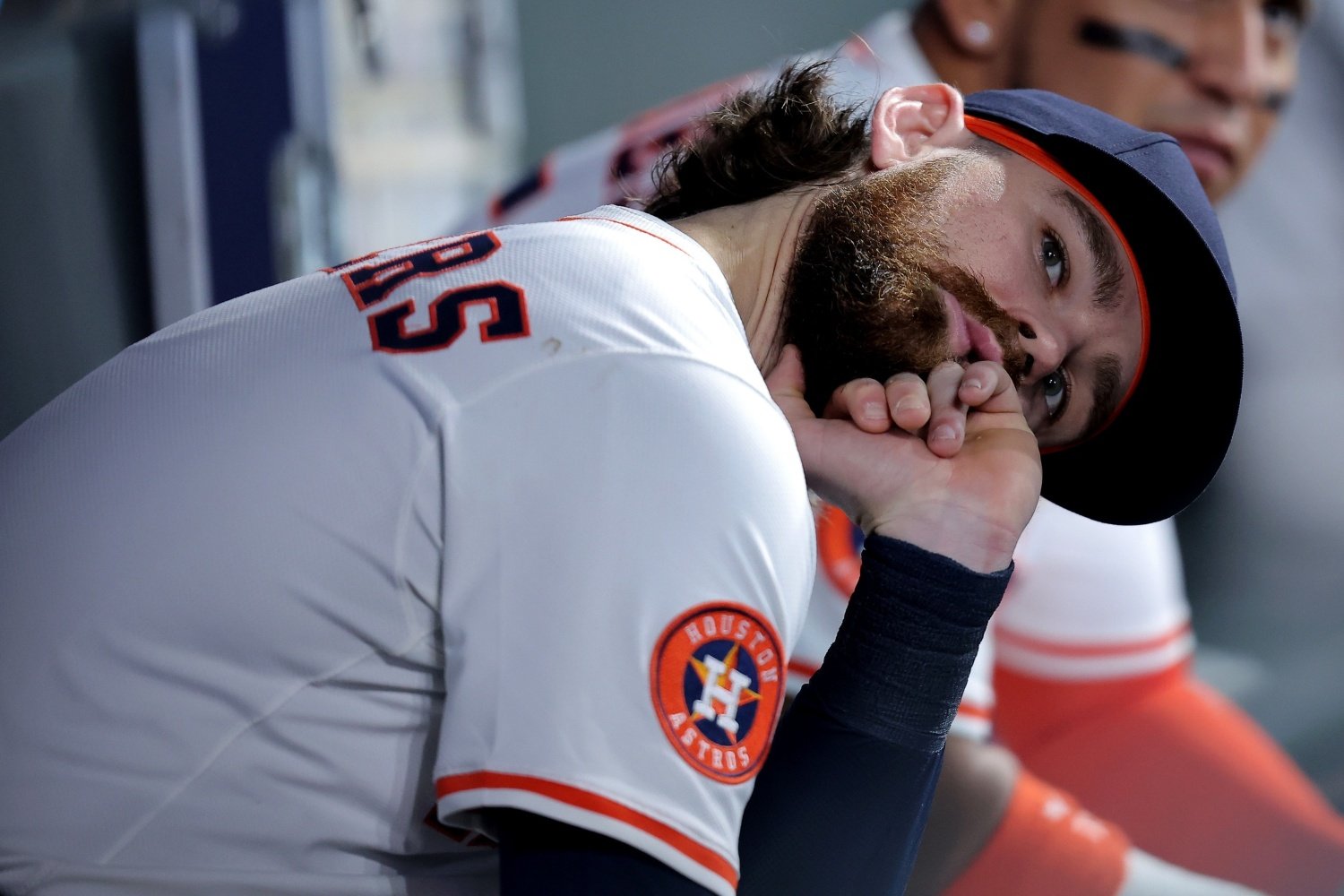
Rodgers was a potential target a year ago, before the Brewers acquired Caleb Durbin to round out their infield. The former Colorado Rockies top prospect ultimately signed a minor-league contract with the Houston Astros, with whom he limped to a career-worst .191/.266/.278 line (55 wRC+) in 128 plate appearances. He hit the injured list on June 18 with an oblique strain. While on a rehab assignment, he collided with shortstop Edwin Díaz while fielding a ground ball, sustaining a concussion and a nasal fracture that ended his season.
There were some promising signs in Rodgers’s bat when he was healthy. He added 2.4 mph of average bat speed, which allowed him to hit the ball harder. He also nearly doubled his rate of balls pulled in the air.
Season
Avg. Bat Speed (MPH)
Avg Exit Velo (MPH)
Barrel%
HardHit%
Pull Air%
xwOBAcon
2024
71.7
89.3
5.6%
44.1%
9.9%
.369
2025
74.1
90.5
14.3%
48.6%
17.1%
.421
Because he was making louder contact, Rodgers’s .296 xwOBA and 98 DRC+ suggested he was better than his results indicated. Even those marks were unremarkable, though. Rodgers was swinging faster and meeting the ball in front of the plate more consistently, but his bat-to-ball ability suffered amid those changes. Not much of a contact hitter to begin with, he saw his whiff rate skyrocket from 25.9% to 37.8% last year. His 35.9% strikeout rate was a career-worst mark.
That much swing-and-miss won’t cut it, but Rodgers could figure things out with more time to acclimate to a new approach or some adjustments that bring him to the right mix of power and contact. He’s still under 30 years old, and there’s some upside in his bat if he’s healthy. There would be no risk for the Brewers in signing him to a minor-league deal to compete in spring training for a roster spot.
The greatest question surrounding Rodgers may be his usefulness in the field as a backup infielder. A former minor-league shortstop, he quickly moved to second base in the big leagues, where his defense has been inconsistent. His suspect arm could complicate his ability to fill in at third base, although the Brewers made do with Durbin’s below-average throwing at the hot corner last year. Even if Rodgers isn’t the perfect fit, he may be a worthwhile bargain.