
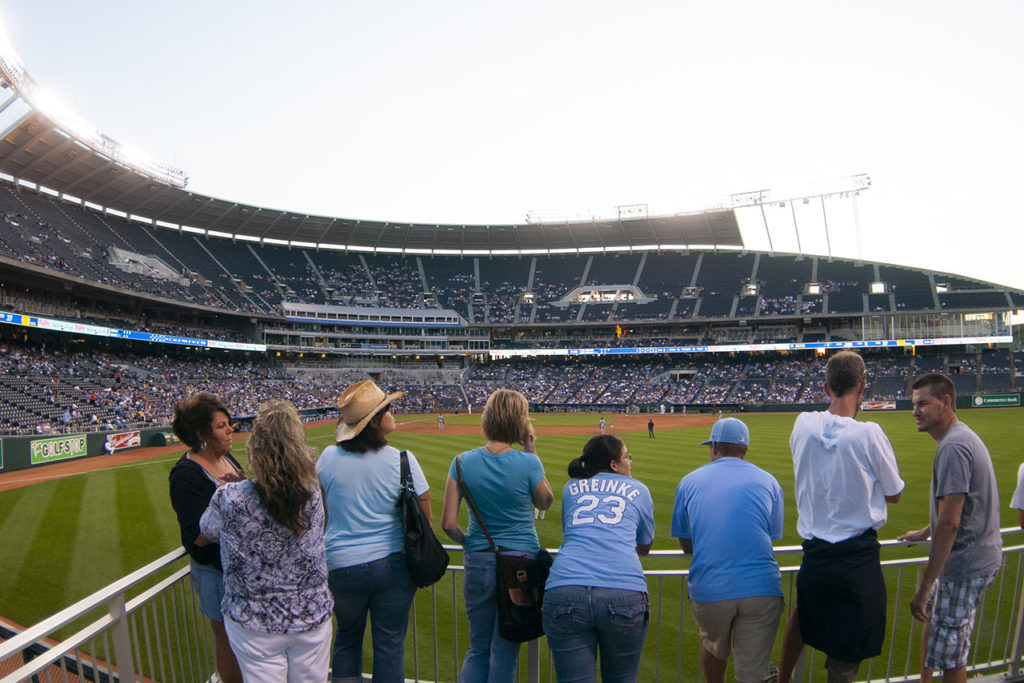
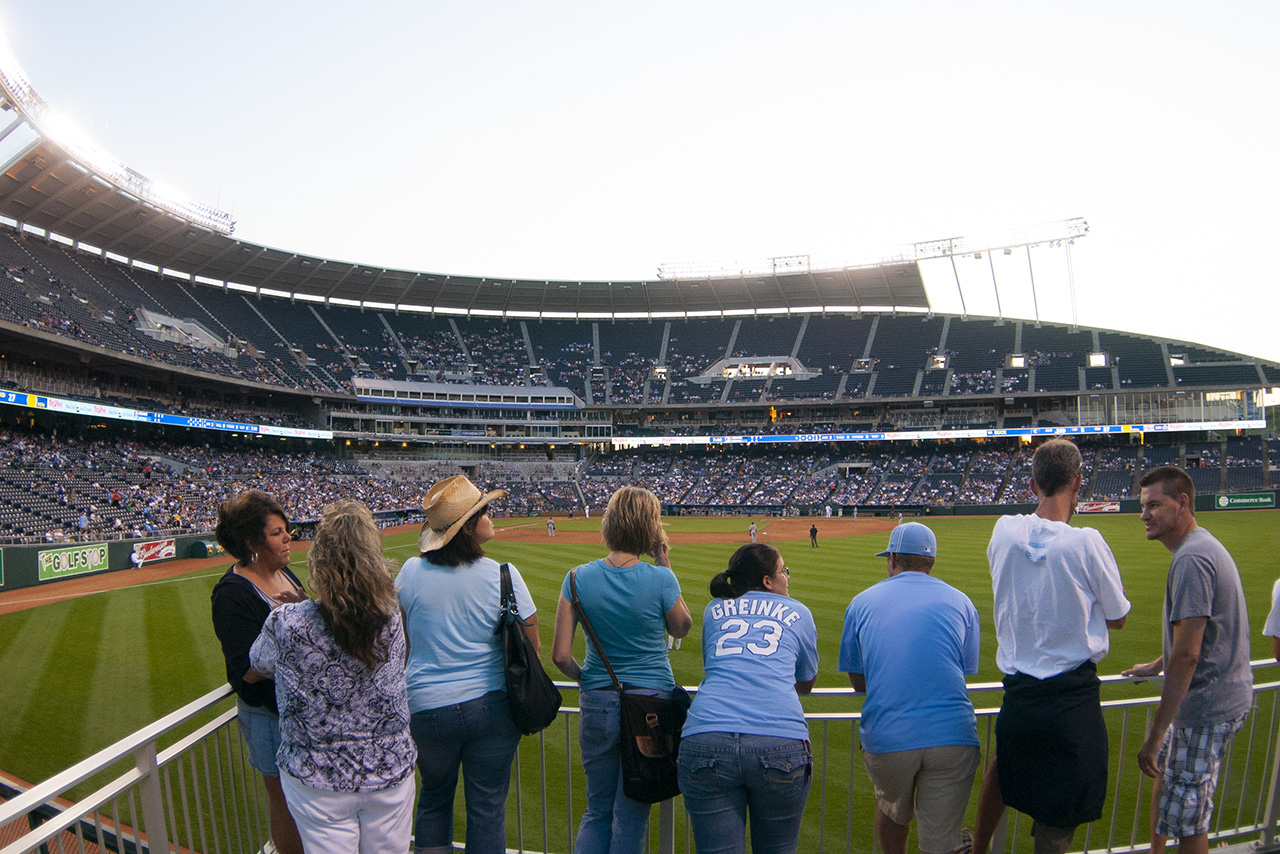
Judging by the huge number of articles discussing the Kansas City Royals moving in the Kauffman Stadium fences, the team was changing the rules of the game. But teams move in fences all the time–usually with less than dramatic consequences.
Kauffman Stadium in the past has sported one of the most spacious outfields in baseball, though the team has fiddled with outfield dimensions in the past; the current configuration matches the dimensions unveiled when the ballpark opened. In 2026, that will change after the Royals announced changes to the Kauffman Stadium fences, as moving in the outfield walls will result in a playing field determined to more neutral. While center field will remain at 410 feet, the left- and right-field walls will be moved in 9 to 10 feet (from 387 feet to 379 feet in the gaps), with the heights reduced by a foot and a half. Moving in the fences also allows the Royals to add some prime seating: 150 new seats in left field and 80 drink-rail spots in right.
The Royals are making the change for what the team calls “competitive reasons.” “Making this a fairer ballpark will help with roster construction, but more importantly will allow our players to keep the same approach regardless of where we play,” vice president of research and development Dr. Daniel Mack said in a press conference. “Our approach was carefully considered to account for as many factors as possible. We believe this will ultimately reduce the constraints within Kauffman Stadium.”
In a press conference, GM J.J. Picollo said the changes to Kauffman Stadium fences will create a “fair” ballpark, creating more extra-base hits (for both visitors and Royals, we assume). Fair for batters, maybe not so fair for pitchers. And fair for upper-cut free swingers, maybe not so fair for slap hitters who will see singles and doubles diminish a little in the reconfigured Kauffman Stadium. In 2025, the Royals hit 183 triples–good for third in the majors–but only 85 homers, tied for 26th in the majors.
Of course, this may not matter and could be argued as more an academic argument than as a practical matter. And teams have been playing with fences since the Yankees built Yankee Stadium and built a right-field porch to accommodate Babe Ruth, and the Red Sox moved in the Fenway Park right-field fences 1940 to accommodate Ted Williams and creating Williamsburg in the process. When fences couldn’t be moved, teams have made other adjustments, like the Minnesota Twins raising the Metrodome fences with plexiglass panels to cut down home runs in the aptly nicknamed Homerdome.
But don’t expect dramatic boosts in power for the Royals in 2026 after moving in Kauffman Stadium fences; history tells otherwise.
In the last few years, the Detroit Tigers and Baltimore Orioles have both moved in fences at their home ballparks; the Tigers in 2023 and the Orioles in 2025. This, according to the baseball pundits, would surely pump the home-run numbers–and as we all know, everyone loves the long ball.
In Baltimore, however, the effect of moving in the fences wasn’t reflected in the year-end numbers. In 2022, the Tigers hit 51 homers at Comerica Park, while in 2023 the Tigers hit 78 home runs at Comerica Park–an improvement, but still a very low number. (That number improved to 104 homers in 2025, a number paced by Riley Greene’s breakout season.) In 2024, the Orioles hit 112 home runs at Oriole Park, while in 2025 the Orioles hit 106 home runs at Oriole Park. Now, in general the Orioles did a lot more poorly in 2025 than in 2024 across the board, especially on the power front, and the signing of Pete Alonso should address that deficiency. Similarly,
(An aside: AI is proving to be wildly inaccurate when it comes to baseball stats. Google AI reported the following on Orioles homers in 2025:
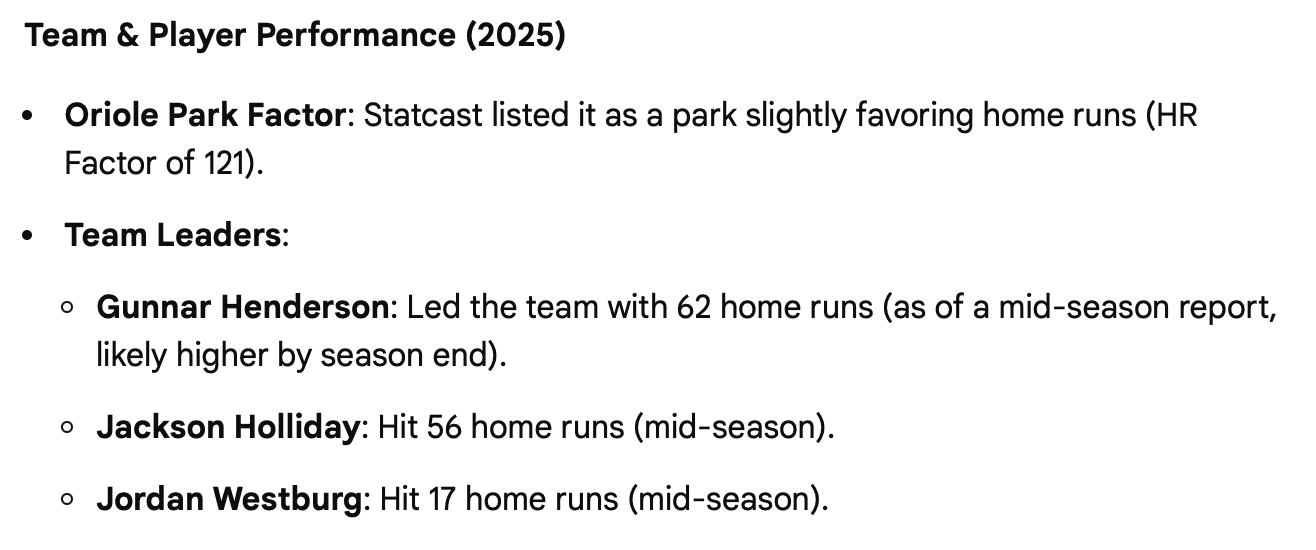
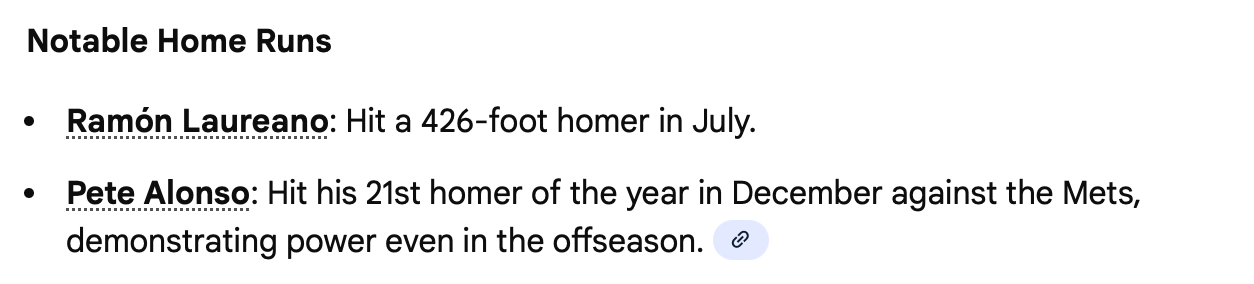
For the record, Gunnar Henderson hit 17 home runs for the Orioles in 2025.)
Now, while moving in Kauffman Stadium fences may have some exemplary benefits for the Royals. And the baseball statisticians will have a more nuanced approach to the issue, factoring in things like doubles in the past being homers with the new fences, examining some very obscure stats (including the run value per fly ball), defensive upgrades possible thanks to a smaller outfield, etc. And the Royals are betting that the new fences will boost the offense but won’t affect the pitching staff performance. Like all relatively minor ballpark changes, the proof in the pudding likely won’t be measured at the end of 2026–hey, we’re still in Hot Stove season, and topics like this always draw an inordinate level of attention–but the new dimensions are a pretty clear indication of how the Royals anticipate a new ballpark performing down the road.