
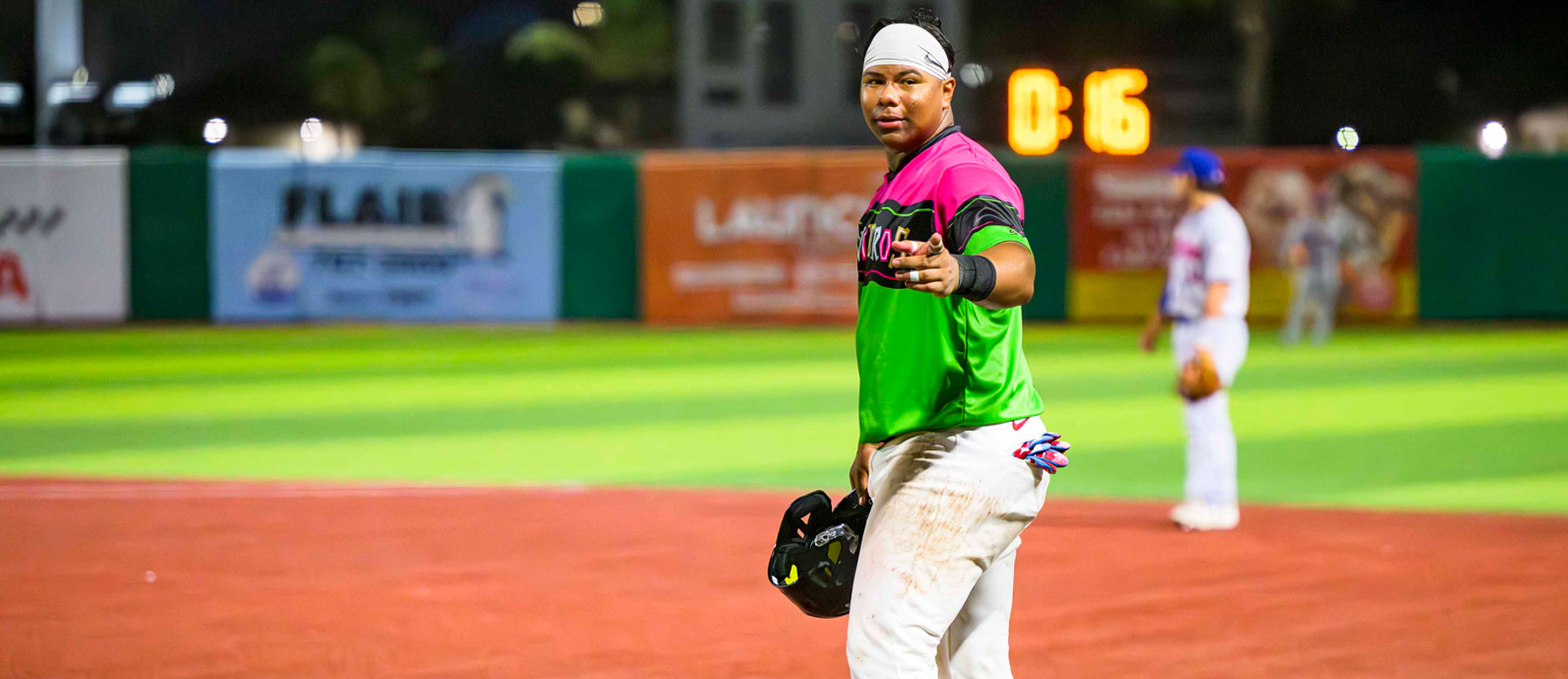
Three Cincinnati Reds prospects have been named to Baseball America’s 2026 Top 100 Prospect list. Sal Stewart was the top rated Red, with Alfredo Duno and Rhett Lowder showing up lower on the list.
For Sal Stewart, he really broke out in 2025. He entered the year unranked by Baseball America (at least in terms of being in the Top 100) but after hitting 25 home runs between the minor leagues and major leagues, while winning the Southern League MVP award and hitting .309/.383/.524 in the minors and posting an .839 OPS in 18 big league games in September he now finds himself heading into the 2026 season as baseball’s #23 prospect.
Alfredo Duno, the Florida State League’s Most Valuable Player in 2025, also began the year outside of the top 100. His big season with Daytona changed all of that. Duno led the league in nearly every possible offensive category except batting average – where he finished 2nd – and triples. His .948 OPS led the league and was just one of two players to top the .800 OPS mark among qualified hitters. The catcher had 32 doubles, two triples, and 18 home runs while walking more often than he struck out and hitting .287/.430/.518 in the most pitcher friendly league in the minors. All of that led to him being ranked 77th overall on the list.
Two spots later it was the final player among Cincinnati’s prospects to show up on the list. Rhett Lowder began the year as the #26 prospect and all expectations were for him to graduate from being a prospect early on in 2025. Things don’t always go as planned, though. Lowder would deal with multiple injuries that would ultimately cost him the entire regular season. He had multiple rehab stints but never wound up being activated. The righty did head out to the Arizona Fall League, though, and was able to pitch in four games for Peoria. His action was limited, throwing just 9.0 innings in those four starts.
How did the Reds stack up?
There are 30 teams in Major League Baseball, so in an even distribution of talent each team would have 3.33 players on the list. You don’t want to know how that 4th player was divided into thirds, I promise.
Cincinnati had three prospects on the Top 100 list. 16 teams had at least four players on the list. The Houston Astros did not have anyone make the list, while the Angels, Padres, and Rockies all had one player on the list. The Guardians, Mets, and White Sox all had six players inside the Top 100.
But what about within the National League Central? Those are the teams that the Reds have to directly compete against. While the amount of times you play divisional opponents has dropped in the last few years you still play them more than anyone else and you still want to win the division. Cincinnati didn’t exactly stack up well as the Brewers, Cardinals, and Pirates all had four players on the list. The Cubs only had two.
But it’s not just that three of the other four teams had more prospects on the list than the Reds did. The Pirates had the top prospect on the entire list. The Cardinals top prospect is ranked 3rd. And the Brewers top prospect is ranked 4th. Pittsburgh even has a second prospect on the list ranked higher than Sal Stewart is. Those teams just have farm systems that are better viewed than Cincinnati right now.
Of course there’s a lot more about projecting a team forward than just the current farm system. A big example here is that Chase Burns is no longer a prospect. But he also has less than a year of service time in the big leagues. He’s probably as valuable as any prospect on this list, if not more. He was arguably the top pitching prospect in baseball before he accumulated too many innings late in 2025 to be considered a prospect any longer. When it comes to the value of the farm system, losing that kind of player is really going to hurt the outlook. But from an organizational standpoint it changes nothing because that guy’s still there.
Note: I cover the Cincinnati Reds for Baseball America. I am not involved with any of their rankings, either for the Reds top 30 or the overall top 100 lists.