
It’s time for a little inside baseball. Most fans know that Scott Boras is the most powerful and visible agent in the sport, and each winter, one of the first things everyone does is to identify the players hitting free agency whom Boras’s agency represents. Many fans also know, at least vaguely, that Boras’s reputation is for stubborn patience and being willing to let his top players stay on the market longer than other agents do.
There’s truth in that, but it’s not the whole story. The Boras Corporation has over 75 active major-league clients, and is always adding players as they enter professional baseball and climb the first rungs of the ladder therein. Boras can’t fully service all of those players; he’s the head of a large operation. The company includes several MLBPA-licensed agents, and most Boras Corporation clients are assigned at least one representative other than Boras for their day-to-day needs.
However, part of the sales pitch with which Boras recruits the best players in the sport is the promise that he’ll be the one negotiating your deal, when the time comes to make real money. That’s his signature skill, and while his employees often talk with and even take the lead during segments of negotiations with teams, Boras is the closer. That’s the real reason why his clients tend to linger on the market the way they do, as much as anything else. Before he steps in to do his thing on behalf of one client, he must tackle the one ahead of them in the pecking order.
That doesn’t mean that Boras clients will simply sign in descending order of quality or earning power each winter. It’s not that simple. Rather, Boras and his team devise a strategy for cultivating discussions and offers, and they try to determine the best order of operations to get all their clients paid as well as possible. This can be a cold-feeling process for some of the company’s clients, and there’s no question that the best players get preferential treatment and take priority as the offseason gets underway, but they’re not neglecting the needs of anyone they represent; they’re just navigating the market with a utilitarian mindset about maximizing their players’ earnings.
When you see a non-elite Boras Corporation client sign early in the winter, you can bet that the team who signed them got extremely proactive in the pursuit of them. That’s how Matthew Boyd signed with the Cubs in late November 2024, and how Josh Bell ended up with the Twins relatively early this winter. If a club has a sufficiently strong feeling about a player, they can jump the line by communicating to Boras (or, just as often, one of the less famous agents under the company’s umbrella) that they’re ready to make a deal. Failing that, though, Boras tends to line up his top players to sign soonest, setting a robust market and ensuring that demand outstrips supply when it’s time to play matchmaker with the lesser lights.
This offseason, as has become common, Boras controlled the market. Dylan Cease signed a massive deal with the Blue Jays in late November. Pete Alonso got his big deal, on the second go-round, signing with the Orioles in mid-December. With a deadline looming, Boras got Tatsuya Imai a flexible deal with the Astros, and earlier this month, he secured a five-year deal for Alex Bregman. Using the leverage the Cubs’ deal with Bregman created, he got Ranger Suárez $130 million with the Red Sox. On Wednesday, Cody Bellinger became the latest headline name to get over $150 million. Boras Corporation clients have been guaranteed over $900 million this winter, not counting the deals inked by arbitration-eligible players.
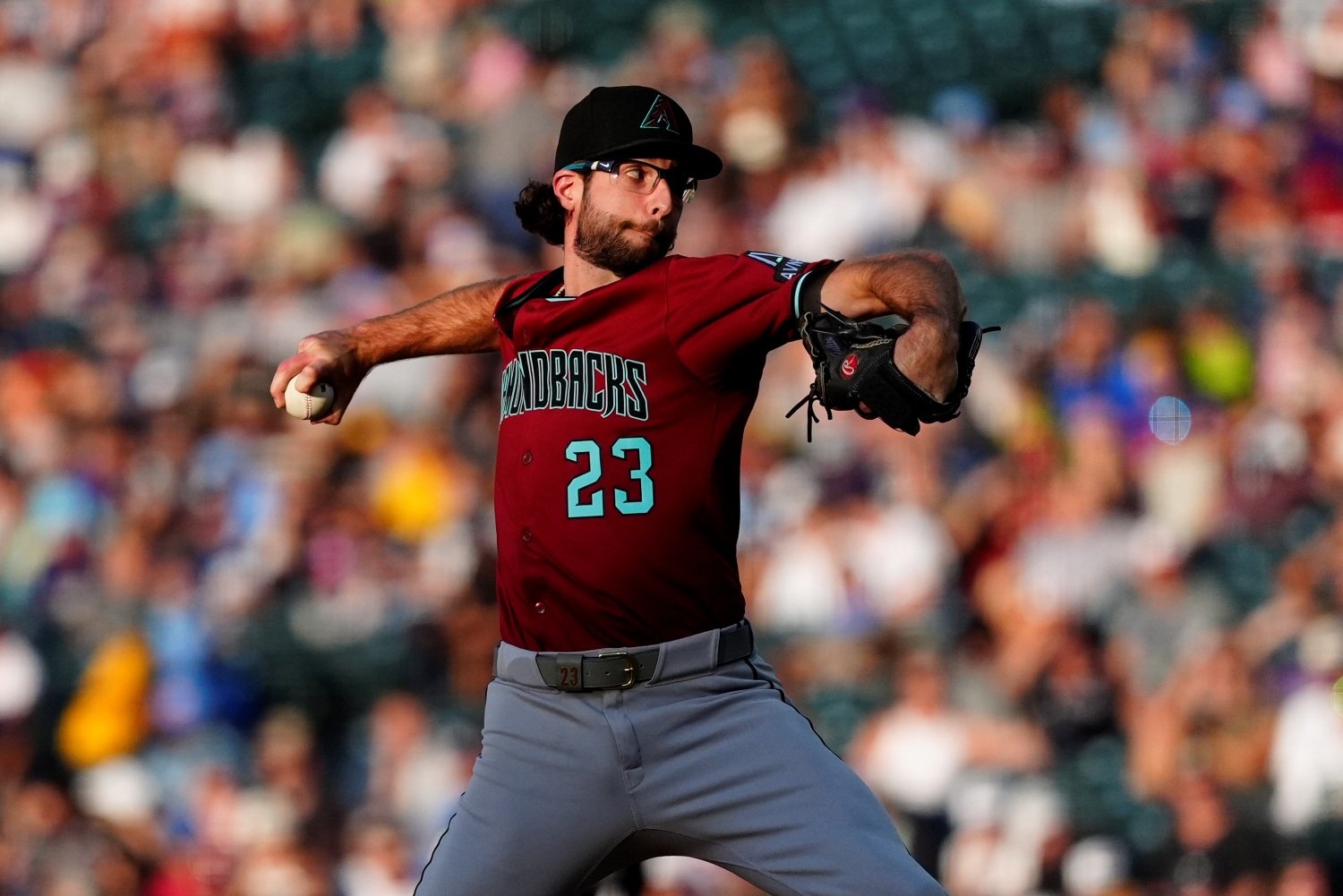
With all those stars off the board and the guys (Bell, Austin Hedges, Luke Weaver, Ha-Seong Kim and a few others) whom teams got proactive on out of the way, the Boras-specific portion of the winter has officially entered its endgame. There is only one player with a modicum of high-end earning potential left on Boras’s list: Zac Gallen.
Boras and company still need to find homes for Erick Fedde, Rhys Hoskins, Michael Kopech, Nick Martinez, Chris Paddack and Max Scherzer, too. None of those guys will sign long-term deals, though, and only one or two of them will get an eight-figure guarantee. Gallen is the last major piece for whom Boras needs to find a home, and it’s not a coincidence that he’s ended up being last in line.
As was reported (rather shoddily) at the time, the Cubs did flirt with a buy-it-now move on Gallen late last year, as they tried to create more certainty in their starting rotation. The price tag was much too high for their taste, though, with Boras seeking a five-year deal. Over a month later, the team has both spent significant dollars (on Bregman, most notably) and added to their rotation via trade, so they don’t have as urgent a need or as easy a fit for Gallen as they had then. That said, we talked at the time about why the team likes him, and those reasons for interest remain valid.
Indeed, Gallen’s market has staggered, though not quite collapsed, according to sources with knowledge of offers made to him this month. Rather than having any hope of a five-year or nine-figure payday, Gallen looks likely to settle for a deal much more akin to the one Boras got for Imai: three years and $54 million guaranteed, with the chance to push that number to $63 million via incentives or the right to opt out after either of the first two years. The Cubs have re-engaged with Boras about Gallen over the last week, according to a source familiar with the talks, but it’s not clear exactly how a deal palatable to both sides would be structured.
Right now, the Cubs have Boyd, Edward Cabrera, Jameson Taillon, Cade Horton and Shota Imanaga penciled into their rotation for 2026. All five of those guys have significant injury histories, either because of the volume of trouble they’ve encountered or because they just struggled with maladies last year. The team also has Colin Rea, who could open the season in the bullpen if everyone is healthy, and Javier Assad, who can still be optioned to the minors. Justin Steele will return sometime in the summer. On paper, they have depth in abundance.
Pitching on paper is unproductive, though, and on the dirt and grass of reality, the team will soon find some limits on the availability of the group listed above. Taillon and Boyd are each planning to pitch in the World Baseball Classic, and it wouldn’t be surprising if Imanaga, Cabrera and Assad ended up doing so, either. Innings limits based on age, previous workload and/or injury rehabilitation will come into play for Cabrera, Horton, Steele and top prospect Jaxon Wiggins. The Cubs are going to need more good, healthy pitchers than they currently have, and Gallen (despite ugly numbers the last year and a half) is exceptionally durable.
To sign Gallen, the Cubs would have to surrender a draft pick, though that would just even things out after they were set to receive one to compensate them for the departure of Kyle Tucker. (Bregman, who received a qualifying offer last winter and wasn’t eligible to get another, didn’t cost the team a pick.) With Taillon, Imanaga and Boyd each slated to hit free agency after 2026, signing Gallen to any deal that allows him to opt for free agency after just one year would be superficially problematic, but one team source suggested that it would also mean more freedom to operate next winter. If Steele, Horton and Cabrera are healthy and pitch the way the team expects, rounding out the 2026 rotation will be important, but not overwhelming.
Thus, as the Cubs consider ways to complete their roster and contend for a pennant this season, Gallen is back on their radar. A decision could come soon, though now that Boras isn’t spread as thin, he can play the waiting game with Gallen if his client is ok with not knowing where he’s going until the eve of spring training. This is just one possible path for Chicago, which is also weighing the option of trading one or more players to get more flexible and balanced throughout the roster, but it’s a surprisingly real one. Boras and Jed Hoyer have learned to read and use each other relatively well, and the best remaining deal out there for Boras’s last high-end client might come from Hoyer.