
Picture the scene. An Orioles hitter works his way into an extended at-bat. On a 3-2 pitch, he lays off of one that’s outside the zone and starts to head to first base — only for the ump to ring him up on a called strike three. The O’s have an out instead of a baserunner. The entire complexion of the inning changes. All because of a blown call on one fateful pitch.
Does it seem like that happens to the Orioles kind of a lot? Well, you’re not imagining things. Orioles hitters have been one of the league’s biggest victims of blown ball-strike calls over the past few years. According to Statcast, since the 2023 season, 2.0% of pitches outside the strike zone have been called strikes against O’s batters, a bit above the American League average of 1.9%.
In a perfect world, you’d hope that O’s hitters would also benefit from blown calls at an equal rate — as in, pitches in the strike zone being called balls. But that hasn’t been happening. In that same time span, only 1.6% of pitches to Orioles hitters have mistakenly been called balls, the lowest rate in the AL.
That 0.4% difference in miscalled strikes and miscalled balls might not seem like much, but it’s the most drastic difference among any AL team, and the most in the majors besides the Giants. Over the past three years, it’s a difference of 273 pitches. And it shows that the Orioles offense has been disproportionately unlucky on umpires’ ball-strike calls.
To be clear, I’m not suggesting that umpires are purposely pulling one over on the Birds. Calling balls and strikes is an extremely hard job, especially on borderline pitches, and it’s impossible for umps to get every one correct. Still, the Orioles have made a point of constructing an offense filled with hitters who know the strike zone. When they’re constantly getting saddled with strikes on pitches that they know should be balls, it changes the entire complexion of an at-bat. Hitters might have to start being overly aggressive or swinging at pitches they shouldn’t be swinging at, simply because they don’t trust the umpire to call the strike zone correctly.
Nearly every O’s batter has been affected by this. Of the Orioles’ nine hitters on the 40-man roster with 2+ years of MLB service time, all nine of them have been victimized by miscalled strikes more than they’ve benefited from miscalled balls in their careers. In some cases, the difference is severe.
Player% of pitches outside zone called strikes% of pitches in zone called ballsDifferenceJordan Westburg2.61.11.5Adley Rutschman2.61.61.0Ryan Mountcastle2.21.30.9Tyler O’Neill2.41.50.9Colton Cowser2.21.60.6Leody Taveras2.41.80.6Pete Alonso2.21.70.5Gunnar Henderson2.21.90.3Taylor Ward2.52.20.3
That’s an entire lineup’s worth of Orioles hitters (including those who just joined the Orioles this offseason) who have suffered miscalled strikes in 2.2% or more of their career pitches. None of them have come close to making up for it with miscalled balls. These guys, through little fault of their own, have been faced with unfavorable counts and blown calls more than the average hitter.
Now let’s get to the good news.
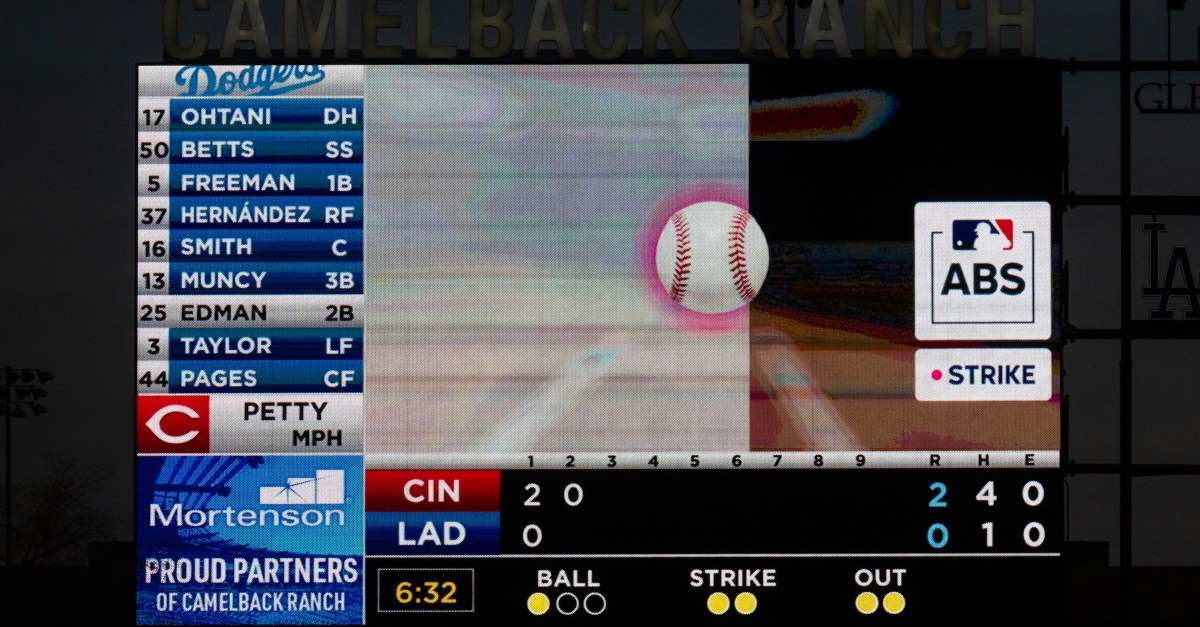
As you might have heard, a major change is coming to baseball this season in the form of the Automated Ball-Strike System (ABS). This will allow a hitter, pitcher, or catcher to challenge a ball or strike call immediately after the pitch, using Hawk-Eye technology to confirm the exact location. Teams get two challenges per game but retain them if they are successful.
ABS could be a game changer for Orioles hitters, who will finally have a way to reverse the undeserved strike calls that have all too often been going against them. It could be a particular boon to Jordan Westburg and Adley Rutschman, the Orioles’ two biggest victims of blown calls in recent years. Westburg has managed to hit well despite all the miscalled strikes; Rutschman, not so much. If there’s anything that can snap Adley out of his 1.5-year offensive doldrums, perhaps it’s his regaining his confidence in his batting eye and knowing that he won’t be bilked out of an at-bat by a blown call. The same goes for the entire O’s offense.
That’s not to say that every miscalled pitch will be reversed. Since teams can only afford two unsuccessful challenges per game, they’ll likely be judicious about how often they use them. So you might not see a batter challenge, say, a 1-0 called strike in the first inning with nobody on base. It’s not worth the risk if you’re not 100% sure it’s wrong. But in a big situation, when the bases are loaded in the late innings and a borderline 3-2 pitch is called strike three? You’d better believe there will be a challenge.
ABS is a long-overdue addition to Major League Baseball. It’s a quick, easy way to minimize blown calls by home plate umpires that impact the game. And for the 2026 Orioles, it just may be the key to an offensive revival.