
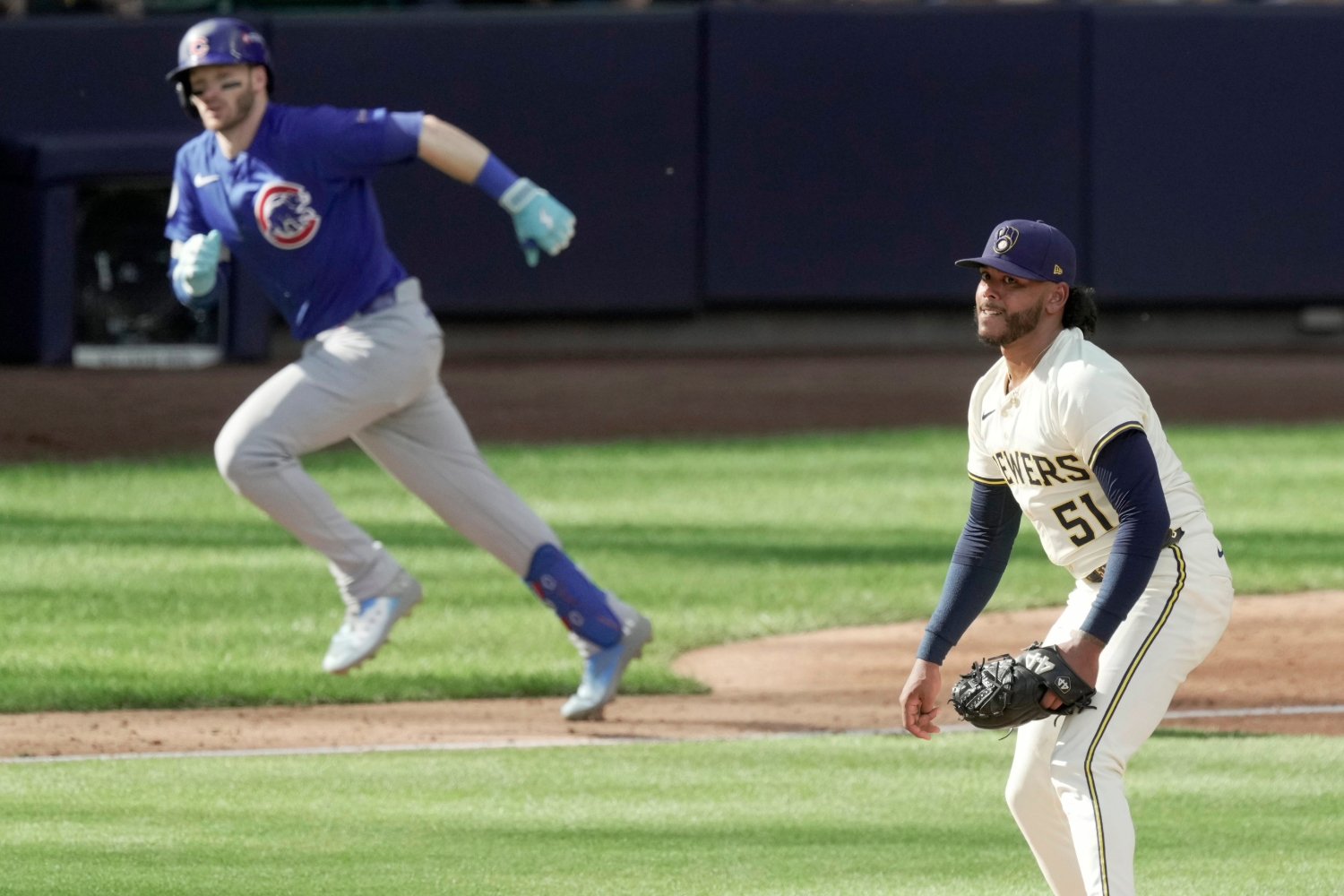
The phrase “limitations breed creativity” isn’t often applied to athletics, but as the lone major American sport without a salary cap (for now), Major League Baseball creates a unique environment that demands creativity from certain franchises in order to remain relevant.
That’s perhaps never been more salient than it is right now, with payroll disparities across the league reaching record levels. In a world where the Los Angeles Dodgers are spending $120 million for one season of Kyle Tucker (when factoring in luxury tax payments), it’s growing increasingly difficult for small-market teams to compete for titles.
And yet, that hasn’t stopped the Milwaukee Brewers from winning four of the last five NL Central titles, despite playing in the same division as the big-market Chicago Cubs. A rebuild from the latter certainly helped matters, but the Crew have just kept on winning, despite never running a yearly payroll higher than $135 million. It’s been astonishing work of creating a yearly product that is always larger than the sum of its parts.
However, those payroll limitations have caught up with the Brewers. After Brandon Woodruff accepted the qualifying offer (valued a little over $22 million in 2026), the team was up against their internal spending limits. They eventually capitulated to the financial strain, trading longtime ace Freddy Peralta to the New York Mets (alongside Tobias Meyers) in exchange for top prospects Brandon Sproat and Jett Williams.
This isn’t a new phenomenon for the Brewers, either. Just last offseason, they dealt All-Star closer Devin Williams and received their third baseman of the future (Caleb Durbin) in return. The year before that, it was Cy-Young-winner Corbin Burnes getting shipped to Baltimore for a gaggle of high-upside prospects, including starting shortstop Joey Ortiz. Wind the clock back a few more months, and you’ll find Josh Hader being sent via first-class delivery to San Diego. Rip up a bunch of yearly calendars, and you’ll find history repeating itself in the form of Yovani Gallardo being traded to the Texas Rangers.
All of those players had just one year remaining on their respective deals at the time of their trades, save for Hader who had an extra half-year of control (his was a trade deadline deal). That’s simply the price of doing business in Milwaukee; they know they can’t pay to extend their superstar players, and so they capitalize on each one’s value before they reach free agency. It’s a savvy way of doing business, though it also comes with the tremendous risk of always parting with the best player at the time of the trade. There’s no guarantee that the prospects the Brewers receive — even with with their excellent scouting department and player development program — will ever amount to anything in the major leagues.
This brings us back to the Cubs, who often find themselves on the opposite end of such deals. You need look no further than last winter for such an example, when they acquired Tucker from the Houston Astros for a package headlined by top prospect Cam Smith and third baseman Isaac Paredes. There are new ways to assess Tucker’s tenure now that he’s officially leaving after only one year in the Windy City, but that’s sort of the point of such trades; the superstar-receiving party is guaranteed one year of the player, whereas the superstar-sending party takes on the risk of developing prospects who come with many years of control. The Cubs got what they hoped for out of their sole season with Tucker — a 90-win season, a return to contention, and a playoff series win — but the value he provided in 2025 is all the value he’ll ever provide to the team. The Astros, meanwhile, now get a half-decade with Cam Smith to try and keep their own contention window open a little longer.
Now, for all their regular-season success, the Brewers haven’t won a World Series during this current window. In fact, they haven’t even made the Fall Classic, and they’ve only made the NLCS twice (2018, 2025) just to be stopped short by the free-spending Dodgers both times. Trading great players for long-term control of really good ones is a solid strategy for a 162-game season, but lowering your short-term ceiling is only bound to hurt you in the playoffs.
That’s the reality facing the Brewers, though. When they trade a star, they’ll get young talent in return, but they also do so with the intention of cutting payroll. They only saved $8 million in the Peralta deal, but you can be sure ownership is counting every dollar that comes in or out of the organization.
Though the Ricketts may be prone to the same billionaire phenomenon, the Cubs don’t have to trade stars in order to save money. There’s a good argument to be made that they should be extending more of their in-house standouts (á la the Braves or Red Sox), but that’s a conversation for another time. What matters now is that Chicago’s list of impending free agents following the 2026 season is as large as it is impressive; the non-exhaustive highlights include Shota Imanaga, Ian Happ, Seiya Suzuki, Jameson Taillon, and Nico Hoerner. Factor in options that aren’t likely to be exercised, and you can include Carson Kelly and Matthew Boyd among that crop.
Of course, the 2026 Cubs will be better with all of those players on their team. If the goal is simply to win the title this year, there’s no argument to be made otherwise. But we know Jed Hoyer likes to talk about this being a multi-year operation, and the 2027 Cubs will be significantly worse if most or all of those players walk in exchange for nothing, save for maybe a few extra draft picks via declined qualifying offers. Barring a few extensions that add more long-term money to the books, isn’t it reasonable for the organization to follow in the Brewers’ footsteps and trade a player or two for some major-league ready talent that has to play for cheap?
All this lamenting and posturing isn’t meant to encourage the conclusion that the Cubs should mimic every facet of the Brewers’ operation. As the big-market, deep-pocketed team in the division, the North Siders should aggressively spend on marquee talents, much like they did with Alex Bregman a few weeks ago. They should be aggressive in trades during competitive windows, much like they were in acquiring Edward Cabrera from the Miami Marlins. Even in the rare instance that a superstar player like Kyle Tucker becomes available, it’d be foolish for the Cubs not to at least throw their hat in the ring.
But this is a salient conversation amidst a potential MLB lockout, crumbling TV deal, and, of course, the Cubs’ self-imposed budget constraints. With so many players due for free agency in a year’s time, the front office must weigh the ramifications of lowering the short-term ceiling in order to keep the window of contention pried open a little longer. The Brewers have successfully walked that tightrope for the last half-decade; the Cubs may be destined for second place until they muster the courage to take the same leap of faith.