
Walker Jenkins sits comfortably at the top of the Minnesota Twins prospect hierarchy. That part of the conversation is easy. The harder debate begins immediately after him. The Twins system has several legitimate candidates for the No. 2 spot, and each brings a very different profile, risk level, and timeline.
This is not a ranking meant to dismiss any of the names below. Instead, it highlights how close this group really is and why the Twins are fortunate to have multiple paths forward. Still, prospect lists force choices, and the question remains simple. Who should be considered the Twins’ top prospect behind Jenkins?
SS Kaelen Culpepper
The case for Culpepper starts with how much he changed the conversation in one season. After entering the year as more of a solid but unspectacular infielder, Culpepper broke out across High A and Double A, with a 138 wRC+. He showed that he can remain at shortstop, while also tapping into more power than most evaluators expected. The bat speed improved, the physicality showed up, and suddenly, he looked like a potential everyday infielder with impact.
Why is he number two? Because Culpepper checks the hardest box. He can play shortstop. That alone carries enormous value, especially when paired with a bat that drives the ball to all fields. He does not need to sell out for pull-side power to do damage, and the extra-base hits came naturally as his strength developed.
Why shouldn’t he be number two? The swing remains fairly flat, which limits the ceiling of his in-game power. It might still be enough, but it likely caps him short of true middle-of-the-order production. There are also lingering questions about his long-term defensive home. If he ends up at third base, the offensive expectations rise considerably, and he will need to keep hitting (including tapping into that power) to justify the move.
C Eduardo Tait
Tait is the most exciting catching prospect the Twins have had in a long time. That puts him firmly in this conversation. He was also the highest-ranked prospect Minnesota acquired in the Jhoan Duran trade, signaling how highly the organization views his potential.
Why is he number two? Catching prospects with real offensive upside are rare, and Tait has that. He shows power, confidence, and leadership behind the plate. If everything clicks, he profiles as an everyday catcher who can hit in the middle of a lineup, something the Twins have been chasing for years.
Why shouldn’t he be number two? The margin for error is thin. There is nowhere else for Tait to go defensively if he cannot stick behind the plate. His aggressive approach leads to chasing pitches out of the zone, and that tendency will be tested as he climbs the ladder. He is also far from Target Field, and long developmental paths come with risk.
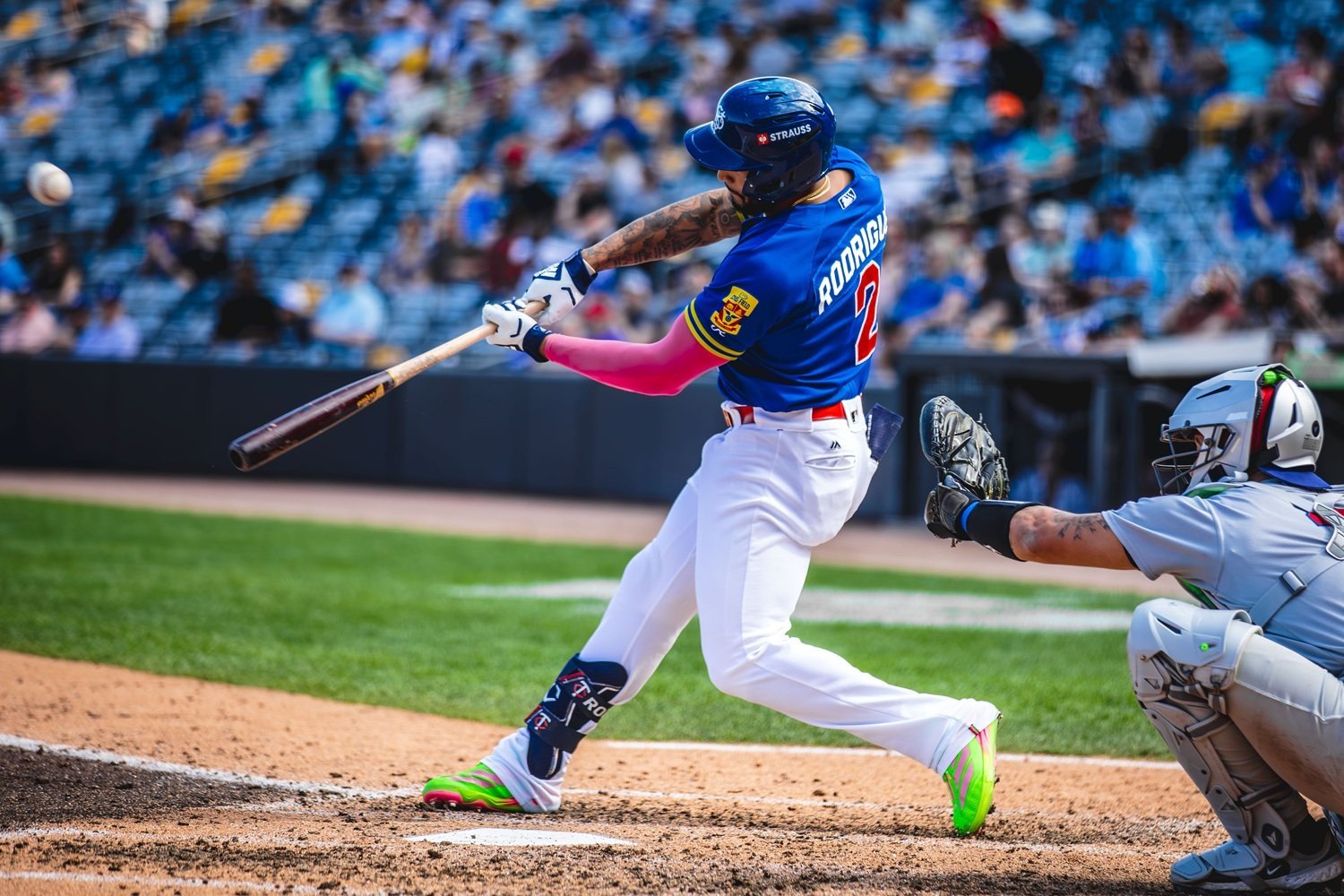
OF Emmanuel Rodriguez
Rodriguez might have the loudest tools of anyone in the system, when he is healthy. That qualifier matters, and he’s on a path to impact the Twins’ roster in 2026.
Why is he number two? When he is on the field, he controls the strike zone at an elite level. He draws walks, hits for power to all fields, and can handle all three outfield spots. In the corners, he is even above-average defensively. Few prospects in the minors combine patience and power the way Rodriguez does.
Why shouldn’t he be number two? Availability matters. Injuries have followed him throughout his professional career. Over the past five years, he has played more than 65 games only once. The passivity that fuels his walk totals also leads to a high strikeout rate, and when paired with durability concerns, it creates real risk.
SP Connor Prielipp
Pitching prospects often live in a separate category, but Prielipp forced his way back into this discussion in 2025.
Why is he number two? Prielipp worked 82 2/3 innings last season and climbed all the way to Triple-A St. Paul. The stuff is undeniable. If he sticks as a starter, he has the arsenal to become a playoff-caliber arm, something every organization covets.
Why shouldn’t he be number two? The biggest question is his role. Internally, opinions vary on whether Prielipp ultimately fits best in the rotation or the bullpen. His injury history also looms large. Last season marked the first time he had thrown more than 25 innings since 2019. Betting on health and a starting role at the same time is a risky proposition.
So Who Is Number Two?
If forced to choose today, Culpepper likely gets the nod. The combination of proximity, defensive value, and offensive growth gives him the highest probability of becoming an everyday contributor. That said, this is a fluid debate. Tait offers rare upside at catcher, Rodriguez brings star potential if healthy, and Prielipp could change the entire picture with one dominant stretch.
Behind Jenkins, the Twins do not have a clear answer. Instead, they have options, and that is a very good problem to have.
Who would you rank number two in the Twins’ system? Leave a comment and start the discussion.