
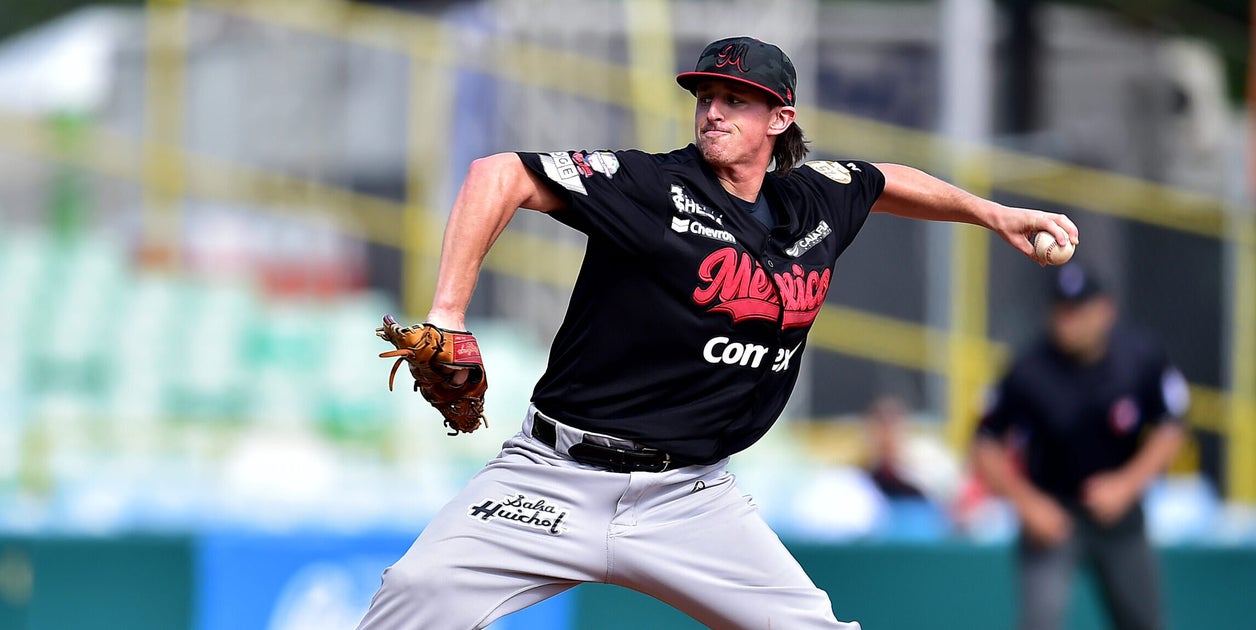
It’s a Thursday morning in late August, when the rigors of a typical 162-game calendar often become laborious for Major League Baseball players. That’s not the case for left-handed pitcher Zack Dodson, who started the week with a quick trip to Paris and, six hours ahead of Eastern Standard Time, is already into his afternoon. He chalks up the European jaunt “to the benefits of living in Germany,” where he plays semi-pro baseball.
The former Pirates fourth-round pick is a member of the Bonn Capitals and celebrated his 30th birthday in July. Dodson is five seasons removed from MLB-affiliated competition. Four years, eight months past the worst day of his life. He cried twice, for the separate 50- and 100-game suspensions he received for violating Minor League Baseball’s drug policy with marijuana. The final one, the winter after the 2015 season, turned his life upside down. Dodson stopped talking to his parents and lost his girlfriend.
Somehow Kent Qualls, the Baltimore Orioles’ director of minor league operations, convinced Dan Duquette — then president of baseball operations — to keep the newly signed, suspended Dodson in the system. The Orioles had already absorbed the bad press, the dreaded “drug of abuse” release that’s standard with any violation.
Dodson stayed on the restricted list and went to Florida to work out. But the Orioles released him two weeks after his suspension was up. A career highlighted by twice making the Pirates’ Top 30 prospects list and a respectable 3.67 ERA in 27 starts at Double-A Altoona in 2015 was over.
It was over because of synthetic marijuana in 2011, another failed drug test the following year and, finally, the one administered days after he came home from Venezuela. If he could do it all over again, maybe Dodson would handle things differently.
“It’s easy to say I was an idiot for doing what I was doing, but during the time I would rationalize it by (thinking), ‘I’m not hurting anybody, I’m not cheating.’ Whose business is it if I do something for two hours before I go to bed?” Dodson said. “Looking back, it was immature to not think about the big picture.”
Dodson was 25 when he was tossed on the scrap heap, before most pitchers are even considered in the prime of their career. Out of options, he followed a friend to the independent leagues, and Qualls helped him secure a job in Mexico the following winter. Dodson wrote letter after letter to big league teams, offering apologies and promises that he would submit to a drug test at any time.
“You spend a good piece of your life gripping a baseball,” former big leaguer Jim Bouton wrote, “and in the end it turns out that it was the other way around all the time.” Had Dodson stuck with the Orioles, he would have seen that quote painted on a wall at the team’s spring facility.
Eleven years after he was drafted Dodson is still playing, and to him that means something. The what-ifs of past poor choices don’t bother him so much as perception does. He smoked marijuana with “a lot of people who get paid a lot of money” in the big leagues today. He knew plenty of guys whose failed club tests were swept under the rug. Dodson knows he’s not a victim, but he bristles at the notion that he was a troublemaker or a “bad character” guy.
He maintains he was just a dumb kid with money, an ego and no luck in outsmarting a random drug test that for years treated marijuana for minor league players the same as performance-enhancing drugs.
“In hindsight,” said Dodson, echoing nearly every single person interviewed for this story, “I wish I would have just taken steroids to get ahead.”
In December 2019, natural cannabinoids (including marijuana, THC and CBD) were removed from MLB’s banned substance list. That means — assuming there is a minor league season in 2021 — it will be the first time players not on a 40-man roster can smoke without fear of retribution.
In 2019, more than a dozen minor league players were suspended for marijuana, which previously was lumped with heroin and LSD as drugs of abuse. Industry sources estimate about 80 percent of positive “drug of abuse” tests were for marijuana. In 2015, 42 of 108 minor league suspensions were listed as “drug of abuse,” a figure that doesn’t count undisclosed violations and those who simply refused to take a drug test. Multiple positive tests were necessary for a suspension, with the first failed test a warning and important baseball currency.
“Guys would say, ‘I still have my warning.’ That was a thing,” said MLB agent Joshua Kusnick, who previously represented several clients who entered the sport’s minor league drug treatment program, most notably pitcher Jeremy Jeffress, who served 50- and 100-game marijuana suspensions.
“Guys would joke about it. It was a joke to everybody except the people in the program, who were persecuted. If you were a lucky guy who got away with (using marijuana), you were cool. If you were one of the ‘idiots’ to get caught, your life was hell. You were in the drug treatment program until they decided to let you out.”
Technically, marijuana wasn’t allowed in professional baseball in any capacity until the 2020 season, though under MLB’s previous Joint Drug Agreement (JDA), opioid and marijuana testing for 40-man roster players was conducted only with “reasonable cause” or as part of a treatment program. Players on a team’s 40-man roster — roughly 26 of whom are on the active big league team — are protected by the MLB Players Association.
The line “smoke your way to the 40-man” was a common clubhouse joke. Several people interviewed for this story said they knew of cases where clubs put promising young players on a 40-man roster quickly so they’d be protected under the JDA.
“That was the most hypocritical thing: He’s on my team, he’s a minor league guy (too), but he can smoke weed and I can’t?” said Ryan Tucker, a former pitcher with the Miami Marlins and Texas Rangers who is now the CEO of a cannabis dispensary. “I know hundreds of baseball players that smoke weed. Maybe some don’t want to admit or keep it behind closed doors, but it was something clearly going on across the board on every big league team.”
While the MLBPA is widely considered the strongest union in sports (players had to agree to adopt PED testing before the league could implement it), minor league players have a separate drug policy and no representation, which has come under increased scrutiny in recent years.
“MLB could put any substance they want on that (minor league banned drugs) list. They can say you can’t take more than 10 grams of sugar in a day and nobody could say anything,” said Garrett Broshuis, a former minor league player and MiLB Advocates co-founder. “This (marijuana ban) was something that was always seen as stupid and ridiculous. It affected guys’ careers and never made any sense.”
Consider this: Under the old rules, if you were a player on the 40-man roster who had previously been in the drug treatment program still using marijuana, you were only fined. There were never suspensions for multiple test failures. At least two star big-league players would hand out blank checks at the start of a season, knowing they would pay fines that started at $35,000 and escalated. And this was among just a fraction of 40-man players who had violated the program enough previously to even be subject to tests.
If you weren’t a 40-man player?
Tucker laughs.
“You were screwed.”

Jeremy Jeffress served 50- and 100-game marijuana suspensions. (Scott Taetsch / Getty Images)
Andrew Lambo thought he was getting promoted when he got called into the manager’s office that day in 2010. It wasn’t a crazy idea; the outfielder was named the Dodgers’ No. 1 prospect by Baseball America the previous year. He was hitting nearly .350 in Double A.
Lambo, who says he used marijuana to help with symptoms of clinically diagnosed ADHD, had already failed one test. A second came with a 50-game suspension and mandatory counseling. Lambo recalls going to meetings in Arizona with cocaine and methamphetamine addicts, who talked openly about suicide and were stunned by his mere presence.
“They were like, ‘Weed? Are you fucking kidding, bro?’” Lambo said. “They put your name on a ‘SportsCenter’ ticker for a dumb fuckup. They can say why (in the press release): He smoked pot. Instead they enhance the fucking suspicion of, oh, what drug was it? Oh, drug of abuse? They put us out like we are some fucking addicts.”
Tucker also ended up in counseling and said that while he never failed a drug test, he was labeled as a problem with Miami and received a suspension for insubordination instead.
“I was made out to be a hard-core drug addict,” said Tucker, who noted several young Marlins players were treated similarly during that time period when he came up in the early 2000s. The Marlins organization has since undergone large-scale changes to ownership and the front office.
“I had to sit through psychologist meetings,” Tucker said. “I was flown to Chicago to meet with a therapist, all because I smoked weed.”
Tucker, like Dodson, knew plenty of guys who failed drug tests and were not punished. In addition to league testing, clubs could conduct their own separate tests, the results of which they didn’t have to report to MLB.
More than one person interviewed for this story questioned whether race was a disproportionate factor in random testing and punitive measures, as has been documented in the U.S. legal system. It’s difficult to determine, considering the autonomy clubs were granted to discipline their minor league players or not. Nearly everyone agreed that punishment varied widely depending on how strict the organization was — and, of course, the player’s overall value.
“There are times I took club tests high and I passed,” said outfielder L.J. Hoes, who spent parts of four seasons in the big leagues with Houston and Baltimore. “It was definitely rigged.”
Hoes, who used marijuana for anxiety, doesn’t think it’s a coincidence that his positive league tests came after he had struggled as a big leaguer. When he got hit with a 50-game suspension in January 2017, he was a minor league free agent, a week after his best friend was murdered.
“That’s where the business side comes in,” Tucker said. “You make people ‘insubordinate’ or come up with different excuses so players don’t have a reputation depending on how big of a prospect they are. If they are a young guy who is roster filler? Yeah, he gets suspended for smoking weed. Those guys fall through the cracks and it sucks for them. For me, I was a first-round draft pick. They had to be a little more careful in what they label people.”
Tucker said he kept his cannabis use in check when he wasn’t on the Marlins’ 40-man roster. When Texas claimed him off waivers on Oct. 6, 2010, one of the first things Rangers ownership said to Tucker was that they were worried about his off-field issues.
“The Marlins went to great lengths to smear my name,” Tucker said of Miami’s previous regime. “Good for the (league) in fixing the system now, but I had a lot of friends and teammates who got screwed over and dealt with a lot of shit that now isn’t frowned upon at all.”
Like Lambo. He served his suspension and was then traded to Pittsburgh and eventually made it to the big leagues more than three years later. He played 60 games over four seasons, was released by Oakland in 2017 and spent some time in independent ball before retiring.
Or Matt Camp, one of the final cuts in Cubs’ camp in 2011, who tested positive for synthetic THC later that season. Camp, unaware that a synthetic product would bring a positive test, appealed his 50-game suspension and lost. Hoes also appealed his suspension. Both Kusnick and Broshuis said the lack of successful drug appeals in the minors is another problem.
Camp never reached the big leagues and is now 36, working at Verizon. He found out he was going to be a father at the same time his baseball dream ended. He said he isn’t bitter about what happened. He’s most upset at the way the Cubs treated him, releasing him knowing it would be nearly impossible to sign with another team while serving a suspension.
“I was treated like a dog. Had I had the funds to jump on a plane, I would have flown up there and probably been in jail right now,” Camp said of the final phone call of his pro career. “For me to argue I was screwed over? No, I wasn’t. I just wish the rules were different when I was playing.”
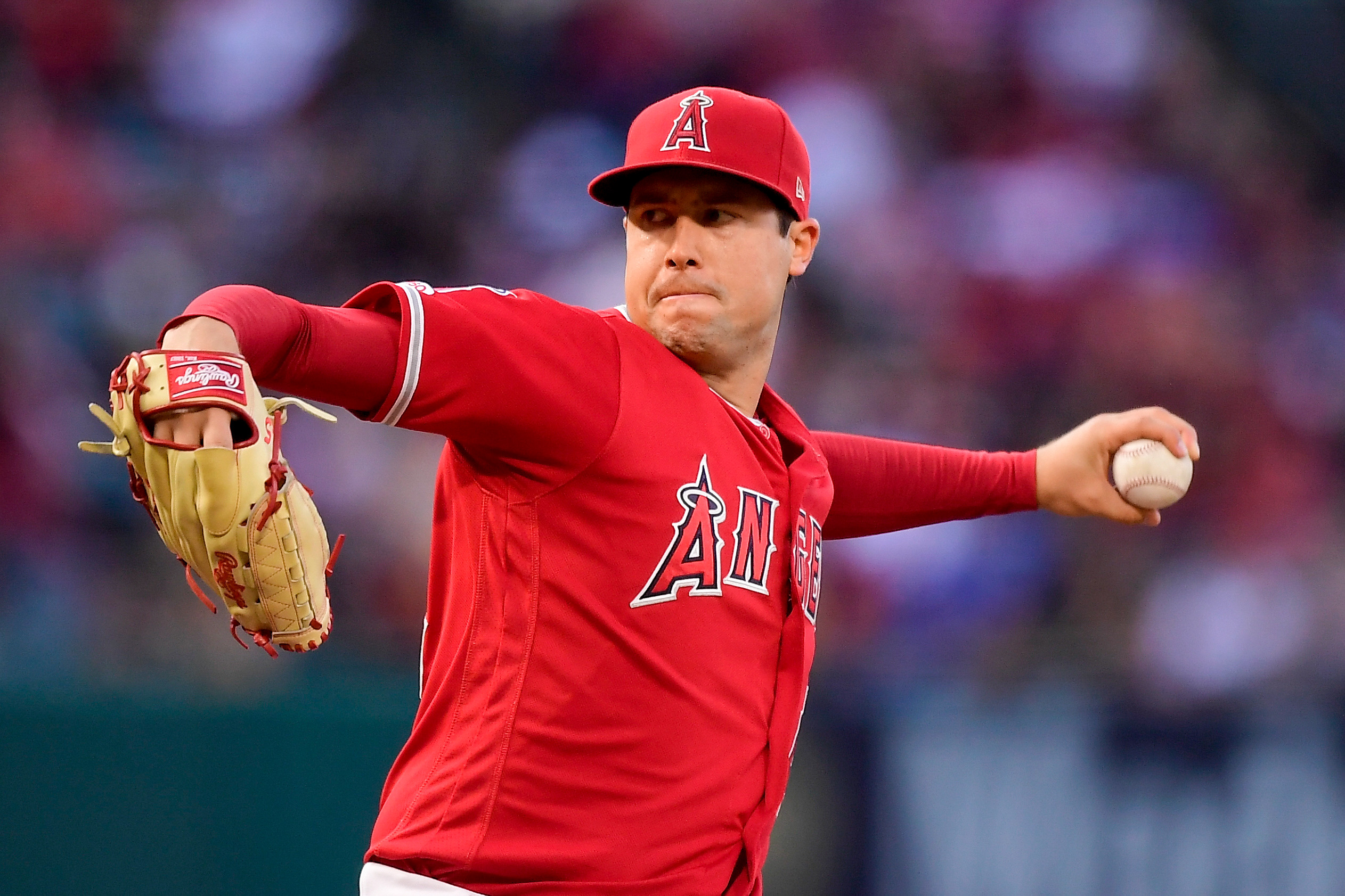
Tyler Skaggs in May 2019 (Mark J. Terrill / Associated Press)
Why now? After years of the MLBPA fighting to get cannabinoids off the banned substance list (“It should have never been there in the first place,” said one official), what prompted the league to finally get this done last winter?
On- and off-the-record interviews with more than a dozen people reveal two main reasons: the increase in state legalization of cannabis and the death of 27-year-old Angels pitcher Tyler Skaggs.
On July 1, 2019, Skaggs was found dead in his Texas hotel room having aspirated on his own vomit with fentanyl, oxycodone and alcohol in his system. His death was ruled accidental. It was tragic, shocking and immediately called the league’s drug policy into question. On Dec. 12, 2019, MLB and the players association announced changes, most notably the addition of opioid and cocaine testing and the removal of natural cannabinoids.
“That (Skaggs’ death is) the only reason the rule changed,” said Kyle Blanks, who played pro ball for a decade with four organizations and now co-owns a CBD company in New Mexico. Blanks also never failed a drug test and says he turned to pills and alcohol when he wasn’t on a 40-man roster because it was the only legal way to deal with pain.
It was liquor during the day, Ambien and Benadryl at night. Blanks said he once went through 200 pills in a 45-day stretch and, while he has sympathy for those who were suspended for weed, he points out there were other options to keep getting paid.
“I knew full well they weren’t great options, but they kept me with a job,” he said. “That (marijuana) rule was bullshit the entire time I was abiding by it and taking pills and alcohol instead. It should have never got this far.”
Today, @MLB and the @MLB_PLAYERS jointly announced significant changes to the Drug of Abuse provisions of the Joint Drug Prevention and Treatment Program. pic.twitter.com/jIie1JDVAg
— MLB Communications (@MLB_PR) December 12, 2019
A 2017 report from the National Academies of Sciences, Engineering and Medicine, titled “The Health Effects of Cannabis and Cannabinoids,” found there is “conclusive, or substantial, evidence that cannabis is effective for chronic pain treatment” in adults. The medical journal presented nearly 100 conclusions and furthered a 2015 American Medical Association study that found “moderate evidence to support the use of cannabinoids for the treatment of chronic pain and spasticity.”
Currently, 36 states and the District of Columbia have legalized medical cannabis. Fifteen states and D.C. allow recreational marijuana use. Over the past two decades, 47 states have amended their marijuana laws, lessening penalties and loosening restrictions. In October 2018, Canada made it legal to buy, use and possess recreational marijuana for adults 19 and older.
“We know there are not only more addictive substances but much more harmful substances. Those are just facts,” said Dr. Ari Greis, the pain management physician for the Philadelphia Eagles who does medical cannabis certifications in New Jersey and Pennsylvania. “So we shouldn’t be treating people the same way if they test positive for cannabis use.”
Greis, who is researching the effects of cannabis on pain and the ability to be an opioid-sparing treatment, said the most recent literature suggests an 8 percent addiction rate for those who use cannabis. In comparison, alcohol addiction is around 15 percent, while opioids are well into the 20-30 percent range depending on the study.
MLB declined to comment for this story, though chief legal officer Dan Halem acknowledged in the league’s 2019 release detailing the drug policy changes that opioids were a significant concern.
“It is our hope that this agreement — which is based on principles of prevention, treatment, awareness and education — will help protect the health and safety of our players,” Halem said.
Any player, whether he’s on the 40-man roster or not, found to be in violation of the new drug policy will be sent to treatment first, with suspension only a potential remedy if he fails to comply. Marijuana is now treated like alcohol in the league’s policy: permitted so long as it’s used responsibly and in accordance with the league’s guidelines.
“It’s frustrating on one hand and encouraging on the other to hear what MLB is doing to change the way they test for controlled substances and more harmful and dangerous drugs that players may be using,” said Greis, who acknowledged that changing how cannabis users are viewed is often a slow process. “It’s happening gradually, but it is interesting to see what a big deal some people are still making of it.”
It is not just baseball’s public stance that is changing. Society is shifting, too. In 2005, a Gallup poll of Americans found that only 36 percent were in favor of legalizing marijuana. By 2018, support for nationwide adult-use legalization hit an all-time high of 66 percent, a figure that repeated itself last year. Of course, some regions have often had more lenient attitudes. (Who can forget the “Let Tim Smoke” chants stemming from San Francisco pitcher Tim Lincecum’s possession charge in October 2009?)
The NHL has had a more tolerant policy for years. Only if a player is found to have a dangerously high level of a narcotic or cannabinoid is he subject to league assessment. That assessment is confidential and may include substance abuse treatment, if necessary.
Last March the NFL and its players announced it would stop random testing for marijuana under its new collective bargaining agreement. The NBA, after allowing cannabis during the 2020 bubble season, announced in early December it would cease marijuana testing again for the 2020-21 season.
“I don’t think all these people had a problem with it before, it was just trying to follow the rules,” Tucker said of the old drug policy. “When you get labeled as being a rule breaker, it’s not something baseball does well with. There aren’t many second chances.”
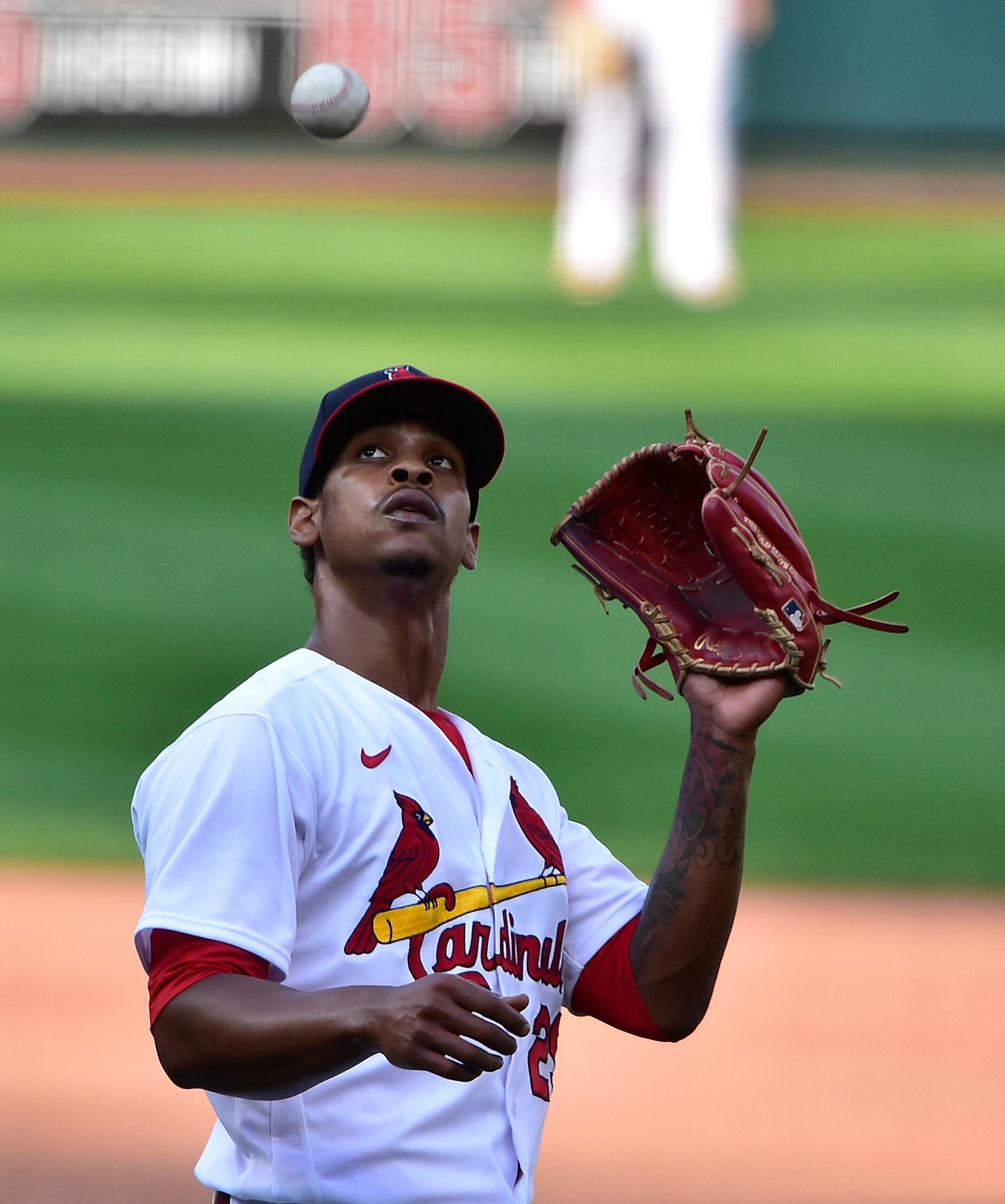
Alex Reyes was suspended in 2016. (Jeff Curry / USA Today Sports)
Careers were altered because of the old cannabis rules. Even those who didn’t see their baseball careers end hardly went unscathed.
There was Alex Reyes, a Cardinals top prospect, who had his pending big-league arrival delayed by a 50-game suspension to start the 2016 season. The previous year the Giants used their first-round pick on pitcher Phil Bickford despite his positive marijuana test in a pre-draft screening. Bickford, who was traded to the Brewers, was suspended 50 games for a second failed test to start the 2017 season. He made his big league debut on Sept. 1, 2020.
Jeffress, a current free agent, is one of the most notable examples. After he served a 100-game suspension as a minor leaguer in 2009 — the next failed test would have banned him for life — Jeffress debuted for Milwaukee the following season. In 2013, after he did a sleep study while with the Toronto Blue Jays, the team diagnosed Jeffress with epilepsy — which helped explain his seizures and anxiety. He previously said he self-medicated with marijuana. Jeffress has pitched in 11 big league seasons and was an All-Star with the Brewers in 2018.
“They took two or three years off of Jeffress’ career,” Lambo said, “and for what?”
What if you’re a struggling big league pitcher with an aching right shoulder and all the anxiety that comes with a career of constantly battling for the final roster spot? What if, instead of reaching for a bottle of alcohol or pain pills, you smoke some marijuana? After all, you’re a 40-man roster guy, so you’re safe. But then the very thing that’s causing your performance dip, the shoulder you told the team was hurt, is the reason you get designated for assignment off the roster. A few days later, the drug test comes and you’re officially a minor league player now, one who already used your get-out-of-jail-free warning card years ago.
It might sound crazy, but that’s exactly what happened to reliever Javy Guerra, who was suspended 50 games in 2015. Guerra was forced to accept his outright assignment — or lose half his salary — with the White Sox and shut up about it. He filed a grievance that’s still pending. But even if it changes his record, what will it really change? He still served the suspension, still got the black mark against his name, still had no job offers until mid-February 2016, a minor league deal with the Angels.
“The damage was already done,” said Guerra, who was told later by a White Sox doctor that his shoulder was badly hurt and needed months off. “I lived through it, and it’s tough because you know you aren’t that person that you are being labeled as and you have to deal with the trolls and people just making assumptions.”
“The one question I got the most with Jeffress from teams, media, everyone was, ‘Well, why can’t he stop smoking weed? Is he fucking stupid?’ Every time I’d have to say, he is sick and no one is taking it seriously,” Kusnick said of Jeffress, who was charged with a DUI in 2016, shortly after he was traded to Texas. “That attitude is the reason it’s tough to get help. Baseball made it hard to get help.”
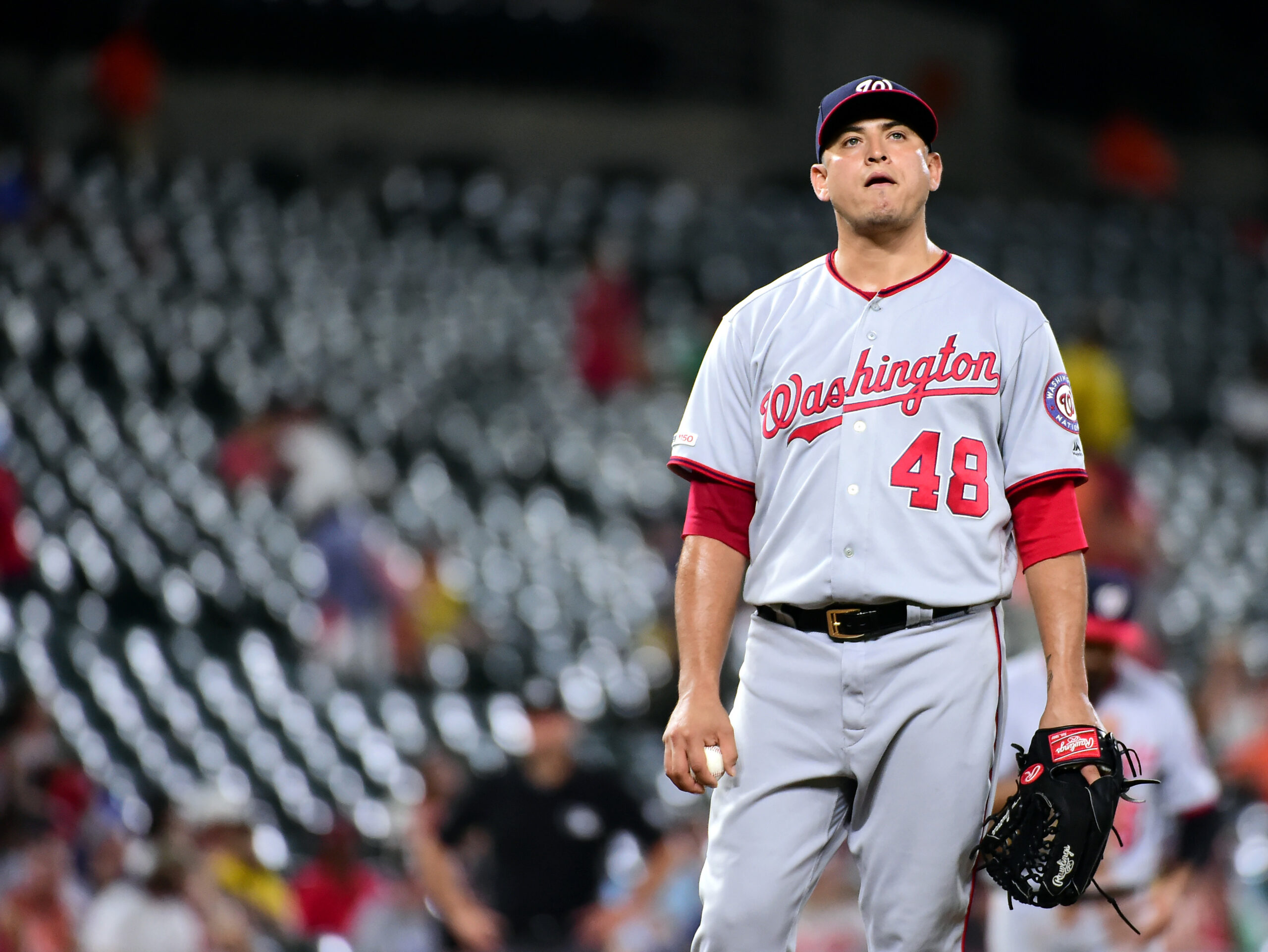
Javy Guerra was suspended 50 games in 2015 (Evan Habeeb / USA Today)
From the other side of the baseball world, Dodson pings. It has been months since we spoke, but Mets second baseman Robinson Canó has just been suspended after testing positive for a performance-enhancing drug. It’s Canó’s second violation, so he will miss the entire 2021 season. Punishment has been served. And yet, not really. Who knows how long Canó, who was suspended in 2018, has been cheating? Who knows what the trajectory of a career for an eight-time All-Star, who hit .316 as a 38-year-old last year, would be like had he been caught and punished earlier in his career?
Has this story run yet? Dodson wants to know. Canó’s suspension has stirred up some of our conversation, about Melky Cabrera getting 50 games for PEDs in 2012 and a $42 million contract three years later. About forgiveness and redemption arcs afforded to established players who use performance-enhancing drugs.
“What if I had taken the chance to do steroids to get to the big leagues quicker?” said Camp, who was a versatile infielder with a light bat. “What if you added 25-30 home runs to that? I smoked marijuana to relax, and that ends up being the demise of my career. I would have been shooting steroids in my ass, doing cocaine, smoking, hitting 75 home runs if I knew it was going to end like that.”
MLB’s domestic violence policy, which started in 2015, has no minimum or maximum, but half of its 12 cases have been less punitive than a second-time minor league marijuana offender. Since the domestic violence program began, only former San Diego Padres pitcher Jose Torres has received a 100-game suspension after he was charged with multiple criminal offenses, including allegedly pointing a gun at a woman with whom he was in a relationship.
“What are we trying to do? Are we trying to clean the game up?” Hoes said. “Because if we are, DV and steroids are way worse.”
There’s a guy Dodson brings up, Tyler Alexander, who came back from a 100-game marijuana suspension. Dodson keeps track of these players, pulls for them, hoping each case means maybe the stigma, the setbacks aren’t as bad as he thought. Alexander did sign with the A’s in 2019, but he struggled in Triple A and was demoted. Before COVID-19 shut down the sports world, Alexander signed to play in Mexico. His redemption arc, like Dodson’s, will have to come outside pro ball, from making the most of whatever opportunity remains. That’s how Dodson sees it, how he copes with a career of might-have-been.
“I give credit to baseball for making it legal because too many people are dying (of opioid overdose),” said Lambo, who works in the credit card processing industry with one of his departments helping bridge the gap between traditional banking institutions and THC companies.
“MLB is fortunate they are in an industry where a lot of their employees don’t have rear-view mirrors,” he said. “Players are wired to not look back and question the what-ifs and contemplate the should-have and should-nots. Because if you did marijuana back in the day, you were on a shit-fucking-list. You were looked at like you were Josh Hamilton.”
(Hamilton, a former major leaguer, had cocaine and alcohol addictions, admitting at one point that he had tried “every drug under the sun.”)
Lambo has thought about steroids making him better off, too. He has thought about his decisions, the shame his suspensions cost his parents, and how sports, like society, is evolving its approach toward issues like drug addiction and mental health.
Like the others profiled in this story, Lambo ultimately blames himself for breaking the rules and changing his life’s trajectory. There is some comfort in knowing that baseball is headed in the right direction, that Dodson will have no more 100-gamer marijuana guys to seek out, even if the sport can’t go back and fix things. Like his pile of unanswered letters. Camp’s final phone call. Lambo’s fateful trip to the manager’s office.
Reputations can take lifetimes to repair. That still may not be long enough to understand baseball’s intention in its inconsistent former drug policy.
“What was the point of any of it?” Kusnick said. “I still have a lot of built-up anger over all of the guys who got screwed over. How much money was lost? For what? What did any of it accomplish?”
(Top photo of Zack Dodson: Ricardo Arduengo / Getty Images)