
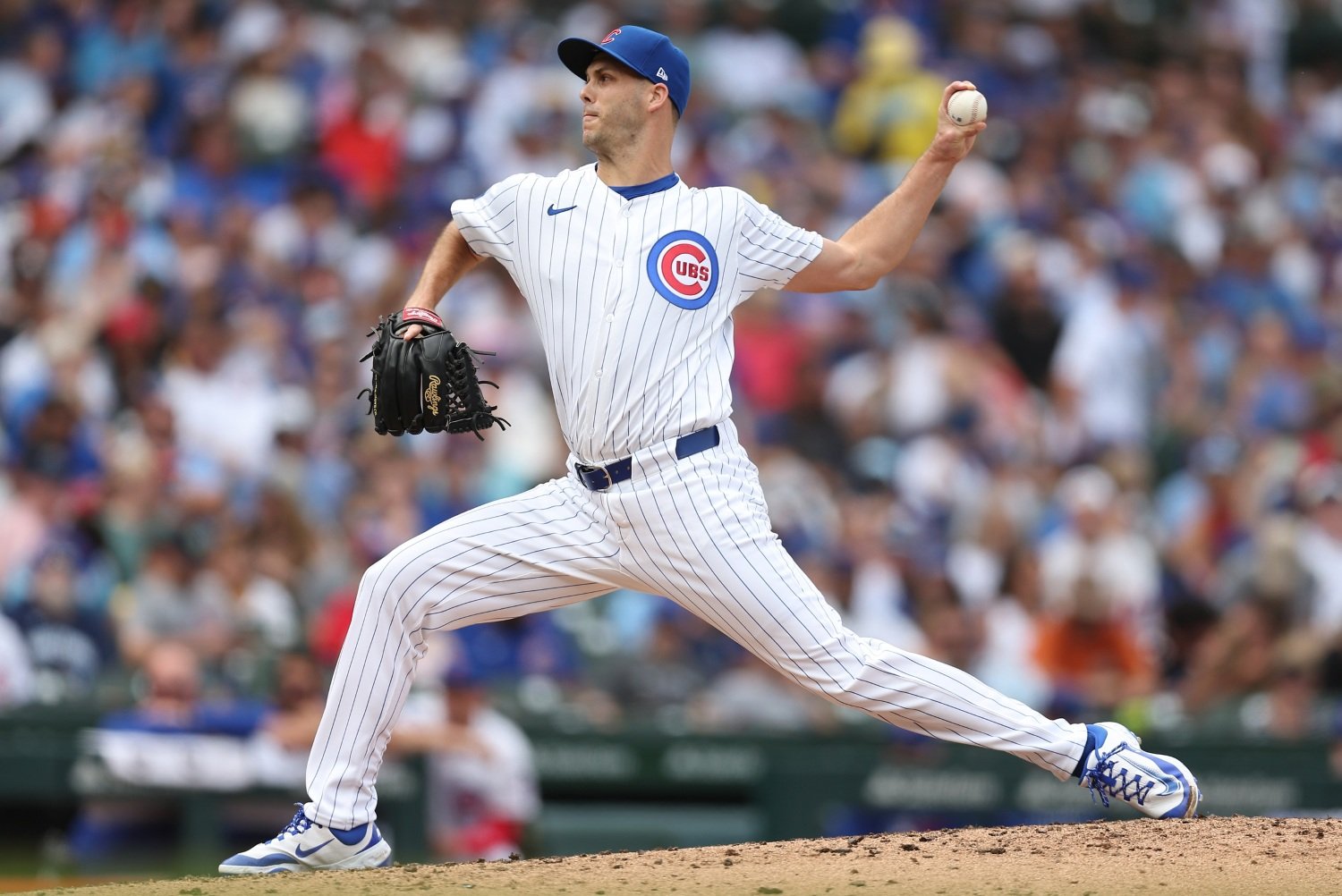
Taylor Rogers has accrued nine years and 145 days of MLB service time—just 27 days short of collecting his pension. The rest of the Twins’ projected Opening Day bullpen (Justin Topa, Cole Sands, Kody Funderburk, Eric Orze, Pierson Ohl, Travis Adams, John Klein) has 11 years and 83 days in total.
About half of that time belongs to Topa, who sits at five years and 44 days, but three of those years (2021, 2022, 2024) he spent injured and threw 13 combined innings. Cole Sands has two fewer years of experience and eight more appearances. So, in terms of MLB experience not spent rehabbing, it’s closer to nine years between those seven bullpen arms.
Put another way—Rogers has thrown 541 1/3 innings as a big leaguer. Those seven names, combined, have thrown 578 2/3 frames. If you want to throw one of the starting pitchers into a bullpen role, I don’t begrudge you, but David Festa only raises the service time count to 12 years and 135 days, then the innings count to 657 1/3.
Rogers brings far and away the most experience in a bullpen stocked with players still wet behind the ears. Many players are slated to make their big-league debuts in the bullpen this season—like Klein, Marco Raya, or Connor Priellipp. It wouldn’t be surprising if some starters—like Festa, Mick Abel, or Zebby Matthews—spent time in the bullpen.
Having someone like Rogers, a former All-Star closer, has value when dealing with this level of youth and inexperience. The nerds in the room may turn up their noses at such an idea. To many, it’s foolish to buy into the human element playing any role in a team’s success, but we have empirical evidence that these things matter. There’s a litany of organizational and managerial research that informs this, but there’s also been studies of MLB teams.
In 2013, Jamal Shamsie of Michigan State and Michael Mannor of Notre Dame published a study analyzing MLB teams from 1985 to 2001 and attempting to measure tacit knowledge. Tacit knowledge refers to knowledge that is difficult to communicate, because it’s gained through experience. A player can have all the skill and instruction in the world, but without experience, they cannot reach their full potential. They have to live to learn.
One form of tacit knowledge that the researchers identified was discrete productive knowledge: knowledge gained from doing the work repeatedly—essentially, the more times you do something, the better you’ll understand it, and the better you’ll perform. This isn’t a practice-makes-perfect skill acquisition idea; it’s understanding your job better and being better able to react when things go awry, because you’ve done it before.
How did the researchers quantify discrete productive knowledge? Pretty simple: years of experience. They even split it up into regular-season experience and playoff experience. They found, over the span of their study, that regular-season and playoff experience both contribute to team success. That is, teams with more experienced players tend to do better. These findings were similar to those of a 2002 study by Shawn Berman, Jonathan Down, and Charles Hill on tacit knowledge among NBA players.
Obviously, there are easy criticisms to make of this methodology. Players who have played longer tend to be better players. You don’t see a bunch of guys playing 15 years while also being bad. But the researchers attempted to control for that as well. Beyond other types of tacit knowledge, like manager experience, tenure within a team, or the number of lineup changes in a year, the authors also controlled for previous years’ winning percentage, market size, and payroll. And they found that even beyond those effects, experience made a real difference. Having ‘been there’ matters.
Rogers understands the game in a way his less-experienced colleagues do not. He knows how to navigate late innings in a way his teammates don’t, simply by dint of having done it before.
By definition, he’s in a better position to navigate bullpen and late-inning life. Even if he’s regressed to a similar skill as someone like Funderburk, he has the background to help him outperform his sheer talent at age 35. Sands might be better than him at this point in his career, but Rogers has two 30-save seasons under his belt. He knows what it feels like to close a nailbiter out. He’s done it dozens of times.
Given that experience, he can immediately step into a high-leverage role. That might just be keeping a high-leverage seat warm for one of the younger guys, but it’s an experienced presence that can anchor a bullpen.
Of course, there’s also explicit knowledge. There are things that he can teach younger guys. Not just “throw a slider in this count” or “move your index finger a little to the left,” but he can be a resource for living the big-league bullpen life, because this will be his 11th year doing it. Many pitchers struggle with finding the right weight-lifting and throwing routines to navigate the unpredictable schedule of a reliever’s work. Some aren’t as sharp as they need to be when they enter the game, because their preparation in the pen itself before entering is imperfect. Applying scouting and analytical data about opposing hitters is a skill that requires development. Rogers can help with all of that.
A player can communicate some of their experience to others. It’s not all locked in their head, tacit and uncommunicable. A good veteran has both types of knowledge to share.
Berman, S. L., Down, J., & Charles W. L. Hill. (2002). Tacit Knowledge as a Source of Competitive Advantage in the National Basketball Association. The Academy of Management Journal, 45(1), 13–31.
Shamsie, J., & Mannor, M. J. (2013). Looking inside the dream team: Probing into the contributions of tacit knowledge as an organizational resource. Organization Science, 24(2), 513-529.