
This is the second installment in a series about the many opportunities and difficulties of signing and developing international amateur free agents. Part 1 can be found here.
Evaluating the Minnesota Twins’ international program requires a level of honesty that can be uncomfortable. For much of the past two decades, international scouting has not been a consistent organizational strength.
Before the implementation of international bonus pools under the CBA that went into effect in 2012, teams were free to spend aggressively in the international amateur market, without penalty. Many organizations took advantage of that freedom. The Twins did not. As reported in a 2019 article at The Athletic, international free agency was not viewed as a high priority by ownership or the front office during that era. While competitors invested heavily across Central and South America, Minnesota often spent conservatively, signaling—intentionally or not—a lack of seriousness to players, trainers, and international talent evaluators.
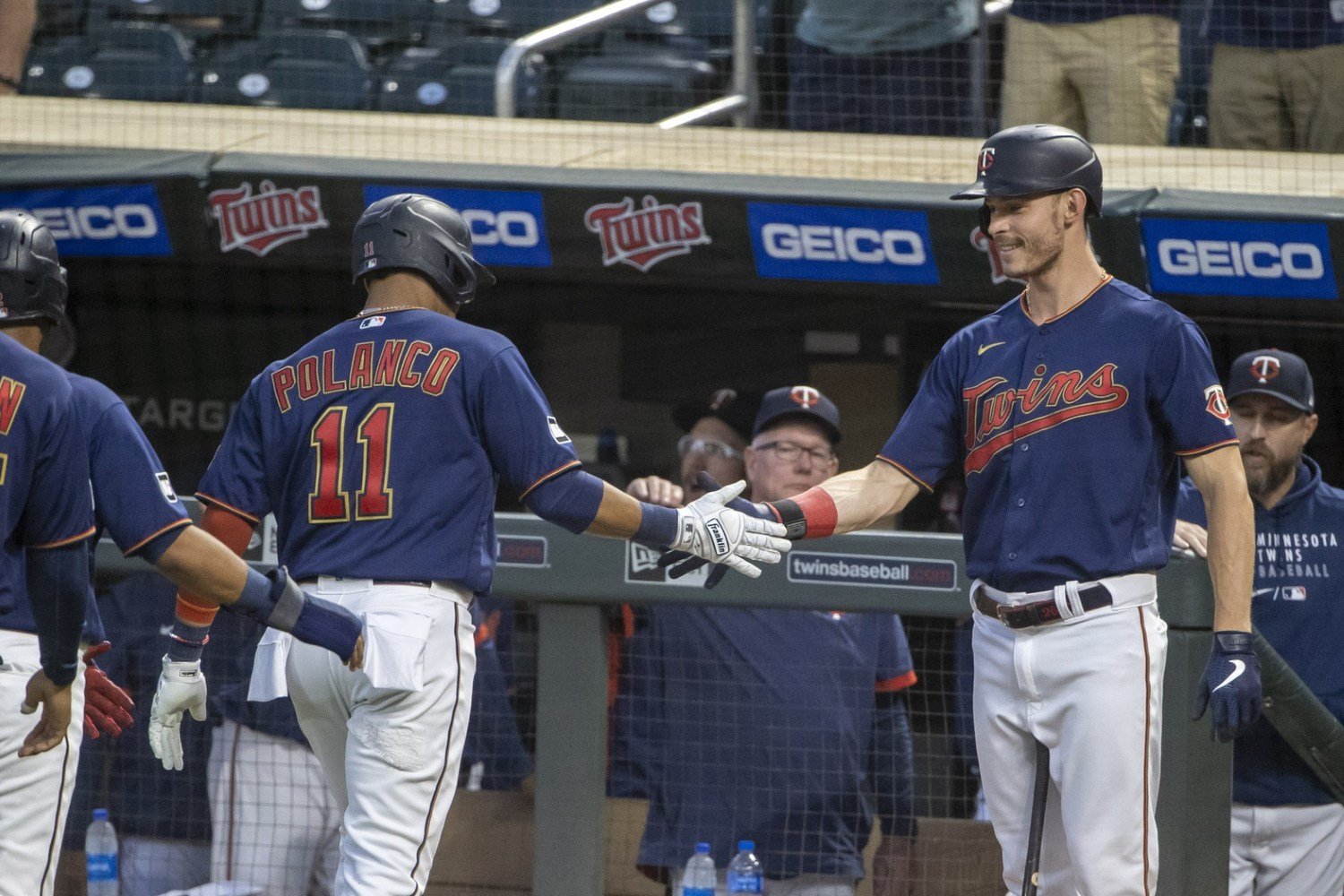
There were, however, notable exceptions. In 2009, despite facing challenges related to age verification and budget overruns, the Twins signed three 16-year-olds who would go on to define the franchise for years: Jorge Polanco, Max Kepler, and Miguel Sanó. That class became the clearest example of what international investment could yield when scouting, development, and opportunity aligned.
Following that success, the pre-2020 era settled into a familiar pattern. The July 2 signing window typically brought modest spending and similarly underwhelming results. The Twins often targeted athletic infielders and outfielders with defensive versatility and strong baseball instincts. While there were occasional wins—particularly among low- to mid-bonus players who developed steadily—the organization struggled to convert its largest bonus signings into long-term MLB impact.
Systemic challenges persisted. Even as the Twins continued to invest in the global market, outcomes frequently lagged behind those of peer organizations. Volatility is inherent to international scouting, and every team misses more often than it hits, but Minnesota’s results often fell short of expectations due to stalled development or recurring injuries. When top-end talent didn’t fully materialize, the club more often leveraged those players as trade capital, rather than foundational big-leaguers.
Until 2020, the organization remained heavily focused on position players. Pitching was frequently acquired via trades, rather than developed after signing internationally. That approach began to shift recently. In 2024, the Twins signed four international pitchers—the largest number of arms they’ve added in a single class—signaling a potential philosophical change. From 2024 through the now-underway 2026 period, Minnesota has shown increased aggressiveness in pursuing pitching talent and a greater willingness to diversify geographically, particularly in the Dominican Republic, Venezuela, and Colombia.
Still, it is far too early to draw firm conclusions. While the Twins appear to be turning a page, the long-standing question remains whether this renewed emphasis will translate into sustained MLB value, rather than isolated success. Until development outcomes consistently match investment, the international program remains a work in progress—defined as much by missed opportunity as by cautious optimism.
During the 2016–2020 stretch, the club attempted to recalibrate its approach. The 2021 transition to the January 15 signing period provided stability on the calendar, but not necessarily better outcomes.
The overarching pattern remains: In Jamie Cameron’s article in 2022, he points out that Minnesota has invested, but the return has not kept pace with the rest of the league. Compared to organizations known for thriving in the international market (clubs like the Dodgers, Guardians, Rays, and Yankees), the Twins have produced fewer big-league contributors and fewer high-impact talents through this pipeline.
For example, the Dodgers have built a reputation for consistently developing international talent, signing players like Julio Urías, Andy Pages and Edgardo Henríquez, who progressed through the system to make meaningful contributions. The Guardians might be benefiting from the signing of José Ramírez for another half-decade or more, and their dedication to Latin America has yielded a bunch of complementary players over the years. They’ve also benefited by building an infrastructure that is friendly to Latin American players, whom they’ve thus been especially proactive about acquiring in trades. Carlos Santana, Carlos Carrasco, Ubaldo Jiménez, Emmanuel Clase, Andrés Giménez, Amed Rosario and more have streamed through Cleveland, finding success because the franchise has oriented itself to support the development of players from their home countries.
The Yankees, meanwhile, leveraged their international scouting to find players like Luis Severino, who became a frontline starter. When they sign a high-profile prospect from that class, they also remain open to trading them, thus improving their team by converting hoped-for value into sure things in the short term. By contrast, while the Twins have invested heavily internationally, their pipeline has produced fewer high-impact MLB players. Prospects like Huascar Ynoa, Amaurys Minier, and Lewin Díaz highlight both the promise and pitfalls of Minnesota’s approach, showing that spotting talent alone hasn’t yet translated into consistent big-league success. The Twins may not have gotten a lot of high value from their IFA players, but what they have done is make trades for roster-ready players. In 2018, two IFA players brought back Jake Odirizzi from the Rays. In early 2020, the team traded away Brusdar Graterol for Kenta Maeda. More infamously, of course, they dealt then-teenager Luis Gil to the Yankees for Jake Cave, but even that move helped them in the short term.
This isn’t to say the system lacks promise. On the contrary, there have been individual bright spots (most notably Emmanuel Rodriguez), and a clearer organizational plan is beginning to take shape. But the Twins’ track record shows that the international program has been more of a weakness than a strength. Fred Guerrero, who was the director for 19 years, left in 2023 after not accepting a smaller role. Guerrero, one of the last guys in the system who was more old school and brought in talent like Sano and Polanco, no longer fit into an evolving vision.
The Twins took an analytical turn in 2022, which probably prompted Guerrero’s exit. Kevin Goldstein, who was hired by the Twins in 2022, modernized the international scouting process with data and technology, then was promoted to VP of International Scouting in January 2024. The biggest part of international free agency is the relationships, and the Twins brought in Roman Barinas in 2023 as the new Latin American Scouting Director, bringing extensive experience from the Dodgers to complement Goldstein’s efforts. As a result, the Twins’ classes in 2024 and 2025 have been more about talent, and less about trade value for veterans—at least, that’s the sense so far. The team hasn’t done well in this market, but that tide is beginning to turn.