
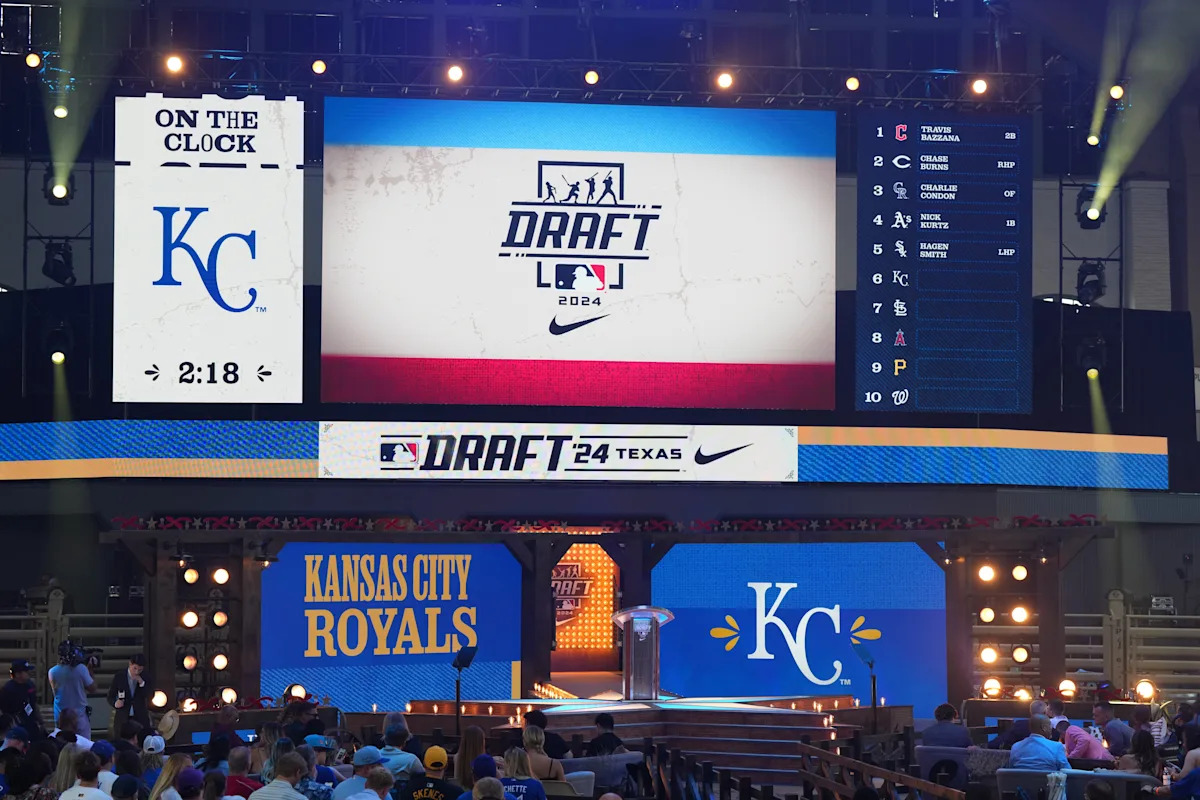
Since the start of the baseball’s amateur draft, high school players have always been eligible. Selecting a young player out of high school and offering him enough money to forego college was just one of the ways to ensure an organization secured top-notch talent.
If that player agreed to a deal, which included a signing bonus, then he would report to the minors and start at the lowest rung of the minor league system. Even if it didn’t work out, he’d hopefully have money left over from that signing bonus.
Advertisement
If the player didn’t sign and instead went to college, he’d have to play a varied amount of time in the college system before he could re-enter the draft. The team that originally signed him would no longer hold his draft rights, making him available to the rest of the league—including, of course, that original team.
Sometimes going to college paid off. There have been numerous instances of players heading to college and improving their draft stock. However, the inverse was more likely to occur—college baseball didn’t go as well, injuries occurred, the player didn’t improve all that much, etc., and then his draft stock plummeted.
Before the days of NIL, that player would be out of luck when it came to money.
Now, in the days of NIL and revenue sharing, I wonder how much that has changed. How much do college baseball players make? Does that NIL money that wreaks havoc in college football and college basketball trickle down enough to convince a player from Broken Arrow, Oklahoma, to choose the Sooners over the Astros?
Advertisement
Now, it seems that such a decision may soon become a moot point for high school baseball players.
At OverSlotBaseball.com on Wednesday, Joe Doyle wrote an article free for all to read about how the league’s next Collective Bargaining Agreement (CBA) could end high school draft pick eligibility.
Part of the reason why is making further changes to the minor league system and length of the draft. In 2021, as Doyle notes, the draft shrunk by half, going from 40 rounds to 20 rounds. At the same time, the minor league system contracted as a chunk of the lower levels were extinguished.
Advertisement
In the next CBA, the draft could become even smaller, perhaps even down to 15 or 10 rounds as soon as the 2028 Draft while the minor leagues could further shrink, this time with the elimination of what is now referred to as Class A ball in 2030.
As logic would indicate—and Doyle spells out—fewer rounds of the draft + no Class A ball = less draft eligibility, specifically for high schoolers.
As Pete Campbell once said, “Not great, Bob!”
Not only would this eliminate more jobs at the lower levels of the organization, it would also force high school players to forego a potential guaranteed payday to attend college. And for how long? Would the college eligibility rules change, too, so that a player could enter the draft after his freshman year? Or would the player have to stay on campus longer?
Advertisement
It’s clear why this is on the table—the owners want to save as much money as possible. You may not become a billionaire by being a cheapskate, but evidently that’s how you stay a billionaire.
This not only hurts players, but it also hurts clubs like the Kansas City Royals, organizations that depend on drafting younger players and developing them over the years. It takes potentially great players off the board. If this rule currently existed, there would be no Bobby Witt Jr. in Kansas City.
I’ll note something Doyle makes clear in his column—this isn’t guaranteed. “To be sure, none of this is set in stone or agreed upon in any way yet,” Doyle writes.
Advertisement
For baseball fans, there are more pressing issues than this with upcoming labor talks. If the owners truly push for a salary cap, and it sounds like they will, it could be a long, ugly fight between the owners and the players that will certainly void games and perhaps the entire season.
Ending high school draft pick eligibility isn’t high on the list of fans’ concerns, but it will almost certainly affect how the Royals mold their future.
And not in a positive way.