
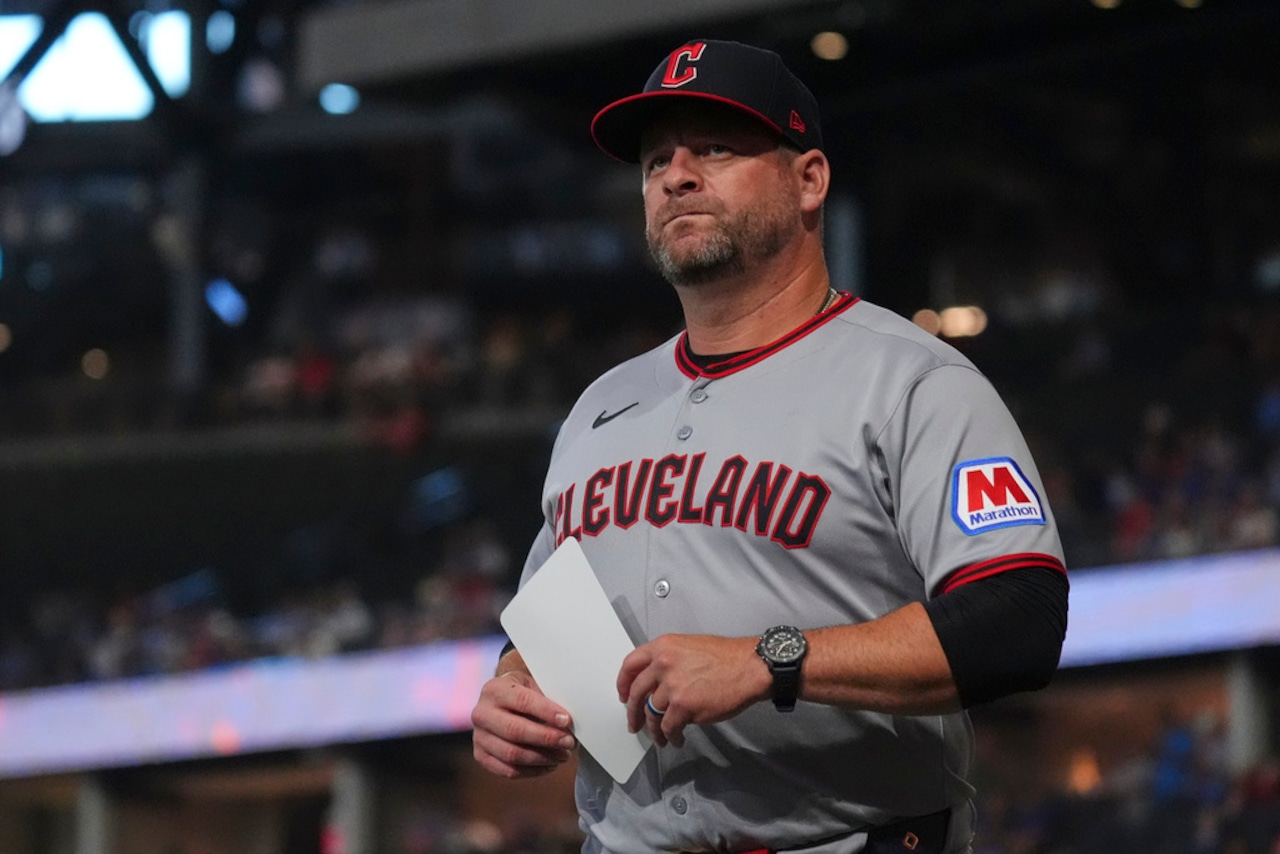
CLEVELAND, Ohio — The Guardians’ 2026 schedule was updated earlier this week with game times and broadcast information, and the Cleveland Baseball Talk Podcast wasted little time diving into the challenging road stretches that could define the team’s season – particularly the brutal bookends that await Stephen Vogt’s squad.
“I just know that first opening trip with four against Seattle and three against the Dodgers, it doesn’t get much tougher right there. Those are seven tough games,” observed Paul Hoynes, clearly concerned about the gauntlet Cleveland must navigate to start the season.
The challenge is clear – the Guardians will open 2026 with seven consecutive road games against two perennial contenders before even playing their home opener. Starting on the West Coast means the team must hit the ground running against quality competition right out of the gate.
What’s particularly interesting is that the schedule doesn’t just present challenges at the beginning – it creates potential high-drama situations at the season’s conclusion as well. Joe Noga pointed out this symmetry: “Open the season with seven on the road, and they end the season with six in a row in Boston and Kansas City.”
Hoynes didn’t mince words about the potential playoff implications: “That’s a tough way to end the year, especially if you’re in contention or you need to win any amount of games to get to the postseason.”
This scheduling quirk creates a fascinating storyline for the 2026 campaign. If Cleveland finds itself in a tight division race or wild card battle (as they did in 2025, winning the division on the final day), those six road games could become the most critical stretch of the entire season.
Both Boston and Kansas City have shown competitive potential, with Hoynes noting, “Boston looks like a really good ball club. They were a playoff team last year. Kansas City had a winning record, and two years ago they were a playoff team.” He added that “both teams have made moves to get better,” suggesting these late-season matchups won’t be easy for Cleveland.
There is one silver lining to the challenging West Coast opener – it represents a homecoming for manager Stephen Vogt, who has strong ties to Seattle. “Stephen Vogt, the Seattle trip is always a fun one. His family is up there and it’s sort of a big homecoming for him,” Noga noted.
Hoynes added a personal touch to this observation: “Last year, he brought his sons’ little league teams to the ballpark before the game.”
Beyond the challenging road trips, the 2026 schedule features another notable aspect – increased national visibility for the Guardians. The team will appear on 13 nationally televised games, including NBC’s Sunday Night Baseball premiere following opening day. This national exposure reflects the excitement Cleveland generated during their dramatic 2025 campaign.
“They made themselves one of the best stories in baseball last season by coming back with that historic 15 1/2 game rally,” Hoynes explained, referencing their remarkable comeback from significant deficits to win the division in dramatic fashion.
For the complete breakdown of the Guardians’ 2026 schedule challenges and to hear more about how the road-heavy bookends might impact Cleveland’s playoff chances, tune into the full episode of the Cleveland Baseball Talk Podcast.
Read the automated transcript of today’s podcast below. Because it’s an AI-generated transcript, it may contain errors and misspellings.
Podcast Transcript
Joe Noga: Welcome back to the Cleveland Baseball Talk podcast. I’m Joe Noga, joined by Paul Hoynes. Hoynsie, still locked in our houses, still pretty cold outside, but the hot stove fires keep burning with these offseason rankings that tend to roll out here after the first of the year. The last few years we’ve watched MLB Network rank different players at different positions. You know, guardians, players making the top 10. We’ve seen Jose Ramirez, Emmanuel Clase, Cade Smith, Steven Kwan all rank very highly among some of these top 10 lists. Earlier last week, Jose Ramirez checking in I believe number five among third basemen. No, no, he was number five on the, the top 100 players list. No total players, all baseball, which was his highest ranking ever remains to be seen where he’s, he ranks among the third baseman but I think it’s going to be pretty high this year. Last night the network came out with their rankings of left fielders and a little bit of a surprise, a little bit of a shock, Steven Kwan, left, unranked by MLB Network among the top 10 left fielders right now. What’d you think of, of that? Kind of a snub for, for Kwan, a four time Gold Glover and a two time all star.
Paul Hoynes: Yeah, that was a surprise. I mean he’s always fared, it seems to me he’s always fared pretty well in these rankings. I guess, you know, a ranking is a ranking that it really doesn’t, you know, that’s some, you know, a machine’s opinion or the what, whatever, you know, it’s an opinion. So. And we’ve, we see Quan every day. We know what kind of player he is. But it’s, it’s interesting that you find 10 left fielders that are better than him. And you know, he, he had a solid season. He played 156 games. 272 tied a career high with 21 stolen bases. I mean scored 81 runs. I don’t know, seven five OPS. I guess that could have been higher for a leadoff hitter, but still, what 60 strikeouts, 55 walks, 330 on base percentage. I mean this is, you know, this is a guy that, you know, just is a contact hitter and he probably gets hurt because he’s not hitting home runs. Joe, he hit 11 this past season, 56 RBI.
Joe Noga: Yeah. And that really, if that’s the only knock on him that, that he doesn’t hit the ball out of the ballpark as often as, as some of these guys, you know, you don’t want to see that make Change his approach at the plate. We’ve seen the power come with growth over the last four years, which is a natural sort of thing. So if it naturally happens. But we don’t want. You don’t want to see Steven Kwan change his approach because some ranking doesn’t put him high enough because he doesn’t hit home runs. You don’t want that to change things on the field for him, and you hope that’s not going to be the case. Quan, like you said, had been ranked pretty high by this MLB network. They call it the Shredder. It’s that their sort of calculus and how they put all the stats together and then their, their panelists all pick their top tens and this is how they rank it. So according to the Shredder, Kwan was the number two left fielder after his rookie season in 2022. Going into 2023, he was ranked number two. He was unranked going into 2024. He was the number eight left fielder going into 2025 and then again this year going into 2026 ranked. Yeah, I just, in my mind, like you said, we see him every day and we’ve seen him play left field. If that was the only metric that they were using, how you play left field, I think Steven Kwan would have to be one or two. And there’s no question about that. But, you know, this takes into account all your rate stats, all of your home run totals, your rbi, your run scored and everything, and it sort of mashes it all together and spits out a result. According to the shredder, their top 10 for the heading into the 2020 sixth season go from 10 to 1. Brandon Marsh, Jackson Cheerio, Kyle Stowers, Jordan Alvarez, who had been the number one left fielder for the last three consecutive years, even though, you know, he plays a handful of games a year in left field because he’s mostly a dh. Number six was Ian Happ. James Wood, you know, exciting young player for the Nationals, Riley Green, who we see all the time in, in Detroit, Cody Bellinger in left field at Yankee Stadium. And then the top two. And I’m going to take issue with this. The top two, number two, Roman Anthony of the Red Sox and number one, Jaren Duran of the Red Sox. Hoynsie, how do you have two left fielders, one and two on the same team? Make it make sense?
Paul Hoynes: Yeah, I don’t know. I guess, you know, Anthony, you know, hot young prospects. He, you know, this is rookie year, but he got hurt at the end of the season. Exciting young player but one of those guys. I mean, Durant. Doesn’t Durant play center field as well? I thought. Yeah, I thought he. But I. I guess not anymore. But still. Yeah, I guess. You know, they had some Boston Red Sox fans on the shredder.
Joe Noga: Yeah, must have been. You’ve got to pick one, pick one, that’s all. If you’re going to be a left fielder, that’s your. Your spot. We have him as a left fielder. It just doesn’t make any sense to me how that that ranking came out. And they’ve got two. Number one and, you know, at the. At the top of the. The list there. As far as Kwan goes, does this give him any extra motivation, any. Any impetus to. You know, maybe the message that it’s being sent here is, you know, hey, Steven Kwan plays in Cleveland. He doesn’t get the recognition. You know, we heard it for so many years with Jose Ramirez. The most underrated player in the game is Steven Kwan suffering from being underrated because he plays in Cleveland, and rankings like this are reflective of that. And is this a motivation for him to want to get the heck out of town?
Paul Hoynes: Yeah. I don’t know, Joey. He doesn’t strike me as that kind of guy that, you know, just because he’s not rated in some rankings during January and February, that he’s going to use that as a springboard to get out of town. I think if Cleveland is willing to pay him what he wants or they can reach a deal, I think there was probably room for a deal to be made, but who knows? I’m not sure what motivates guys, but just, you know, from talking to Quan and seeing him every day, he does not seem like that kind of guy. But Joe, I mean, he did. His production did drop off in the second half. He hit 2.285 going into the break.254 going in, you know, in the second half. That included a.214 batting average in August. And, you know, and the Tigers did a great job against him in the wild card series. He had.167, two for 12. He wasn’t the only guy that didn’t hit on Cleveland. But, you know, this is still a guy that does a lot of good things. Joe, as you mentioned, is his defense, his base running, and he had.336 with runners in scoring position last season. So, I mean, he’s got to be doing something right. If I’m Steven Kwan, hopefully, you know, I don’t get rabbit ears. I’m not Wearing myself out watching MLB Network and, you know, ringing my hands over this. I’m, I’m just working to get better.
Joe Noga: Yeah. I think from, from year one, Steven Kwan is a, is a player who recognizes his own value, recognizes his own worth and knows what he’s good at and capable of and, and where he so sits among the hierarchy there. I think he understands that this sort of ranking is something that’s, you know, it’s outside noise obviously, but, but he’s definitely a guy who’s used stuff in the past to, to motivate himself. You know, we’ve seen evidence of that all the way up through from his rookie year on. I just hope that the motivation isn’t colored by, or tainted by, you know, this, you know, what if I, if I were playing on the west coast or if I was in a bigger market, if, if the, the recognition would be sort of different there. And I’m not saying that that’s the case. I just, I just, you know, for the, the fans who want to see him stick around and sign a multi year extension, you know, you hope that maybe they can use this in some way to, to convince him. The, the other sort of players on this list. What do you think of some of these guys? I, I do have to mention MLB Network did a fan poll and so it was opened up to fans. It had no input from the shredder or metrics or anything like that. You want to take a guess at who was number one in the fan poll according to MLB Network viewers, for, among left fielders?
Paul Hoynes: I’m not good at guessing, Joe. Tell me, tell me who was in the top spot.
Joe Noga: It was Steven Kwan, number one, Jackson Cheerio from the brewers, number two, Riley Green, number three on that list, interestingly enough, Roman Anthony, number five and Jaren Duran, number 10 on that list, according to the voters. Yeah. The top 10 as chosen by fans. Steven Kwan, number one. The top 10 as chosen by computers. Steven Kwan unranked for the second time in what, his, his four or five seasons. So, yeah, I, I, I just, there’s a, there’s a, a disparity there. A lot of people like what they see and they like who Steven Kwan is. And a lot of teams would like to have Steven Kwan. A lot of fans would like to have Steven Kwan penciled in as their leadoff hitter.
Paul Hoynes: Yeah, no doubt about it, Joe. He’s a popular guy. He, he enjoys the game. You know, you can, you can tell and you know, he’s not that big a guy. People can relate to him. You know, like, as he says, he spends the off season in. In Chicago and he can walk down the street and nobody notices him. You know, I think, you know, there’s some fans can relate to him. He’s. He’s the people’s choice for sure.
Joe Noga: Hopefully he’s walking down the streets in Chicago bundled up, and nobody can recognize him right now because, goodness, it’s probably double digits below zero up in Chicago. All right, Hoynsie, you know, rankings aside, I think that’s. It’s kind of crazy to think about the money some of these guys make and the contracts that have been signed recently. Jose Ramirez signing the extension or agreeing to the extension at the end of last week, 175 million. But 70 million of that deferred, a big step for the Guardians and their organization because they’ve really never done something like that in the past. Not to the extent of $70 million worth of a contract. Deferred payments over, you know, 10 years or so. The deferrals are becoming a lot more en vogue. You go back to sort of the granddaddy or the godfather of deferred contracts, and that’s Bobby Bonilla. You know, every year they celebrate Bobby Bonilla day, where he gets, what, 1.2 million from the Mets all the way through, you know, the next. I mean, that’s. That contract’s gotta be coming up at some point. But you now go to Shohei Ohtani, who deferred, what, $68 million of his $70 million a year for 10 years from the Dodgers to keep them financially viable, to sign other free agents. And that’s sort of a. The right now, the gold standard of contract deferrals. What do you think of this trend of deferred payments, you know, and what it’s done to baseball and what it’s done to players? Ability to sort of sign with these same clubs, the Dodgers and the Mets and other teams for big bucks and still keeping them able to add other players because the superstars are deferring their payments big.
Paul Hoynes: It’s a. It’s a good strategy by the front office. And if you can get the player to agree to it kind of, you know, works both. You know, it helps both parties. I mean, years after a player retires, he’s still getting paid by that club. I mean, there’s still some security there. And like you said, Joe, he. The team gets a chance to, you know, some flexibility to continue to build their roster, and they’re not held hostage by one contract. And so it. It is a Good idea. You know, when, when Manny Ramirez left Cleveland to sign with Boston, the long term deal, the guardians, it turns out they offered Manny just as much money, maybe more than Boston did, but a lot of it was deferred and Manny didn’t want to do that. Manny and his agent didn’t want to do that. So he went to Boston where most of the money was up front. You know, it, it just depends on the player and the team, the team’s situation. You know, I think, you know, what Jo done here has really, you know, given the Guardians a chance to, you know, if, if not this year, then next year to, to add some help, to add some offensive help, whatever they need. You know, I think it’s a two way street and you have to have a good relationship with the player to do this.
Joe Noga: Yeah, that’s, that’s the key there is Jose. It really doesn’t feel like he was going anywhere or if, if he wanted to stay. You know, he also wanted to make sure that the Guardians were able to put pieces around him. And I think that was sort of the feeling maybe back at the beginning of the contract when he left a lot of money on the table back in 2022. And, and now it’s sort of, it, it becomes sort of a, it becomes sort of paramount now that they, that they do that here in the second sort of phase of his, his, his contract status with them, that they, they actually show, you know, in good faith that they’re actually going to do this. I just want to go back to mentioning the, the Bobby Bonilla contract. The parameters of it were just crazy. He receives an annual payment of $1.193 million from the Mets every July 1 from 2011 through 2035. So he’s still going to be making $1.193 million every year through 2035. Just sort of crazy. I dug up some, some really sort of oddball weird facts. Jose Ramirez, Shohei Otani, on Soto, all these guys who were signing all these deferred contracts. So there’s a lot of deferrals out there and, and that are in play in 2026. I’m going to go through a bunch of these weird facts and some of these names are pretty interesting. Max Scherzer, you remember he was what he used to play, used to pitch for the Mets. Pitch briefly for the. I’m sorry, for the Nationals, for the Mets and the Dodgers. Max Scherzer and what last year he pitched for the Blue Jays. Max Scherzer making 15 million from the Nationals this year, 15 million from the Nationals next year, and 15 million from the Dodgers in 2028. And I don’t think he even has a team yet this year if he’s intending to still pitch. The Astros Owe Zach Greinke $12.5 million this season. I don’t think he’s pitched, what, in two years. Madison Bumgarner making $5 million this year and next year from the Diamondbacks. Chris Davis getting 3.5 million this year and will be on their payroll for the Orioles through 2037. You think about that.
Paul Hoynes: Wow.
Joe Noga: You mentioned Manny Ramirez earlier. He will receive his final cash payment from the Red Sox for that original deal that he signed. $2 million this season. He’ll make his final $2 million from the Red Sox, and he hasn’t played in forever. Austin Pedroia getting 2.5 million from the. From Boston every year from this year through 2028. And here’s. Here’s the craziest one I came across. Matt Holiday is going to make 1.5, $1.4 million from the Cardinals this year. He last played for them 11 years ago. His son Jackson is going to make $820,000 from Baltimore. So he’s. He’s going to make almost twice as much as his son who’s actually playing this year. And like we said, Bobby Bonilla, 1.2 million from the Mets and another $500,000 from the Orioles. The last one that I found, Vinny Castilla, he hasn’t played since 2006, and he’s still getting more than $100,000 a year from Colorado and will continue to be on their books until he is 61 years old in 2029.
Paul Hoynes: That’s amazing.
Joe Noga: I mean, these guys are. None of them have picked up a bat in how long, and they’re. They’re still making crazy amounts of. Of money that they deferred from when they were. When they were playing. So, yeah, those. Those are some insane facts about deferred payments. And. And now Jose Ramirez sort of part of this. This trend. And. And the Guardians sort of jumping in, getting their feet wet with deferrals.
Paul Hoynes: Good retirement planning, Joe. It. It pays off.
Joe Noga: And here I sit with no. No retirement plan. Nothing. Nothing on the books. Uh, nothing to. To think about. Uh, it’s. It’s gonna be. I’m working at home, Dep. Just know it. All right. You know, we wanted to talk about the. The 2026 schedule, the guardians and Major League Baseball, releasing the times and the TV broadcast schedule. The Guardians actually appearing on 13 nationally televised games this year, including the. The first NBC Sunday night game coming up on opening weekend. The season kicks off Thursday, March 26, but that Sunday night, the following Sunday, they will be in Seattle taking on The Mariners on NBC’s Sunday Night Baseball. The premiere of that version of Sunday night baseball at 7:20pm Hoynsie, what’d you think when you saw the MLB schedule and the Times and just seeing that all on paper sort of made it all a little bit more real and it’s coming up quick.
Paul Hoynes: Kidding, Joe. It, it, it really. When the calendar flips to January 1st, it start, you know, the season starts coming at you at a. Like a freight train. Seeing the schedule and you know, all the times and the, the broadcast schedule, you know, you start looking over your shoulder like it’s almost here. I just know that first opening trip, Joe, four against Seattle and three against the Dodgers. I mean, it doesn’t get much. It’s a tough, that’s a tough opener right there. Those are tough. Seven tough games.
Joe Noga: Yeah, you better be ready to hit the ground running, especially, you know, that series, an early week series, Monday, Tuesday, Wednesday against the Dodgers in la. But you know, for Stephen Vogt, the, the Seattle trip is always a fun one. You know, his family is up there and it’s sort of a big homecoming for him. Nice to open the season that way, at least at the very beginning, you know, being around, he can sleep in his own bed for at least one night.
Paul Hoynes: Yeah, that’s nice. I mean, the last time, I think last year, he brought his team, his, his sons, he’s, he brought his son’s little league teams to the ballpark before the game. So y. It was, it was cool. So I’m sure they’ll do that again. You know, he spent a lot of the winter, a lot of the off season coaching his daughters and, and son’s baseball team. So I’m sure, you know, that’ll carry over into this four game series with the Mariners.
Joe Noga: Yeah. And as far as being on national TV 13 times, is that sort of a, at least a little bit of a recognition of the excitement that the Guardians were able to generate last season, end of the year, into the playoffs. And this is a team that a lot of people want to see, see guys like Jose Ramirez and Steven Kwan and Gavin Williams and what they can do.
Paul Hoynes: Yeah. And you know, they made themselves one of the best stories in baseball last season by coming back with that historic rally. You know, 15 and a half games back in July, 11 games back on September 4th. Winning the division on the last game of the season. What, in extra innings on a. On a home run by Brian Rocco? Yeah, Brayan Rocchio. I mean, it doesn’t get that storybook stuff. They just didn’t take it a little farther in the postseason. Yeah, I think people would like to see this team and want to see how they do it, Joe. I mean, a lot of times last season, they did it with smoke and mirrors with this offense, and they haven’t done a whole lot to improve it. And we’ll have to see if that style still, you know, still. Still works, still plays, and just how much this team can improve from last year to this year.
Joe Noga: Open the road like we on the. Or open the. Open the season with seven on the road. Seattle and la, they end the season with six in a row. At the end of the year, Boston and Kansas City being on the road to sort of finish the year, does that have any impact on, you know, what’s going on with them?
Paul Hoynes: Think so, Joe? Definitely. I think it’s always harder to win on the road. I think, you know, Boston, it looks like a really good ball club. They were a playoff team last year. Kansas City had a winning record. Two years ago, they were a playoff team. So. Yeah. And both teams have made moves to get better. Yeah, that’s a. That’s a tough way to end the year, especially if you’re in contention or you need to win X amount of games to get to the postseason.
Joe Noga: That’s going to wrap up today’s edition of the Cleveland Baseball Talk podcast. We’ll talk to you again tomorrow.
Paul Hoynes: Good deal.