
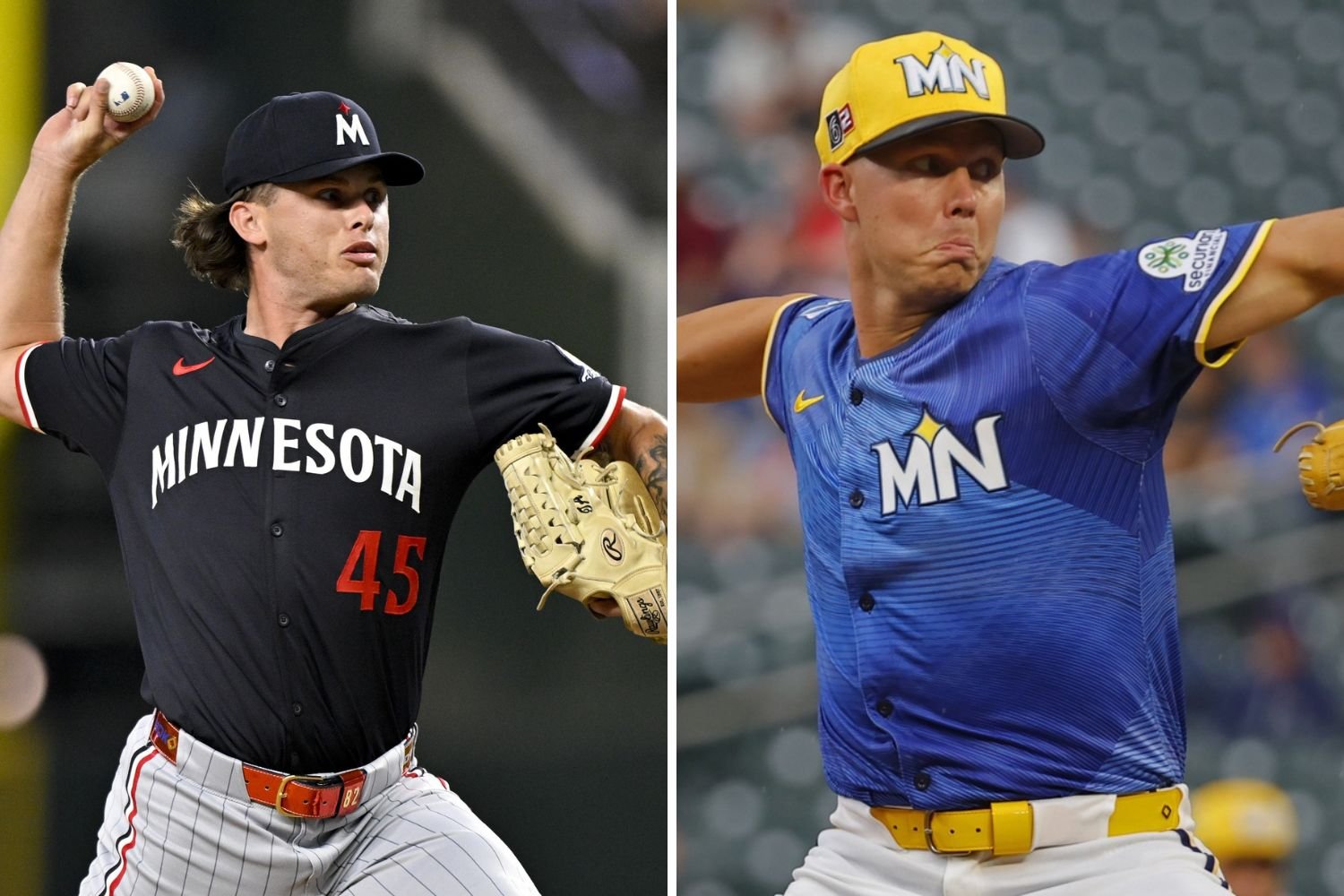
After they traded a majority of their bullpen at the trade deadline last year, the Twins had a bunch of bullpen innings to cover in the final two months. Many of those went to marginal veteran placeholders like Thomas Hatch, Michael Tonkin, Erasmo Ramirez and Genesis Cabrera. More intriguing to follow were internally-developed arms Travis Adams and Pierson Ohl, who ranked 6th and 7th in pitching appearances for the Twins after July 31st.
While hardly top prospects or household names, Adams and Ohl seemed like credible contenders to carve out a role in Minnesota’s reconstructed relief corps. As unremarkable minor-league starters whose stuff and results showed potential to jump in shorter stints, both looked similar enough to many of the pitchers who previously broke through in the Twins bullpen — including the remaining ringleader Cole Sands.
Ohl was recently designated for assignment to make room on the 40-man roster, and on Wednesday he was traded alongside Edouard Julien to the Rockies. Adams remains on the 40-man, for now, and he’s one of only six pitchers with any real experience as major-league relievers. That doesn’t guarantee Adams will stick around through the spring, but the front office has continually shown an auspicious level of faith in the right-hander. I find myself wondering why.
Let’s compare Adams with the now-departed Ohl to try and figure out what’s driving the team’s confidence.
Similar Track Records in the Twins System
Adams and Ohl are both 26 years old. Both were drafted out of college in 2021 — Adams in the sixth round, Ohl in the 14th. In the minor leagues they posted similar numbers, although Ohl was a little better across the board in terms of performance. Here are their totals in five minor-league seasons:
Adams: 407.1 IP, 4.44 ERA, 8.6 K/9, 2.9 BB/9, 1.27 WHIP
Ohl: 394 IP, 3.61 ERA, 8.6 K/9, 1.3 BB/9, 1.13 WHIP
Neither really ever emerged on the top prospect radar, although they’d occasionally pop up on longer lists and in sleeper conversations. Aaron Gleeman of The Athletic had Ohl ranked 25th on his 2024 preseason list, with Adams unranked, and then in 2025 had Adams ranked in the same spot with Ohl falling out of the top 40.
This flip-flop points to an upward trend for Adams in the 2024 season (3.90 ERA in 127 IP at AA/AAA) and a downward one from Ohl (4.68 ERA in 102 IP at AA). It was enough to get Adams added to the 40-man roster afterward while Ohl went undrafted in the Rule 5. This also meant Adams was first in line for a major-league shot, debuting in early July of 2025 while Ohl had to wait until the end of the month.
During their limited time in the majors last year, much like during the balance of their minor-league careers … Ohl sure looked like the better pitcher.
Ohl Outperforms Adams During MLB Bullpen Audition
Let’s be clear: neither of these guys was good in 2025. Ohl posted a 5.10 ERA in his 30 innings of work, although it came along with a 27-to-7 K/BB ratio and respectable 4.20 FIP. Meanwhile, Adams put up a brutal 7.49 ERA in 33 ⅔ innings, sprinkling in repeated blow-up spots. He averaged nearly a strikeout per inning but also walked 10.8% of opposing hitters, roughly double the rate of Ohl.
What’s really interesting is the way the usage of these two pitchers evolved in tandem. Early on they were used in extended, inning-eating roles, even making occasional spot starts. When the calendar flipped to September, and the Twins seemingly got a little more serious about trying to evaluate what they had, both were used almost exclusively in shorter, higher-effort, one-inning stints.
Between July and August, Adams and Ohl threw 40-plus pitches in 13 of their 15 appearances. In September, they made 17 combined appearances and only one of those included more than 40 pitches thrown. It was Ohl’s first outing of the month, in which he gave up four earned runs. From then on, his numbers: 8 IP, 0 ER, 9 K, 1 BB, 5 H. Among Twins relievers he ranked second only to Kody Funderburk in September WPA. On the surface, it was everything you’d want to see from a guy making his case to contend for a job in the 2026 bullpen.
Adams didn’t fare so well in the shorter September stints. His numbers: 10.1 IP, 9 ER, 10 K, 5 BB, 9 H. He couldn’t be trusted to come in and pitch through an inning, much less do so cleanly.
So Why Did the Twins Prefer Adams?
I realize we are working with very small samples in the analysis above. I’m not trying to overblow the significance. But Adams has been outperformed by Ohl over the breadth of their careers so far, and especially in last September’s mini-audition. Nonetheless, Ohl was first out the door. When you look at the repertoires it is a little easier to see why.
Ohl’s approach is built around excellent control and a standout changeup that he threw a ton (37%), but he doesn’t have much in terms of a third or fourth pitch. His 91-MPH fastball is in the 15th percentile for velo and got blasted for a .370 batting average. It’s tough to succeed in relief without at least a decent fastball as your base, especially without an assortment of secondaries you can credibly mix in.
Adams’ heater is nothing special but he throws it in the mid-90s and it held its own (.351 xwOBA vs. 432 for Ohl). He’s got five different pitches he threw at least 10% of the time with the Twins, including a slider that shows real promise. You squint at him and you can see the raw profile that eventually turned into Sands, or even Griffin Jax.
Regardless, Adams hasn’t ever performed all that well in the minors and he got bashed in the majors. Despite an evident stuff advantage over Ohl, he was worse by almost any metric, including chase rate and strikeout rate.
You might be saying, “Nick, I can’t believe you’ve spent all this time weighing the merits of two borderline MLB arms like these,” and you’d have a fair point. But it’s been that kind of offseason, and as a result, there’s a lot of pressure to get these decisions right. Even if the Twins add another veteran reliever or two, pitchers like Adams are going to get opportunities, and dark horses will need to emerge.
For now, the Twins are committed to sticking with Adams in that mix, while Ohl moves on to see how his signature changeup plays in the Colorado altitude. While I’d like to believe they made the right choice, their history with keeping the right fringy relief pitchers is hardly infallible.