
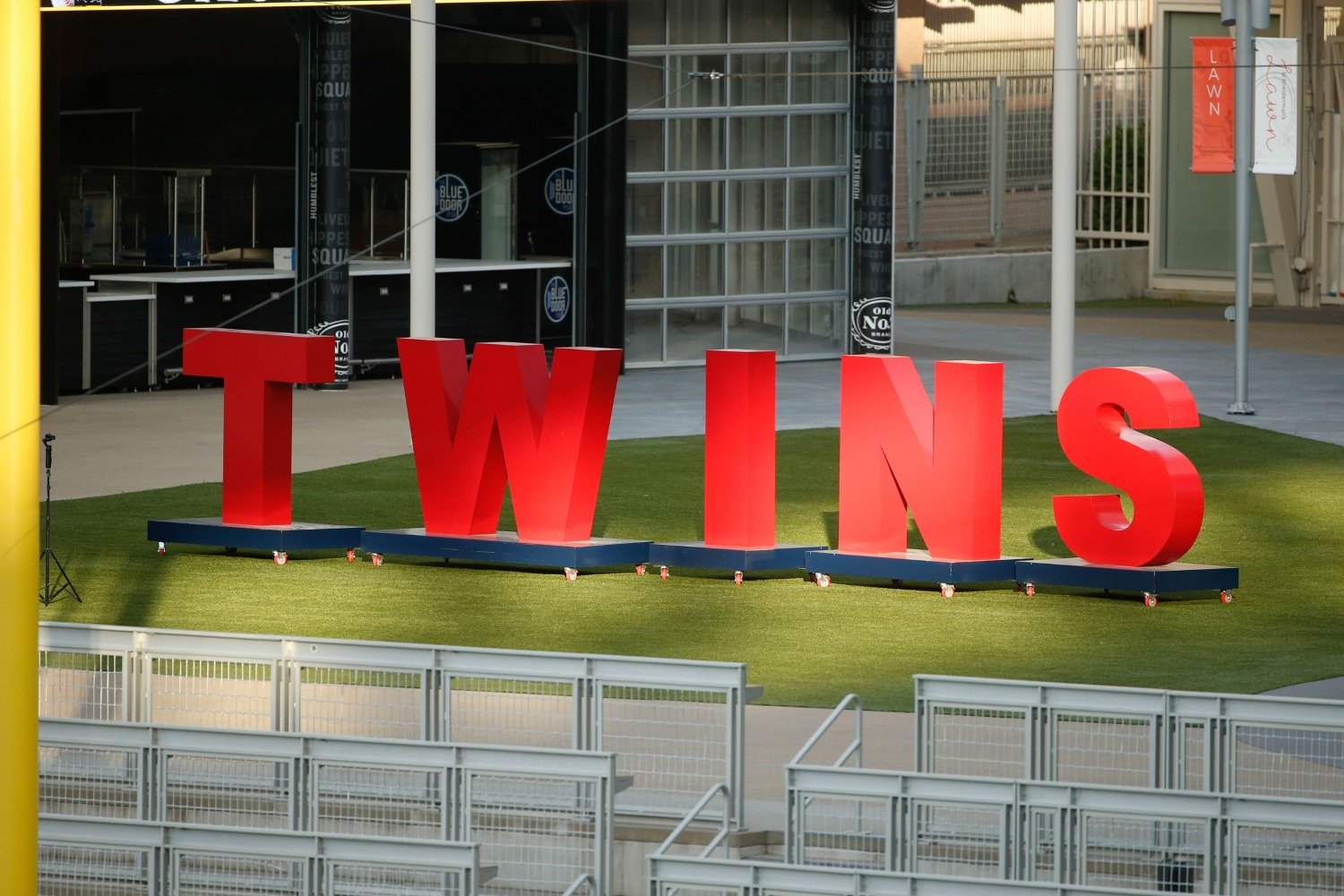
In his opening back-and-forth with the collected beat writers, Tom Pohlad defended his family against fans’ decades-long complaints about their lack of investment.
“People like to say we’re not committed to investing in this team,” he said, but “$500 million of debt would tell you exactly the opposite.”
But what about the new minority owners? What, exactly, are they investing in?
While we don’t know the exact financial influx, we do know that it likely eliminated a large portion of the debt on the team’s books, with roughly a 20% share of the club changing hands at a $1.75-billion valuation for the whole thing—notably above what many expected from the team sale based on (often inaccurate) Forbes evaluations. The money came from three parties: a local Minnesota group headed by George Hicks, a second investment from the New York-based Glick Family Investments, and a smaller amount from Minnesota Wild owner Craig Leipold.
While we can talk about civic duty and the like, the reason to own a sports team—either in part or in full—is because the returns are good. More so, a minority investment in a sports team is a rare opportunity for those whose fortunes consist of nine figures, rather than ten or eleven.
Unlike the Pohlads’ own complicated history, Hicks and Glick are fairly boring entrepreneurs. (As noted by Pohlad himself, the investment by Leipold is more advisory and less substantial than the others.) We can certainly ask questions about the private equity firms they used to accumulate their wealth, but there’s nothing scandalous there, outside of buying and selling properties. Still, we can learn a lot—about the Pohlads, the Twins, and the future of MLB—by probing their interest.
There’s No Place like NoLo
George Hicks, the team’s press release would have us believe, is a “lifelong Twins” fan. Scouring the internet won’t exactly produce evidence of that fact, but there is one important detail that helps position his interest: he can watch the team from his office.
Hicks founded Värde Partners, a bread-and-butter hedge fund, in 1993, and remains Co-Executive Chair and a board member. Hicks’s net worth was priced by some evaluators at a little over $500 million (though nothing there should be trusted), while the firm itself is worth more than $75 billion. It should be noted that he also did not simply put in his own money, but is meant to be the head of a consortium of “local” investors. Among the few announced individuals therein are Fort Myers Mighty Mussels owners John and Allen Martin.
Notably, Värde and Hicks are betting on something that will require the Twins: a downtown revival of Minneapolis, and particularly the North Loop. Värde signed an agreement to move into North Loop Green, a new high-rise overlooking Target Field, in 2023, and moved there in early 2025. The space includes apartments (including that of current Twin Austin Martin), a hotel, and a green space for outdoor music events. It is just one of many spaces in the North Loop that are slowly expanding. As one of the other North Loop’s commercial residents explained their own relocation from Nicolet Mall, “There is just a level of energy and vibrancy that currently exists in the northwest area of downtown.” Urban planners have replaced the rail yards and warehouses with the city’s most trendy restaurants, upscale retailers and loft apartments, all alongside creative spaces and public transit that turn it into a pedestrian utopia—for those who can afford it. Värde has one building for sale in the area, the former Lumber Exchange, which it believes can be expanded and transformed into high-quality residential condos.

This might be what Hicks sees: a chance to build a ballpark village west of Target Field, akin to Wrigleyville or Cobb County’s The Battery. When Hicks ran Värde, his company bet against the common knowledge of the pandemic’s long-term effects, investing in travel and hospitality and eventually making millions. It would only make sense to bet on downtown Minneapolis.
Of course, Minneapolis has had its setbacks, though the reasons have been distorted by bad-faith actors. You might not know, for example, that the downtown area’s crime rate has plummeted, compared to those in the suburbs. While businesses have been slow to return, residential growth has continued—now surpassing 60,000 residents. Slowly but surely, downtown offices are growing. Target enforced their Return-to-Work policies in September of last year, alongside other businesses. (The productivity claims of return-to-work remain specious, but the companies calling their workers back have real estate costs to justify and politicians to appease.)
This is all speculation, but I can see how Hicks could view Minneapolis as the next great revival—one that requires its downtown jewel to succeed. The Pohlads made their own bet on downtown that flopped due to the pandemic, but the city believes it can turn it around—almost certainly by shifting the center of downtown to the hip “NoLo,” as some denizens call it.
The Twins have relatively low beer and hot dog prices—probably better than some of the craft breweries across the street. I’d also note that Target Field is one of the better standing environments in the game, with plenty of spots to watch where you won’t be asked to move. If you don’t have a disability and are willing to stand for a few hours, all you need is a cheap ticket, and maybe if you can ease a downtown flaneur into what sounds like a rocking ballpark, that’s going to be a winning argument.
The Wolves, Vikings, and Lynx are all putting up record attendance numbers downtown, so why not Target Field? If the Twins begin to succeed, so will the neighborhood. At the moment, there are (literally) external forces dampening the environment of the vibrant city, but their staying power looks shaky. By the time the ice melts, the city should be ready for a great spring and summer.
Anyone and everyone will benefit from a downtown revival. The bet is to make sure the Twins are part of that, rather than the exception to it.
Square Burgers, Safe Investments
Whereas it’s easy to understand Hicks’s personal involvement, the story of the Glick Family Investments buying in is more of a head-scratcher. Pohlad already joked that they would have to throw out their Yankees gear, and it’s not clear the equity firm has any investments—real estate or otherwise—that would put them in Minnesota. Their motivation for putting money in here appears to be getting money out, via the on-field product.
Glick Family Investments is your standard investment firm. As has been well reported, their wealth began in diamonds in the 1930s and 1940s, but now has a varied portfolio. Run by Simon Glick, the firm invests in real estate, technology companies, corporate debt and the like (the one buzzy note: Sharon Stone’s engagement ring came from Glick). Simon is reportedly press-shy, so don’t expect him or anyone else in the family to open up about their interest anytime soon.
Within that group, there are numerous subsidiaries, most notably the Glick Property Group, which focuses on real estate from New York City all the way to Houston. They’ve made other, seemingly easy bets: they were partners along with BlackRock and JPMorgan on a company that provides trading software and record-keeping for financial firms. Within their properties, they also act as managers for some 3,000 units (you can find stories of potential mishaps, but so is the case with any landlord group). One of their biggest sales occurred in 2018—Alvin, the patriarch, had gathered several properties on Third Avenue in New York between 77th and 76th street. He sold them together for a clear $232 million, which was redeveloped into a hospital.
There are two ways to break down their investment in the Twins. One is to think about what value you get compared to other investments, and the other is to think about why sports, specifically, made sense.
As Rob Mains has argued, one cannot simply compare the valuation of a team to something like a stock price, due to the lack of risk of the assets.
“A safe investment that yields a return comparable to that of a risky investment has higher risk-adjusted returns. If the stock market rises by 8% per year and a baseball team’s value rises by 7%, the baseball team has superior risk-adjusted returns,” Mains wrote at Baseball Prospectus. Partially thanks to their long-standing antitrust exemption and the fact that MLB will always bail out an owner in need, MLB owners can make both returns and know their investment is safer than any company on the S&P 500.
Think about the options for any investment firm right now. Businesses are struggling to deal with tariffs; the commercial real estate market faces high interest rates and guarded buyers; private markets are essentially bets on the teetering artificial intelligence industry; and cryptocurrency is run entirely on scams and memes. Most notably, investors have recently had trouble beating the markets, driving more and more people toward standard mutual funds.
So what is a “safe” bet in 2026? A sports team, for sure. Assuming the Twins were sold in 2028, what if the valuation went up to $2 billion? That’s a 14.3% return over four years. That’s before any potential profits the team might make in any of those years. The worst-case scenario is probably something more like a 7% return—which, as Mains observed, would still be a strong one for such a low-risk asset in almost any other market.
Sports ownership also provides a massive tax loophole. In 2021, ProPublica revealed that Vikings owner Leonard Wilf had “taken $66 million in losses from his minority stake in the team” over his time owning the team. This is because of a Bush-era tax write-off that allows owners to include intangible assets, such as player contracts and media rights. Though President Trump initially sought to reduce this write-off in the One Big Beautiful Bill (in response to his failure to secure a football team in the 1980s), it was eventually dropped by the Senate due to bribes pressure from NFL owners.
This would not be the first time the Glick Family looked for a unique investment to create a tax shelter; they did so with a Wendy’s franchise in Connecticut. As Jason Glick told a local reporter, the purchase near Yale University was to specifically “fulfill an investment requirement necessary to avoid having to pay capital gains tax on $232 million worth of mostly vacant buildings on the Upper East Side that the investors sold in August 2018 to make way for a new medical complex.” Behold the beauty of tax savings:
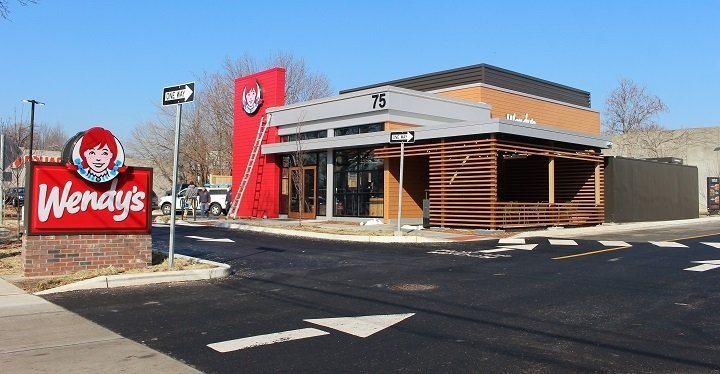
This might give reason for the Glick Family Investment to park cash somewhere safe. The Glicks don’t even need to look at the team’s record; they can just collect whatever checks they are due. If and when the team does get sold in full, the Glick group will be able to fully cash in.
That’s what each of the main groups joining the Twins’ ownership cabal has to gain therefrom. Next time, let’s tackle another question: How much benefit are the Pohlads themselves getting from it? And in what form?