
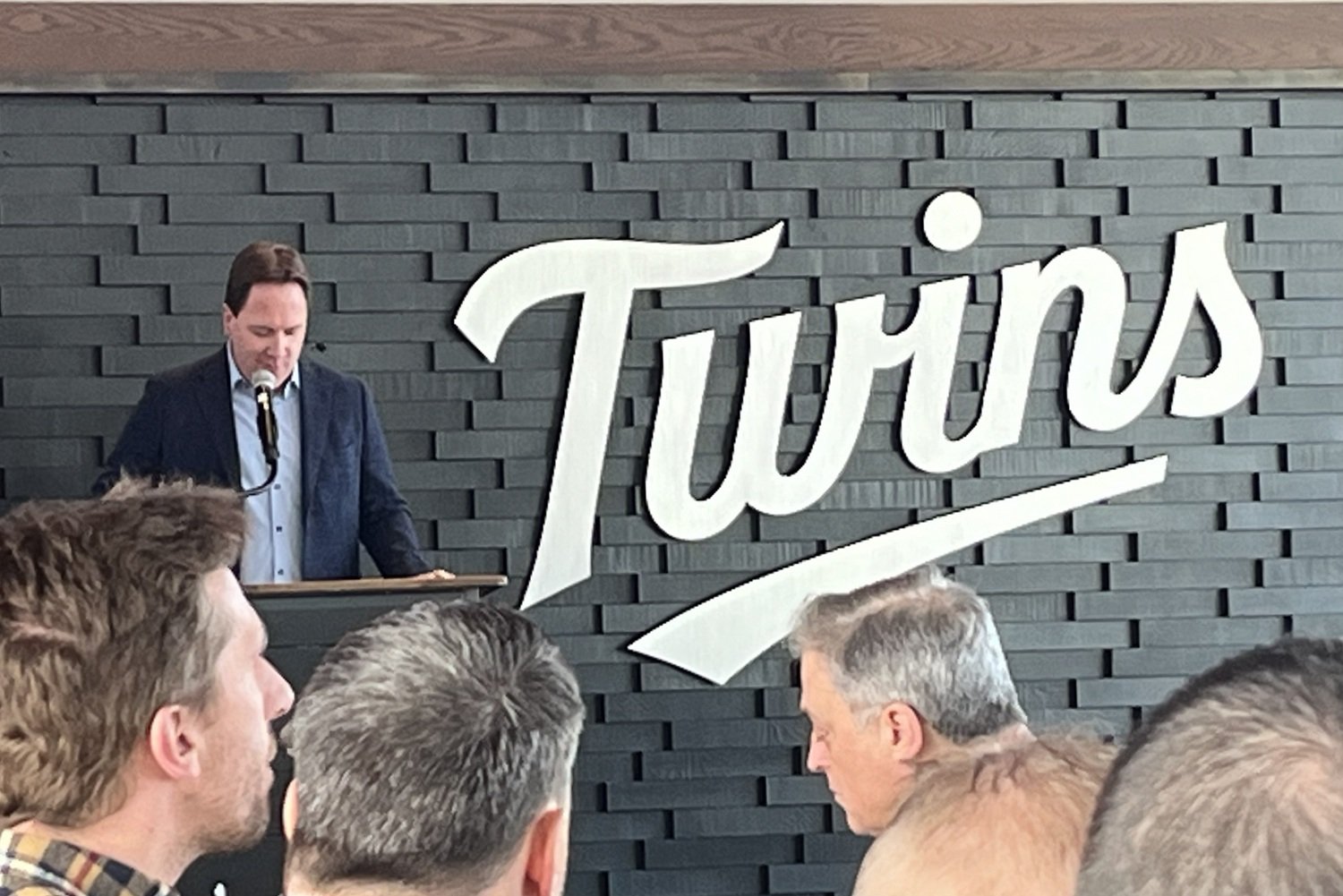
Derek Falvey and the Twins shockingly parted ways on Friday, a mere week and a half before pitchers and catchers report to the Lee Health Sports Complex in Fort Myers. This “mutual” parting of ways has wide-ranging implications for the 2026 season, and raises no few questions that will be explored here on Twins Daily in the coming days.
One such is this: are there even historical precedents for a GM or analogue to jump ship or get fired (depending on how you interpret Tom Pohlad and Derek Falvey’s statements) this late in the offseason, just when teams are preparing to ramp up for the season?
After all, there are myriad reasons why the timing is truly awful. It creates unnecessary chaos and complexity. It threatens the perceived job security of coaches and executives. It threatens to dispirit players, some of whom have already openly questioned the organization. It’s too late to ask teams for permission to interview their executives, drying up the talent pool, and practically forcing the Twins’ hand in elevating Jeremy Zoll. It adds responsibility to his purview, and by extension, likely his assistant GMs as well, without ample time to ramp up. All of these things conspire to make Pohlad’s stated goal of competing this season an even tougher needle to thread. In short, Friday’s announcement just doesn’t make sense; at least not now.
So, surely, the situation the Twins find themselves in must be pretty rare. Turns out, it is, indeed. After some digging, there are only two other examples of executives departing on the eve of spring training, and both happened in situations not dissimilar to that of the 2026 Twins.
The Firee: Dan Duquette, Boston Red Sox, 2002
The Red Sox fired Dan Duquette on March 1, 2002, smack dab in the middle of spring training. In terms of tenure, success rate, and fan perception, there are some real similarities to Falvey’s time with the Twins, as well as some potential hints for the future.
Prior to being fired, Duquette had an eight-year run as the Red Sox GM. He made the playoffs just three times, and in those appearances won only two total games. He angered fans when he let the popular (and talented) father of Kody Clemens leave in free agency, and fans weren’t enamored with his communication style with the media either.
Heading into the 2001 season, Duquette went big on the free agent market, signing Manny Ramirez to a massive-at-the-time eight-year, $160 million deal. With Pedro Martinez on the books, as well as a number of other contracts that were well above average, the Red Sox had the second-highest payroll in baseball behind only the Yankees. The payroll didn’t correspond to success that season, as the team dealt with injuries and underperformance, and finished just over .500. Duquette fired his Manager, Jimy Williams, mid-season after a high-profile disagreement with a player.
Oh. By the way. Duquette was fired by the John Henry’s group not 24 hours after they became the new owners of the Red Sox. They replaced him by promoting Mike Port, Duquette’s VP of Baseball Operations. He lasted just one season before ownership ultimately hired Theo Epstein to take the reins of the core of talented draftees and veterans in their prime that Duquette had assembled. Three years after Duquette’s firing, the Red Sox began their dynasty.
Could Falvey’s departure be a simple case of “not my guy?” Or something closer to a scapegoat? Pohlad said on Friday “the vision is probably a little bit different than what it was before. The landscape is different, and that it’s best for both of us, if we if we make a change, and best for the Minnesota Twins.” Make of that what you will.
The Quitter: Bob Watson, New York Yankees, 1998
Bob Watson was a former player, turned coach, turned general manager. His brief stint in the role lasted just two seasons, and they shone. In 1996, he and rookie manager Joe Torre took the Yankees to the World Series where they defeated the Atlanta Braves. The following season, they made the playoffs again, but didn’t advance past the ALDS. On February 3, 1998, Watson resigned and he was replaced by Brian Cashman.
Ok. So. Neither tenure nor results match up with Falvey’s, but you know what just might? Watson’s reason for quitting. In short, he was frequently at loggerheads with owner George Steinbrenner. “The Boss” had a habit of micromanaging his GMs, to the point of pushing for specific trades and negotiating around them with other GMs and owners. In fact, he was responsible for acquiring Chuck Knoblach from the Twins.
In 1997, Steinbrenner repeatedly attempted to get Watson to move Jorge Posada and a number of prospects for Rickey Henderson, and publicly lambasted his GM for not making specific moves that Steinbrenner wanted to see happen, and for trading for players he himself wouldn’t. It got to the point that Watson would tell rival GMs he was out on a deal “’unless I get orders from south of New York.’ “, referencing Steinbrenner’s Florida home.
Eventually, Watson had enough. After he resigned, a Yankees official told the New York Times: “I don’t know if he wants to be a general manager anymore. Maybe he doesn’t need the pressure. I don’t know that he wants another general manager’s job. I don’t know if he wants to stay in baseball. I imagine he’s disgusted with Steinbrenner.”
If we are looking for parallels, it’s easy to find them. After all, like George Steinbrenner, Tom Pohlad seems to believe he understands just how to run a baseball team. Unlike Steinbrenner, however, Pohlad is new to the game, and his diametrically opposed dictates reflect that. To wit: “no half measures” and “we will be competitive in 2026”, are in conflict with “yes, our payroll is down from last year” and the whole, you know, not really having a bullpen you trust with a one-run lead in a playoff push.
Really, when you look at it, Falvey’s departure combines themes from both of these case studies.
On one side of the equation, you have new ownership, likely disappointed with middling results, a disengaged fanbase, and questionable baseball decisions by the GM (albeit with the former owner’s blessing and, in part, because of unexpected financial constraints placed on him).
On the other side, you have the owner, perhaps out of hubris, assuming he knows the way to right the ship despite little to indicate such, who, in his confidence, creates an unwinnable and frustrating work environment for the GM.
That’s the sort of conflict that leads to a parting of ways, even if the initiating party remains opaque. As it stands, this development probably doesn’t help the Twins’ chances in 2026, but it sure does continue the palace intrigue that began with Joe Pohlad’s ouster. One thing that’s certain is that there’s no shortage of confidence among the Pohlad family.