
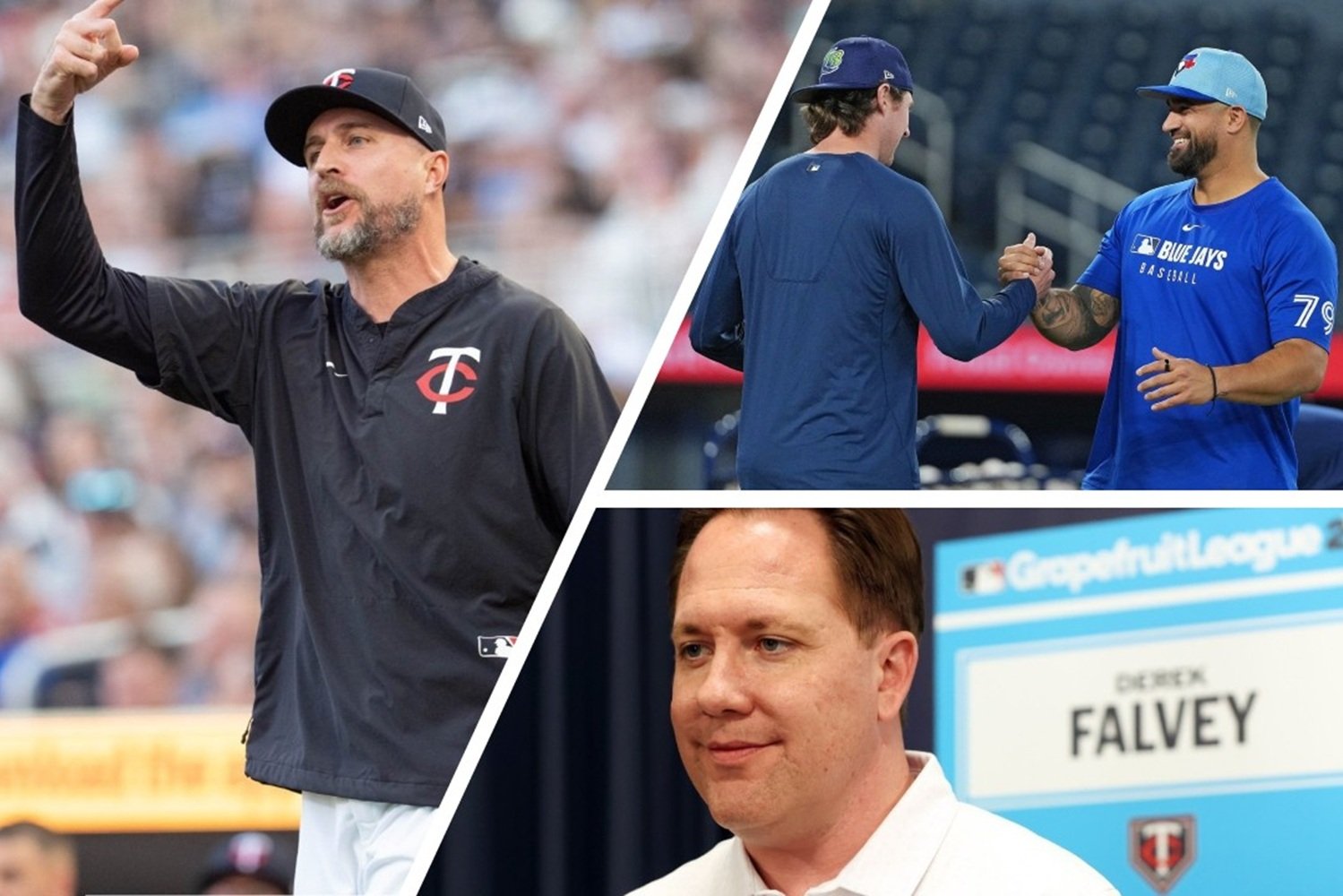
For much of the last decade, the Pohlad family has operated the Minnesota Twins as if accountability were a shell game. When results soured, someone else was usually nearby to take the fall. Executives were shuffled, managers were dismissed, and coaches were swapped out. Each move came with the implication that the problem had been identified and removed. Yet, the cycle has continued, and the list of available scapegoats is getting uncomfortably short.
What once looked like decisive action is starting to resemble a pattern of deflection. The common thread is that the ownership group remains untouched, while nearly every layer beneath it has been stripped away.
President Derek Falvey (January 2026)
The most significant domino fell last week, when Falvey and the Twins agreed to mutually part ways. The language was polite, but the reality was clear. Falvey and Tom Pohlad did not see eye-to-eye on the direction of the franchise. Falvey had been the face of baseball operations and often the public shield for ownership decisions, particularly as payrolls tightened and long-term planning gave way to short-term austerity.
By removing Falvey, the Pohlads removed the last executive who could plausibly claim autonomy over roster construction. It also raised an obvious question: If the architect of the modern Twins model is gone, who’s responsible for the limitations placed on him in the first place?
Joe Pohlad (December 2025)
Just weeks earlier, the family turned inward. Joe Pohlad was pushed out as his elder brother assumed control. The move was framed as a necessary reset, but it also signaled something deeper. When even a family member can be deemed expendable, it suggests panic, rather than vision.
Joe Pohlad had been positioned as the future of the franchise. His removal did not come with a clear philosophical shift or a renewed commitment to spending. It simply concentrated power, while offering another name to point at when explaining why things had gone wrong.
Manager Rocco Baldelli (September 2025)
Baldelli was fired after two disappointing seasons, something few managers can withstand. However, the decision felt less like a baseball call and more like an ownership directive. Baldelli was widely respected in the clubhouse and around the league. He had navigated earlier Twins teams through adversity and postseason success, with limited resources.
His dismissal appeared to come from above Falvey, rather than through him. In hindsight, it may have marked the beginning of the end for Falvey, as well. Once the manager was removed, the front office structure began to crack, and the chain of responsibility became murkier.
SS Carlos Correa (July 2025)
Correa was meant to be the franchise cornerstone and a signal that the Twins were willing to spend like a contender. Instead, his time in Minnesota was defined by inconsistency. He showed flashes of playing like a $30-million player, but those moments were fleeting and often disrupted by injuries. The expectations never aligned with the on-field results, and frustration followed.
By July 2025, the Twins moved on, while still paying the Astros $10 million per season to take Correa. Minnesota is saving roughly $20 million annually by having him off the roster, but it doesn’t feel like that money has been reinvested into improving the team. Correa became another name attached to failure, while the larger issue once again went unaddressed.
GM Thad Levine (October 2024)
When the Twins collapsed in 2024, someone had to answer for it in the front office. Levine became that person. While elements of the failure were tied to decisions made during his tenure, the issues ran far deeper than the actions of one executive. Development stalled, depth eroded, and financial constraints tightened.
Levine’s departure offered a clean headline and a sense of action, but it did little to address the systemic problems that had been brewing for years. The organization moved on quickly, and the root causes remained.
Hitting Coach David Popkins (October 2024)
In the weeks before Levine left, the Twins fired a trio of hitting coaches, including Popkins. The offense collapsed in the second half of 2024, making changes to the coaching staff inevitable. Popkins was fired, and the Twins pointed to approach and preparation as culprits. Then Popkins landed in Toronto and helped the Blue Jays make a World Series run in 2025 on his way to being named Baseball America’s MLB Coach of the Year.
The contrast was jarring. What was deemed failure in Minnesota translated to success elsewhere. It reinforced the idea that the environment and roster construction matter and that coaching alone was not the issue in Minneapolis—especially after the team ousted Popkins’s replacement, Matt Borgschulte, at the end of 2025.
With Falvey gone, Joe Pohlad sidelined, Baldelli dismissed, and a wave of executives and coaches already removed, the Pohlads are running out of people to blame. The familiar explanations are wearing thin. At some point, the constant turnover stops looking like accountability and starts looking like avoidance.
The Twins do not lack talent or institutional knowledge. They lack stability and a clear commitment from the top. Until ownership is willing to examine its own role in the franchise’s struggles, the cycle will continue. There are no scapegoats left, except the ones in the mirror.
Are there any scapegoats left for the Pohlads? Leave a comment and start the discussion.