
As the MLB offseason nears its end, the best remaining free agents are starting pitchers Zac Gallen and Framber Valdez. Even the next-best tier is made up mostly of starters, too—guys like Nick Martinez, Justin Verlander, Max Scherzer, Chris Bassitt, Lucas Giolito and Zack Littell. For the Minnesota Twins, that’s not obviously helpful, because the starting rotation is the strongest segment of their roster right now. Led by frontline, playoff-caliber starters Pablo López and Joe Ryan, the rotation has been the pillar around which the rest of the roster has crumbled over the last two seasons.
However, the team’s depth in starters doesn’t prohibit them from improving by adding to the group, as long as they land someone who is genuinely likely to deliver above-average performance. Last year, injuries and shaky command left Bailey Ober a shell of his previous self, but he’s penciled in as the No. 3 starter for the team with spring training on the horizon. A signing that pushes Ober down to fourth in the rotation and leaves the club’s cluster of young, controllable starters vying for places in the bullpen or Triple-A St. Paul would be a wise investment, since new chairman Tom Pohlad seems intent on having the team challenge for a playoff berth in 2026.
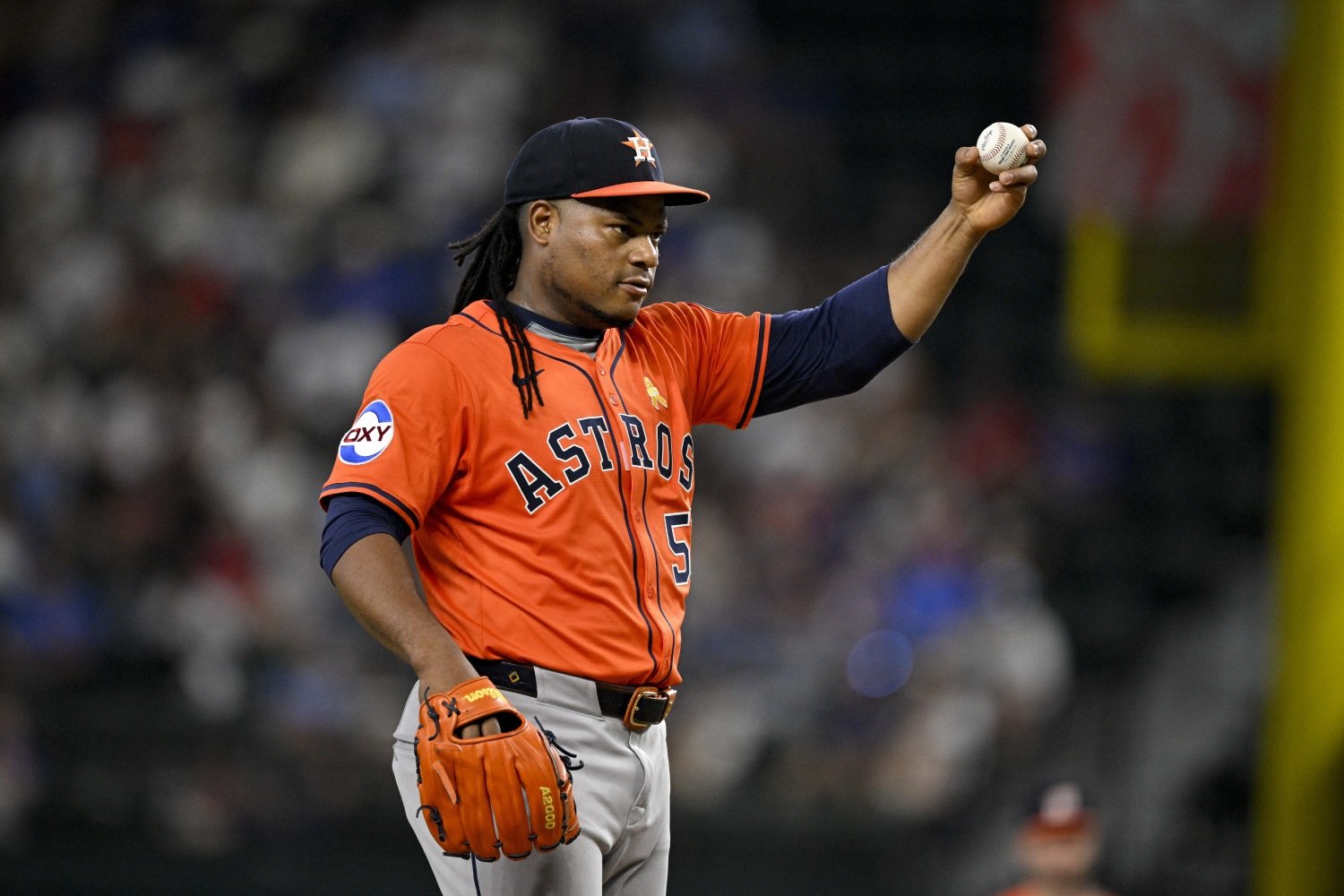
Thus, Valdez is beginning to make some sense for the Twins. It would be a very unusual move from a team this deep in an offseason this underwhelming, but Minnesota could still increase their payroll a bit from the present projection of $108.9 million. Valdez, 32, is a two-time All-Star and has averaged 192 innings per year over the last four seasons. He’s as reliable an innings-eater as any starter in the league, and although Gallen is almost as durable, Valdez is the one guy who combines volume and impact in a way that could take the Twins’ pitching staff to another level.
It would take a minor miracle of coaching and development (not to mention good health) to make the 2026 Twins more than an average team when it comes to run production. However, with another high-upside arm like Valdez’s in the mix, they could become a nearly elite run prevention club. That’s the most realistic path to an AL Central title for the team this year, and if they do get to October with a starting rotation of Valdez, López and Ryan, anything is possible. They might even find that they can reinforce the positional side of the roster at the trade deadline, or that young players like Walker Jenkins and Luke Keaschall transform them into a more complete team by season’s end.
Valdez is still available because the long-term, nine-figure deal he envisioned when the winter began has not materialized. His price would have to swoop quite low for the Twins to become a legitimate candidate to sign him, but the team has been known to pull off unexpected February splashes. More importantly, there are already signs that Valdez’s market is down low enough for that possibility to appear on the radar. A deal somewhat similar to the one the Padres roughed out with Nick Pivetta last winter—whereby Pivetta was guaranteed up to $55 million over four years and had the right to hit the market again after either of the first two seasons, but which helped San Diego by being heavily backloaded and including conditional club options—might end up making sense for both sides.
After the departure of Derek Falvey last week, the temptation to doubt that the Twins will do anything of note for the balance of the offseason is understandable. The team continues to proclaim their intention to get better, though, and in a market drying up in a hurry, signing Valdez is one of very few ways they could still concretely do so.