
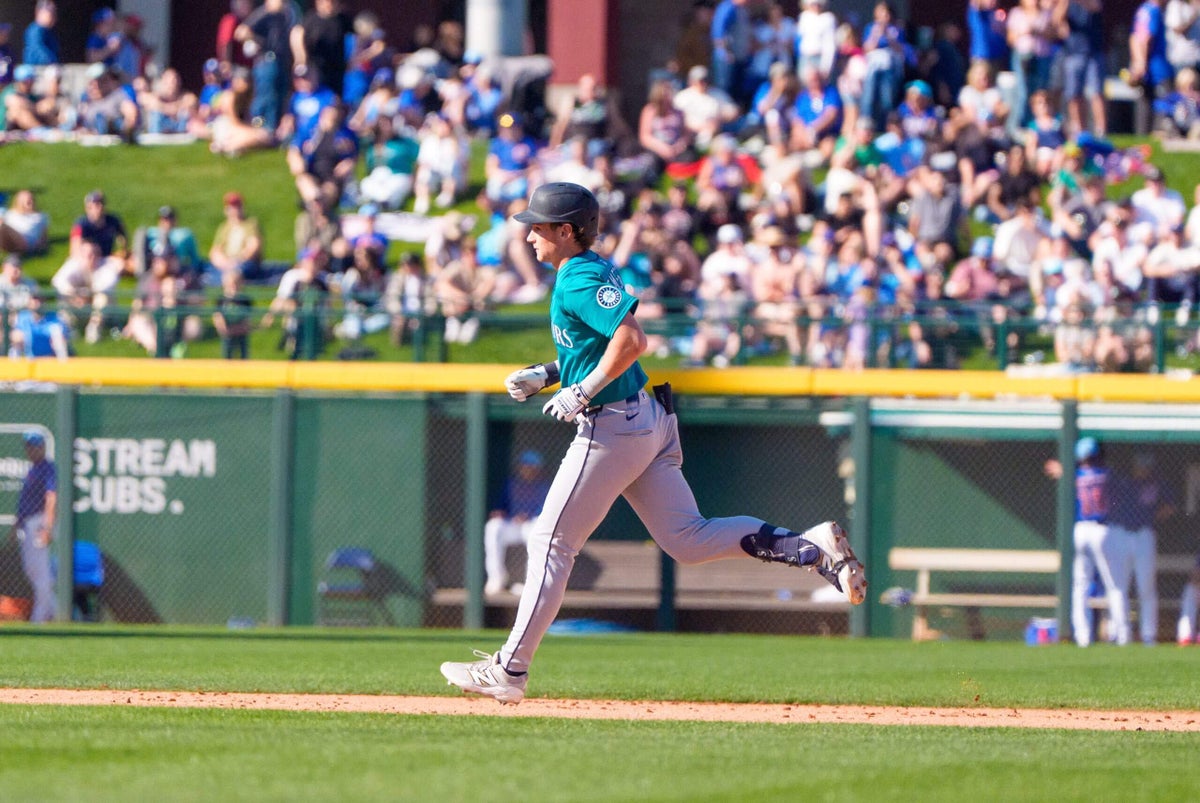
The Mariners’ system is by far the most top-heavy of all of the best systems in the game, with seven players in the top 100 and one more who’d be in the next 25-30 names, but it very quickly descends into thoughts, prayers and middle relievers after that.
(Note: Tools are graded on a 20-80 scouting scale; ages as of July 1, 2026. EV = exit velocity.)
Height: 6-0 | Weight: 195 | Bats: L | Throws: R | Age: 20
The Mariners’ first pick in the 2023 draft, Emerson is already on the brink of making the big leagues, even though he won’t turn 21 until July. After an injury-shortened 2024 season, Emerson got a full year’s work — exactly 600 PA — while playing at three levels in 2025, hitting .285/.383/.458 overall and making excellent swing decisions until he spent the final week in Triple A, where he was the second-youngest player after Nelson Rada. He has quick hands and generates plus bat speed, combining it with very advanced pitch recognition for his age, as he doesn’t chase much at all (22 percent in High A, where he spent most of the year) and picks up pitch types well already. He started the year putting the ball on the ground too often and appears to have dropped his hands just a little by year-end, with much lower ground-ball rates in Double A and Triple A, although he might want to drop them a little further to at least cement those gains in his line-drive rates.
He’s kept the possibility of playing shortstop in the big leagues alive due to his hard work, as he’s a 45 runner and doesn’t have the naturally quick actions you want in a shortstop, and is more likely to end up at another position, probably third base. He really, really looks like he’s going to hit, both in the sense of making contact and hitting the ball hard enough to matter, and will do so while playing some position of value on the dirt. If he ends up at 20-plus homer power, which is probably his ceiling, he’s a superstar. Maybe he’ll hit .300-plus with enough secondary value in walks, doubles and defense to be a superstar even without a gaudy home run total. I’m not betting against him given how fast he’s moved and how hard he works.
Height: 6-5 | Weight: 220 | Bats: R | Throws: R | Age: 20
Sloan has all of the ingredients you’d want in a No. 1 starter: He’s big, he fills up the zone, he’s got three pitches that might all be plus, and while it’s not a necessity for the job, he does have a giant fastball that hits triple digits. The Mariners’ second pick in 2024, Sloan went to Low A to start his pro career and wasn’t just dominant — he was efficiently dominant, peaking at five innings per start and never needing more than 72 pitches in any outing. His sweeper is his best pitch right now; when he finishes it out front, it breaks sharply downward with a little tilt, and hitters whiffed on the pitch 46 percent of the time they swung. He also throws a kick-change — who doesn’t — that dies just enough as it approaches the plate to get hitters to swing right over it, although he has to keep throwing it to improve his feel for the pitch. His arm action is a little bit long in back, not enough to keep him from repeating it or throwing strikes, which he did all year with a 4.5 percent walk rate.
The Mariners bumped him up to High A in August, and he was hit around a little bit, as he looked tired and wasn’t finishing as well over his front side. If I have any concerns about Sloan, it’s just that he is so good, so soon. He turns 20 on Jan. 29 and is already showing velocity that would put him among the hardest-throwing starters in the majors. Protect him at all costs — he looks like an ace in the making.
Height: 6-2 | Weight: 179 | Bats: L | Throws: L | Age: 21
The No. 3 pick in the 2025 draft, Anderson was dominant at LSU last spring, working with five pitches (counting his fastballs separately), showing excellent feel already for the zone and for mixing all of his weapons to get left- and right-handed hitters out. He’s 91-95 and it plays up thanks to a plus changeup that has hitters off-balance, while his slider is his best breaking pitch, and I think the Mariners should probably deprecate the curveball, at least for now, to focus on developing the slider. He really repeats his delivery and holds his mechanics very deep into starts — occasionally too deep, as he threw 130-plus pitches twice in his draft year.
Even as is, he has at least average command already of a major-league arsenal, maybe without the wipeout pitch to make him a front-line starter just yet, and could pitch in the Mariners’ rotation this year if they need him. There’s at least No. 2 upside here beyond that, as he’ll probably pick up some velocity and should tighten the slider with more focus on the pitch.
Height: 5-10 | Weight: 160 | Bats: R | Throws: R | Age: 21
Arroyo signed back in January 2022 for $1.375 million, which feels like forever ago, but he just turned 21 in November and has already reached Double A, showing superlative contact skills and an outstanding eye at the plate. His carrying tool is the bat, as he hit .269/.422/.512 in High A and .255/.376/.341 in Double A, actually cutting his strikeout rate at the higher level down to a career-low 15.6 percent. He’s got a very simple, direct swing that’s geared towards low line drives, with line-drive rates in his career consistently in the 20-27 percent range, including 25.6 percent in that stint in Double A. He loves the ball middle-down, with some weakness on fastballs toward the top of the zone, and he has very strong ball/strike recognition overall.
He’s an average to above-average second baseman, with some throwing issues early in 2025, and played a couple of games in left field in the Colombian Winter League to try to add some versatility given the Mariners’ surfeit of infielders. His bat will make him a regular anywhere, while his chances to be an above-average regular are probably tied to him playing second base for somebody.
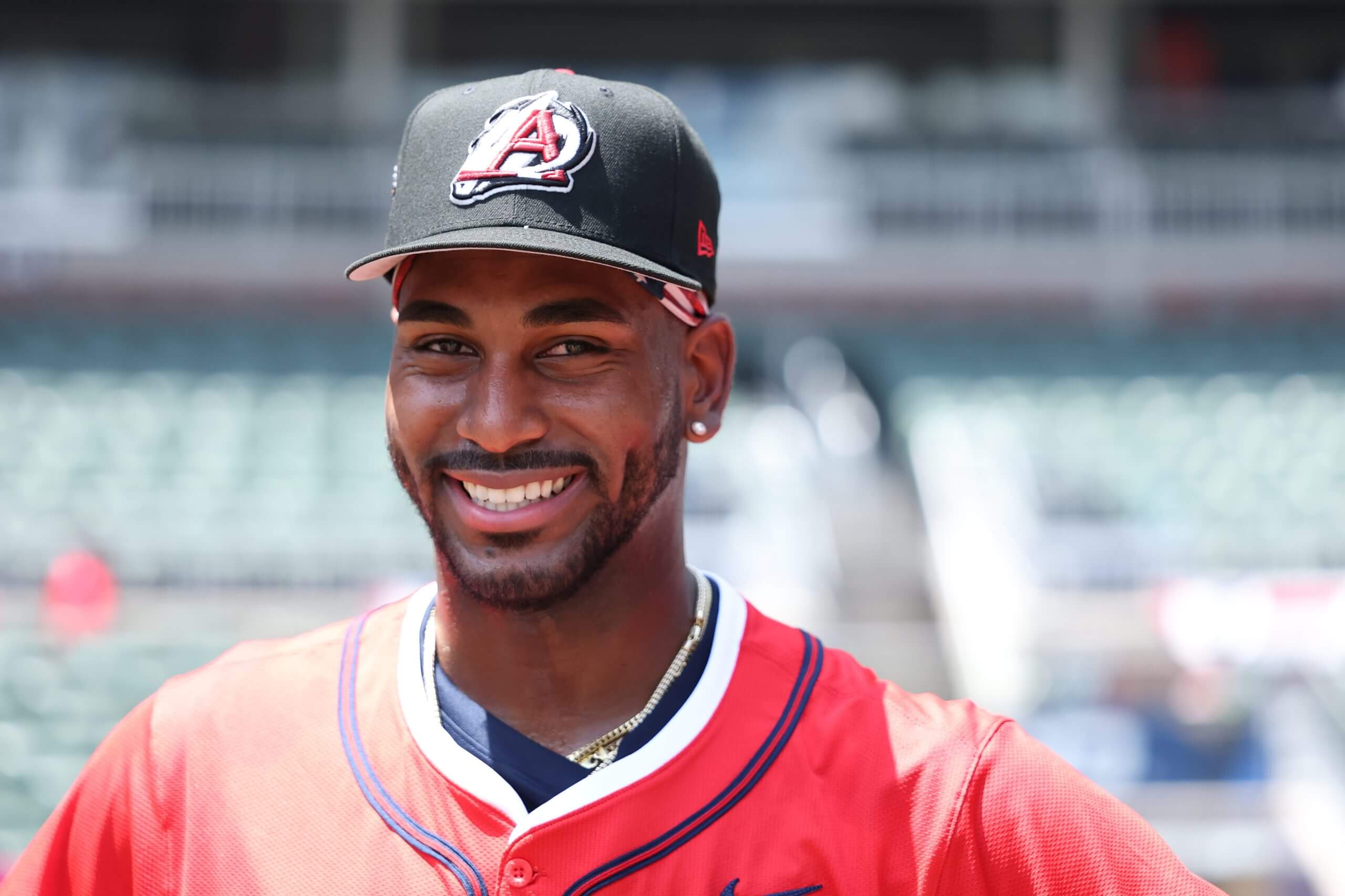
Lazaro Montes has huge power. (Kevin C. Cox / Getty Images)
Height: 6-5 | Weight: 210 | Bats: L | Throws: R | Age: 21
Montes’ 2025 season was a mixed bag, although it had more positives than negatives. He continued to post extremely high-end exit velocities along with very high hard-hit rates, a result of a combination of elite bat speed and his sheer overall size and strength. He hit 32 homers and had 58 total extra-base hits between High A and Double A. He did take his walks at both levels, though that came with too much tendency to chase pitches out of the zone at Double A (29 percent), even fastballs he should be able to pick up. The main negative last season was that his strikeout and whiff rates continued to trend up; he went from a 27.6 percent K rate in High A to 30.5 percent in Double A, and his swing-and-miss rate went from 35.4 percent in High A to 41.5 percent in Double A.
Despite his bat speed, he still misses a lot of fastballs in the upper third because he’s so tall that he has a hard time covering all areas of the strike zone. Some extremely tall hitters never figure this out. A few do, although it can take time — Aaron Judge wasn’t a big-league regular until he was 25, while Montes only just turned 21 in October. He’s still playing right field, moving around well enough to stay there for now, with a high probability he moves to first because he’s going to get even bigger — just a lower probability of that move than I thought a year ago. He has truly 35-40 homer upside with such hard contact that he could be a big-league regular even with a strikeout rate that’s well above the median, but that also can’t keep increasing as he continues to move up the ladder.
Height: 6-1 | Weight: 175 | Bats: B | Throws: R | Age: 20
Celesten’s stock took a big hit last year, even though he performed reasonably well for a 19-year-old in full-season ball, as he didn’t show a lot of urgency or focus on the field or in the box, and his batted-ball data got much worse year-over-year. He hit .285/.349/.384 in Low A before struggling in an 11-game run in High A to finish the season, but even with peak EVs around 111 mph he didn’t make nearly as much high-quality contact as he did in 2024. He missed time in May with vertigo and was worse across the board after his return, notably in his contact rate as his strikeout rate went from 17 percent before the IL stint to 25 percent after, so that likely was at least a contributing factor in his year. He does still have an outstanding left-handed swing and a good enough right-handed one to stick as a switch-hitter, with frequent hard contact in 2024 in the Arizona Complex League, and can show excellent actions at shortstop with soft hands. There’s too much potential here to ignore, with true All-Star upside as a shortstop with power, but he has to either grow up or get healthy or both.
Height: 6-2 | Weight: 205 | Bats: L | Throws: R | Age: 21
Farmelo came back intact after tearing his ACL in 2024, still running plus and playing strong defense in center field, but actually played fewer games in 2025 than he did the prior year because he suffered a stress reaction in his rib cage just a month into his return and didn’t get back on the field until early August. He did play in the AFL and didn’t look 100 percent at the plate, hitting plenty of line drives but missing some pitches in the zone he should have hit, while he did run well again with that plus defense. He hasn’t hit lefties well to date in a tiny sample, which is at least something to watch if and when he gets a full season in. He really, really needs to stay on the field this year, as he’s now two-and-a-half years into his pro career and has only 350 regular-season PA. He still has above-average upside between the defense, speed and a line-drive swing that makes hard (but not elite) contact.
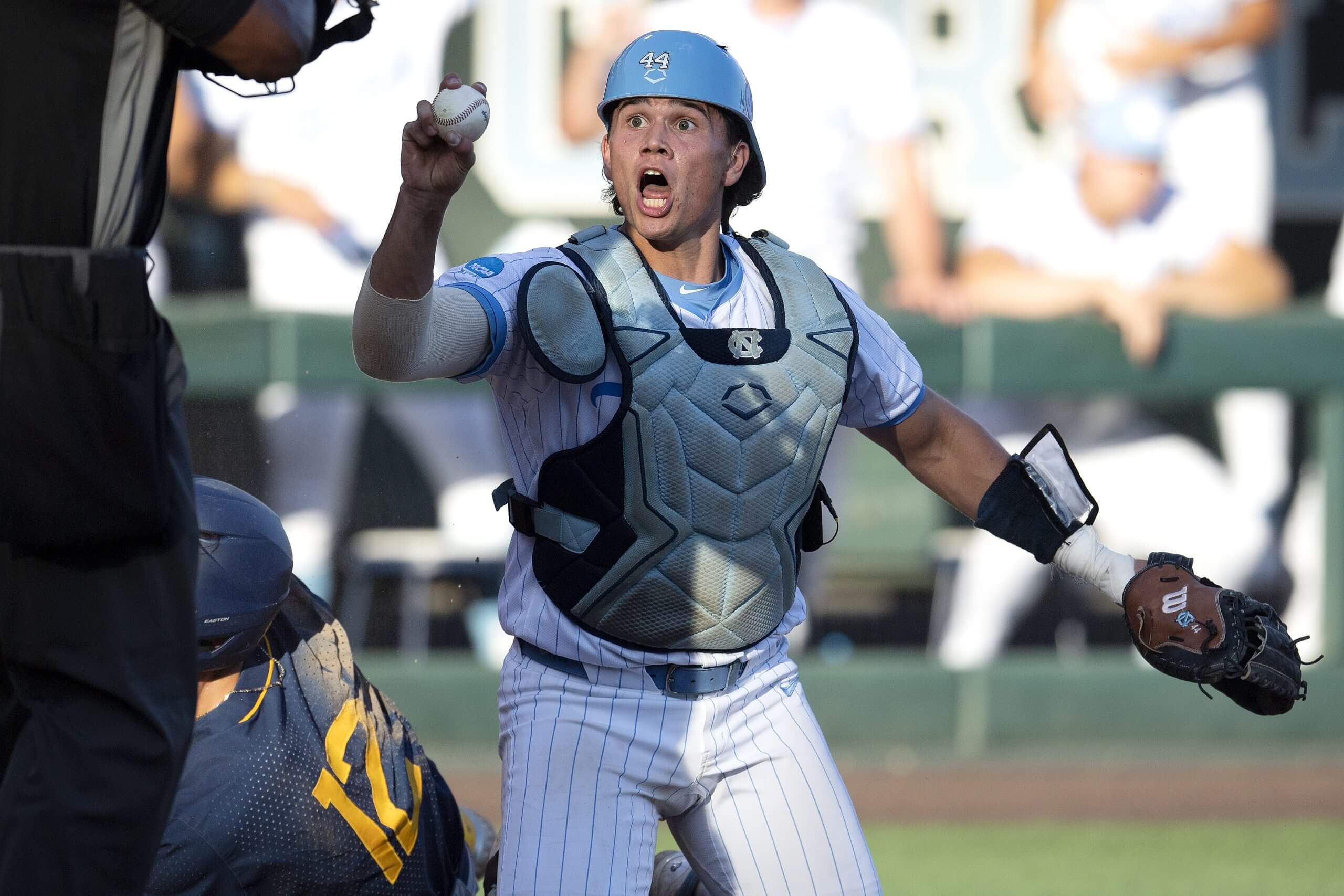
Luke Stevenson could be a top-100 prospect by this time next season. (Jeffrey Camarati / USA Today)
8. Luke Stevenson, CHeight: 6-1 | Weight: 200 | Bats: R | Throws: R | Age: 21
Stevenson is a true catcher with a plus arm, good plate discipline and plus power already. The Mariners’ second pick in the 2025 draft out of UNC, he has yet to hit .300 at any stop — not in either year in Chapel Hill nor in his 22-game pro debut in Low-A Modesto (RIP), where he did draw 23 walks for a .460 OBP. I don’t know why he’s run consistently low BABIPs, as the swing is fine and he had one of the highest hard-hit rates in the draft last year. He should be an everyday catcher and I wouldn’t be shocked to see him break out with an actual .300 batting average in High A, perhaps launching him onto the top 100 by this time next year.
9. Nick Becker, SSHeight: 6-4 | Weight: 190 | Bats: R | Throws: R | Age: 19
Becker was a potential first-rounder going into his senior year of high school, but someone told him to pull the ball in the air more and it cost him at the plate. Becker ended up going in the second round to the Mariners in last year’s draft. He’s an above-average runner who probably stays at shortstop, and before the swing change showed good contact skills with a lower swing plane for more gap power. He got way too uphill and doesn’t have the raw power to make that work, while it also took away from his hit tool, which looked like it might be his strongest one. I assume the Mariners have already tried to get him back to his 2024 swing, in which case he has a fairly high ceiling as a shortstop who hits and has occasional power. His brother, Eric, is at Virginia and likely to be a high pick in this year’s draft.
10. Griffin Hugus, RHPHeight: 6-2 | Weight: 210 | Bats: L | Throws: R | Age: 22
Continuing with Seattle’s stellar 2025 draft class, Hugus was their third-round pick out of Miami, working 92-94 with a solid-average slider and at least average command. He’s got a changeup he should probably use more, along with a show-me curveball. The delivery works, with an old-school full windup, and he’s an excellent athlete who was also a shortstop and third baseman as a freshman at Cincinnati. He could be a starter as is, although the lack of an out-pitch holds down the ceiling.
11. Mason Peters, LHPHeight: 5-11 | Weight: 175 | Bats: L | Throws: L | Age: 22
Peters, the Mariners’ fourth-rounder in 2025, is a smallish lefty who was 92-94 with two solid-average breaking balls at Dallas Baptist, missing plenty of bats while showing enough of a platoon split to say he’ll need something more for righties. He does throw strikes thanks to a simple delivery that’s very online to the plate. He could be a starter, with a reasonably high floor as a reliever.
12. Yorger Bautista, OFHeight: 6-1 | Weight: 176 | Bats: L | Throws: L | Age: 18
Signed last January for $2.1 million, Bautista is a strong kid already with huge bat speed and potentially top-end power. Even in a mediocre showing in the Dominican Summer League last year, he hit seven homers in 53 games. He’s in center field now and most likely moving to right field, with the arm to profile there. The Venezuelan outfielder can get too uphill in his swing, leading to a 29.8 percent strikeout rate in his debut, so there’s major hit tool risk here.
13. Brock Rodden, IFHeight: 5-7 | Weight: 170 | Bats: B | Throws: R | Age: 26
Rodden is small (5-foot-7) and older for a prospect (he’ll be 26 in May), but he improved his bat speed significantly from 2024 to 2025, only to lose most of the year to an oblique strain and a broken hamate bone. He’s a plus runner who can play anywhere on the dirt, maybe best at second base, and can at least turn on a fastball. He attacks strikes, while there’s still too much chase here, as he sometimes swings like he’s a bigger guy. If he embraces the shortness, he has a clear path to utility infielderdom.
14. Teddy McGraw, RHPHeight: 6-3 | Weight: 210 | Bats: R | Throws: R | Age: 24
McGraw has already had two Tommy John surgeries and missed the start of the 2025 season while recovering from more elbow trouble. The good news is he finished up the year healthy, pitching up to three innings per outing, and his stuff kept improving. He’s throwing a four-seamer and a two-seamer now, with the latter probably the better option, and his slider is a widowmaker when he lands it, showing good tilt and very sharp break down and strongly away from a right-hander. Left-handed hitters did more damage off him than righties, although he still struck them out 30 percent of the time. His profile is reliever only, maybe two innings at a time if all goes well, with the potential to be a dominant sinker/slider guy against righties.
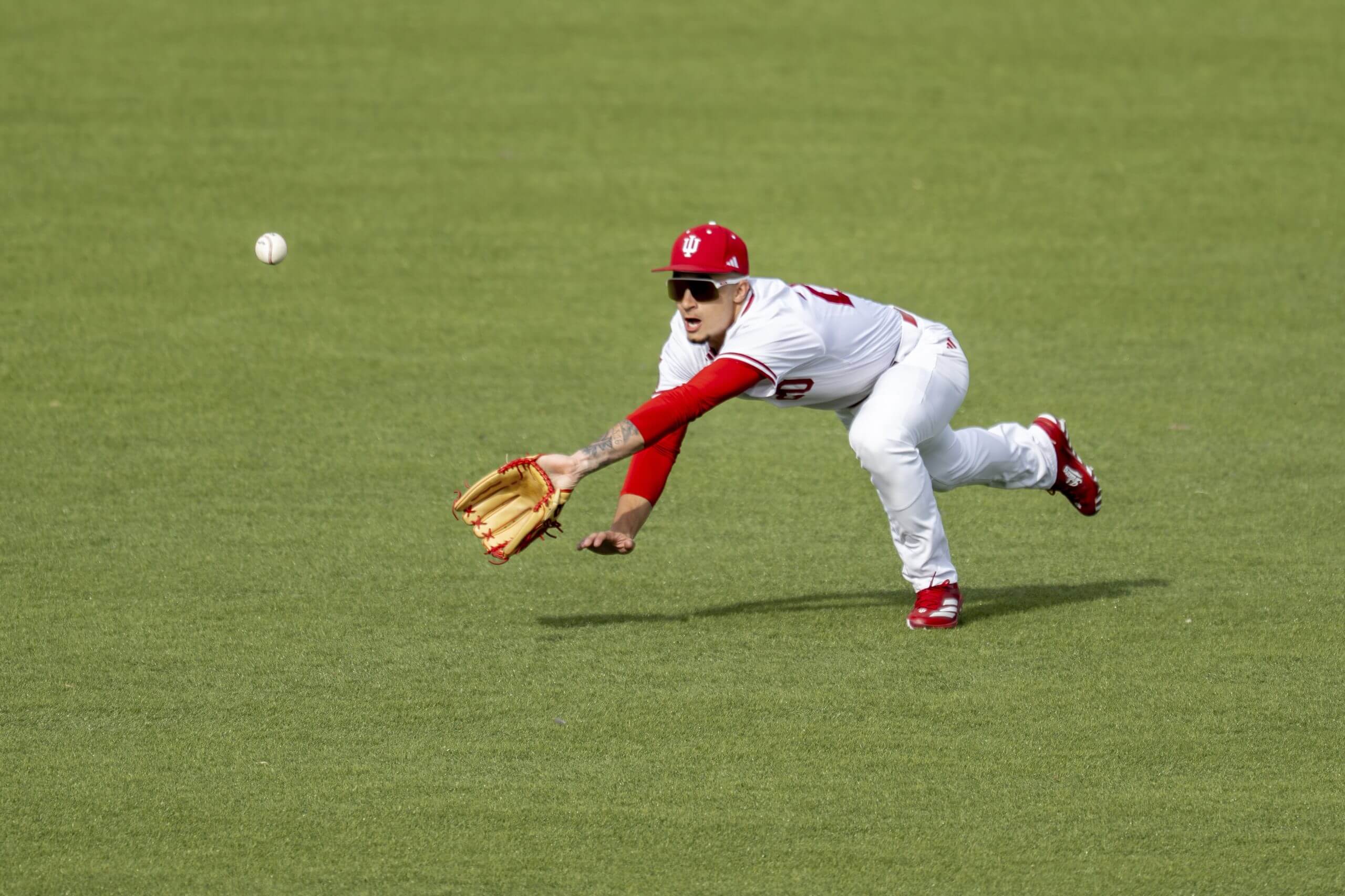
Korbyn Dickerson has a chance to stay in center field. (Doug McSchooler / Associated Press)
15. Korbyn Dickerson, OFHeight: 6-1 | Weight: 205 | Bats: R | Throws: R | Age: 22
A favorite of data scouts — a term I do not use with love — Dickerson is tooled up and makes very hard contact, with probably 70 power and 60 speed, along with a chance to stay in center. A fifth-round pick out of Indiana last season, Dickerson stopped hitting right around when Big Ten conference play started, and he has a long way to go in his swing decisions, especially around picking up pitch types. He was a great pickup at the spot he was selected, as he does offer significant upside as a 20-20 hitter who can play center field, with low probability given his propensity to swing and miss at anything that zigs or zags.
16. Luis Suisbel, 3BHeight: 6-1 | Weight: 190 | Bats: B | Throws: R | Age: 23
Suisbel did not follow up his modest breakout 2024 season, moving up to High A and losing everything but home-run power; he went from 15 homers to 23, at a cost of 65 points of batting average, dropping to a .211/.308/.412 line. He did lead the eight-team Northwest League in homers, so that’s something. He’s a third baseman with a plus arm and might be able to stick there, with first base the only other option, one that probably ends his status as a prospect. He’s a switch-hitter as well, although he did nothing from the right side last year, so perhaps there’s a platoon future for him. He’s got to make better choices at the plate and put the ball in play more often.
17. Robinson Ortiz, RHPHeight: 6-0 | Weight: 180 | Bats: L | Throws: L | Age: 26
Ortiz, acquired from the Dodgers in November for Tyler Gough, has been pitching in the minors for almost a decade, but thanks to multiple missed seasons and many more injuries, he has 238 career innings since he debuted in the DSL in 2017. He’s a sinker/slider guy now, still throwing 94-95, just a little too erratic to be a high-leverage reliever but probably fine as the 12th man on a staff right now.
18. Josh Caron, CHeight: 5-11 | Weight: 215 | Bats: R | Throws: R | Age: 22
I wrote last year that Caron’s pitch recognition was a serious problem before the Mariners drafted him in 2024, and lo and behold, he whiffed on more than half of the sliders he swung at in High A last year, hitting .197/.269/.331 at a level he should have been able to handle as a Division 1 product. He can catch and throw well enough to stay there and has 15-plus homer power, but that won’t matter if he can’t pick up spin.
19. Marcelo Perez, RHPHeight: 5-10 | Weight: 195 | Bats: R | Throws: R | Age: 26
Perez is a diminutive starter who throws strikes with three pitches, mostly going fastball, slider, cutter, with nothing better than average but low enough walk rates that he’s succeeded up through Double A. He spins the ball enough that if he goes into a short relief role either the cutter or slider could miss enough bats to make him a middle relief candidate. As is, he’s more of a sixth/seventh starter type who might end up very homer-prone in Triple A.
20. Charlie Beilenson, RHPHeight: 6-0 | Weight: 215 | Bats: R | Throws: R | Age: 26
Beilenson is a straight reliever who walked 4.6 percent of batters he faced between High A and Double A last year, sitting 92-93 with a slider that occasionally is a 55 and a fringy changeup. If he gets the ball down more, especially that slider, he’s got a chance to be a middle reliever. He went to Brown for three years and Duke for two, so I assume he’s not very bright.
2026 impact
I don’t think Emerson is that far away, actually. I bet he sees the majors this year, and Anderson does too, maybe in the reverse order.
The fallen
Right-hander Michael Morales was a command/projection guy whose projection still hasn’t come, four-plus years after the Mariners gave him $1.5 million in the third round of the 2021 draft. He struck out just 16 percent of batters he faced in Double A last year, posting a 4.60 ERA, with worse results than he’d had in a half-season at that level in 2024.
Sleeper
Stevenson isn’t some wild stab here, as he was the No. 35 pick last season, but I am betting he’ll outperform his previous showings this year and leap onto the top-100 list.