
The stateless A’s improved their system quite a bit with the Mason Miller trade, landing three guys now on their top 20, which helped replenish a system that graduated last year’s Rookie of the Year and runner-up.
(Note: Tools are graded on a 20-80 scouting scale; ages as of July 1, 2026.)
Height: 6-1 | Weight: 183 | Bats: B | Throws: R | Age: 19
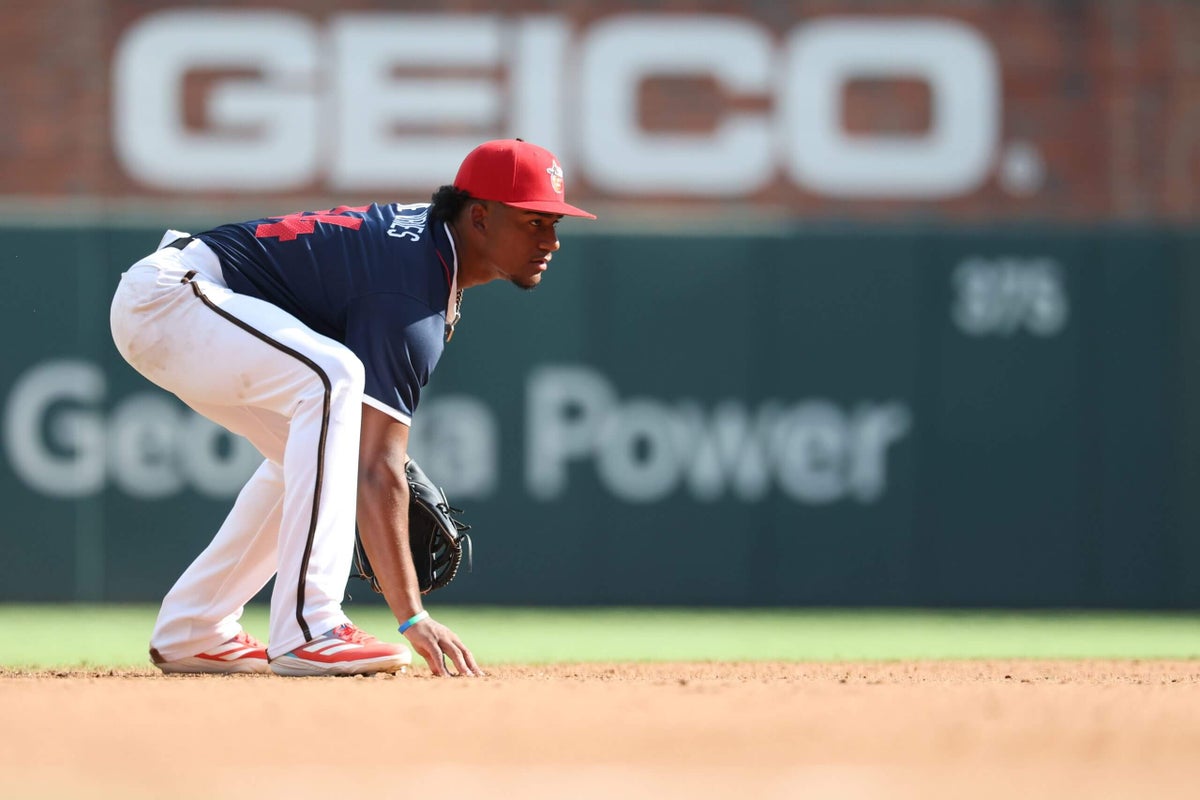
When the Padres sent De Vries to the trademark-pending Athletics at the 2025 trade deadline, he became the most significant prospect to be traded in ages, probably since the December 2012 trade of Wil Myers, who ranked No. 4 on my top 100 a few weeks after the Royals dealt him to Tampa Bay. At the time of the trade, De Vries was in the midst of his first truly full (injury-free) season in the minors, eventually playing in 118 games and finishing the year in Double A, with an overall line of .255/.355/.451. He kept improving as the season went on, hitting .279/.364/.548 in the second half, even with a trade and then a promotion to Double-A Midland, all before his 19th birthday. He’s a legit switch-hitter who makes a ton of contact both ways, with a batting-side split in 2025 that was the reverse of his split in 2024. He’s already showing above-average power, even though he was essentially a high school senior in High A and above.
He’s a natural shortstop who has the hands and arm to stick there, but I heard from several scouts over the summer that they thought De Vries’ defense at shortstop had regressed, which may be one small reason why the Padres were willing to trade him (the main reason being that A.J. Preller would trade his grandmother in the right deal). It’s a star-level ceiling even if he ends up at second base, and MVP-level upside if he shows he can stick at short.
Height: 6-0 | Weight: 200 | Bats: L | Throws: L | Age: 23
Jump was the Athletics’ second-round pick in 2024 out of LSU and his first pro season couldn’t have gone much better, as he made 24 starts, beginning by slapping High-A hitters silly in six outings and then going to Double A for the bulk of the season, where he continued to get left- and right-handed hitters out with his three-pitch mix. He’s sitting 94-95 now and gets good ride at the top of the zone, helped by a very low release height (sometimes it’s OK to be short), and both his slider and changeup are above-average pitches that miss enough bats. The changeup might be plus, with heavy tumble to it as it approaches the plate, although he doesn’t throw it a ton. I have never liked Jump’s delivery, leaving him off my draft top 100 in 2021 (when he was in high school) because I thought there was too much risk that he’d get hurt and/or not throw strikes. He went to UCLA, walked 11 in 16 innings, and blew out his elbow, but since his return and transfer to LSU, he’s been healthy, effective and in the zone much more, with an 8.3 percent walk rate in Double A this past year.
He should see the majors at some point in 2026 and has the repertoire and command to stick in the rotation, assuming he stays healthy under a starter’s workload, with a mid-rotation ceiling and extra points for being so close to helping a major-league club.
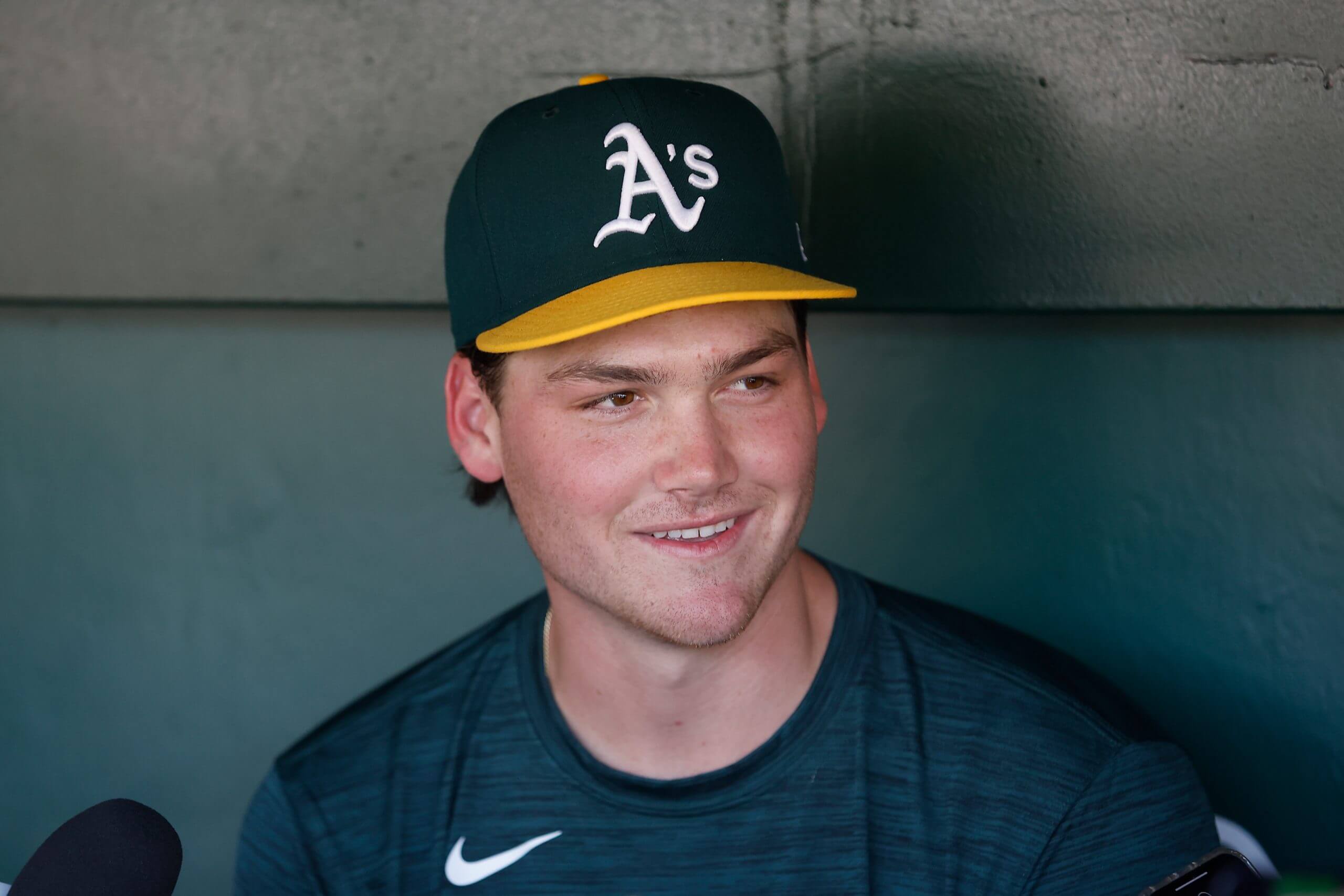
Jamie Arnold’s low release point has drawn comparisons to Chris Sale, though there are significant differences between the two pitchers. (Lachlan Cunningham / Getty Images)
Height: 6-1 | Weight: 188 | Bats: L | Throws: L | Age: 22
Arnold came into 2025 as the top left-handed pitcher in the draft class, but his stuff backed up a little bit and a couple of other lefties soared past him into the top five, which is how the Athletics got the preseason No. 1 lefty at pick 11. He sat 91-95 this past spring with a hard slider, coming from a very low three-quarters arm slot that earned him comparisons to Chris Sale, with a release height that looks like a typo at around 4.5 feet and plus extension over his front side. He’s got some feel for a changeup already, particularly in how and when to deploy it to keep hitters off-balance, although that’s the pitch that needs the most help in his present arsenal. His release point is in a really tough slot for hitters to see, and he’s consistently in the zone, thanks to his ability to repeat the delivery. He’s not Chris Sale — Sale threw harder in college, with an excellent changeup and less breaking ball — but Arnold does it a little easier than Sale did, and I think he’s a clear mid-rotation starter who may have some stealthy upside if he regains a couple of mph on the heater.
4. Henry Baez, RHPHeight: 6-3 | Weight: 175 | Bats: R | Throws: R | Age: 23
Baez also came over in the Miller trade, but after three outings he suffered a forearm injury that ended his season. He’s supposed to be healthy and ready to go for spring training. He’s a sinkerballer who had a 53.6 percent ground-ball rate in Double A at the time of the trade, walking more guys than he should with that profile. He’s mostly two-seamer/curveball, and even to lefties, he throws the two-seamer about 60 percent of the time, leading to a growing platoon split even though he has a decent enough splitter to keep it at a manageable level. If he’s healthy and the A’s get him to use his offspeed stuff more, he has a short path to becoming a back-end starter.
5. Braden Nett, RHPHeight: 6-3 | Weight: 185 | Bats: R | Throws: R | Age: 24
Also part of the return in the Miller trade, Nett was an undrafted free agent who looked like a sure reliever early in his pro career and has grown into a possible starter. He ditched his split-change and went to a more true changeup to lessen his massive platoon splits, working now with a five-pitch mix where nothing is plus but nothing is worse than strong average. His control has improved substantially in two years. He threw 40 innings in 2023 and walked 20.1 percent of batters he faced, all in the Arizona Complex League and Low A, while last year he threw 105 2/3 innings in Double A and walked 10.3 percent, improving even within the season. He’s probably 50/50 to start right now, with fourth starter potential if the control moves up even another half a grade.
6. Wei-En Lin, LHPHeight: 6-2 | Weight: 179 | Bats: L | Throws: L | Age: 20
Lin, who signed out of Taiwan in June 2024, made his pro debut in Low A last year and finished the year in Double A, all before he turned 20, with strong performance across the board at each stop. He’s exactly what you want in a 19-year-old pitcher: he throws strikes, he can definitely spin the ball (slider and curveball), he has feel for a changeup, the delivery works and the body is projectable. He’s mostly 90-92 right now, but I’d be shocked if he’s not at least 92-95 when he’s 22 or so.
7. Mason Barnett, RHPHeight: 6-0 | Weight: 218 | Bats: R | Throws: R | Age: 25
Barnett’s stuff was down for much of 2025, although he still ended up averaging 94.1 on the year on the four-seamer and had a plus slider, so he still missed some bats in a difficult year in hitter-friendly Triple-A Las Vegas. He made his major-league debut in late August and averaged 94.3 on his fastball in 22 1/3 innings, though his ERA was 6.85. He was up to 99 for the Aviators before the call-up, so the better stuff is still in there, and he might be better off starting this season in the majors in relief to get him away from the altitude of the Pacific Coast League. He’s a competitor who works with a real four-pitch mix and can be a mid-rotation guy if he gets to average command and control.
8. Kade Morris, RHPHeight: 6-3 | Weight: 190 | Bats: R | Throws: R | Age: 24
Morris is a highly competitive right-hander who throws strikes and uses six distinct pitches, mixing everything up to try to keep hitters off-balance and make up for the fact that nothing he has is plus or even firmly above-average. He’s probably best suited to a swing or long relief role given the pitch mix, maybe a fifth starter in a best-case scenario, but regardless, should be in the A’s bullpen this year.
9. Devin Taylor, OFHeight: 6-1 | Weight: 215 | Bats: L | Throws: R | Age: 22
A second-round pick last season out of Indiana, Taylor was a big data play, as he posted one of the best hard-hit rates in Division I last spring while facing USC, Illinois and non-baseball powerhouses in Big Ten play. He doesn’t pick up offspeed stuff well yet, at least not quality stuff, so he may have some on-base skills but struggle with overall contact, which was the case in his pro debut in Low A. It’s probably 30-homer power, and if he hits for some average, he could profile as an everyday left fielder.
10. Zane Taylor, RHPHeight: 6-0 | Weight: 200 | Bats: R | Throws: R | Age: 24
Taylor was their fifth-round pick last year at age 23 off a fantastic year at UNC Wilmington, where he walked just 3 percent of batters he faced even though he added some velocity. He also switched to a sharper slider in the mid-80s that had more vertical break and missed more bats. He’s six-foot-nothing and doesn’t have any projection left or big deception in the delivery, so he’s got to throw strikes like he has and keep changing speeds and shapes to fool better hitters. I did like the pick and think he’s one of this system’s sleepers. He also debuted after the draft with two innings in Triple A, as they needed an arm and he was available.
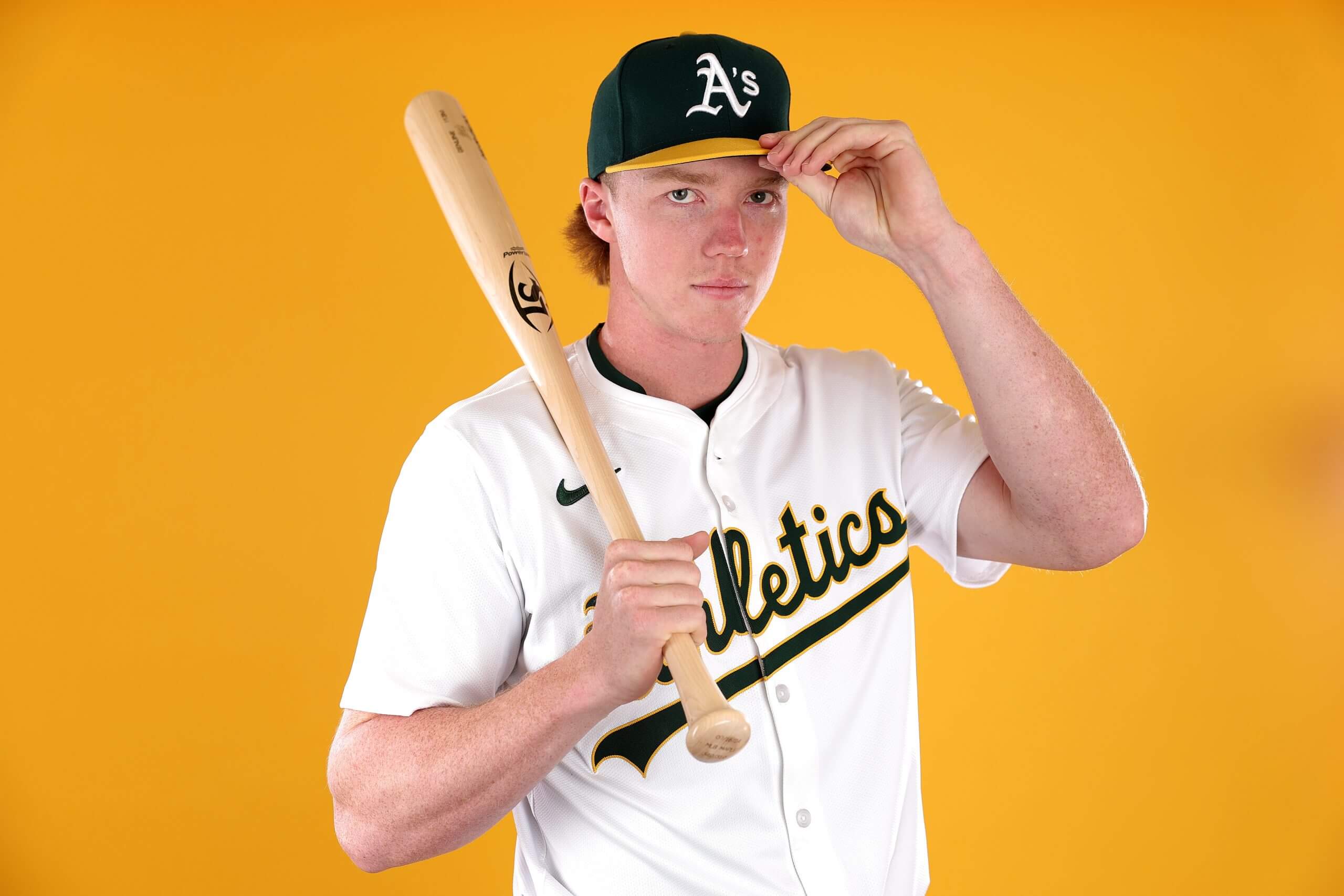
Henry Bolte has made significant adjustments since turning pro. (Steph Chambers / Getty Images)
11. Henry Bolte, OFHeight: 6-3 | Weight: 195 | Bats: R | Throws: R | Age: 22
Bolte was the A’s second-round pick in 2022 after striking out excessively even in high school, so it’s an incredible success story for their player development team that he has even reached Triple A, which he did last year after hitting .278/.378/.424 in Double A with a 27.3 percent strikeout rate. That’s high, but close enough to acceptable that he’s become a viable prospect. He’s a toolsy kid who can make very hard contact, but the tradeoff in getting the whiffs down has been that he’s cut down on his swing and doesn’t pull the ball that much to get into his power. He’s made so many adjustments already that I have to think he can continue to do so, at least enough to become a decent fourth outfielder who can play all three spots well and gets to some occasional pop off the bench.
12. Logan Sauve, CHeight: 5-10 | Weight: 185 | Bats: R | Throws: R | Age: 22
Another data play from the 2025 draft (seventh-round pick), Sauve had surgery almost immediately to repair an injury to the labrum in his non-throwing shoulder. He looks like a high-probability backup catcher who hit the ball harder than his spring line for West Virginia implied and has some contact skills. The shoulder injury predated the draft and may have dragged some of his stats down, so I wouldn’t be shocked to see him outperform that line when he does return to play this season.
13. Yunior Tur, RHPHeight: 6-6 | Weight: 208 | Bats: R | Throws: R | Age: 26
Tur is 26 but only signed with the A’s before the 2023 season after several seasons pitching in the Serie Nacional in Cuba. He started almost all of last year, going from High A to Triple A, although I think he’s a straight reliever. He comes straight over the top, sitting 96 with some ride along with a 55 splitter and a low-90s cutter that doesn’t miss many bats. The slider is fringy and he’s very north-south because of the arm slot. He could pitch in the big-league bullpen right now.
14. Joshua Kuroda-Grauer, SSHeight: 6-0 | Weight: 205 | Bats: R | Throws: R | Age: 23
Get the ball off the ground, and we might have something — a utility infielder, probably, but still more than he is now. Kuroda-Grauer makes a ton of contact, striking out less than 9 percent of the time in 2025, with no power — he hit two homers last year, which is two more than he had in 2024 — and low walk rates, so it’s kind of an empty batting average with a little boost from his speed. He doesn’t hit the ball very hard, either, but soft line drives are still better than soft groundballs. He’s a natural shortstop but better suited to second or third, and even played a little left field in the Arizona Fall League for versatility. He could be a perfect last guy on the bench with a tiny adjustment to get the ball in the air more.
15. Gavin Turley, OFHeight: 6-1 | Weight: 196 | Bats: R | Throws: R | Age: 22
After the draft, I compared Turley to Tommy White (see below), as they’re both guys who hit the ball extremely hard and show plus-plus raw power, but aren’t very advanced as hitters and don’t add a ton of value in other ways. Turley crushes fastballs, but is vulnerable to anything that shimmies or shakes, which continued in his brief time in Low A as he whiffed 47 percent of the time he swung at sliders. He’s an average defender in an outfield corner, which gives him a slight edge over White. There is definitely upside here, as he could be a low-OBP power bat with 25 homers if he can ever develop the pitch recognition to get there.
16. Steven Echavarria, RHPHeight: 6-1 | Weight: 195 | Bats: R | Throws: R | Age: 20
Their third-round pick in 2023 out of a New Jersey high school, Echavarria has been up to 100 and can flash an above-average slider, but he gets hit and doesn’t hold his stuff well into games. Lefties crush him even though he’s been throwing a splitter, and his command is probably around a 40, although I give him some grace, given the rapid increase in his arm strength. He’s only 20 this year, so I don’t want to consign him to a relief role off performance, since he might have three pitches to start and has held up physically under the workload, but the odds right now are that he’ll be a short-burst reliever who’ll sit upper 90s or better with a 60 slider and overwhelm hitters that way.
17. Gunnar Hoglund, RHPHeight: 6-4 | Weight: 220 | Bats: L | Throws: R | Age: 26
Hoglund is a fifth starter, right now, sitting 92-94 with good extension, an average change and sweeper, and probably plus command, so he can live on the edges of the zone with his stuff and get away with the lack of a swing-and-miss fastball. He did some of that in the majors last year before his season ended in June with a left hip impingement, working down with the changeup and to his glove side with his sweeper, but got too much middle-middle with the four-seamer. He’s posted low walk rates consistently in the minors since his return from Tommy John surgery, and if he does that in the majors and gets out of the heart of the zone more with the heater, he’ll be valuable as an innings-eater at the back of the A’s rotation.
18. Chen Zhong-Ao Zhuang, RHPHeight: 6-1 | Weight: 198 | Bats: R | Throws: R | Age: 25
“Z-Man” can run it up to 96 but sits 90-91 and will sometimes throw his fastball in the upper 80s, working with at least four distinct pitches and nothing better than his maybe-55 changeup. He led the A’s system in strikeouts last year because he’s really good at setting hitters up and mixing all of his pitches, but he also gave up 22 homers in 145 innings in Double A, and outsmarting hitters there is not the same as outsmarting hitters in the majors. I’d love to see him succeed with guile and guts and all that, but realistically, he’s probably a sixth starter or swingman.
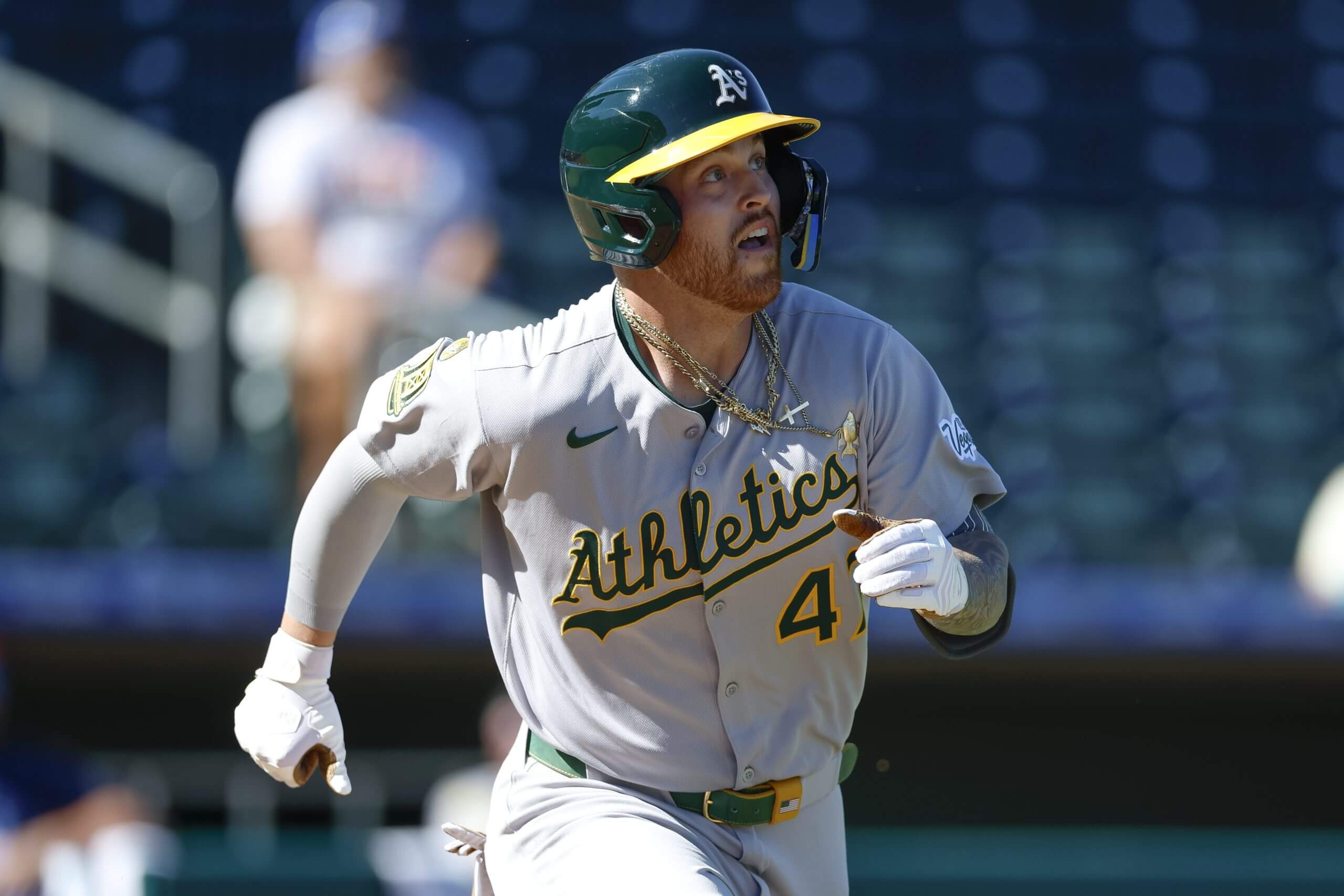
Tommy White has big raw power, but pitch selection has limited his in-game power as a pro. (Brandon Sloter / Getty Images)
19. Tommy White, 3B/1BHeight: 6-1 | Weight: 220 | Bats: R | Throws: R | Age: 23
Tommy Tanks has … well, not tanked, but he hasn’t shown the big power he did as a freshman at NC State or even the medium-big power he showed at LSU, slugging .439 last year between High A and Double A and .444 in the hitter-friendly AFL. He has raw power, but his swing decisions are poor, and he gets himself out too often, even though his contact rates are solid. He’s improved his defense at third base to keep it alive as a possibility, although I’d still bet on him ending up at first rather than sticking at the hot corner. If he picks better pitches to swing at, he could easily be a low-average, 20-25 homer regular.
20. Shotaro Morii, SS/RHPHeight: 6-0 | Weight: 190 | Bats: L | Throws: R | Age: 19
Signed out of Japan last January, Morii wants to be a two-way player, and for now, the A’s are entertaining it, having him pitch in some bridge-league games after he had a credible season as a shortstop in the ACL, hitting .258/.399/.384 with a 25 percent strikeout rate. He has no power, and doesn’t project to much, but he can defend well enough to stick at short and might hit enough to be a utility guy. On the mound, he’s up to 94 with tight spin on the curveball, but the delivery has a ton of effort and head-whack; I think it’s reliever all the way. Is he a prospect or a novelty act? I’m not sure, but get your signed paraphernalia soon so you can get a Morii memento.
2026 impact
Hoglund should pitch for them a bunch this year. Tur could surface as a power reliever.
The fallen
Daniel Susac was their first-round pick in 2022 out of the University of Arizona, but he really never hit in the minors outside of last year in Las Vegas, with awful pitch selection and below-average defense. They chose to leave him off their 40-man roster this winter and the Giants selected him in the Rule 5 draft.
Sleeper
I don’t think Lin has a huge ceiling, but he has some projection to be a mid-rotation guy and excellent feel to pitch already, which could put him on the back of a top 100.