
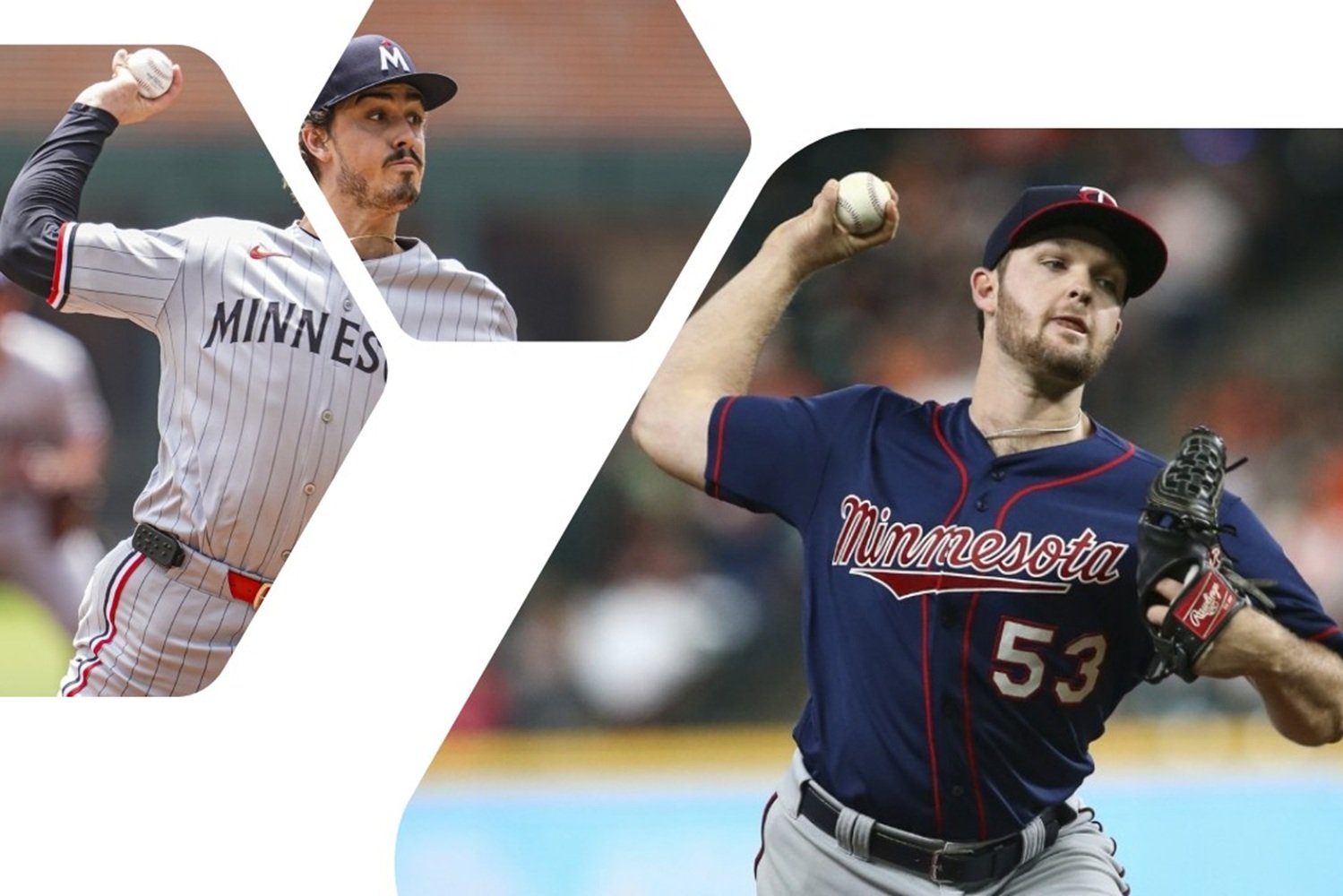
The Minnesota Twins and Derek Falvey mutually agreed to part ways last week, bringing an end to an era defined equally by long-term vision and by uneven results. Falvey arrived with a reputation as a process-driven executive who believed in infrastructure, development, and patience. His departure opens the door to reflection on what actually changed during his tenure, especially in the area most closely tied to his reputation when he was hired.
When the Twins brought in Falvey prior to the 2017 season, they were not just hiring a new voice: they were hiring a philosophy. Falvey came from Cleveland’s front office, where he was widely viewed as one of the architects of a pitching pipeline that seemed to endlessly produce big-league-caliber starters. Cleveland stayed perennially competitive by developing arms internally, turning mid-round draft picks and overlooked prospects into reliable rotation pieces.
Meanwhile, the Twins were seen as an organization lagging behind in player development, particularly when it came to pitching. Years of conservative approaches, limited data use, and inconsistent development plans left the organization scraping by with soft-tossers and mid-level veteran pickups. Falvey was charged with modernizing the system and building something sustainable, from overhauling coaching philosophies to investing in technology and process at every level of the minors. The goal was not quick fixes, but a pipeline that could consistently supply the major-league roster.
Understanding where the pitching pipeline started is critical to evaluating where it ended. When Falvey arrived, leading into the 2017 season, the Twins’ top pitching prospects included Stephen Gonsalves, Fernando Romero, Tyler Jay, Kohl Stewart, and Felix Jorge. That group generated some optimism in ranking circles, but had very little lasting impact at the major-league level. None of them became long-term contributors, and several struggled just to reach the big leagues. The cupboard was bare, and that reality meant any meaningful pitching pipeline would take years to build.
There were legitimate successes in player development during the Falvey era. Bailey Ober emerged as a mid-round pick who added velocity and refined his command to become a dependable starter. David Festa and Zebby Matthews followed similar paths, pushing themselves into the team’s future plans after entering pro ball without much fanfare. The Twins also showed an ability to creatively deploy arms. Jhoan Duran, Griffin Jax, and Louis Varland all transitioned to bullpen roles and became dominant late-inning options.
Joe Ryan may ultimately stand as the biggest success story of the Falvey regime, even though he was not drafted by the organization. When the Twins acquired him for Nelson Cruz’s expiring contract, few evaluators saw more than a potential mid-rotation starter. Minnesota refined his pitch usage, helped him better understand how to attack hitters, and put him in a position to maximize his strengths. The result was an All-Star-caliber arm and a pitcher who became a rotation anchor, highlighting how the organization could add outside talent and still meaningfully elevate it through development.
The story of the pitching pipeline may not be finished yet. Minnesota’s 2025 trade deadline sell-off brought a wave of new arms into the organization, including Kendry Rojas, Mick Abel, Ryan Gallagher, Sam Armstrong, Garrett Horn, Taj Bradley, and Geremy Villoria. Some of these pitchers could play a role as soon as 2026, while others represent longer-term bets that will take years to fully evaluate. Falvey’s lasting legacy in Minnesota may forever be tied to the results of the 2025 trade deadline selloff.
That depth is also reflected in the current prospect rankings. Minnesota’s system is now crowded with pitching talent such as Connor Prielipp, Dasan Hill, Andrew Morris, Charlee Soto, Riley Quick, Marco Raya, James Ellwanger, and C.J. Culpepper. Some of these arms will develop into starters, some will thrive in relief, and others will never make it out of the minors. That uncertainty is the nature of pitching development, but the volume of talent is notable compared to where things stood when Falvey arrived.
In the end, Derek Falvey’s pitching legacy with the Twins is less about a finished product and more about a transformation in progress. The organization he inherited had little margin for error and almost no internal pitching depth. By the time he exited, Minnesota had reshaped how it identifies, develops, and deploys arms throughout the system. That shift represents meaningful progress, even if the results did not always align with expectations.
The difficulty with judging a pitching pipeline is that timelines rarely cooperate. Arms take years to develop, and many of the pitchers most closely tied to Falvey’s vision are still working their way through the minors. Some will become contributors, others will not, but the volume of talent and variety of profiles now in the system suggest a healthier foundation than what existed a decade ago. If nothing else, they’ve had more ammunition to make trades over the last handful of years, as Falvey’s pipeline has produced pitchers other teams want. That Falvey’s conservatism in the trade market left some of that value untapped is a strike against him, but at least he created those opportunities. Duran, Jax and Varland were key pieces of the 2025 fire sale and brought back much of the young talent mentioned above. The team’s work to identify and begin the development of Chase Petty allowed them to swap him for Sonny Gray in the 2021-22 offseason.
Whether Falvey ultimately succeeded may depend on what happens next. If the Twins begin to regularly graduate starters and high-leverage relievers from the current crop of prospects, his tenure will look far more favorable in hindsight. If those arms stall or flame out, the criticism will remain that the pipeline was never fully delivered. For now, Falvey leaves behind a system that is better positioned than the one he found, even if the final verdict on his pitching legacy is still years away.
So did Falvey complete the Twins’ pitching pipeline, or did he simply lay the foundation for someone else to finish the job? Add a comment and start the discussion.