
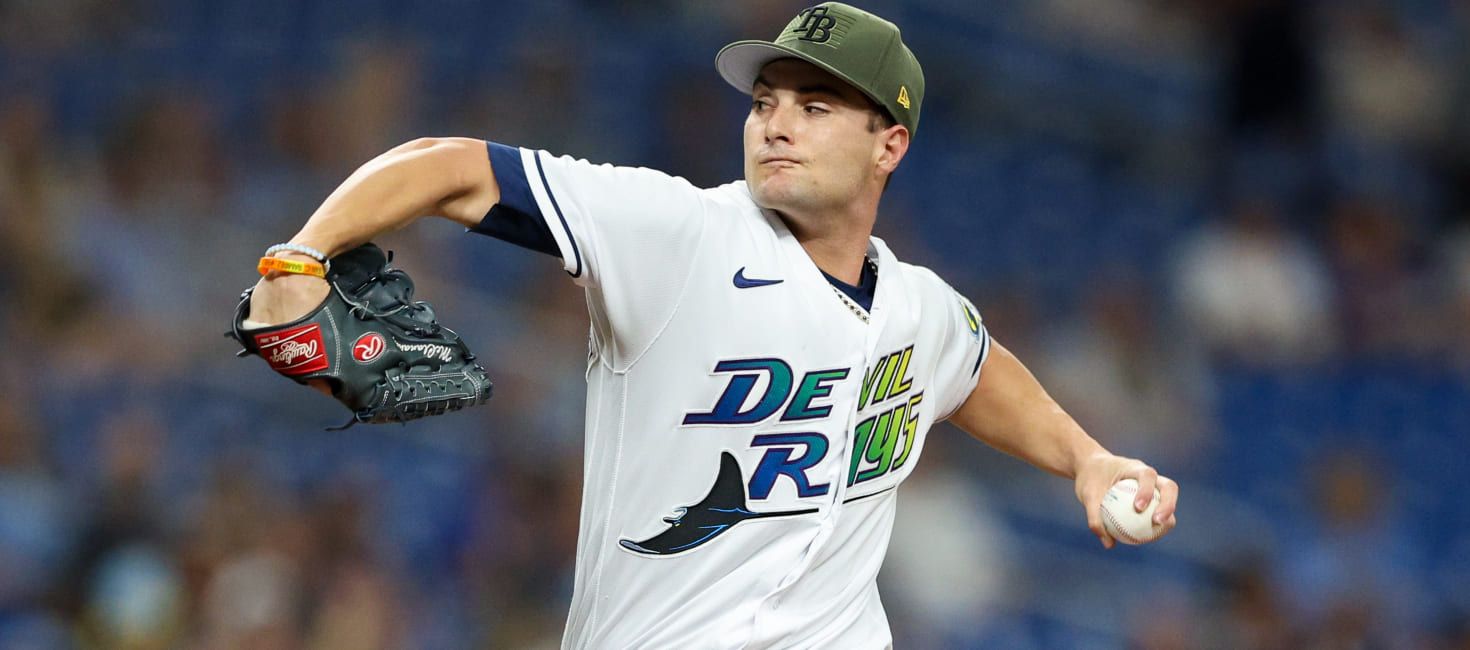
When preparing for your fantasy baseball drafts, knowing which players to target and others to avoid is important. The amount of information available can be overwhelming, so a great way to condense the data and determine players to draft and others to leave for your leaguemates is to use our expert consensus fantasy baseball rankings compared to average draft position (ADP). In this way, you can identify players the experts are willing to reach for at ADP and others they are not drafting until much later than average. Let’s dive into a few notable players below.
2026 Fantasy Baseball Draft Advice
RK
PLAYER NAME
TEAM
POS
BEST
WORST
AVG.
STD.DEV
ECR VS. ADP
167
Jonathan Aranda
TB
1B16
128
214
169.3
14.4
31
177
Edward Cabrera
CHC
SP57
140
200
179
15.1
31
186
Ezequiel Tovar
COL
SS19
111
279
188.7
37.9
41
188
Shane Baz
BAL
SP60
152
242
191.3
19.7
47
189
Merrill Kelly
ARI
SP61
119
253
191.6
16.4
40
197
Shane McClanahan
TB
SP64
149
250
200.8
16.8
52
201
Connelly Early
BOS
SP65
146
245
208.1
15.6
47
202
Luis Garcia
WSH
2B14
123
252
209.7
8.6
70
206
Jasson Dominguez
NYY
OF43
144
266
212.8
24.2
32
207
Kyle Manzardo
CLE
1B18
167
247
213.3
19.3
48
211
Masyn Winn
STL
SS20
108
296
215.2
41.1
70
223
Bryce Miller
SEA
SP68
113
274
231.4
29.2
41
225
Andrew Vaughn
MIL
1B20
155
281
232.6
18.1
89
240
TJ Friedl
CIN
OF51
192
297
247.4
24.2
37
250
David Peterson
NYM
SP75
96
304
212.3
40.5
69

What is Fantasy Baseball?
Fantasy baseball is an online game where participants act as managers of virtual baseball teams based on real-life Major League Baseball (MLB) players. The performance of these players in actual games determines the results in the fantasy league. It’s a blend of skill, strategy, and a little bit of luck, akin to the real-world decisions team managers must make.
Basic Strategy for Fantasy Baseball Success
1. Understand Your League’s Format and Scoring
Before drafting your team, it’s essential to understand the scoring system and rules of your specific league, as this will influence your drafting and management strategy. Knowing whether you’re in a points-based, category-based, or head-to-head league will guide you in selecting players whose strengths align with the scoring system.
2. Drafting Your Team Wisely
A solid draft is the foundation of a successful season. Here are a few tips for the drafting phase:
Balanced Team: Ensure you have a balanced team with a mix of power hitters, average hitters, speedsters, starting pitchers, and relievers.
Position Scarcity: Be aware of the depth of talent at each position. Some positions, like shortstop, may have fewer high-quality players, making it beneficial to draft a top player at that position early.
High-Floor Players: Early in the draft, focus on players with a proven track record of consistency.
Upside Picks: In the later rounds, look for “upside” players. These are athletes who have the potential to outperform their draft position.
3. In-Season Management
Stay Active: Constantly look for ways to improve your team through waivers, trades, and free-agent pickups.
Mind the Matchups: Pay attention to player matchups, platoon splits, and ballparks. Starting a pitcher in a hitter-friendly park, for example, can be risky.
Injury Management: Stay on top of player injuries and have backups ready for your key players.

Subscribe: Apple Podcasts | Spotify | Google Podcasts | SoundCloud | iHeartRadio