
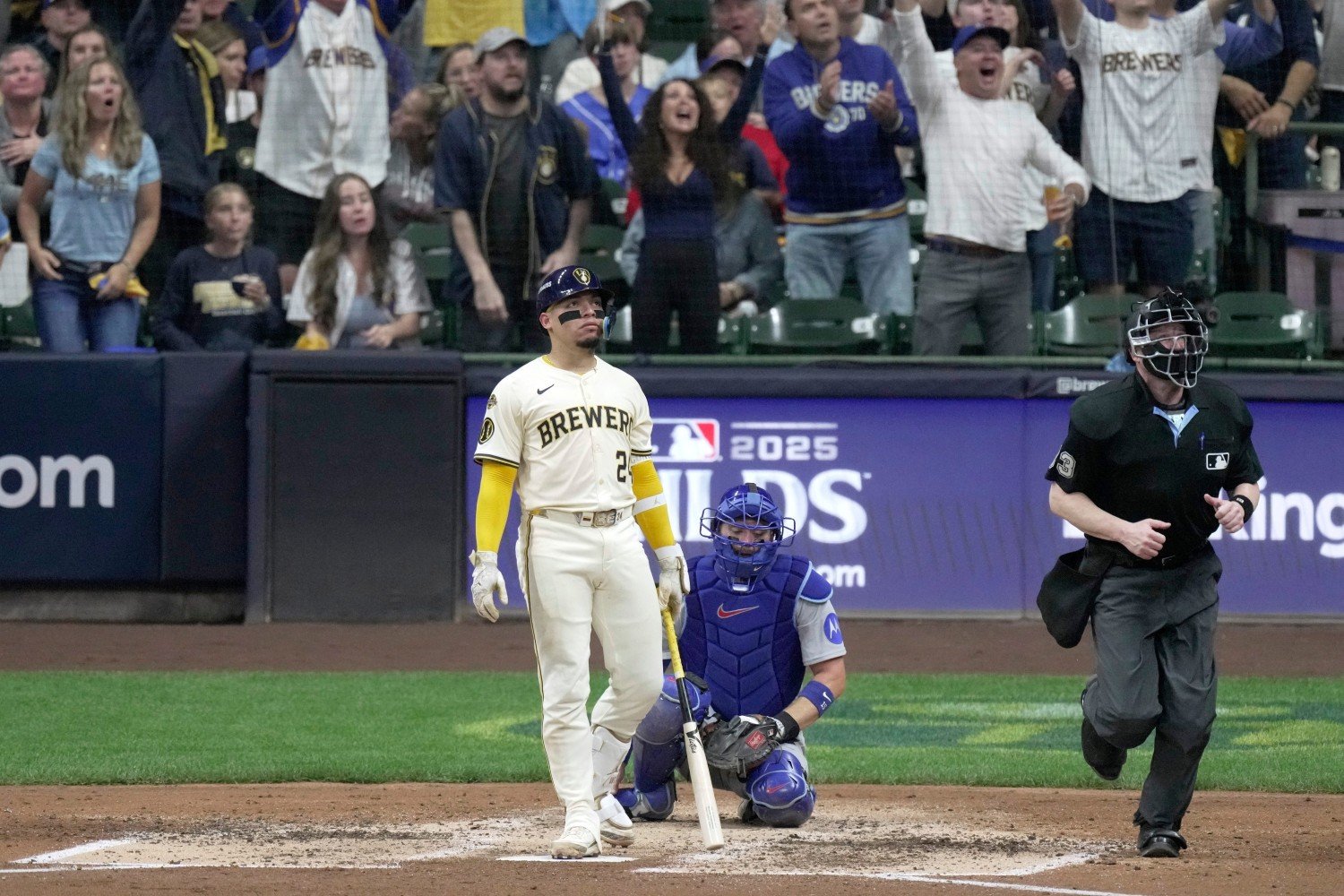
The Milwaukee Brewers won 97 games in 2025, winning the National League Central for the third straight time and earning the top overall seed in the postseason. They achieved this success while hitting only 166 home runs, which was good for 22nd in the majors. With the Cubs and Pirates spending money this winter and Freddy Peralta in New York, the Brewers might need to increase their home run total significantly to continue their dominant run in 2026. Assessing the projected 13 position players on the roster will allow us to see who will provide the power for the Brewers this year.
William Contreras
Contreras ended the 2025 season tied for the team lead in plate appearances, and heading into his age-28 season, he will look to increase his power production. He hit 17 home runs in 2025, but his slugging average dropped from .466 in 2024 to .399 in 2025. His expected slugging (xSLG) was .001 less than his actual figure, meaning he wasn’t missing chances for power; he just wasn’t generating them. Contreras’s exit velocity and hard-hit percentage were both higher in 2024, so he will look to get back to form with regard to power in 2026.
Reese McGuire
McGuire played for the rival Cubs in 2025, and the veteran catcher will be 31 by Opening Day. He hit a career high in home runs last year, with 9, and his slugging was up to .444. However, McGuire’s expected batting average and expected slugging were both well below his actual numbers, so don’t expect him to contribute much from the backup catcher role.
Andrew Vaughn
Vaughn was acquired from the White Sox on June 13, 2025, and he turned out to be one of the more important hitters the Brewers had during the stretch run. Before he was traded, Vaughn was a terrible major-league hitter. He hit below .200 in his time with the White Sox, and slugged only .314. However, after joining the Brew Crew, Vaughn began to walk more and strike out less. His slugging average rose to .493 for the Brewers, in 64 games. Vaughn ended the season with a .411 SLG overall, and his expected slugging, which sits at .479, suggests that there could be more power to tap into. I expect Vaughn to contribute heavily from the middle of the order, especially against lefties, against whom he was significantly better in 2025 than he was against righties.
Jake Bauers
The 30-year-old Bauers played in 85 games for the Brew Crew in 2025, and he posted an above-average OPS+ for the first time in his career. Bauers hit seven homers and had the second-highest SLG of his career, at .399. Bauers’s expected slugging was even higher, at .460. I’d like to see a platoon of Bauers and Vaughn at first base, which would create a good, reliable position of power for the Brewers in 2026.
Brice Turang
Turang finished 2025 tied with Contreras for the team lead in plate appearances, and the 26-year-old took full advantage of his playing time. He hit 18 dingers, and his slugging was a career high .435, which was close to his expected slugging of .429. Turang’s SLG has increased each year of his career, but I would expect it to level off in the lower ranges of the .400s. Turang’s value to the Brewers comes from all facets of the game, and he will be one of the Brewers’ most valuable players regardless of whether he hits 20 or more home runs. It’s noteworthy, but not necessarily predictive, that he hit 12 of his 18 homers in the final two months of the season.
Joey Ortiz
Ortiz regressed in 2025, hitting 7 homers in 149 games and slugging a lousy .317. His expected slugging was not good, either, at .327, one of the worst figures in baseball. His average exit velocity was equally dreadful, at 84.9 miles per hour. In his career so far, the 27-year-old has only 18 homers in 306 major-league games, so it may be wise to look elsewhere for power production.
Caleb Durbin
Durbin will be 26 years old by Opening Day, and while he provided value for the Brewers during the 2025 season, his power was limited. He hit only 11 bombs, his slugging percentage was only .387, and his expected slugging was even lower, at .362. His hard-hit percentage and exit velocity were also low, just above Ortiz. Unlike Ortiz, Durbin makes contact in ways that tend to maximize the value thereof, and makes better swing decisions. Durbin will contribute to the Brewers in 2026. Just don’t expect it to be in the power category.
Andruw Monasterio
The 28-year-old Monasterio had a productive 135 plate appearances for the Brewers in 2025, hitting four home runs with a .437 slugging percentage. However, his expected slugging was way below that number, at .363. Monasterio will look to contribute again for the Brewers in 2026, but expect a little regression if the plate appearances stay the same or increase. He’s not an upside option.
Blake Perkins
Perkins is similar to Ortiz. His homer total last season was low, and his expected slugging (.326) managed to be even more discouraging than the actual number (.348). The 29-year-old had only 171 plate appearances in 2025, due to injury and the loss of his mother, so we should assume he can be a bit better next year. Expect a potential increase in plate appearances (but not an increase in production) due to the trade of Isaac Collins to the Royals.
Jackson Chourio
Chourio hit the second-most homers for the Brewers in 2025, with 21, and the soon-to-be 22-year-old will look to build on an eerily similar offensive season to the one he had as a rookie. Chourio finished with a .463 slugging percentage, but his expected slugging was much lower, at .426. For reference, 2024 saw Chourio end with a .464 slugging percentage, but an expected slugging much lower again, at .431. The good thing is that Chourio is still young (he’ll turn 22 next month), and his exit velo and hard-hit percentages stayed close to the same from 2024 to 2025 as well. I’d project him to hit around the same number of homers, but there’s certainly a chance for a breakout here.
Christian Yelich
Yelich led the 2025 Brewers in home runs with 29, but he will enter 2026 coming off his lowest OPS since 2022. He’s also a year older, and the 34-year-old outperformed his expected statistics in 2025. The former MVP earned a slugging percentage of .452, and his expected slugging percentage was slightly lower, at .439. While Yelich’s OPS may remain the same or continue to decrease, he is still, in my opinion, the Brewers’ most dangerous bat, when it comes to hitting the ball out of the park.
Sal Frelick
Frelick improved his power numbers in 2025, hitting 12 homers. However, in 2024, he ranked in the bottom-most percentile in the majors in terms of barrel percentage, hard-hit percentage, and exit velocity. He made slight improvements in his second full season, but he still ranked in the bottom decile for barrel percentage, and even lower in hard-hit rate and average exit velocity. Although the 25-year-old showed improvement, I wouldn’t suspect much more power from Frelick this year. He’s also capable of power only against opposite-handed pitchers.
Garrett Mitchell
The 27-year-old Mitchell has totaled only 141 games played over the past four seasons, and the most home runs he has hit were 8 in 2024. Mitchell only played 25 games last season, with no homers at all, and his slugging average was an anemic .294. While his expected slugging was higher, at .341, staying on the field will be crucial for Mitchell in 2026 for him to contribute in the home run column.
Overall, I expect the Brewers to hit roughly the same number of home runs this coming season as they did in 2025, and their success will come down to pitching, defense, and scoring runs without hitting homers. There will be regression in all those departments, though, so they need a big step forward or two from one of their prime-aged could-be sluggers.