
Reports repeatedly connected the Chicago Cubs to designated hitter/outfielder Miguel Andujar in the last fortnight, but Andujar signed with the San Diego Padres this week, for $4 million. That contract is proof that the Cubs didn’t have a particularly serious interest in Andujar. San Diego offered a path to more playing time than the Cubs could, so if Andujar had his long-term earning potential in the front of his mind, he might have demanded considerably more from the Cubs than the Padres paid. In truth, though, the North Siders’ interest was always contingent on the possibility of a second move, which didn’t materialize.
Andujar is a right-handed batter who mashes lefty pitching. That’s a valuable complementary piece, even with little defensive value added thereto, but it’s less valuable to the Cubs than to most other teams. Chicago wanted Andujar only in a scenario in which they moved Matt Shaw and opened a spot to add a left-hitting infielder to their bench. That hasn’t happened, and looks increasingly unlikely, so Andujar didn’t end up being a fit for the team.
At catcher, the Cubs have two right-handed hitters. Among their six infielders (counting Tyler Austin, who’ll back up and platoon with Michael Busch), they have five righty batters, in Shaw, Alex Bregman, Dansby Swanson, Nico Hoerner, and Austin. Busch is the only lefty batter out of those eight roster spots, so the Cubs need lots of left-handed at-bats from their outfield and DH spots.
They’ll get them, of course. Ian Happ is a switch-hitter, and Pete Crow-Armstrong bats left-handed. Moisés Ballesteros, in whom the team demonstrated their great faith by trading Owen Caissie earlier this winter, will soak up plenty of playing time at DH. Seiya Suzuki is locked in for at least 550 plate appearances, though, and bats right-handed. The team will choose from among Justin Dean, Kevin Alcántara, Chas McCormick and Dylan Carlson for the fourth outfielder job, and all four of those guys are de facto right-handed bats. (Carlson, technically, is a switch-hitter, but he’s a disaster from the left side and would only find a real role as a backup and partial platoon partner for Crow-Armstrong.)
We’ve accounted for all 13 position-player spots on the roster, but we haven’t really accounted for all the available playing time. There are likely to be between 300 and 450 plate appearances available in that outfield and DH mix, accounting for injuries, the possibility of failure by Ballesteros, and the times when they won’t need to carry any of the backup center field candidates. Those plate appearances should be given to a strong lefty batter, to make up for the right-leaning infield group and the fact that a team faces more righty pitchers than lefties.
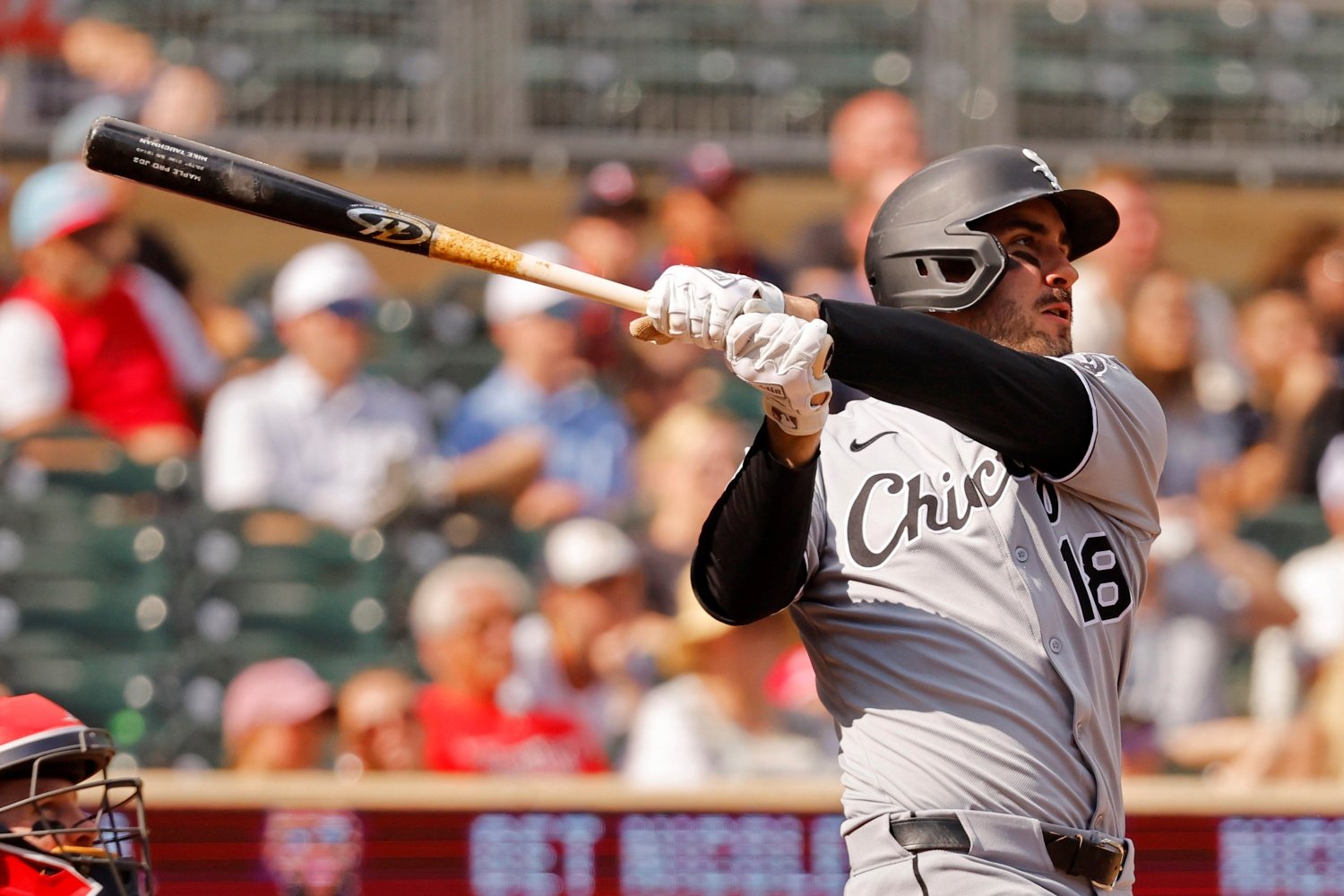
A few good trade candidates stand out. The team could try to pry underachieving but intriguing corner outfielder Trevor Larnach away from the Twins. (In fact, the Twins have several lefty bats who are short on positional or defensive value but can hit a bit.) They could pursue Lars Nootbaar, of the rebuilding Cardinals, or late-blooming former top pick Mickey Moniak from the Rockies. However, the easiest path forward is a simple, warm-feeling one: Re-sign ex-Cub Mike Tauchman.
Tauchman, 35, doesn’t come with worries about clubhouse fit or swing retooling. He doesn’t need to play with a next contract in mind, like Andujar. He’s a player with clear flaws whom everyone knows to be in decline, and he absolutely can’t be placed in center field anymore. However, since the start of 2023, he’s averaged almost exactly the number of plate appearances the Cubs need to fill, at the very positions where they need to fill them. He’s batted .255/.359/.381, and his rates with the White Sox in 2025 weren’t a step down from that. Tauchman still gets on base, and he can play a competent corner outfield spot. He’ll also be exceptionally cheap.
He’s not likely to stay healthy all year or to be an impact player even while he’s on the roster. As a complementary option in the outfield, though, Tauchman would give the Cubs lineup extra length. Because he spent two fruitful years reviving his career at Wrigley Field, he’s a known commodity in the clubhouse. This is a simple solution to a simple problem. Unless something bigger comes together very, very soon, the Cubs should bring back the Palatine, Ill. native for a fourth consecutive hometown summer.