
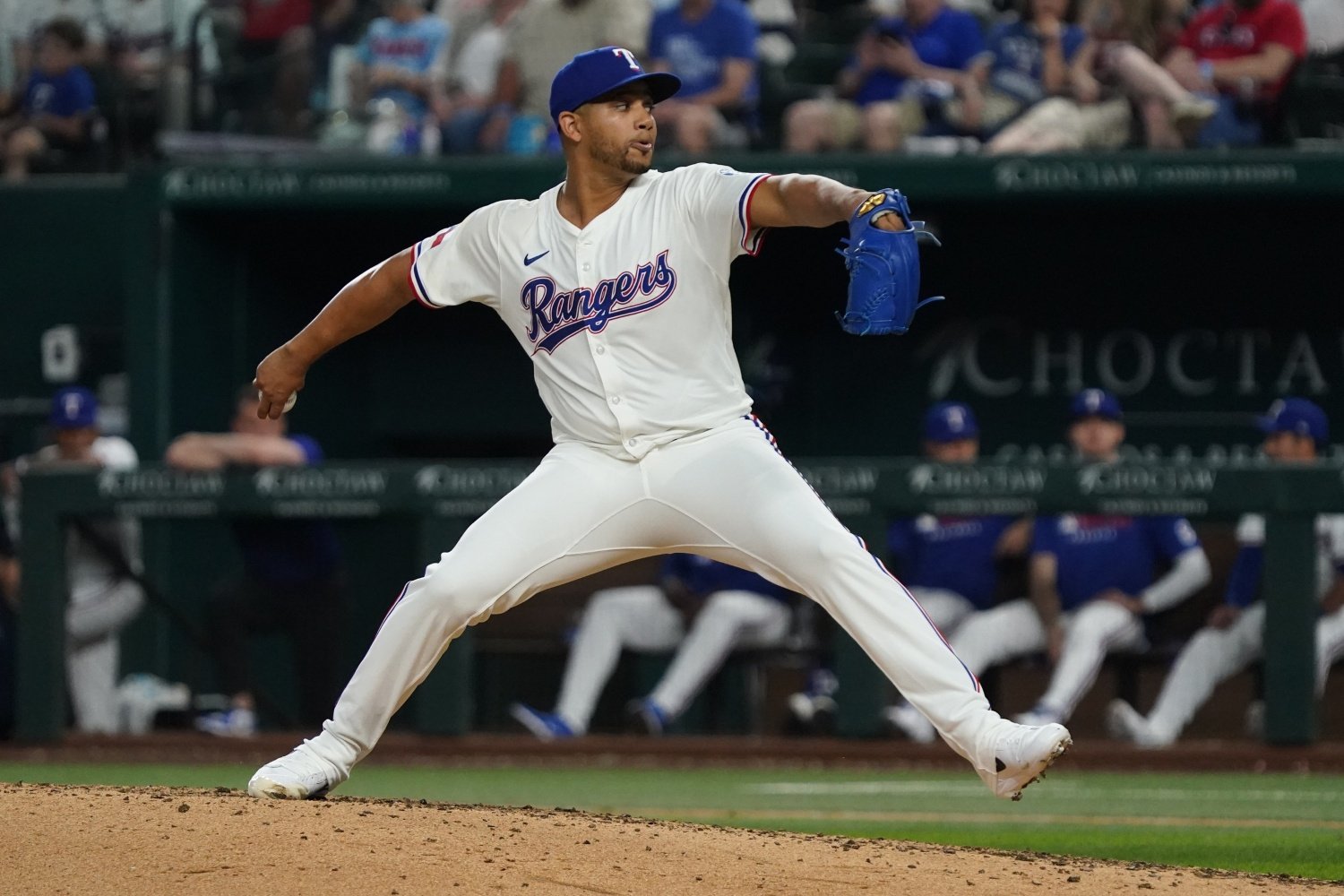
With a plethora of young starters set to compete for rotation spots in spring training—most of them already on the 40-man roster—minor-league signee Gerson Garabito probably won’t be in the running for the Brewers’ Opening Day roster.
Still, Garabito will be among the pitchers reporting to big-league camp in the coming days, where he’ll get an opportunity to make an impression for later in the season. Andruw Monasterio, Jared Koenig, Anthony Seigler, and Easton McGee are among the recent non-roster invitees to find their way to Milwaukee in the middle of a season after being further down the depth chart in spring. For a club that has gone through plenty of arms throughout the last few seasons, Garabito could be next.
The 30-year-old Dominican made his debut in 2024 for the Texas Rangers, for whom he pitched to a 5.77 ERA and 4.96 FIP over 34 ⅓ innings across parts of two seasons. They released him last June to sign with the Samsung Lions of the Korean Baseball Organization (KBO), where he posted a 2.64 ERA and 3.94 FIP in 15 starts.
Stuff models are not enamored with Garabito’s arsenal. He had a 92 Stuff+ and 0.1 StuffPro (where 0 is average and lower is better) in his eight big-league innings in 2025. However, he throws five pitches, with a few interesting shapes. Most notably, his sinker had 3.5 more inches of sink than expected from his three-quarters arm slot, while his four-seamer had an extra inch of carry.
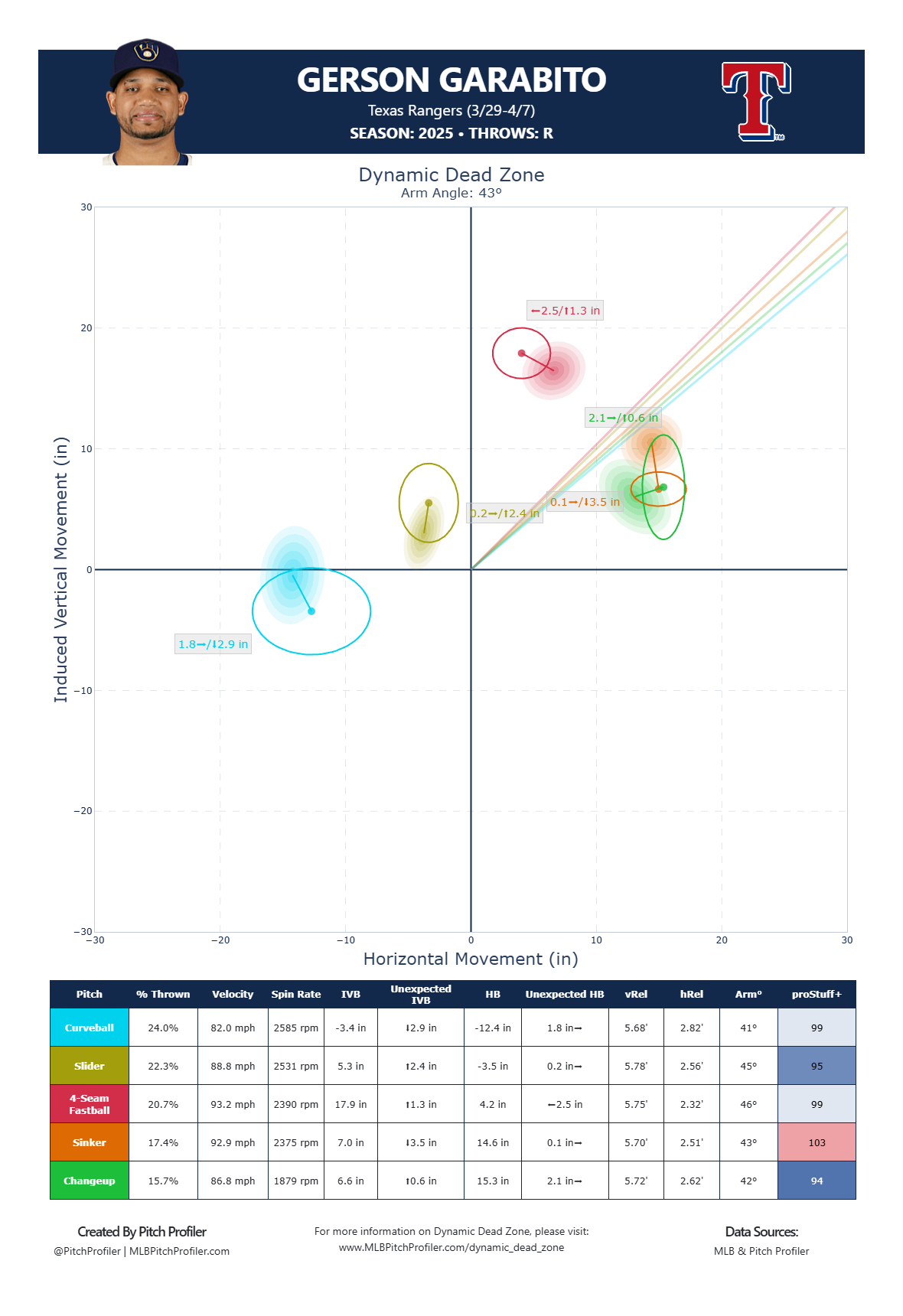
That heavy sinker figures to become the foundation of his pitch mix in the Brewers organization, which has been among the top five teams in sinker usage over the past two seasons. One of their greatest development successes last year was Quinn Priester, who throws a similar bowling-ball two-seamer. In fact, Garabito’s velocity, pitch shapes, and arm angle are eerily similar to Priester’s before his 2025 breakout.
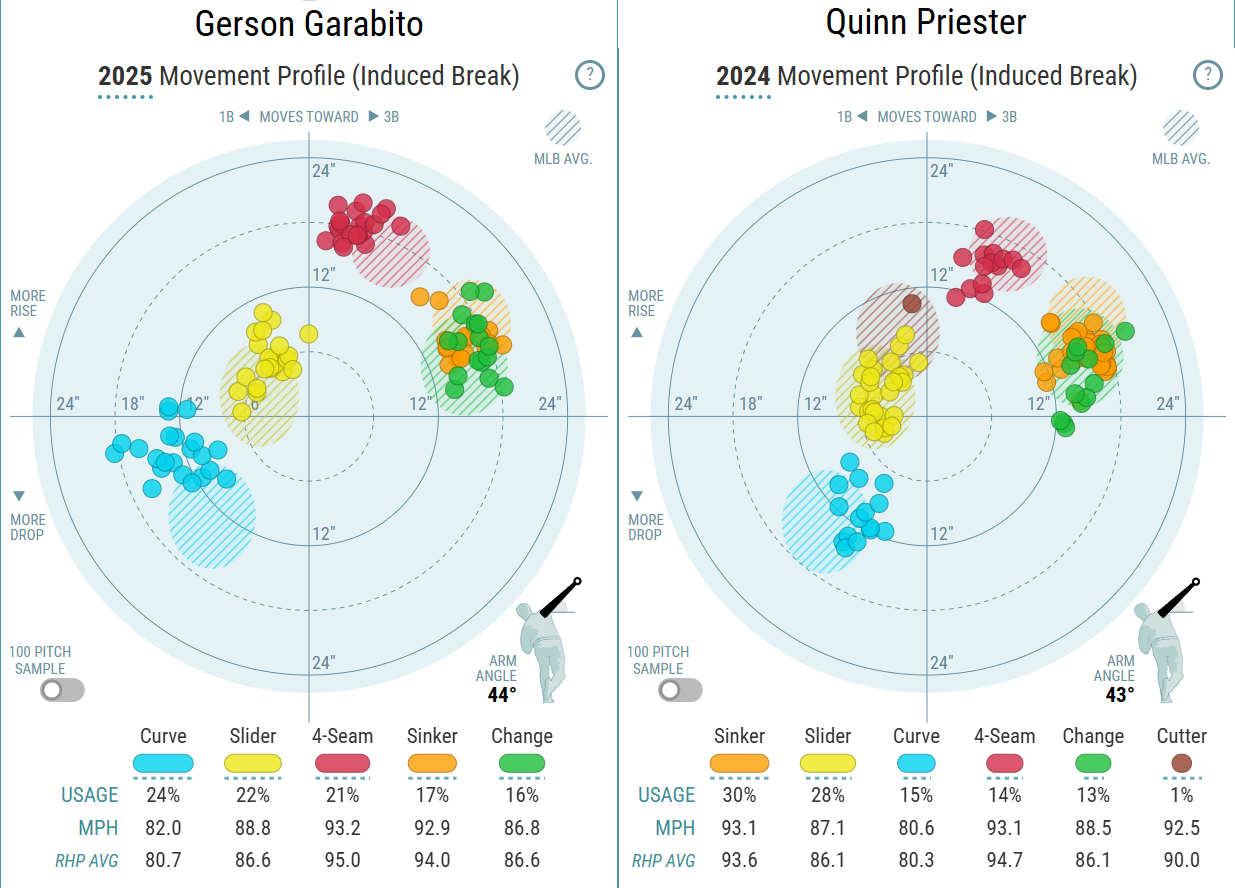
There are a few key differences between the two pitchers. Garabito’s four-seamer has more spin and carry than Priester’s did, and his curveball has more of a sweeping slider shape. That’s because Priester throws his curveball from a higher slot than the rest of his pitches to get more traditional 1-to-7 movement, but Garabito uses a lower slot to give his hook more lateral break.
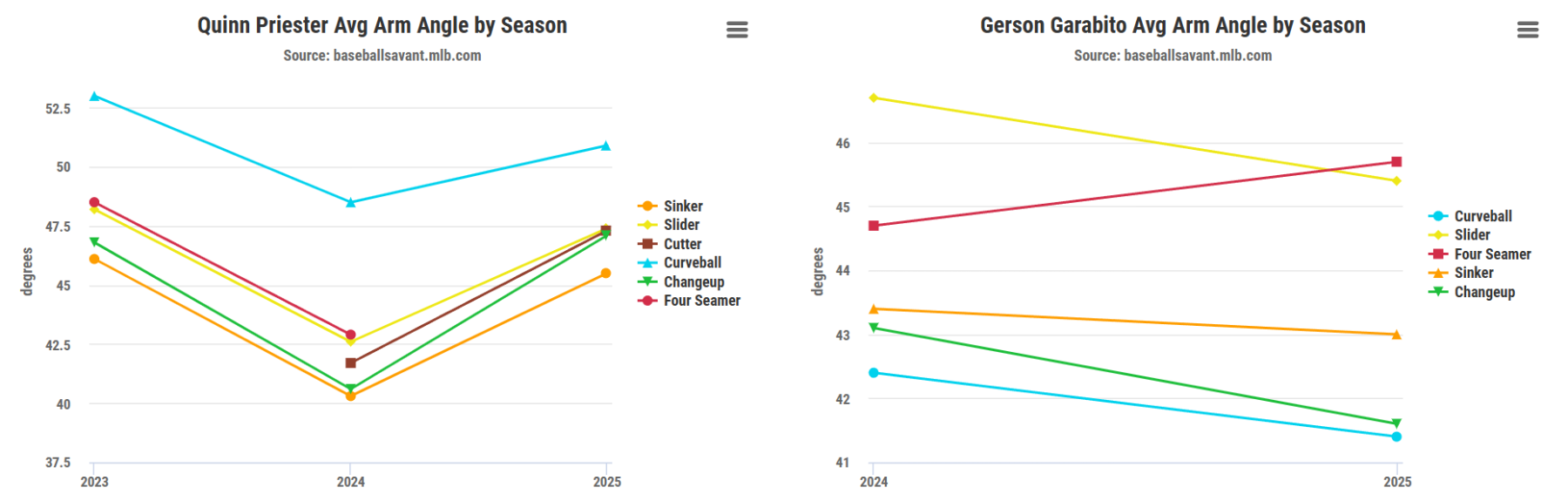
That means Garabito may not make all of the same changes as Priester, who refashioned his four-seamer into a cutter last year and threw his curveball less. His four-seamer has a better shape, and his slider has more backspin, leaving him with less room to switch to a cutter. Because his curveball plays more like a bigger slider, it’s been his go-to breaking ball against righties, whereas Priester typically threw his to lefties.
The primary focus, though, could be similar. While the Brewers brought along Priester’s other pitches as the season progressed, their initial tweaks simplified things by letting his sinker play in the heart of the strike zone. Identifying that sinker as his best pitch, they upped its usage from 30% to 42%, eliminated his changeup, and moved him to the middle of the rubber to get him in the zone more often.
Each of those adjustments could benefit Garabito. Between the big leagues and Triple A, his sinker produced a monstrous 72% ground ball rate. Like Priester, his changeup had very similar spin-induced movement. Pitching from the extreme third-base side of the rubber, he’s struggled with walks throughout his career, including 12.2% and 11.3% walk rates in Triple A and in the KBO last year, respectively.
The Brewers’ plan for Garabito’s arsenal will soon become apparent. It could look familiar, and it might have him soaking up big-league innings later in the summer.