
Some ballplayers have short careers that are mediocre. Some have long ones that are really good. Some have ups, and some have downs. Roger Craig had all of that and more. Craig was born in a rural North Carolina town on a cold, early February day, the 8th of 10 children to a hard-scrabble family. His dad, a shoe salesman, probably never made more than $50 a month, Craig said. He was a boy version of Dolly Parton’s hit, “A Coat of Many Colors.” His resume, however, as they used to say, was as long as your arm. As you read on, you will see that unpacking Craig is really interesting.
For instance, ever heard of anyone who wanted to go to war? Craig wanted to fight in Korea but was assigned elsewhere. He also lied about his age, making himself one year older than he actually was. It ended up making a real difference in his life, getting him into baseball when he otherwise would have been too young. Craig’s resulting baseball career encompassed being a pitcher, a coach, and a manager.
From his Associated Press obituary, it is easy to see what a remarkable roller-coaster career he had. “We have lost a legendary member of our Giants family,” Giants President and CEO Larry Baer said. “Roger was beloved by players, coaches, front office staff and fans. He was a father figure to many and his optimism and wisdom resulted in some of the most memorable seasons in our history.”
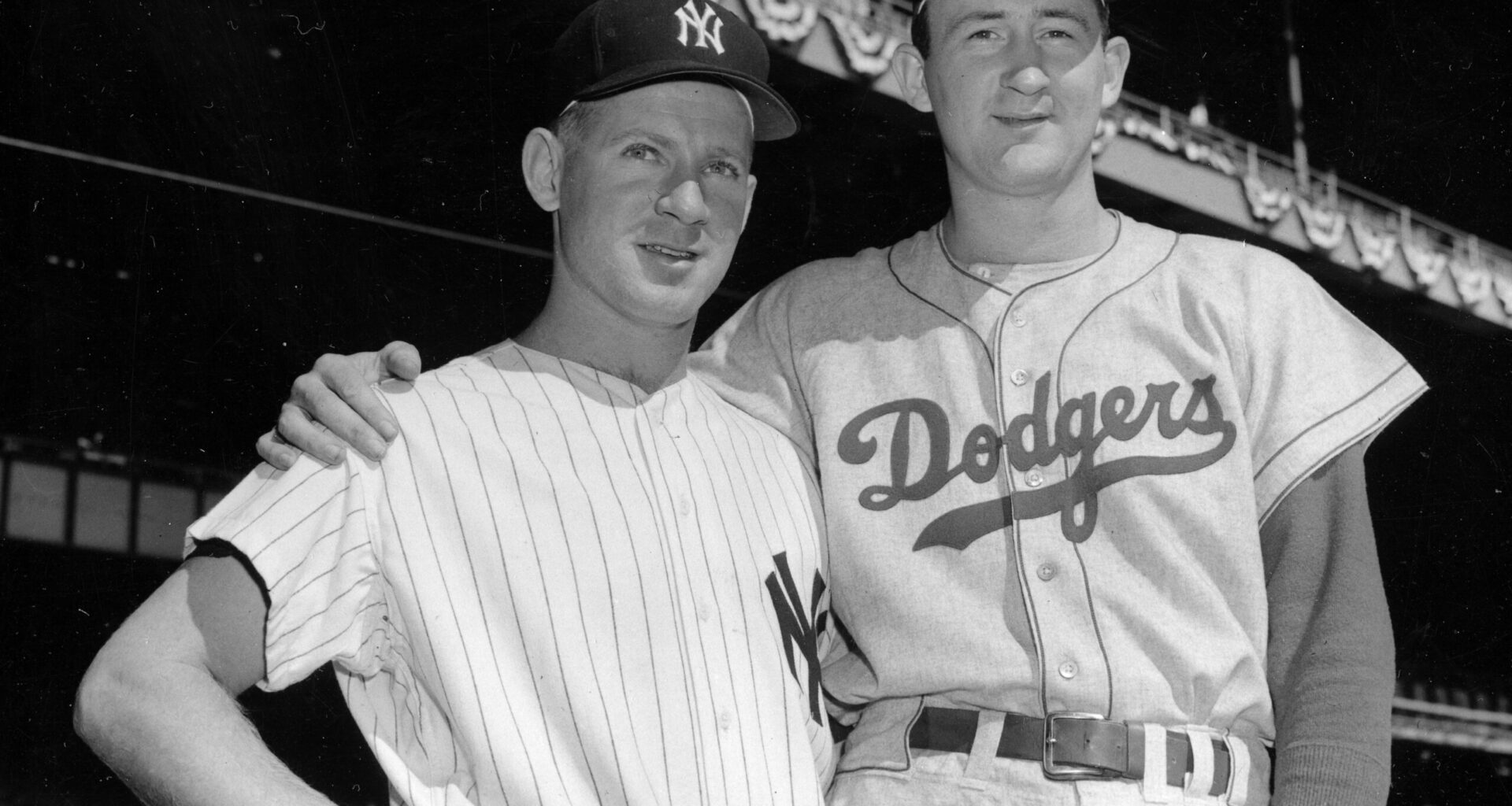
Craig was a rookie on the 1955 Brooklyn Dodgers club that won the franchise’s first title. He had a terrific season for the 1959 Los Angeles Dodgers, who beat the Chicago White Sox in the World Series. And he made 39 appearances for the 1964 St. Louis Cardinals, who beat the New York Yankees for the championship.
He also pitched for the New York Mets, Cincinnati Reds, and Philadelphia Phillies during his 12-year career, finishing with a 74-98 record, a 3.83 ERA, and 19 saves. His best season came in 1959, when he went 11-5 with a 2.06 ERA in 29 games (17 starts), and his four shutouts tied for the most in the National League.
Craig started and won Game 5 of the 1955 World Series against the Yankees to give the Dodgers a 3-2 lead. He was hit hard in his next two Series (1956 and 1959), then rebounded in 1964, as he struck out eight in 4 2/3 scoreless innings of relief to earn the win in Game 4 for the Cardinals.” One could say that when he was good, he was very good, and when he was bad, he was close to awful.
Craig also knew well what it was like to be a loser. He pitched the first-ever game in franchise history for the New York Mets. The club, described as a laughing stock, lost 120 games. He went 15-46. Those numbers led the majors in losses in both years. Commenting on that period of his career, Craig pointed out that while he had lost a lot of games, a lot of them were complete games, which were high points in the Mets two dismal seasons.
After his playing days were done, Craig became a renowned pitching coach for the San Diego Padres, Houston Astros, and Detroit Tigers.
Craig died in his 93rd year and was healthy almost until that happened. He left behind a phrase that became part of baseball’s unique vocabulary. He also perfected a pitch that was almost unhittable and taught it to a generation or more of both young and established pitchers.
So how did it all start? Craig was a gifted young athlete with great physical attributes. He was a 6-foot-4-inch, lanky 190 pounds. He was something special both on the basketball court and on the ballfield. His baseball career started at shortstop, but he was too tall for the position and could pitch reasonably well. Because of his high school success, a baseball scout pursued him, a so-called “bird dog,” someone who seeks out and follows young talent. He was recommended to the Dodgers’ Branch Rickey and went into the Dodger farm system. Pitching as a rookie in his first World Series and winning was quite the auspicious start.
Then, too, there was that strange expression: “Humm Baby!” It became part of my teenage years. I feel like it was an exhortation to a pitcher to throw hard — at least that’s the way we used it when I played ball in Brooklyn as a kid.
And the pitch? It was the split-finger fastball. Craig always said he never invented it. He is, however, widely credited with teaching it to pitchers at both early and later stages of their careers. “You need big hands and strong fingers for it,” he said. The ball is described as coming at the batter like a fastball and dropping below the bat shortly before it reaches the plate.
“Roger Craig and ‘split-finger fastball’ will forever be linked in baseball history,” says Rich Shook for Society for American Baseball Research. “It was Craig’s work teaching first Jack Morris and then Mike Scott how to throw the pitch that gave the former right-handed pitcher lasting fame.”
“People think I invented that,” Shook recails Craig saying. “I did not. Bruce Sutter did. I just found a way to teach it, and it worked out.”
Shook explained that the split-finger fastball “is a cousin to the forkball, the difference being that the latter is set way back in the hands near the webbing, while the former is closer to the fingertips.”
“The forkball is deeper and you can’t throw it as hard,” Craig said. “The key to it is you throw it like a fastball. You don’t try to turn it over or cut it.” The pitcher uses the same motion, arm slot, and arm speed as he does for his fastball, but the ball dips as it nears the plate… its effectiveness comes because the batter’s brain says a fastball is coming and by the time he figures out that it isn’t, it’s too late.” That description marks pitching as both art and science.
There are not many players, and for a long time, there weren’t any, who could say, “I played, I coached, and I managed in the big leagues.” Roger Craig could say that. What I would say about Craig is, “Forget the Mets, you humm, baby! Thanks for the memories.”