
In a major change to the organization’s leadership structure, the Twins announced last week that they had “mutually agreed to part ways” with Derek Falvey, ending a tenure that spanned nearly a decade and reshaped the franchise in ways both celebrated and criticized. Falvey, who had overseen baseball operations since 2016 and was promoted last March to run both the baseball and business sides, was suddenly gone. Jeremy Zoll will continue to run baseball operations, while new principal owner Tom Pohlad assumes interim oversight of the business side as the Twins begin a search for new leadership.
It was a stunning development, not because Falvey had been universally beloved, but because of how central he was to everything the modern Twins became. From the depths of the worst season in franchise history to division titles, blockbuster free agent signings, and eventually a jarring teardown, Falvey’s tenure covered nearly every possible outcome for a front office.
Which leads to the unavoidable question, now that it is over. Was Derek Falvey a good president of baseball operations for the Minnesota Twins?
The way his tenure ended makes that question harder to answer emotionally than it should be analytically. Falvey’s final years were defined by shrinking payrolls, roster stagnation, and ultimately a fire sale that left the organization hollowed out. Offseasons became quiet, often limited to low-impact signings and internal optimism that rarely held up to the test of the team taking the field. Trade deadlines passed without meaningful action, even when the roster’s flaws were obvious and opportunities existed to reshape a core that had clearly run its course.
Over time, Falvey’s reputation shifted from aggressor to bystander. Players like Edouard Julien, Brooks Lee, Max Kepler, and others held trade value at various points, but the Twins repeatedly opted for continuity. Budget constraints from ownership were real, but they increasingly felt like a reason to stand still, rather than a challenge to navigate creatively. That frustration reached its peak at the 2025 trade deadline, when the Twins abruptly pivoted from inactivity to a full-scale fire sale, trading away 10 major-league players and gutting any realistic hopes of near-term contention. Ownership influence was significant, but Falvey was the one making the moves, and the returns did little to inspire confidence.
Those low points matter, but they should not erase what came before them.
When Falvey took over following the 2016 season, the Twins were in disarray. They were coming off a 59-103 campaign, the worst record in franchise history, and had lost 90 or more games in six of the previous seven seasons. The roster lacked impact talent, the farm system needed a reset, and fan engagement was fading. Turning that situation around quickly was far from guaranteed.
Instead, Falvey engineered one of the most impressive turnarounds the organization has ever seen. In just three seasons, the Twins built a 2019 roster that won 101 games, the second-most in franchise history, and captured the division for the first time since 2010. That team was built through a series of smart, assertive decisions. Max Kepler and Jorge Polanco signed extensions that paid immediate dividends. Nelson Cruz was brought in as a culture-altering free agent who became the heartbeat of the lineup. Complementary additions like C.J. Cron and Jonathan Schoop filled critical roles. While the postseason ended quickly, the regular season dominance reinvigorated the fan base and fundamentally changed the perception of the franchise.
Falvey’s willingness to push payroll was a defining feature of his success. Unlike previous regimes that took pride in underspending, he consistently pressed ownership to the limits of what was allowed. That approach resulted in some of the largest contracts in team history, including those given to Josh Donaldson and Carlos Correa. For the first time, the Twins operated as a team willing to play in the upper tiers of free agency. Even though that approach faded as ownership priorities shifted, Falvey proved that Minnesota could compete in that space and benefit from it.
He brought that same selective aggressiveness to the trade market. Not every swing connected, and trades for players like Sam Dyson and Tyler Mahle ultimately cost the organization. But acquisitions like Sonny Gray and Pablo López were franchise-shaping moves that raised the ceiling of the roster. The team became a superb scavenger in the endgame of the offseason, not only signing players whose markets didn’t materialize but trading for good players whose former teams needed to move on—most notably, Jake Odorizzi and Kenta Maeda. Falvey was willing to take risks, and that mindset alone marked a meaningful shift from what Twins fans had grown accustomed to.
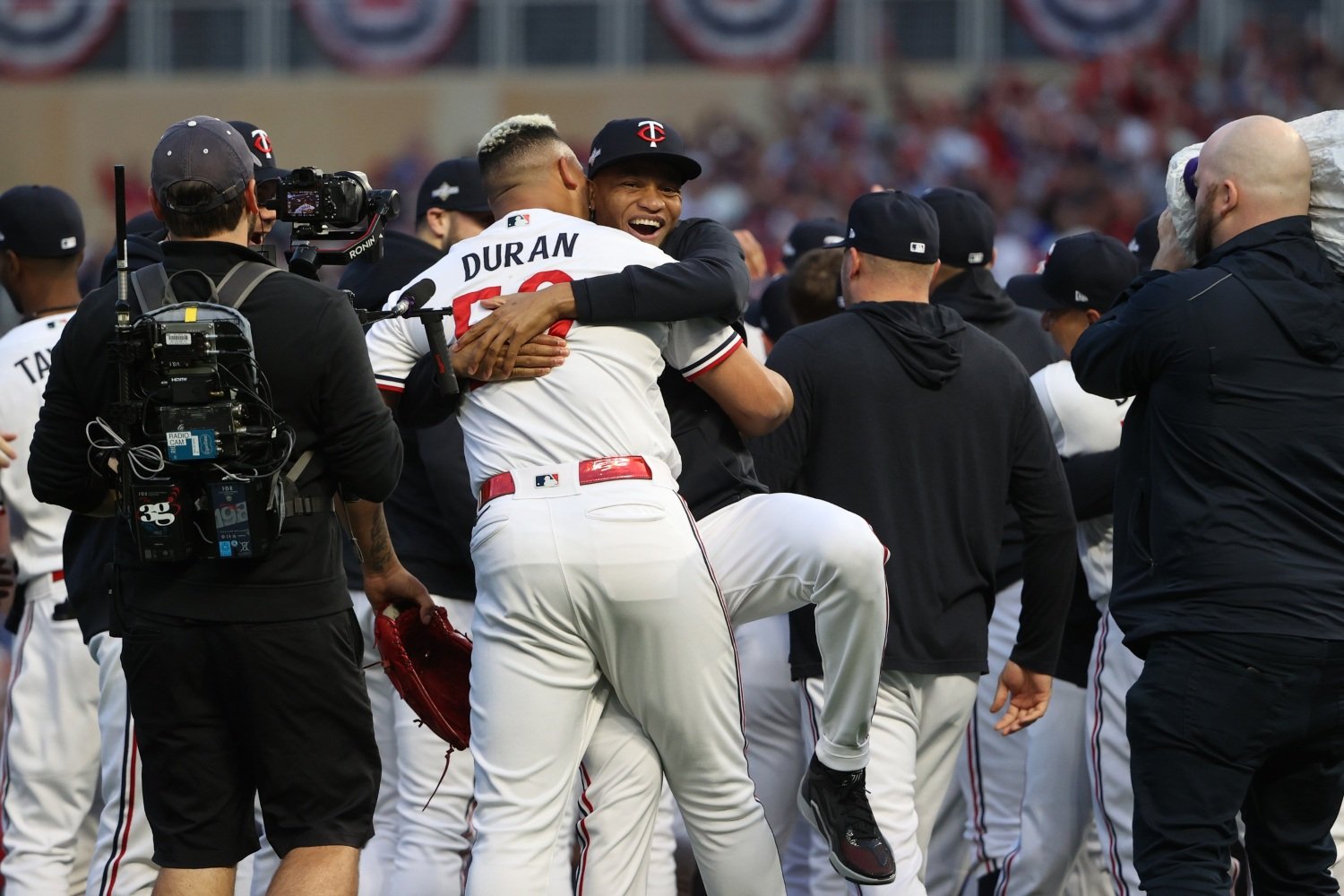
Those moves culminated in the defining achievement of his tenure. The 2023 Twins won the division, snapped the playoff losing streak, and captured the franchise’s first postseason series win since 2002. It was a long-awaited release for a fan base burdened by decades of October frustration. That moment does not happen without Falvey’s smartest and boldest decisions, and it should stand as a central part of his legacy.
Upon weighing the totality of Falvey’s time in Minnesota, my view is that it was a success. His best years showed what this organization could be when leadership was aligned, ownership was willing to invest, and aggressiveness was encouraged. The lowlights were real and damaging, but many of them were the results of an ownership environment that no longer supported the very approach that had produced success. With an ownership group that consistently cared about winning and empowered its baseball operations department, those late-stage failures likely never would have occurred.
The Falvey era was imperfect and frustrating at times, but it also delivered one of the best regular-season teams in franchise history and one of the most meaningful postseason moments Twins fans have experienced in decades. That matters. It should not be overshadowed by how things ended.
As the Twins move forward yet again, I hope Derek Falvey is remembered not for the collapse, but for the progress, the ambition, and the moments that made fans believe again.