
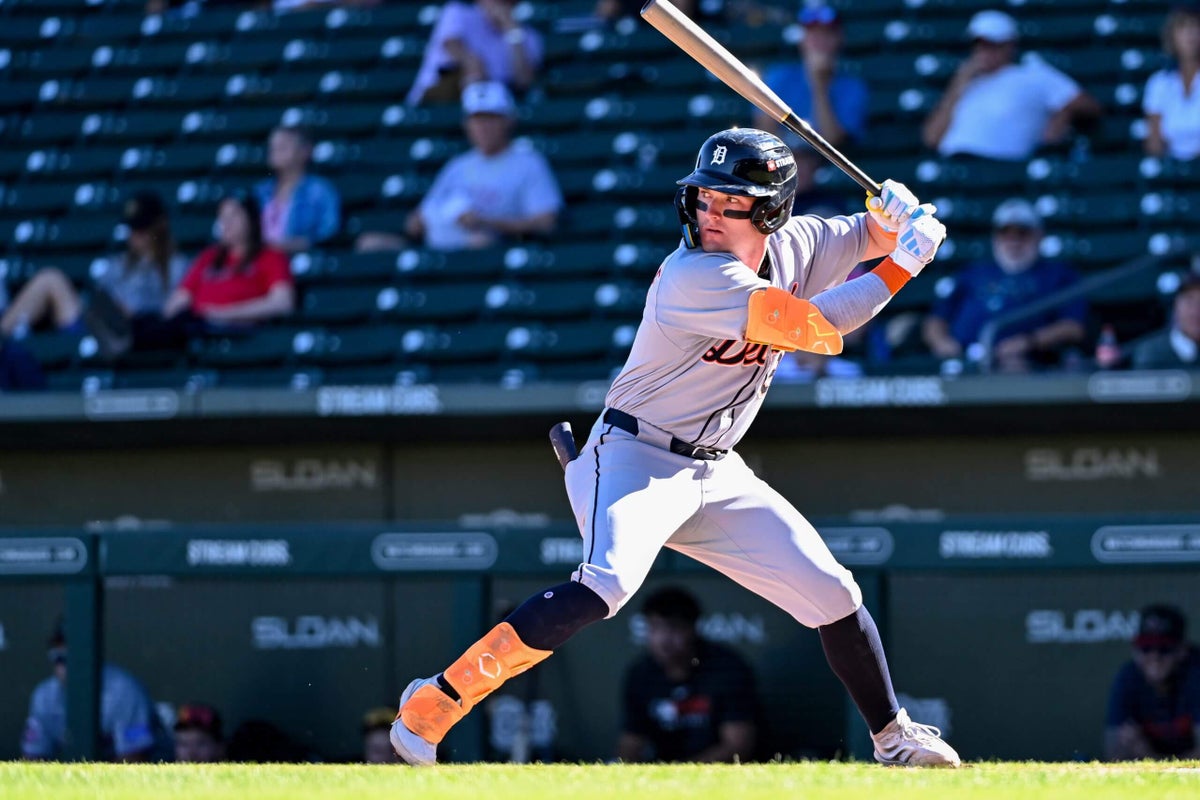
The Detroit Tigers’ system is very top-heavy, but the top is very heavy. They have three of the top 20 prospects in the sport, and three more on the top 100, after which it does taper off quickly into the world of fifth starters, bench bats and middle relievers. After several years of extremely strong drafts, they went in a different direction last year and, at least in my view, didn’t go for the same kind of upside they had when they were drafting up top.
(Notes: Scouting grades are on the traditional 20-80 scouting scale. Ages are listed as of July 1, 2026. EV = exit velocity. EV50 = the average exit velocity of the top half of all of a player’s balls in play, ranked by exit velocity — that is, the top 50 percent of his batted balls; EV90 is the same concept but the top 90 percent of a player’s balls in play.)
Height: 5-10 | Weight: 187 | Bats: L | Throws: R | Age: 21
McGonigle was the No. 1 prospect on my midseason update, and he didn’t do anything to lose that spot; he just got lapped by the new Robin Yount. McGonigle’s 2025 season started a little late because of injury, but once he arrived, he mashed, hitting .372/.462/.648 in 36 games in High A, and then hitting .254/.369/.550 in 46 games in Double A, while walking more than he struck out at both levels. And he only turned 21 in late August. The Tigers sent him to the hitter-friendly Arizona Fall League to try to make up for some of the lost at-bats, and all McGonigle did was hit .362/.500/.710 with 19 walks and 12 strikeouts.
He’s an elite hitter for hard contact, pairing that with outstanding swing decisions, so the result is that he hits the ball in the air and pulls it a ton, getting to surprising power for a guy with more of a medium build and frame. He’s still playing shortstop and I know people who think he’ll stick there. That said, while he has clearly improved on defense since he was drafted, my guess is he gets bumped to second base by a plus defender at short. If he’s at second base, fine, he’s Rogers Hornsby, that’ll play. His projection is going to be high averages and OBPs with 20 homers, and if you do that, you can play anywhere.
Height: 6-0 | Weight: 205 | Bats: L | Throws: L | Age: 21
Clark has been overshadowed by his teammate and fellow 2023 draftee McGonigle, but is still a potential All-Star in his own right, a true center fielder with speed, a strong approach and above-average power right now that could still get to plus. He spent most of last year in High A, walking more than he struck out there while hitting .285/.430/.427, and then moved up to Double A and hit .251/.360/.439 in 43 games at the higher level, while still keeping his strikeout rate to 16.7 percent. Clark has excellent bat speed and a very advanced eye at the plate, which combined to produce just an 18 percent whiff rate on the season, along with an 18 percent chase rate that dropped to 10 percent on pitches well out of the zone. He ran better this past season and seemed to hold up more as the season went along compared to the latter part of his first full pro season in 2024. Clark’s power also started to show up more in games, as he put the ball in the air more often as the season progressed, going from a 50 percent ground-ball rate in April to a 36 percent rate in the second half.
He’s an extremely competitive kid who’s already shown he can adjust quickly to better pitching, and I wouldn’t be surprised to see him reach the majors this year. His MLB ceiling is as a plus defender with high OBPs and 18-22 homers a year, which is going to at least make him an All-Star and a big fan favorite.
Height: 6-3 | Weight: 195 | Bats: L | Throws: R | Age: 20
Rainer got off to a flying start in his pro career, hitting .288/.383/.448 in 35 games for Low-A Lakeland, but the Tigers’ 2024 first-rounder dislocated his throwing shoulder while diving back to first and had to undergo surgery that ended his season. When he played, he showed a bit of everything, with power (peaking at 111.6 mph EV, with a hard-hit rate over 52 percent), patience, plus defense and, at least before the injury, a plus-plus arm. He had no trouble with better velocity, hitting .333/.440/.476 last year off 94-plus mph in a sample of 80 pitches. Hitting velocity was my one concern about him in the draft, as his bat speed looked more average than plus and he didn’t do much as an amateur against good fastballs, but he seems to have figured that out. He’s a very instinctive player who showed excellent on-field leadership in high school as well, and at least has the aptitude to move quickly despite the lost time. The injury was lousy, to put it mildly, but at a minimum he showed us that the Tigers might have crushed yet another first-round pick.
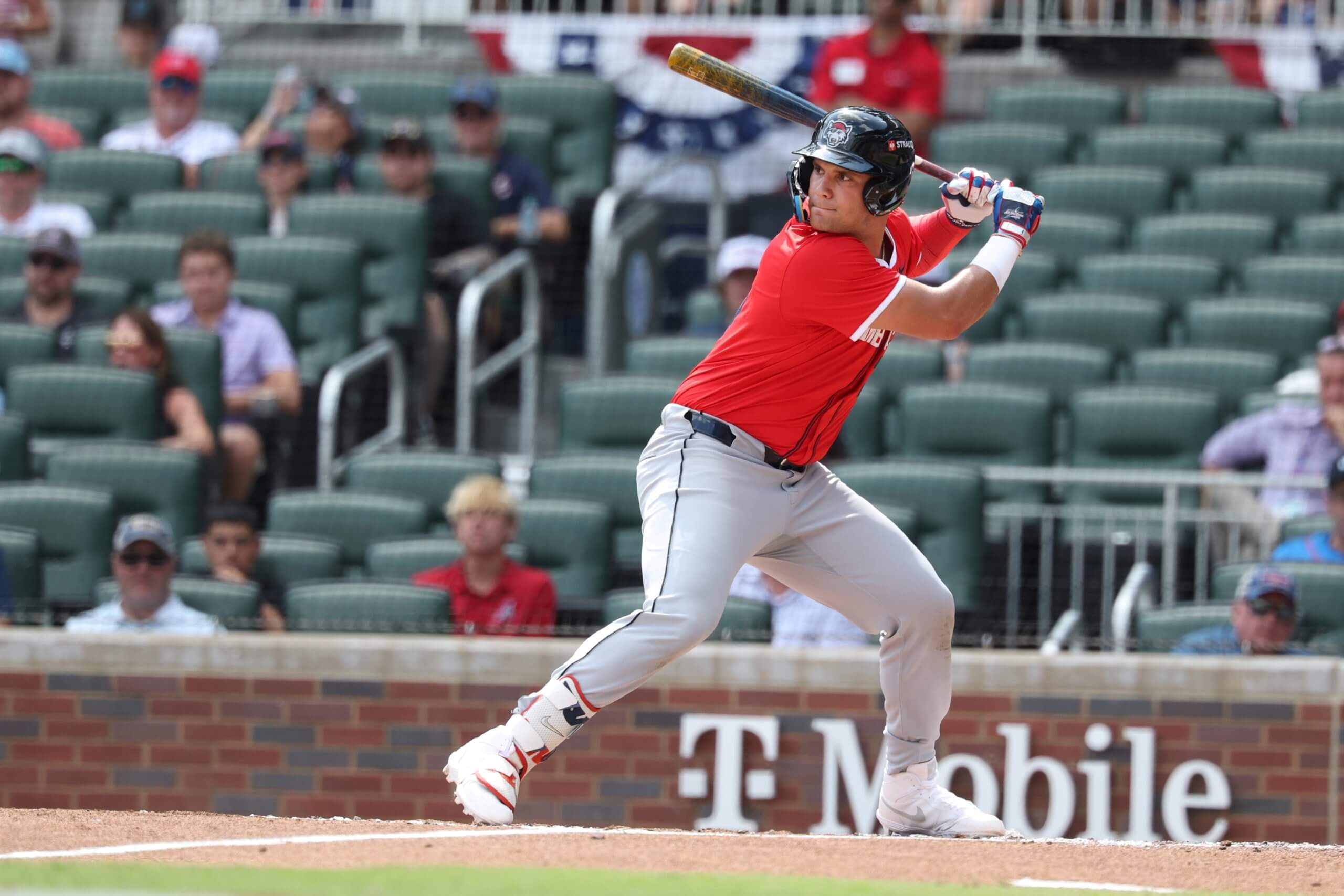
Josue Briceño may not catch at the big-league level, but he should hit enough to be valuable at first base. (Kevin C. Cox / Getty Images)
Height: 6-4 | Weight: 200 | Bats: L | Throws: R | Age: 21
Briceño is nominally a catcher, but his best position is in the batter’s box, and it’s likely he’s going to end up a regular at some position other than behind the plate. He has real power and he’s got a smart approach already, with excellent timing that helps him get more out of maybe 50/55 bat speed. He hit .296/.422/.603 as a 20-year-old in High A to start the year, then struggled after a promotion to Double A, hitting .232/.335/.381 at the higher spot where he was young for the level. He did still maintain his feel for the strike zone and continued to make plenty of contact in the zone (85 percent), so there’s reason to believe he’ll resume mashing with more reps at the level. It’s plus power already, even to the opposite field, as he understands how to hit the ball where it’s pitched (even when that violates the “pull the ball in the air” mantra). He’s not a great receiver to begin with and has already had one significant knee injury along with other lower-body issues, making it much more likely that he ends up at first base in the short term — which also has the benefit of getting his bat in the lineup more and maybe reducing his time lost to injuries. It’s a 25-plus homer first baseman with a good chance to hit for average as well, but perhaps taking more time to get to his ceiling than his teammates Kevin McGonigle and Max Clark will.
Height: 6-0 | Weight: 215 | Bats: R | Throws: R | Age: 24
I don’t know where Anderson can play, but I know he can hit. The Tigers’ 2023 second-round pick out of Nebraska, Anderson had a lackluster full-season debut in 2024, where he posted a 50.4 percent ground-ball rate that was even higher after a promotion to Double A. He focused over the offseason on trying to change how he was making contact from getting on top of the ball to hitting it on the bottom half, and took off from the start of last season, with a .306/.358/.499 line in Double A in 90 games, then a .267/.327/.422 line in Triple A where he still had a 46 percent hard-hit rate. His production is almost entirely in his hit tool; he has average power, below-average patience and below-average speed, so he has to continue to post high contact rates given his lack of a current defensive position. He’s played second and third in pro ball and isn’t better than a 45 at either spot; he can field what’s hit at him but doesn’t have much range, and as much as everyone I ask says he should be a catcher, that’s not happening with a 24-year-old on the cusp of the big leagues. He’ll play every day at one of those infield spots as long as he keeps those batting averages up, and I think he will, given the ability to square the ball up that he showed last year.
6. Hao-Yu Lee, 2BHeight: 5-9 | Weight: 190 | Bats: R | Throws: R | Age: 24
Lee was the return from the Philadelphia Phillies for Michael Lorenzen at the 2023 trade deadline. He had a strong year in Double A for the Tigers in 2025, but he hit just .243/.342/.406 last year with a lot of medium-hard contact but not enough overall contact for this type of hitter. He’s a capable second baseman who does have the raw power to hit 15-20 homers, or could just focus on contact and hit .280+ again with some walks and doubles, but I don’t think he can do both. He could be an everyday guy for somebody, maybe this year, certainly in 2027, but I doubt it’s for the Tigers.
7. Thayron Liranzo, CHeight: 6-2 | Weight: 195 | Bats: B | Throws: R | Age: 22
The Tigers promoted Liranzo to Double A to start the year after he’d finished 2024 extremely strongly between his time in High A after they acquired him from the Los Angeles Dodgers and a stint in the Arizona Fall League, but he started last season slowly and never fully got going before a huge slump to end the year that also saw him exclusively DH from July 27 on. He can catch and really throw, and he’s a switch-hitter with power from both sides, hitting well against good stuff in 2024. He was definitely being too aggressive early in 2025, but the collapse when he moved to the DH spot full-time was hard to believe: he hit .163/.226/.293 with a 44 percent strikeout rate. Something had to be wrong beyond just fatigue here, which is why I’m cautiously keeping him in the Tigers’ top 10 over a couple of guys who performed better. I thought he had a chance to be an above-average everyday catcher with plus power and walks, maybe hitting for a low batting average … but not this low.
8. Franyerber Montilla, SSHeight: 6-0 | Weight: 160 | Bats: B | Throws: R | Age: 21
Montilla hit .271/.368/.395 as a 20-year-old in the Low-A Florida State League, with good but not elite batted-ball data and a max EV of 109.5 mph. He’s an above-average runner — for now — who has a chance to stick at shortstop, although second base is an easy answer if he can’t stay at short. He does need to tighten up his swing decisions and I have talked to some scouts who question whether the hit tool will be good enough to make him a regular. He tore his ACL on a fluke injury while fielding a groundball in August, so he won’t be back until mid-2026, which is why I hedged a little on his speed.
9. Andrew Sears, LHPHeight: 6-3 | Weight: 200 | Bats: L | Throws: L | Age: 23
Sears is a changeup/command lefty who has been up to 97 but sits more 92-93, with the fastball sometimes slipping below average, which might be the difference between him becoming more than a fifth starter or settling into that latter role. He has a decent slider and gets some good angles on the pitch from his lower arm slot and strong extension out front. Even as he got hit around a bit in his six Double-A starts, he didn’t shy away from throwing strikes. I like the rest of the package beyond that concern about harder contact on the fastball, and I think at worst he’s a fifth starter who can soak up some innings because he’s efficient.
10. Jordan Yost, SSHeight: 6-0 | Weight: 170 | Bats: L | Throws: R | Age: 19
Yost was Detroit’s first-round pick last year out of a Florida high school, and dissimilar from their recent high school picks in that he needs to add a lot of strength — McGonigle, Clark and Rainer, to name three of their high school picks, were all very strong at the time of the draft, while Yost doesn’t hit the ball hard at all and has a swing that isn’t geared for any power. He’s an elite contact bat who rarely whiffed or chased as an amateur, even against the best high school pitching he faced, hitting with no stride and a short swing that gets the bat to the ball without any power from his legs or real bat speed. He’s a plus runner who can stay at short and could also move to center field if that is the better path to the majors.
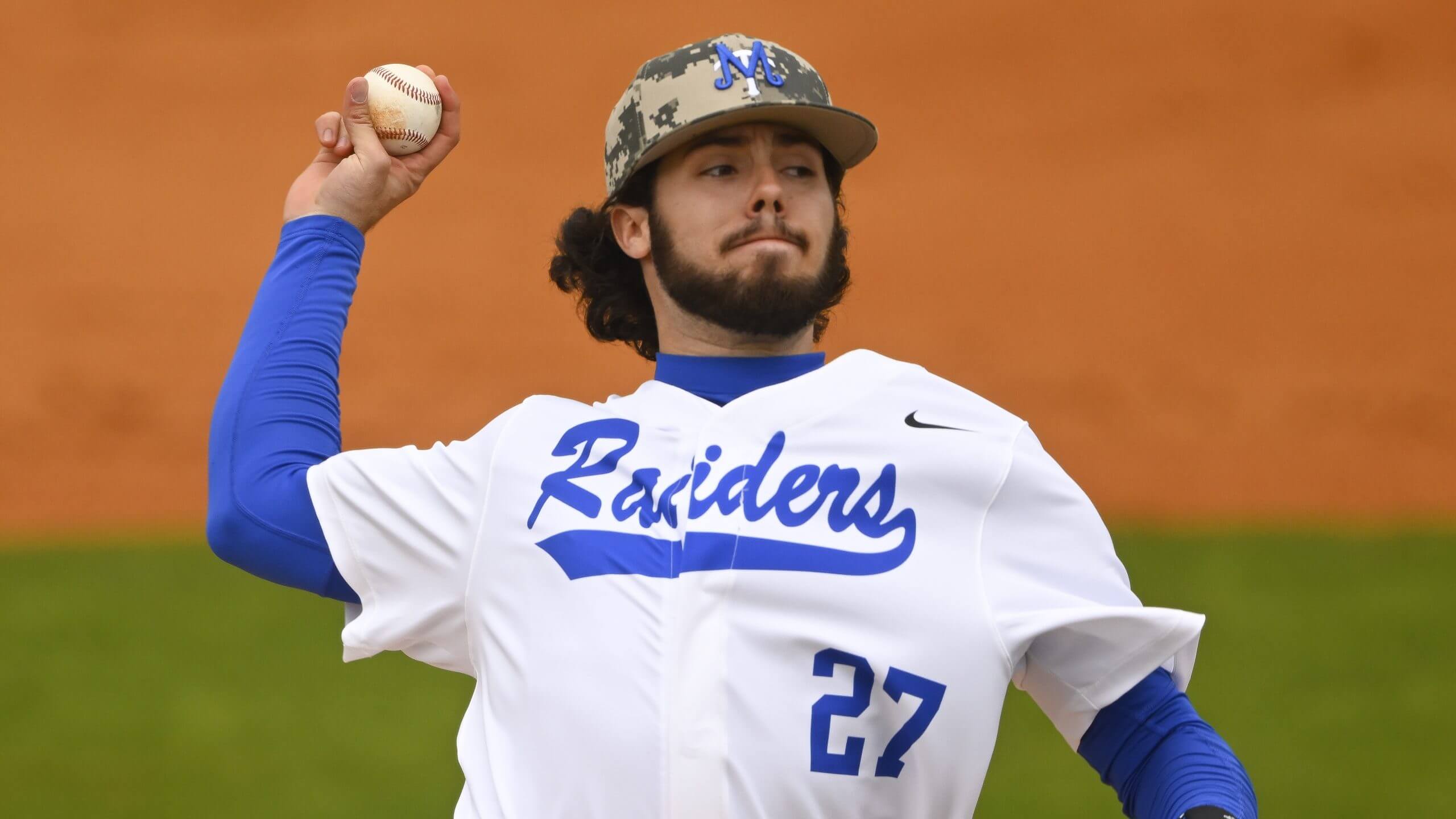
Jaden Hamm pitched for Middle Tennessee State in college. (John Amis / Associated Press)
11. Jaden Hamm, RHPHeight: 6-1 | Weight: 190 | Bats: R | Throws: R | Age: 23
Hamm made the back of my top 100 last year, with some caveats about him struggling to hold velocity throughout the season, and unfortunately he didn’t hold it, sitting 89-90 in Triple A. That’s not going to cut it for a right-handed starter — it probably wouldn’t for a lefty, either — and he has at least been working this offseason to build strength for durability. He has been up to 96 at times with huge induced vertical break, so the velocity is in there, somewhere, just perhaps very well hidden. He does come from a very high slot that’s tough for starters for numerous reasons, including the ability to stay healthy, and if he can’t show more consistent velocity this year, he’ll probably have to go to the bullpen. I’m holding out a sliver of hope he can be the starter he flashed in 2024.
12. Michael Oliveto, CHeight: 6-3 | Weight: 185 | Bats: L | Throws: R | Age: 20
The Tigers’ second pick in the 2025 draft was another high school hitter, this time a catcher from Long Island who passed up on his commitment to Yale to go pro. Oliveto is tall for a catcher but has the hands and arm to stay there, needing reps catching better stuff to cement that status. He hit well at showcases and can flash average raw power, with a tendency to open up his front side too much, which leads him to pull stuff that he should try to hit to the opposite field. I firmly believe catchers take longer to develop because of the physical and cognitive demands of the position, so I won’t be worried if he doesn’t produce right out of the gate. He has everyday upside, even if it takes a while.
13. Kelvis Salcedo, RHPHeight: 6-0 | Weight: 180 | Bats: R | Throws: R | Age: 20
Salcedo is 94-97, up to 99, getting a ton of chases on his cutter, almost certainly a reliever with a big body and high-effort delivery. He’s close to straight over the top, with a circle-change as his third pitch, everything north-south with the cutter getting just a little horizontal break to it. He is a starter for now and did walk just under 10 percent of guys he faced in the Florida Complex League and in Low A last year. I just don’t buy that he really has close to average control, and the effort in his delivery screams reliever to me.
14. Lucas Elissalt, RHPHeight: 6-4 | Weight: 190 | Bats: R | Throws: R | Age: 21
Drafted in the 13th round in 2024 out of Chipola College, Elissalt is a very athletic right-hander who works 89-94 with some late life, showing a plus curveball at times and a viable third pitch in a kick-change. He comes from a lower slot with very good extension, so he’s getting the most out of his stuff even though the fastball is still probably a 45 all-in. He could be a fifth starter if the velocity never increases, or perhaps a quality swingman, showing good feel to pitch and the delivery to point to at least average command.
15. Malachi Witherspoon, RHPHeight: 6-3 | Weight: 211 | Bats: R | Throws: R | Age: 21
The twin brother of Boston’s first-rounder in 2025, Kyson Witherspoon, Malachi has a very quick arm and can flash a plus slider while running his fastball up to 100, with inconsistencies in the delivery that led him to walk more than 9 percent of batters he faced and hit 17 in the spring at Oklahoma. It might be 35 command, maybe 40 if you like him, and I think he’ll need a big delivery change to be able to start. He is athletic enough that that’s at least a possibility.
16. Cris Rodriguez, OFHeight: 6-3 | Weight: 203 | Bats: R | Throws: R | Age: 18
Rodriguez signed last January for just under $3.2 million on the potential for huge power from his wide 6-foot-3 frame and plus bat speed. He’s a power-over-hit guy with swing-and-miss concerns that already popped up in his Dominican Summer League debut, and there’s some inconsistency in the swing path as he’s already trying to lift the ball more than he needs to. He played mostly center field last year, although once he fills out, I can’t imagine he’ll stay there. He finished second in the DSL with 10 homers — more than four teams hit as a whole — and posted a .308/.340/.564 line, so you can see why the Tigers might dream on his offensive upside. I’ll buy it more if he hits as well against FCL or Low A pitching.
17. John Peck, SSHeight: 6-0 | Weight: 185 | Bats: R | Throws: R | Age: 23
Peck can rove all over the infield and has enough pop to be a good utility infielder who gets on base a little, hits a few homers, runs well, not doing enough of any one thing to be a regular except maybe as a shortstop on a second-division club. He hit lefties especially well last year, with a .339/.389/.466 line, although he strikes out a little too much against them to just call him a platoon guy. The Tigers took him in the seventh round out of Pepperdine in 2023.
18. Ben Jacobs, LHPHeight: 6-1 | Weight: 195 | Bats: L | Throws: L | Age: 22
The Tigers’ third-round pick in 2025, Jacobs is 92-93 with an average slider and changeup, working with a repeatable delivery that hasn’t led to strikes. He walked 12.2 percent of batters he faced last spring at Arizona State, struggling to get his secondary stuff in the zone. I worry about guys who have deliveries they can repeat and still don’t throw strikes, because what do you do to help them?
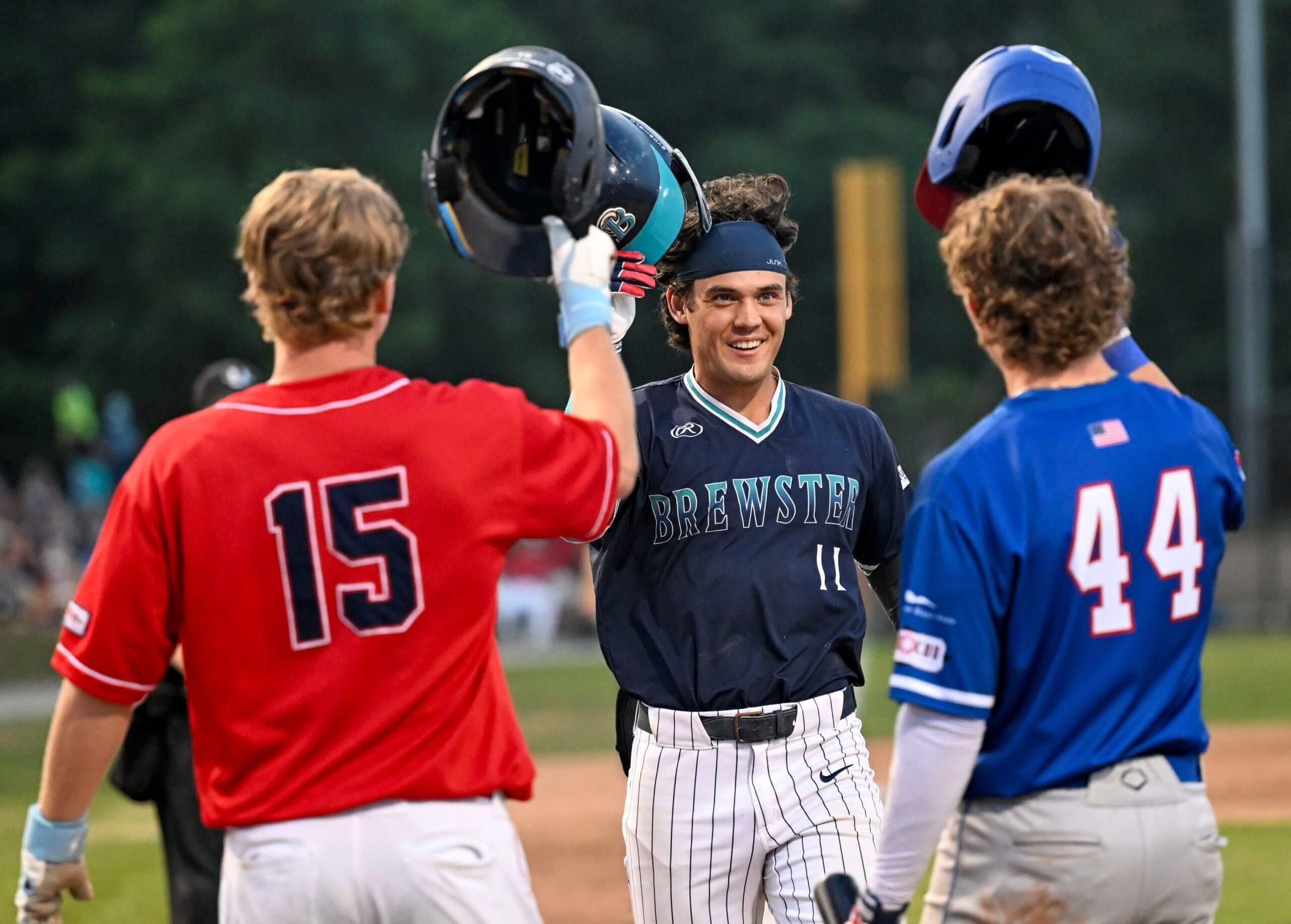
Nick Dumesnil excelled in a stint in the Cape Cod League the summer before his draft season. (Ron Schloerb / Cape Cod Times / USA Today Network via Imagn Images)
19. Nick Dumesnil, OFHeight: 6-2 | Weight: 210 | Bats: R | Throws: R | Age: 22
Dumesnil came into the spring of 2025 with some first-round chatter, but that wasn’t fair to him at all as he’s just not that kind of player or athlete, projecting as a fourth outfielder who has above-average speed and power while lacking enough of a hit tool right now to see him as a future regular. He ended up going to the Tigers in the eighth round. He hit very well in the Cape Cod League in the summer of 2024, but that’s not such a great indicator of future pro success, given how many top pitchers choose to take the summer off. His best path to becoming an everyday player is if he can stick in center and show he can hit good velocity after he saw next to none last spring.
20. Dylan Smith, RHPHeight: 6-2 | Weight: 180 | Bats: R | Throws: R | Age: 26
Smith can’t stay healthy as a starter, and hasn’t exactly been Ripkenesque as a reliever, showing enough stuff to see him as a late-game option when he’s right. He sits 94-95 with average life despite high spin rates, mostly working fastball/sweeper but throwing an occasional splitter that has some promise. He’s still a tremendous athlete, but that doesn’t exactly keep runs off the board.
Others of note
Right-hander Owen Hall looked great in his first spring training but wasn’t right when the season started, eventually going on the shelf with a stress reaction in his shoulder that ended his season. He’s supposed to be 100 percent for spring training. He was up to 97 with a high-spin slider and a slight cutoff in his delivery before things went awry … Left-hander Paul Wilson was 95-96 in spring training but blew out his elbow in April and had Tommy John surgery, probably coming back this summer. He needs to throw a lot more strikes but he looked different physically and was throwing harder before the injury … Lefty Ethan Schiefelbein is another of their young pitching prospects who threw fewer than 10 innings in 2025 before getting hurt. He has excellent ability to spin the ball, throwing a curveball and a slider along with a low-90s sinker. He had a shoulder strain and some other minor injuries but never had surgery … Right-hander Moises Rodriguez was 23 in A-ball, sitting 96-97 with his sinker, throwing an occasional slider, with solid control. He induced a 64 percent ground-ball rate and didn’t give up a homer in 63 innings. I’d like to see him use the slider or even his cutter more so he’s less of a one-pitch guy, but that one pitch might be good enough to make him a big-league reliever.
2026 impact
McGonigle will debut this season. The return of Gleyber Torres complicates that a little, as the most likely opportunity will be at shortstop, where McGonigle plays now but is a little stretched; the bat is so good that he’d still be an upgrade over Javier Báez even if the defense isn’t as strong.
The fallen
Signed for an over-slot $2.75 million in the second round in 2021, third baseman Izaac Pacheco repeated High A for the second time last year and had his best season, hitting .258/.388/.499, but still struck out 29 percent of the time as a 22-year-old, and the Tigers didn’t challenge him with Double A.
Sleeper
Last year’s sleeper candidate, Franyerber Montilla, didn’t break out, but I’m still bullish, and he remains the best chance for a big leap for anyone currently in the system.