
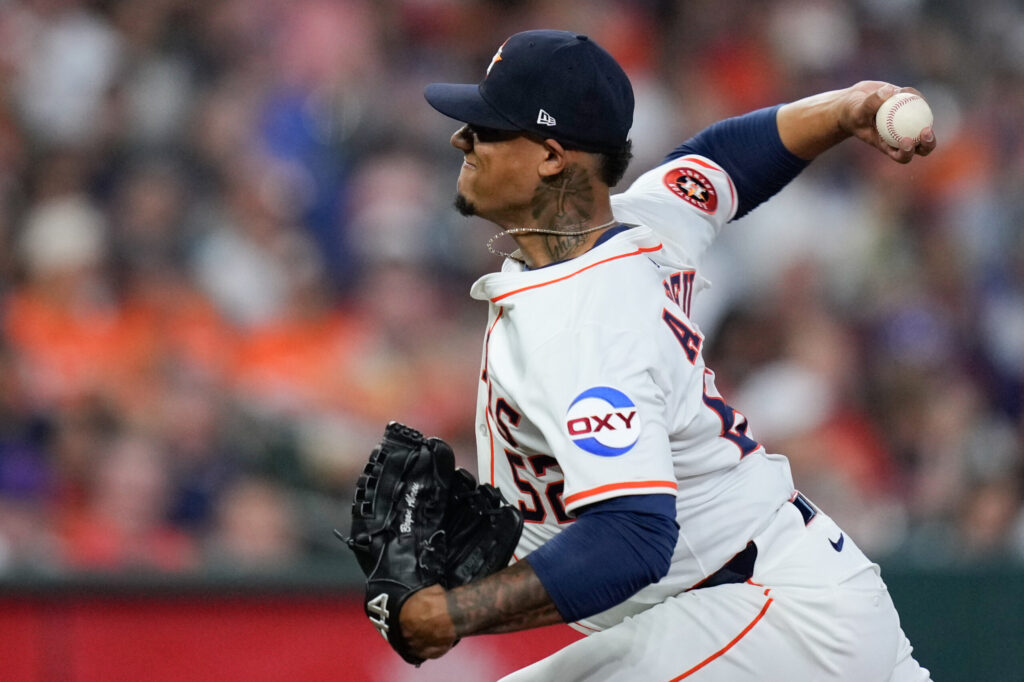
Like Morejon, Abreu is set to hit free agency after 2026, meaning this deal could be a rental situation for New York.
In exchange, the Astros receive David Peterson and two prospects: Nick Morabito and R.J. Gordon. Morabito is ranked 12th in the Mets’ farm system according to Just Baseball and is very close to being major league-ready.
Gordon made 21 starts across High-A and Double-A in 2025 and is also close to being ready for the show. While neither has appeared in Triple-A yet, both project to begin the season at that level with the Mets.
Houston has a history of stockpiling starting pitching, and the Astros could add 24-year-old R.J. Gordon to a long list of rotation options.
Meanwhile, Morabito, 22, fills an organizational need in the outfield. At the very least, he would bring speed to the Astros’ lineup, an area where they struggled in 2025 after swiping just 85 bags as a team.
The kicker, of course, is the fact that on top of the prospects, we are including Peterson in this deal. You might wonder what the difference is between Abreu and Adrian Morejon, where Peterson was able to fetch one rental by himself, while the other requires multiple prospects in return.
The difference here is that trading Abreu creates a hole in the Astros bullpen that would be hard to fill at this stage in the offseason. Meanwhile, the Padres still have a loaded bullpen that would have Mason Miller and Jeremiah Estrada if they dealt Morejon.
Furthermore, Abreu has a longer track record of success than Morejon and misses bats at an elite rate that makes him a bit more dynamic as well. If the Astros fell out of it at the deadline, they could trade Abreu and likely get a prospect much better than Gordon or Morabito.