
As the calendar turns to February, the offseason is nearing its end. Super Bowl Sunday marks the informal handoff from football to baseball, and with pitchers and catchers reporting the following Tuesday, the focus begins to shift back toward the diamond.
Even with SoxFest Live taking place over this past weekend, Chris Getz and the front office stayed busy, adding outfielder Austin Hays on a one-year deal, then followed with a trade with Boston that brought right-handers Jordan Hicks and prospect David Sandlin to the South Side.
Those moves reflect how this winter has unfolded for the White Sox. The club has leaned into their “flexibility”, which has allowed the market to settle while addressing specific needs without narrowing its options as camp nears.
That posture suggests the work may not be finished. Earlier this week on The Baseball Insiders, Robert Murray said he does not believe the White Sox are done adding, pointing to an opportunistic approach as prices continue to find their level. With several free agents still searching for homes in 2026, some of that patience could carry into camp.
Let’s take a look at the jam-packed past week and look ahead to what is worth monitoring as another wave of news approaches and the organization looks towards the new season.
Additions for White Sox
The White Sox made the Austin Hays signing official Wednesday afternoon, finalizing a one-year deal that guarantees $5 million with a $1 million signing bonus and includes an $8 million mutual option for 2027 with a $1 million buyout.
For Hays, the appeal was opportunity. In an interview following the announcement, he pointed to the chance to play every day as a major factor in choosing Chicago, framing the White Sox as a young team with momentum and room for him to establish a steady role. In a late winter market, many comparable outfielders were funneled into platoon fits.
Manager Will Venable echoed that view earlier in the week at SoxFest, describing Hays as a veteran who can still perform at a high level and contribute meaningfully both on the field and in the clubhouse. The expectation is not a part-time role, but a player trusted to support a roster that remains heavy on younger pieces while also translating that development into wins.
Compared to recent multi-year outfield contracts such as Harrison Bader’s two-year, $20.5 million agreement with San Francisco, Hays came in at close to a quarter of the annual cost while offering a similar short-term production range. It keeps the door open for additional moves as camp approaches, while giving the outfield a more stable baseline than what Chicago carried into February.
I took a deeper look at the signing in my first article for Just Baseball earlier this week.
Chicago’s weekend did not stop with Austin Hays. The White Sox followed that move by striking a deal with Boston for right-handers Jordan Hicks and David Sandlin, along with two players to be named later and cash. Chicago sent pitching prospect Gage Ziehl and a player to be named later back to the Red Sox.
Boston is covering $8 million of the $24 million remaining on Hicks’ contract. That leaves the White Sox responsible for $16 million across the next two seasons.
Getz signaled where the best version of the fit with Hicks likely lives. Asked on MLB Network by Dan Plesac about usage, Getz called Hicks “high octane” and an “elite talent”. He said he spoke with Hicks over the phone and did not feel it was right to assign a role before he arrived. Hicks told him he would do whatever was best for the White Sox. Even so, Getz reiterated that the plan is likely to trend toward the bullpen as camp unfolds.
Hicks has touched 98-99 mph this offseason and has been traded twice in less than a year. At his peak, he reached 104 mph and remains one of the most prolific triple-digit arms of the pitch-tracking era. His 56.7% ground ball rate ranked in the 95th percentile last season, and his 4.7% barrel rate allowed ranked in the 93rd percentile. He also ranks fifth all-time in swinging strikes on 100+ mph pitches since 2008.
Chicago’s staff lacked consistent velocity last season, and Hicks gives them another power right-handed option who can change innings quickly if the health and execution return.
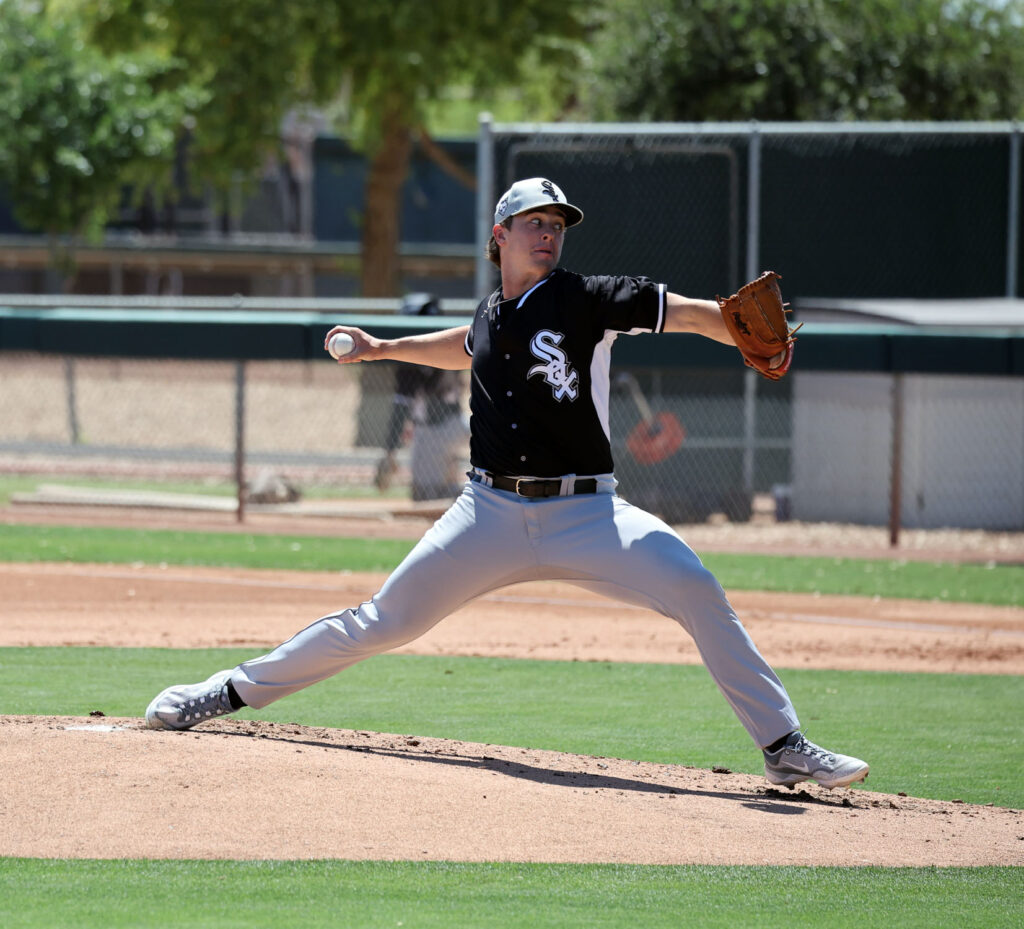
The most intriguing piece of Chicago’s deal with Boston may ultimately be David Sandlin, a power right-hander whose raw stuff immediately jumps off the page. Sandlin brings mid-to-upper-90s velocity that can reach the high 90s early in outings, paired with a deep arsenal that includes a cutter, slider, sweeper, and splitter, all of which flash bat-missing traits. Few arms in the system combine that level of velocity with this much pitch variety.
Sandlin’s delivery is generally repeatable, but it carries enough effort that his secondaries can lose shape when his timing drifts, leading to inefficiency and some harder contact. He also endured multiple injuries, limiting his ability to work deep into games. Even so, the underlying data remain encouraging, particularly his ability to generate chase at upper levels despite his uneven surface results.
For the White Sox, this is the type of move a rebuilding team should make any time they can. It further justifies the Luis Robert deal too. The money they cleared up has been used for flippable pieces like Seranthony Dominguez and Austin Hays + a top 10 prospect in David Sandlin
— Aram Leighton (@AramLeighton8) February 1, 2026
Shut down in September due to a shoulder injury, Sandlin reached 101 mph this offseason and currently ranks 14th on MLB Pipeline’s Top 30 list, sitting just behind Mason Adams and ahead of fellow former White Sox arm and recent Rule 5 pick Jedixson Paez. After the trade, Sandlin noted that the first person to reach out was Kyle Teel, with whom he overlapped in Boston’s system during the 2024 season.
New Pitching coach Zach Bove overlapped with Sandlin in Kansas City earlier in his career, and the White Sox believe there is more to unlock. Sandlin has pointed this offseason to improving his ability to attack left-handed hitters and tightening the consistency of his breaking ball, areas that could shape whether he settles into a multi-inning role or pushes toward the rotation.
At minimum, Sandlin gives the White Sox a high-octane arm capable of contributing innings in the near term. At best, he’s a volatile but legitimate upside play who could force his way into meaningful big-league usage sooner than expected.
Viewed internally, Sandlin represents a clear upgrade over Gage Ziehl, pairing a higher-end stuff profile with a development timeline that positions him to impact the major league staff sooner rather than later. Chris Getz said the right-hander “has a chance to really impact our starting rotation this year.”
Chicago effectively turned a half-season of Austin Slater into Jordan Hicks at a reduced cost and a pitching prospect pushing the upper tier of the system, another example of how deliberately the front office has reshaped the roster this winter.
The players to be named later are an interesting wrinkle to this deal. Our managing editor James Fox has speculated that the players coming from Boston could potentially require a 40-man move and that the club could be waiting to use the opening of the 60-day injured list to make room. It was purely speculation but just an idea. It could always be just a typical process where the White Sox will choose two players from a list with Boston getting one.
Margin Moves for the White Sox
Chicago added another depth arm to the camp mix by signing right-hander Lucas Sims to a minor league deal with a non-roster invite to spring training. Sims threw at a Driveline Pro Day earlier this offseason before the agreement was announced, positioning himself as a rebound candidate heading into camp.
The 31-year-old is coming off a difficult 2025 season marked by command issues, but some of the underlying traits still stand out, including above-average fastball spin and a sweeper that has generated swing and miss when he is right. Sims brings major league experience and strikeout ability, making him a low-risk option who can compete for a role without requiring a roster commitment. He is likely to open the season in Charlotte while remaining available as depth.
In the flurry of roster activity since late January, the White Sox have aggressively churned the margins of the 40-man roster, trimming fringe pieces to create space for higher-leverage additions.
Bryan Ramos, once a top-three prospect in the system as recently as 2023, was designated for assignment as the corresponding move to the Seranthony Domínguez signing and later sent to Baltimore for cash considerations, a reflection of how far he’d slid down the depth chart after limited major league impact. Ramos was claimed off waivers, two days later, by the St. Louis Cardinals, after he was designated for assignment by the Orioles.
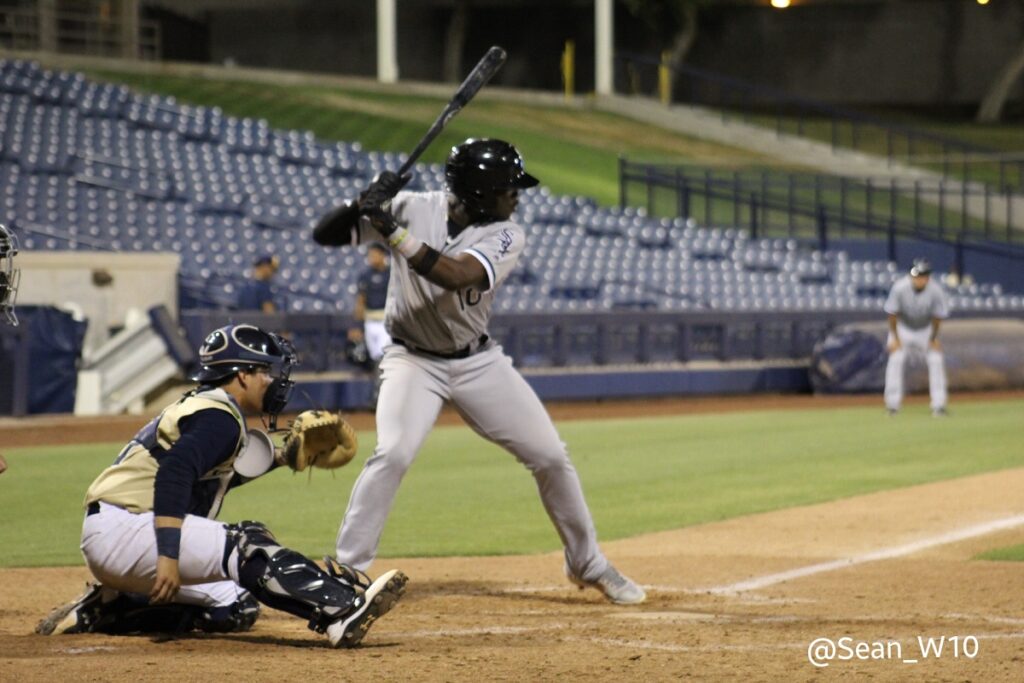 Photo courtesy: Sean Williams/FutureSox
Additional space was created by designating Jairo Iriarte and Drew Romo to accommodate Jordan Hicks and David Sandlin, while left-hander Bryan Hudson was DFA’d following the Austin Hays signing. Hudson remains in DFA limbo, while right-hander Jairo Iriarte and catcher Drew Romo have cleared waivers and been outrighted to Triple-A Charlotte with non-roster invites to spring training.
The sequence underscores how fluid the back end of the roster has become, as Chicago prioritizes flexibility and turnover over holding onto option-less or stalled profiles.
White Sox Posturing for Activity
Even after a busy stretch, the White Sox still appear positioned to keep their options open as camp approaches. Offensively, the club has addressed most of its needs this winter, raising the floor without locking itself into long-term commitments. That restraint has preserved flexibility in the few remaining areas that still warrant monitoring.
Framber Valdez, landing in Detroit on a three-year, $115 million deal, stands as one of the lone true impact additions elsewhere in the AL Central, and his signing should finally unstick the pitching market, with the rest of free agency now waiting on where Zac Gallen lands to give remaining arms a clear runway to sign in the coming days.
The rotation remains unsettled. Chicago has enough depth to move through spring without forcing a decision, but there is still room for an inning stabilizer if the market allows. A profile like Zack Littell fits that mold by adding clarity. At the same time, the organization appears comfortable letting internal options such as Tanner McDougal set the pace rather than assigning innings too early.
Workload also factors into the equation. Outside of the offseason additions, much of the staff skews young, which keeps the door open for another veteran arm. That could come through a minor league deal if a clean rotation fit does not emerge on the open market.
The fifth rotation spot can remain in flux, with swingman or opener approaches absorbing innings while evaluations continue. That structure limits strain while allowing roles to take shape organically. Zach Littell has been a rumored target of the White Sox who remains available. James Fox discussed that name with Chris Lanuti on a recent episode of The Sox in the Basement Podcast.
The outfield mirrors that approach. Austin Hays firmed up one corner, but the group still lacks left-handed balance. Veterans such as Michael Conforto or Mike Tauchman remain sensible fits if the cost aligns. Neither would need to be a long-term answer, only a steady presence while younger hitters continue to develop. A stopgap bat can hold space early if needed as the market settles.
Chris Getz also addressed the trade landscape, noting that there is “a little bit of redundancy with the right-handed corner bats” currently on the roster. At the same time, he downplayed any near-term movement involving Andrew Benintendi, saying the club has not had many discussions around him and expects him to be on the roster come Opening Day, effectively pushing those conversations to the background for now.
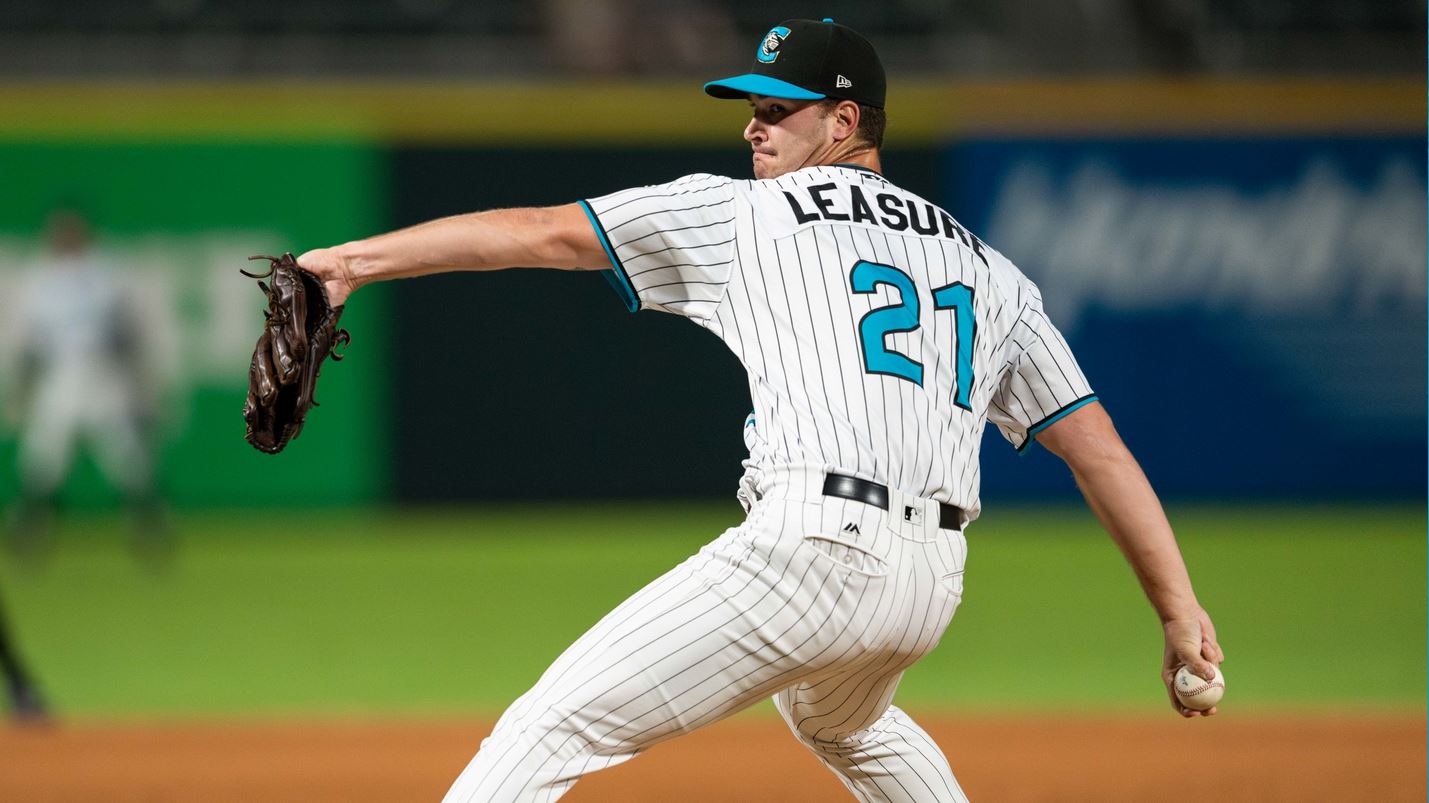
One interesting wrinkle that surfaced after the Hicks deal was how close Jordan Leasure came to being part of it. A report from Chris Cotillo indicated Boston pushed on packages that included Leasure before ultimately pivoting to Gage Ziehl instead. From Chicago’s side, that feels like a quiet win.
Leasure fits a lot of what Craig Breslow tends to value, but he’s also under team control deep into the decade and looks poised to be a real leverage piece. Keeping him matters, especially for a bullpen that lacked power last season.
Red Sox and White Sox also had serious discussions about packages including Jordan Leasure, a major league reliever, in the deal that just went down. Ultimately, the clubs settled on Ziehl.
— Chris Cotillo (@ChrisCotillo) February 1, 2026
It’s also notable what didn’t happen. Boston took a minor leaguer who had only been in the system a few months rather than a major league reliever, and that choice says something. A Leasure-centered deal likely would have offset most, if not all, of Hicks’ remaining salary, effectively turning Hicks into a financial freebie.
The cost would have been real, though. You’d be paying for it with one of your more important bullpen arms. Getz avoided that trade-off and still got the deal done.
SoxFest Notes
In a story from MLB.com by Scott Merkin on Grant Taylor’s usage outlook heading into 2026, the White Sox pointed toward a flexible role built around volume rather than a fixed lane. Speaking during SoxFest Live, Taylor said, “I love innings. I love to throw a lot of innings. So, I love any way that they come.”
Manager Will Venable echoed that open-ended approach, explaining that Chicago wants to “use Grant to win games” while still managing his long-term workload.
With added bullpen depth this winter, the club has more freedom to deploy Taylor in multi-inning relief spots when it fits, building volume in a way that mirrors Mike Vasil’s usage last season instead of locking Taylor into strict limits.
A similar approach is already taking shape elsewhere on the pitching staff. Multiple outlets have reported that Mike Vasil is entering spring training with the intention of stretching out, reflecting how the White Sox prefer to let roles emerge rather than assign them upfront. After operating in a flexible capacity last season, Vasil has indicated he is preparing for longer workloads as camp opens.
With his Rule 5 status now behind him, Chicago is no longer bound to a single usage and can choose the environment that best supports his development. Whether that means continued work in extended relief or a deliberate buildup away from the major league bullpen, the organization now controls the timeline.
It is the same philosophy guiding Grant Taylor’s outlook. Accumulate innings first and allow performance to dictate when a move toward starting becomes realistic rather than forcing the issue too early.
Kyle Teel arrived at SoxFest Live noticeably bigger after a productive offseason in the weight room. He said he finished last season around 190 pounds and now checks in at 212, adding close to 20 pounds of muscle with an emphasis on durability for a full 162-game season rather than simply adding bulk.
Teel stressed how important it will be to quickly learn the pitching staff as he continues to grow into the demands of catching at the next level, and noted that representing Team Italy in the World Baseball Classic is something he is especially looking forward to.
How the added mass translates into power without sacrificing mobility at the plate will be one of the more intriguing developments to track this year. The White Sox also shared a behind-the-scenes video following Teel, including a nod to his close connection with a New Jersey deli owned by his godfather, a local fixture known online as “The Deli Guy” who has become a small social media sensation in his own right.
Colson Montgomery struck a confident tone when asked about handling the early-season cold, framing it as part of the job. He said he has shifted his mindset to embrace those conditions, emphasizing that playing through them is simply part of competing at this level.
Montgomery added that he spent the offseason focused on preparing his body for the grind of a full 162-game season and beyond, a mentality that reflects a more direct, professional approach to the realities of playing in Chicago than past cores.
One of the quieter adjustments this spring involves Anthony Kay re-acclimating to a five-day rotation after pitching every seven days in Japan last season. At SoxFest, in an interview with Sean Anderson of CHGO, Kay described the shift as less about raw endurance and more about rebuilding the right between-start routine, from throwing programs to recovery work.
He said the process is already underway in close coordination with the White Sox pitching staff, pointing to the organization’s experience bringing pitchers back from overseas as a source of confidence. While much attention has been placed on Kay’s stuff and pitch consistency, how quickly he adapts to the tighter schedule could play an equally important role in his 2026 outlook.
We also got a ton of great stuff in our own FutureSox interviews from SoxFest Live. If you want the full context, go listen because there are details in there you will not get from quick quotes. More interviews with FutureSox link, including Mike Shirley, Paul Janish, Connor McKnight, plus players Sam Antonacci and Tanner McDougal.
Paul Janish kept coming back to how much last year’s draft class wants to work. He also downplayed the obsession with where guys open the season, since the bigger focus is building pro routines and stacking reps. He pointed to Billy Carlson as a tone setter who mixes it up with everybody, and said Jaden Fauske will move around the outfield with an emphasis on staying mobile while the body keeps developing.
Janish also talked about why catcher and shortstop reps matter so much early, and why someone like Matthew Boughton can end up anywhere once the organization starts moving him around. Janish even noted that he believes Boughton could be a factor in center field.
Mike Shirley went deep on how having the top pick changes the entire draft process, mostly because the pool makes it easier to chase the players you actually want. He also had a good line on why he cares more about consistent exit output than one big max number. His draft outlook was blunt on prep arms, too. The stuff is not the question, the strike zone is.
Connor McKnight had a strong frame on the offseason adds. He called veterans like Hays and Dominguez “insulation” for the younger core, and he hinted the Sox still have room for one more real pitching move if the player and price line up.
On the player side, Tanner McDougal, who may be the fan-favorite after the past weekend, talked through what flipped for him, and it came back to location and trusting the fastball. He also had great color on the Barons culture, plus a very clear stance on the Cubs rivalry.
Sam Antonacci leaned hard into leadership and being a good teammate, and he got specific about how his approach is built around getting his A swing off. He also touched on his positional flexibility and mentioned the offseason bat speed plan, and the org pushing guys to take the extra base without playing scared.
Other Headlines to Keep an Eye On
World Baseball Classic rosters for 2026 were officially announced, with several current and former White Sox names spread across the field. Kyle Teel and Sam Antonacci will represent Italy, Munetaka Murakami is slated to play for Japan, Seranthony Domínguez will suit up for the Dominican Republic, and Curtis Mead will compete for Australia, with the tournament running from March 5 through March 17 and opening in the Tokyo Dome before stateside pool play begins March 6.
One draft name to keep an eye on is right-hander Joseph Contreras, a top 2026 high school arm and the son of former White Sox pitcher José Contreras, who will pitch for Brazil as one of the youngest players in the event.
The field also includes a wide range of former White Sox players, including Michael Soroka for Canada, José Quintana, Captain for Colombia, Yoán Moncada for Cuba, Trayce Thompson for Great Britain, Tommy Kahnle for Israel, Dan Altavilla for Italy, Dane Dunning for Korea, Martín Maldonado, Captain for Puerto Rico, and Yoendrys Gómez for Venezuela.
As rosters take shape, the WBC can also serve as a showcase for remaining free agents still looking for clubs, with some players historically turning strong tournament performances into late major league or minor league deals.
Chicago’s offseason presence is extending beyond domestic circles. According to Will Sammon, scouts from Chicago are on the ground at the Caribbean Series in Mexico alongside representatives from the Mets, Phillies, and Dodgers. The continued international scouting activity underscores the incremental progress the organization is making under Chris Getz, with Chicago’s offseason drawing positive reviews as a reflection of a more active and intentional approach across multiple talent markets.
Shane Smith’s name continues to surface around Opening Day, and the location would be fitting. The White Sox open the season in Milwaukee against the organization that left Smith unprotected before Chicago selected him in the Rule 5 Draft. Smith spent all of last season with the White Sox as a Rule 5 pick and went on to make the All-Star team in 2025, firmly establishing himself as more than a roster flier.
Shane Smith and Davis Martin threw bullpens at the Rate today, so they are getting in their work during SoxFest Live weekend.
As for Smith being the Opening Day starter?
“I know the game is in Milwaukee. That’s all I know.”
— Scott Merkin (@scottmerkin) January 31, 2026
Prelander Berroa is back, throwing in Arizona. An Instagram story from the White Sox complex showed him on a bullpen mound, which is a small but real checkpoint after last spring’s UCL injury and Tommy John plan. He is still a ways off from game action, but just being back to structured throwing is a positive sign as he works toward a 2026 return.
One of the funnier side notes from the offseason came courtesy of Munetaka Murakami and a very specific clubhouse request. During his first walkthrough, Murakami pointed out that the White Sox locker room didn’t have a bidet. The Sox moved quickly to add one, and the joke carried from there. A day later, High-A Winston-Salem announced it had installed bidets as well.
A brief note from the Sox Machine podcast addressed Caleb Bonemer and the possibility of an early Spring Training look. The idea has been discussed internally, though the current feeling is that it may be premature. Even so, the underlying sentiment was consistent.
Bonemer is well regarded inside the organization, with limited upper-level middle infield depth, it would not be surprising to see him spend some time in big league camp, similar to how a prospect such as William Bergolla Jr. appeared briefly last spring. Even if the timing is not immediate, Bonemer remains firmly on the club’s radar.
Charlotte stands out as the most hitter-friendly environment in Triple-A, according to Baseball America’s 2025 park factor data, ranking at the very top in wOBA and sitting alone at the end of the scale. That matters when reading Triple-A stat lines, as offensive production there is coming in the most favorable run-scoring conditions at the level, while pitchers are working with far less margin. Results out of Charlotte are still useful, but they require added context when projecting how that performance translates beyond Triple-A.
Jeff Passan offered a rare bit of national-level optimism for the White Sox this week, responding on Threads to a fan asking whether there is any real reason for hope. Passan said he likes a number of the young players already in the system and added that Roch Cholowsky could become the No. 1 prospect in baseball the moment Chicago drafts him.
Passan tempered expectations for 2026, noting the season likely will not be great, but should be better, before pointing to the bigger picture. If Justin Ishbia enters the ownership mix with the same intensity his brother brought to Phoenix, Passan believes it could finally push the White Sox into the financial tier they should have been operating in for years. It is the kind of long-term signal fans have been waiting to hear echoed by national voices rather than just internally.
Edgar Quero spent part of his offseason visiting Driveline’s hitting lab as he looks to take the next step offensively, and it offers a clear window into how the organization is thinking about his development timeline. The 22-year-old catcher is already known for plate discipline and contact skills, but the focus of the work centered on adding bat speed and better impact from his lower half without compromising his approach.
Alden Gonzalez dives deeply into that process in a detailed ESPN feature that’s well worth the read, tracing how Quero is using modern hitting technology to address specific limitations and raise his offensive ceiling. If you want the full context behind what he worked on and why it matters, Gonzalez’s piece lays it out far better than any quick summary can.
A recent Sox In The Basement interview offered a rare look at a behind-the-scenes project the White Sox commissioned in 2024. Two members of the group behind it, Alex Yeager and Devan Joshi, explained how the team used biomechanical Hawkeye data to study hitter movement and identify actionable adjustments.
The goal was not a one-size-fits-all swing model. It was to build more tailored development plans that can help improve hitters already in the system. They also touched on how this kind of work can influence player acquisition by flagging fixable traits in draft targets or undervalued bats in trades and free agency. If you want context on why the White Sox have leaned so hard into bat speed and individualized plans under Chris Getz, this is one of the best listens out there.
Post Navigation